Wildlife. Updated November 2026. 3 min read.
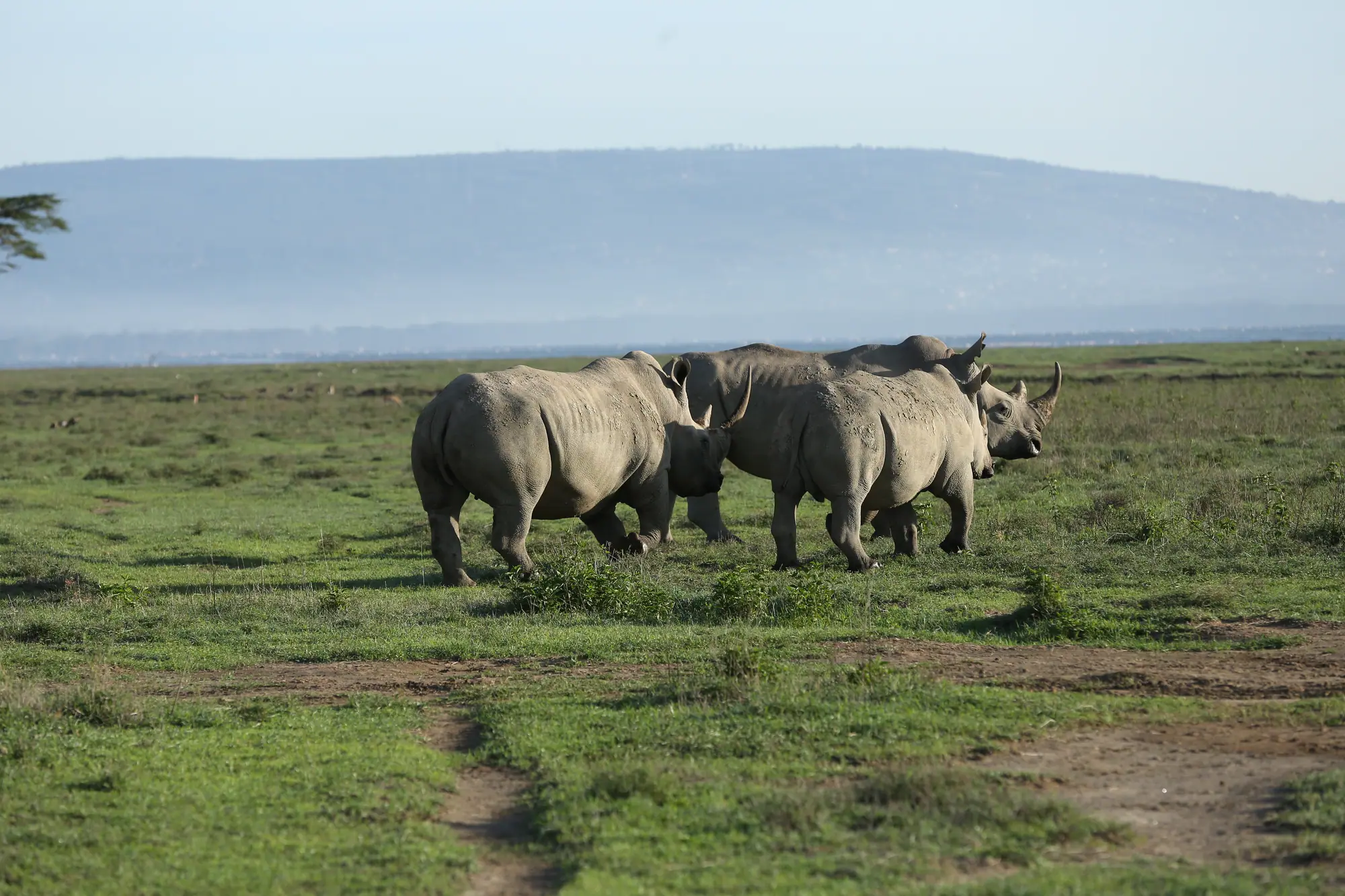
Kenya is a world leader in bringing rhinos back, and seeing one here means seeing that work up close. The most reliable places are Ol Pejeta Conservancy, Lewa Wildlife Conservancy and Lake Nakuru National Park, which all protect both black and white rhinos, and Nairobi National Park has black rhinos a short drive from the city. Kenya's rhinos live mostly in guarded sanctuaries and conservancies, so sightings there are good and sightings elsewhere are rare.
The best places for rhinos
- Ol Pejeta Conservancy, Laikipia: black rhinos, southern white rhinos and the last northern white rhinos, cared for by keepers as part of an international effort to save the subspecies
- Lewa Wildlife Conservancy, Meru County: black and white rhinos in a landscape that is part of the Mount Kenya UNESCO World Heritage Site
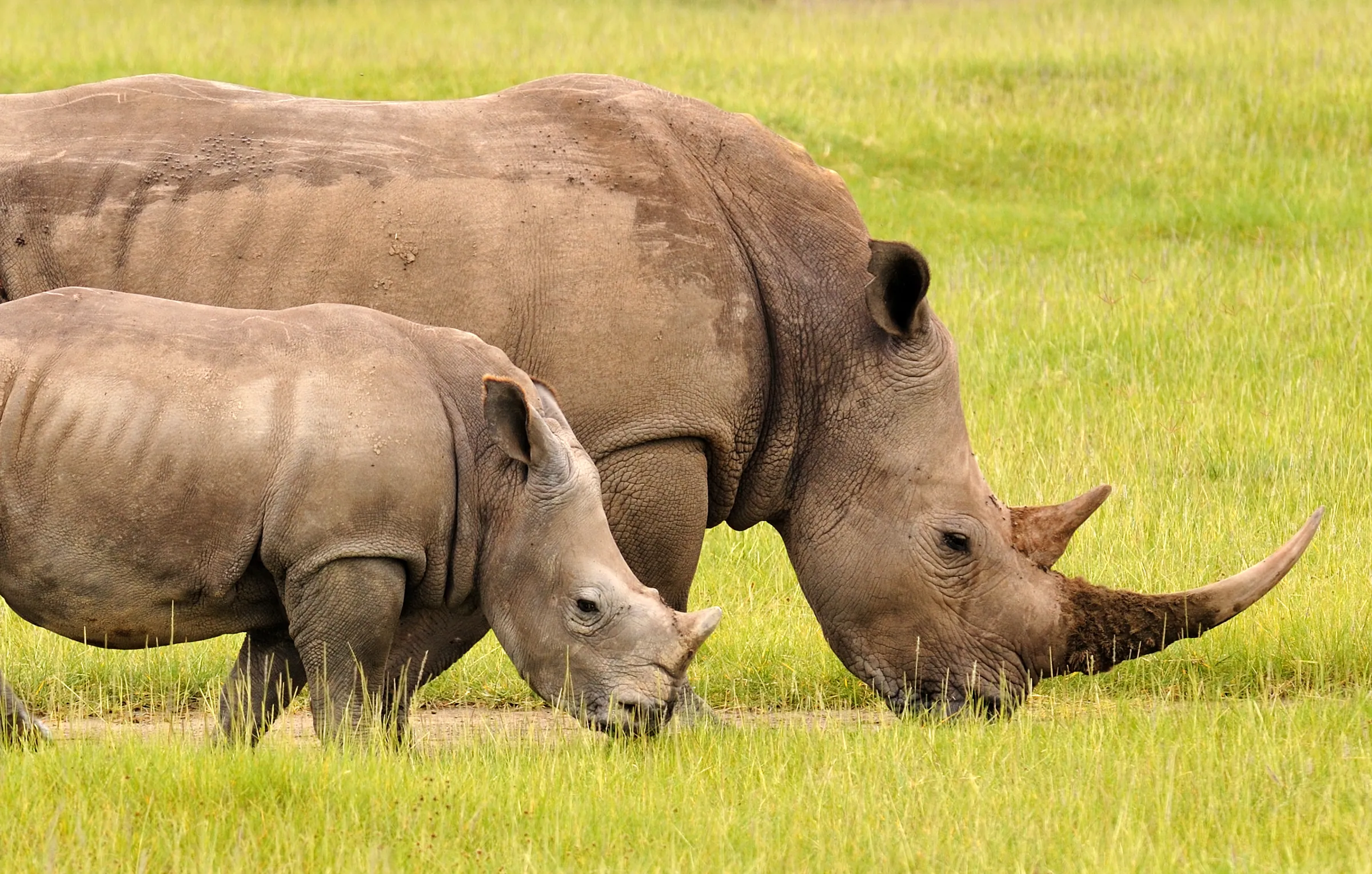
- Lake Nakuru National Park: a fenced park where white rhinos often graze the open grassland near the lake shore and black rhinos browse in the woodland
- Nairobi National Park: black rhinos in the thickets and valleys, with the skyline behind
- Meru National Park: a rhino sanctuary within a quiet park
- Tsavo West National Park: black rhinos in the fenced Ngulia Rhino Sanctuary, where thick bush makes them a challenge
- Sera Community Conservancy, Samburu: a community-run sanctuary where you can track rhinos on foot with Samburu rangers
The Maasai Mara has a small black rhino population, but sightings there are rare. If rhinos matter to you, plan at least one night in a sanctuary.
When to go, and what time of day
You can see rhinos all year in the sanctuaries. The dry seasons, usually June to October and January to March, help because vegetation thins out. Black rhinos are most active in the early morning, late afternoon and at night, and rest in thick bush through the heat of the day. White rhinos graze in open grassland and are easier to see at most hours, though they too lie up in the shade at midday.
Black or white?
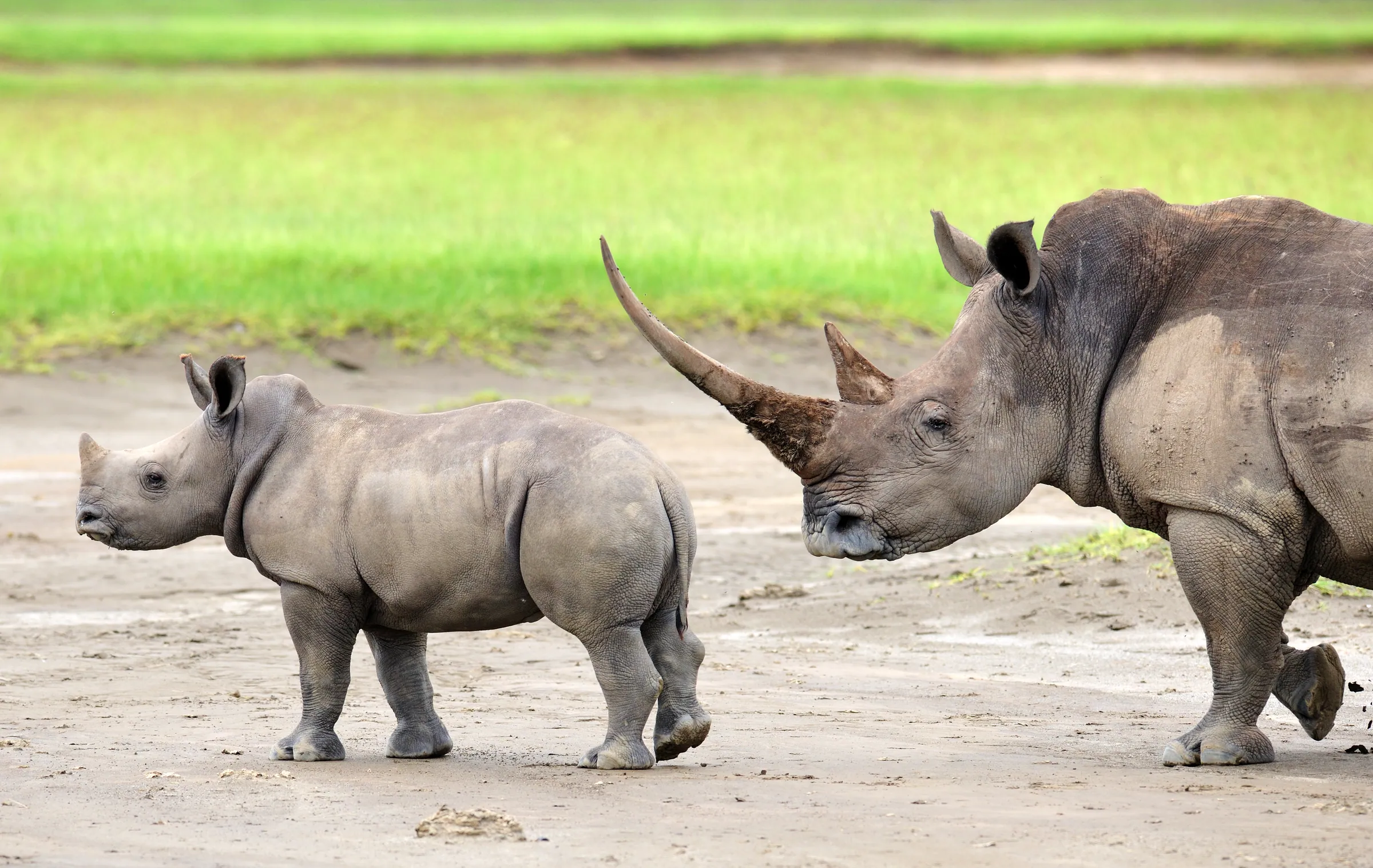
Both are gray. The difference is the mouth. The white rhino has a wide, square lip for grazing grass, holds its heavy head low and often lives in small groups. The black rhino has a pointed, hooked upper lip for browsing leaves and shrubs, holds its head higher and usually lives alone. Black rhinos are more nervous and more likely to charge. Rhinos see poorly but hear and smell well, so guides approach from downwind and keep voices low. A rhino that lifts its head, swings its ears toward you and snorts is ready to run or charge.
How guides find rhinos
- Rangers in sanctuaries monitor rhinos closely and can point your guide to the right area
- Dung middens, the shared piles that rhinos use as signposts, show who has passed
- Oxpeckers, the small birds that ride on rhinos and buffalo, give away an animal in tall grass
- Fresh three-toed tracks on a dusty road
Rhinos in Kenya today
The IUCN lists the black rhino as Critically Endangered and the southern white rhino as Near Threatened. Kenya's black rhinos are the eastern subspecies, and the country holds one of the largest populations left. Kenya Wildlife Service reported 2,102 rhinos at the end of 2024: 1,059 black and 1,041 southern white. That is a large recovery from the poaching crisis of the 1970s and 1980s. Poaching for horn remains the main threat, and every sanctuary depends on armed rangers, dogs and constant monitoring. As numbers grow, Kenya is moving rhinos to new sanctuaries so they have room. In 2024, scientists working at Ol Pejeta announced the first rhino pregnancy from IVF, a key step in the effort to save the northern white rhino.
Watching rhinos ethically
- Turn off location tags before you post rhino photos, and never share where a rhino was seen
- On a walking safari, follow the rangers' instructions exactly and stay downwind and quiet
- Keep your distance from a mother with a calf; mothers are protective
- Your sanctuary and conservancy fees help pay for the rangers who guard them
Photography tip: get down to the rhino's level, shooting through a low window, so the horn and head fill the frame. Early light on dust kicked up by a walking rhino makes strong pictures. Watch for oxpeckers, which add life to a close portrait.