Wildlife. Updated November 2026. 3 min read.
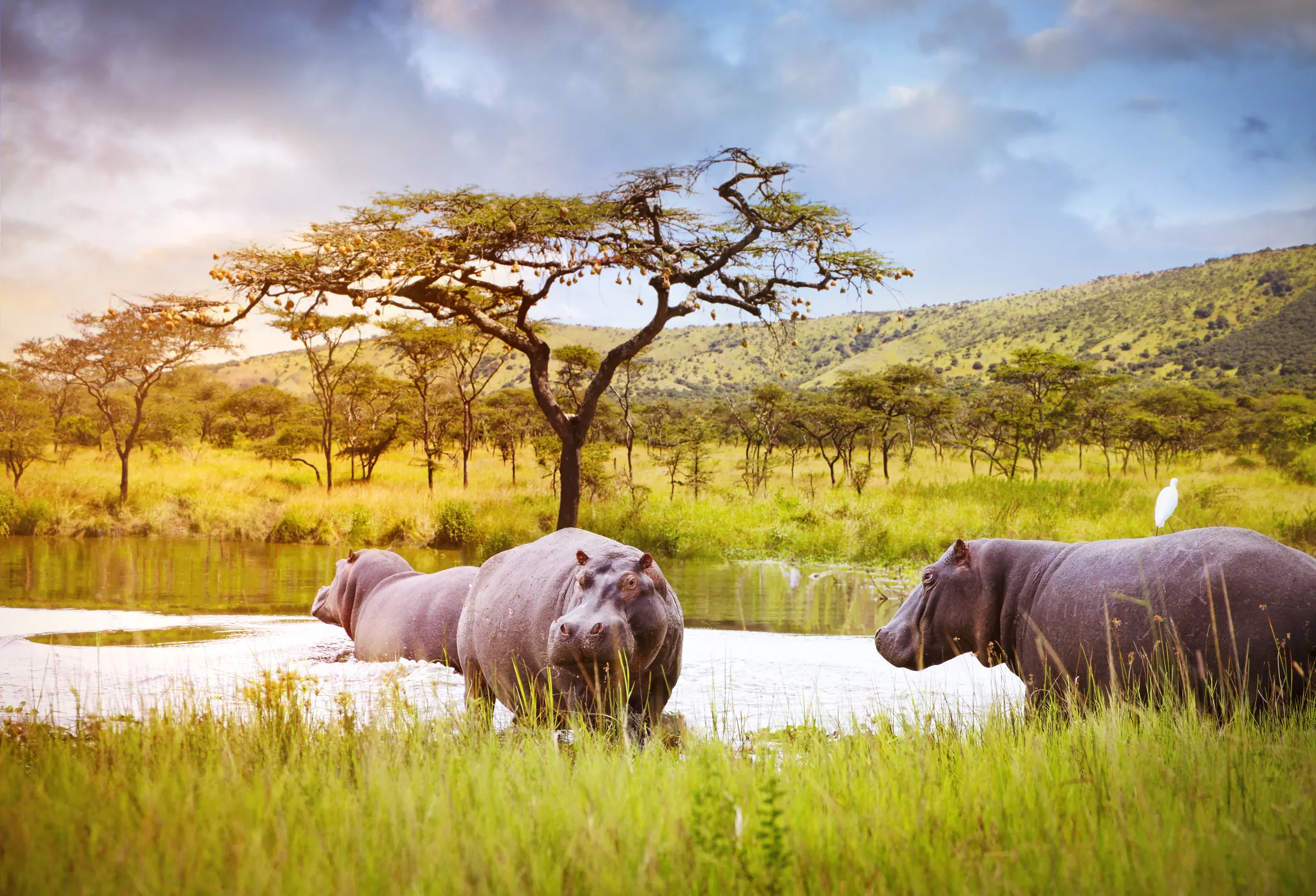
The best places to see hippos in Kenya are the Mara River in the Maasai Mara, Lake Naivasha, Mzima Springs in Tsavo West and Lake Baringo, and Nile crocodiles share most of the same water. Few countries let you watch hippos from a safari vehicle, a lake boat and an underwater glass window on the same trip. You can see both animals all year, and the dry months bring them together in fewer pools.
The best places
- Maasai Mara: pods of dozens crowd the bends of the Mara River, and some of Kenya's biggest Nile crocodiles wait at the migration crossing points. At a few designated hippo pools you may step out with an armed ranger.
- Lake Naivasha: a boat trip with a local skipper brings you within safe sight of hippo pods resting in the shallows, with fish eagles calling overhead. Hippos come ashore here to graze at night.
- Mzima Springs, Tsavo West: clear spring water rising from the lava, with an underwater viewing chamber where you can sometimes watch hippos and fish below the surface.
- Tsavo East: hippos and crocodiles in the Galana River, especially around Lugard Falls.
- Lake Baringo: hippos and crocodiles in a freshwater Rift Valley lake, best seen from a boat early in the morning.
- Lake Turkana: a remote expedition, where Central Island is known as a breeding ground for Nile crocodiles.
When to go, and what time of day
Hippos live in Kenya's rivers and lakes all year. In the dry seasons, roughly January to March and June to October, rivers shrink and pods pack into the deepest pools, which makes them easy to find. In the rains they spread out along fuller rivers and flooded shorelines.
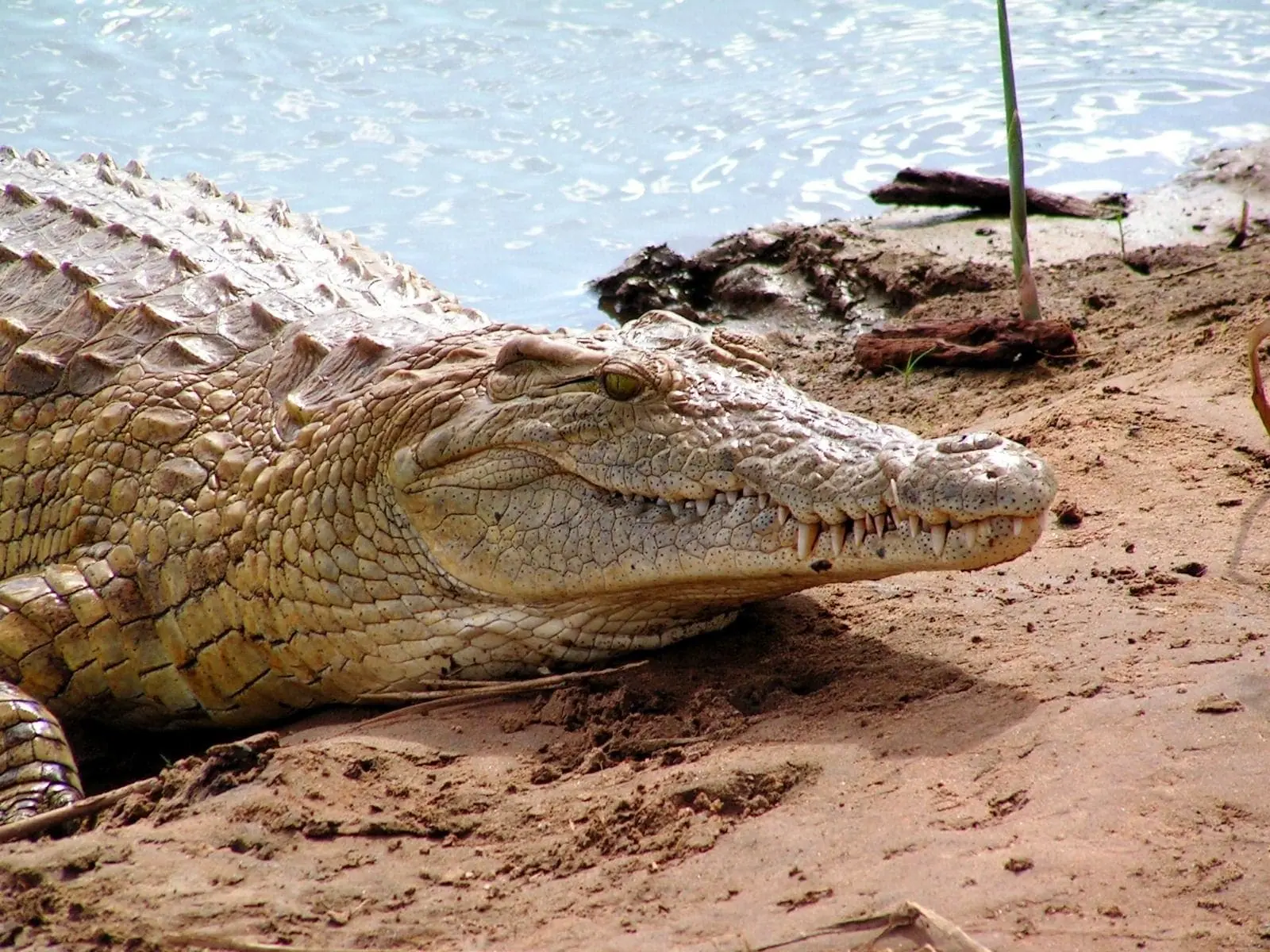
Early morning is the best time. Hippos are often still out of the water or just returning after a night of grazing, and crocodiles haul out onto sandbanks to warm up in the first sun. By midday most hippos are submerged with only eyes, ears and nostrils showing. Late afternoon brings them back to life, with grunting, splashing and the first animals heading for the bank.
Behavior worth watching for
- Hippos spend the day in water to stay cool and leave it after dark to graze, often walking a long way inland along well-worn paths.
- The reddish sheen on their skin is a natural secretion that helps protect it from the sun. It is often called blood sweat, though it contains no blood.
- A wide yawn is usually a warning to rivals or to you. Bulls also mark territory by flicking dung with their tails.
- Nile crocodiles can lie still for hours. During the migration they gather at the Mara River crossings to ambush wildebeest and zebra.
- Hippos are among the most dangerous large animals to people in Africa, mainly when someone stands between a hippo and its water.
Conservation status in Kenya
The common hippo is listed as Vulnerable on the IUCN Red List, mostly because of habitat loss and hunting for meat and teeth in parts of its range. In Kenya hippos are protected by law, and most live inside national parks and reserves or on lakes like Naivasha, where Kenyan wildlife authorities and local communities work to manage nighttime encounters as farms press against the shore. The Nile crocodile is assessed as Least Concern across Africa. Both depend on clean, flowing rivers, so protecting catchments such as the Mau Forest, which feeds the Mara River, protects them too.
Safe and ethical viewing
- Stay in the vehicle unless a ranger tells you a spot is safe to get out.
- On boats, keep the distance your skipper sets, stay seated and never ask to push closer to a pod.
- Never walk near lake shores or riverbanks after dark, even in a lodge garden; hippos graze there at night.
- Never feed or throw anything at hippos or crocodiles to get a reaction.
- Keep voices low at crossing points; noise can push animals back from the river.
Photography tip: wait for the yawn. Focus on a hippo's eyes as it rises, keep your shutter speed fast, around 1/1000 of a second, and shoot a burst when the head lifts. At Mzima Springs, put your lens close to the glass and turn off the flash to cut reflections. For crocodiles, rest the camera low on the window frame so your eye line sits near the water.
We are Kenyan-led, with two U.S. companies behind us, and our Kenyan guides know which pools are busy each season. You can pay in full or monthly with no deposit, and a specialist replies within two business days.