Wildlife. Updated November 2026. 3 min read.
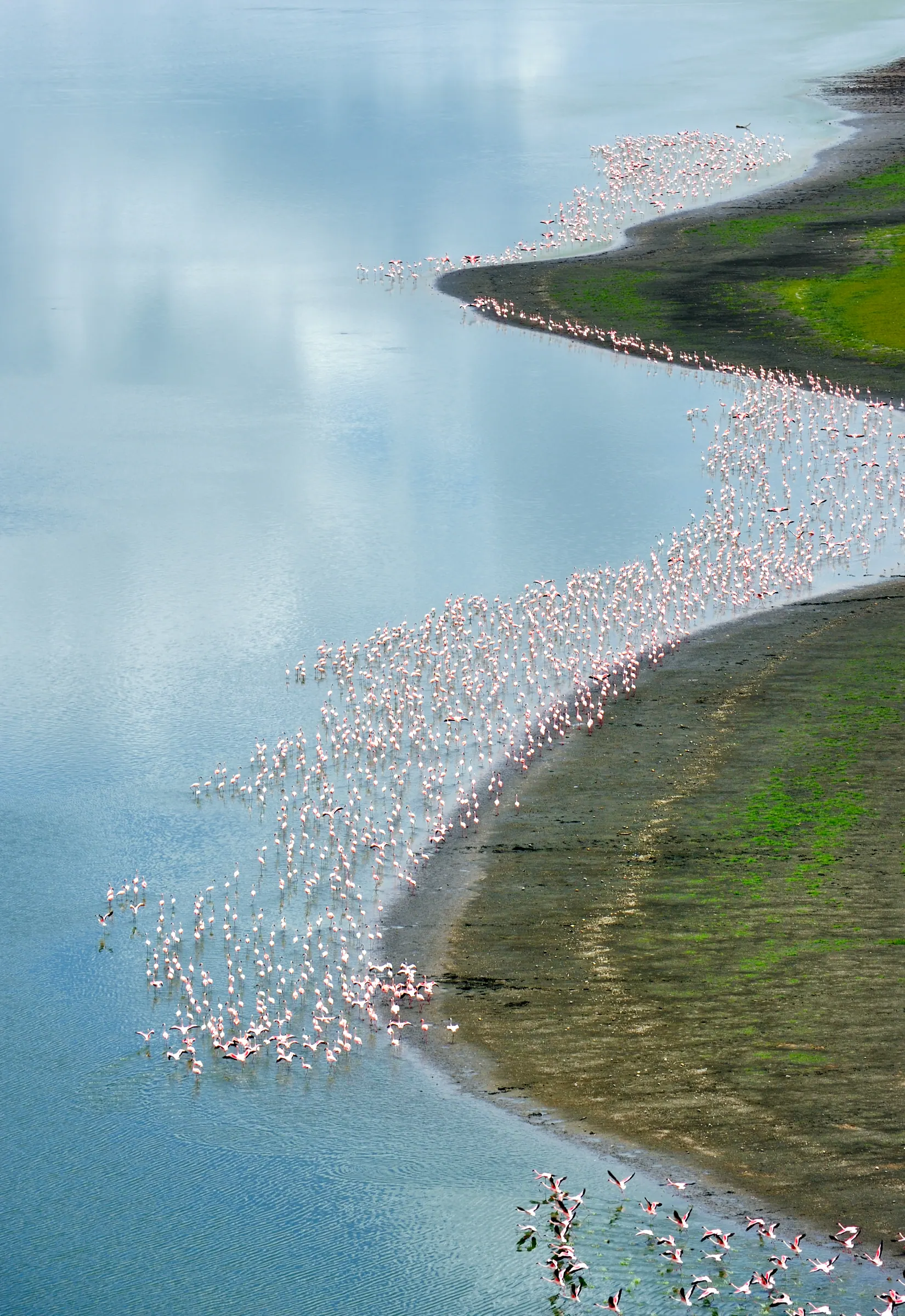
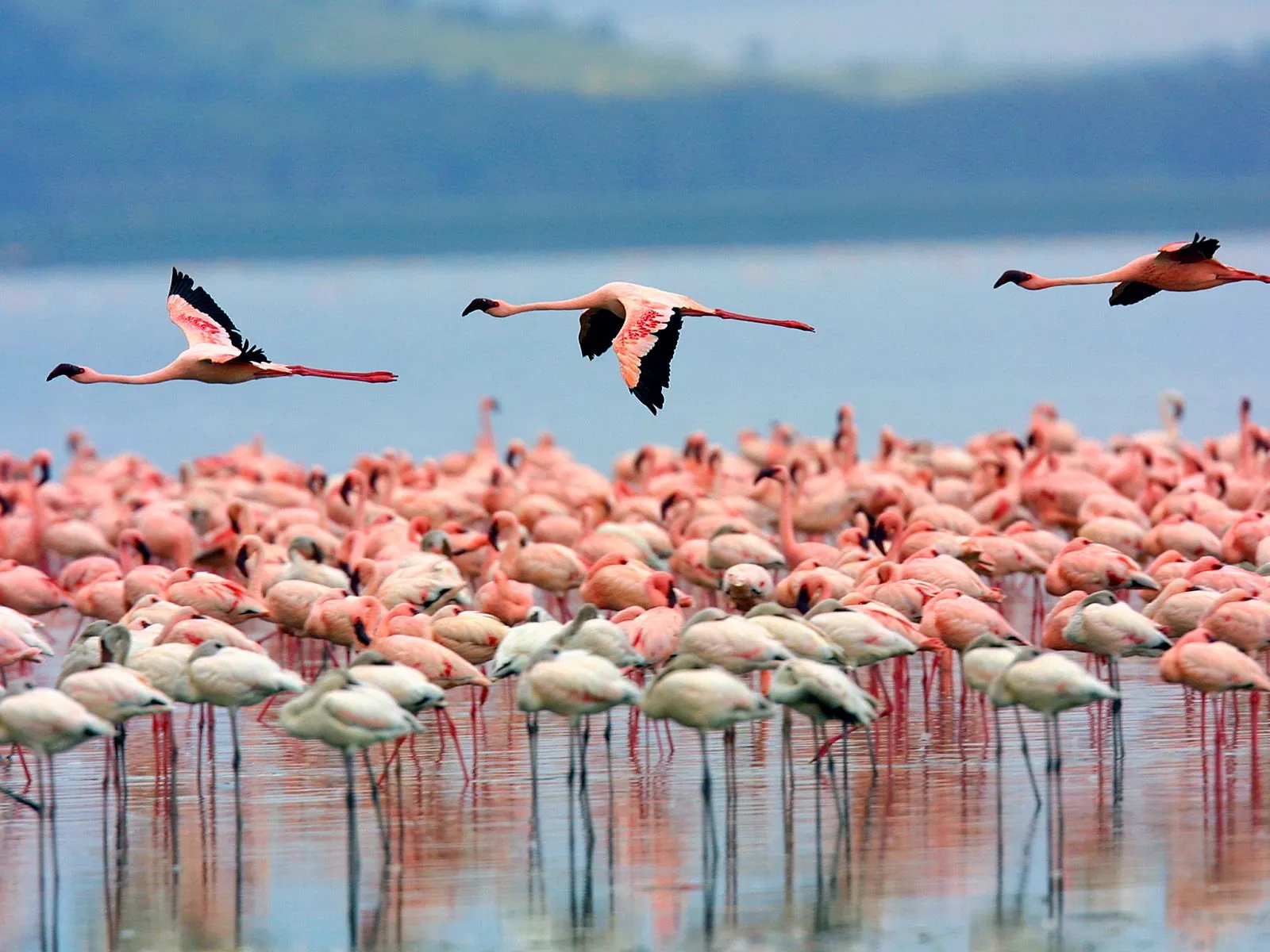
The best places to see flamingos in Kenya are the Rift Valley soda lakes, above all Lake Bogoria, with Lake Nakuru and Lake Elementaita close by. UNESCO calls these three lakes the most important feeding site for lesser flamingos in the world, and at their best they turn whole shorelines pink. Flamingos follow their food, so the busiest lake can change from one year to the next, and we check recent reports before we route you.
Why the flocks move
Lesser flamingos feed on spirulina, a blue-green alga that thrives in shallow, salty, alkaline water. When heavy rains raise a lake, the water gets fresher, the algae thin out and the birds move on. Lake Nakuru rose sharply around 2013 and many flamingos moved to Lake Bogoria. Since then Nakuru, Bogoria and Baringo have all grown well beyond their long-term averages, according to Kenya Wildlife Service. Recent aerial counts have also found huge gatherings at remote Lake Logipi in Turkana, then far fewer at the next count. Kenya Wildlife Service describes that volatility as normal for the species, and it is why we never promise a pink shoreline.
The lakes
- Lake Bogoria: a national reserve run by Baringo County, with steaming hot springs on its shores, some now drowned by the rising water. In most recent years it has had the largest flocks you can reach easily.
- Lake Nakuru: a Kenya Wildlife Service national park that adds rhinos, lions and Rothschild's giraffes. Flamingo numbers have been lower and more variable since the lake rose, though birds return in some seasons.
- Lake Elementaita: a smaller, quieter soda lake between Naivasha and Nakuru. Counts here have dropped sharply in the last few years.
- Lake Magadi: hot and stark, south of Nairobi in Kajiado, with a few thousand lesser flamingos in recent counts.
- Lake Logipi: deep in the Suguta Valley, reached only on a serious expedition.
Best months and time of day
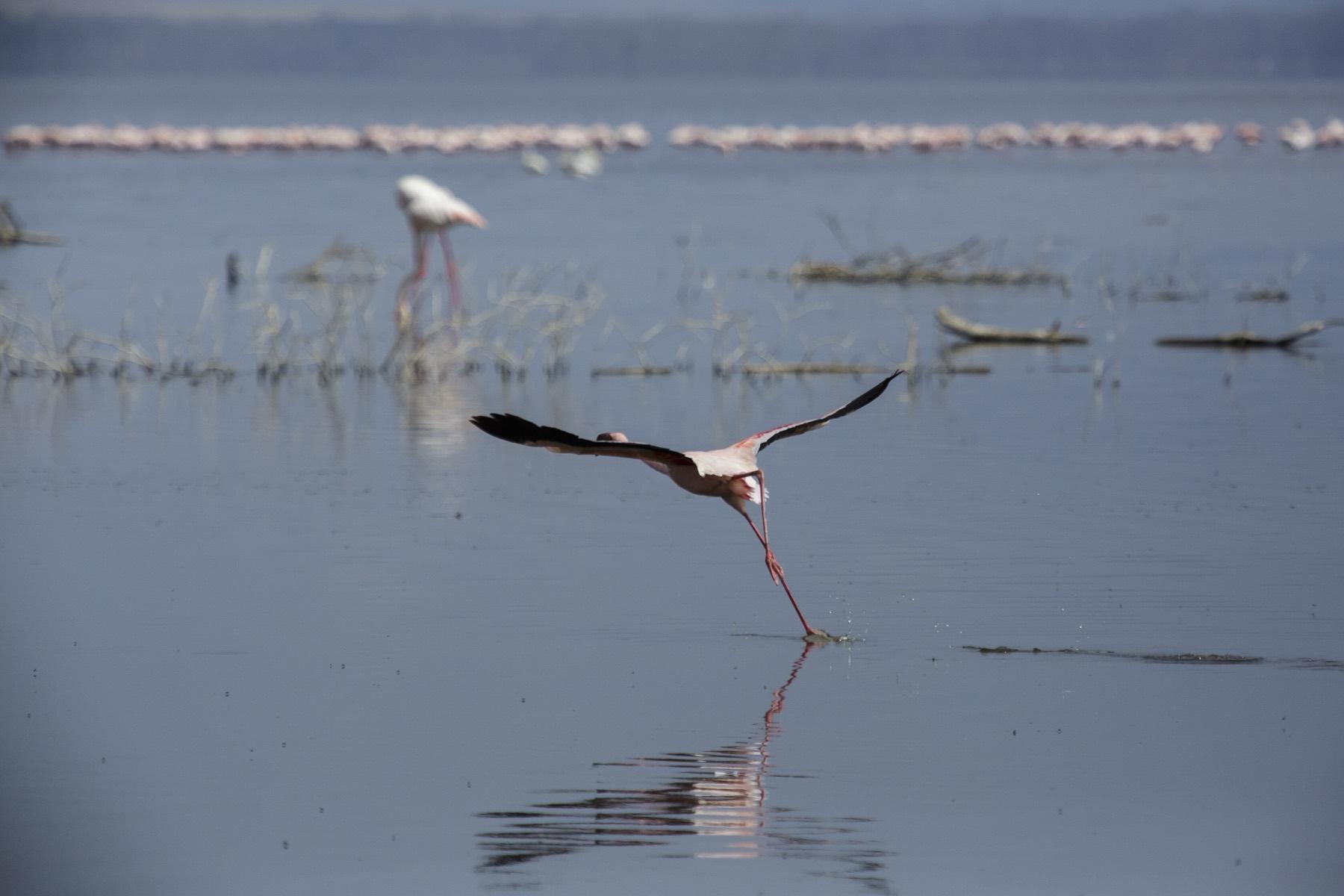
Flamingos are on the soda lakes all year, and there is no fixed season. Dry spells, roughly January to March and June to October, can concentrate food in shallower water, but the best guide is the latest count. Go early. In the first hour after sunrise the water is calm, the light is soft and the birds feed close to shore. By midday heat haze flattens the color. Late afternoon is good again, especially when flocks lift off and wheel over the lake.
Behavior worth knowing
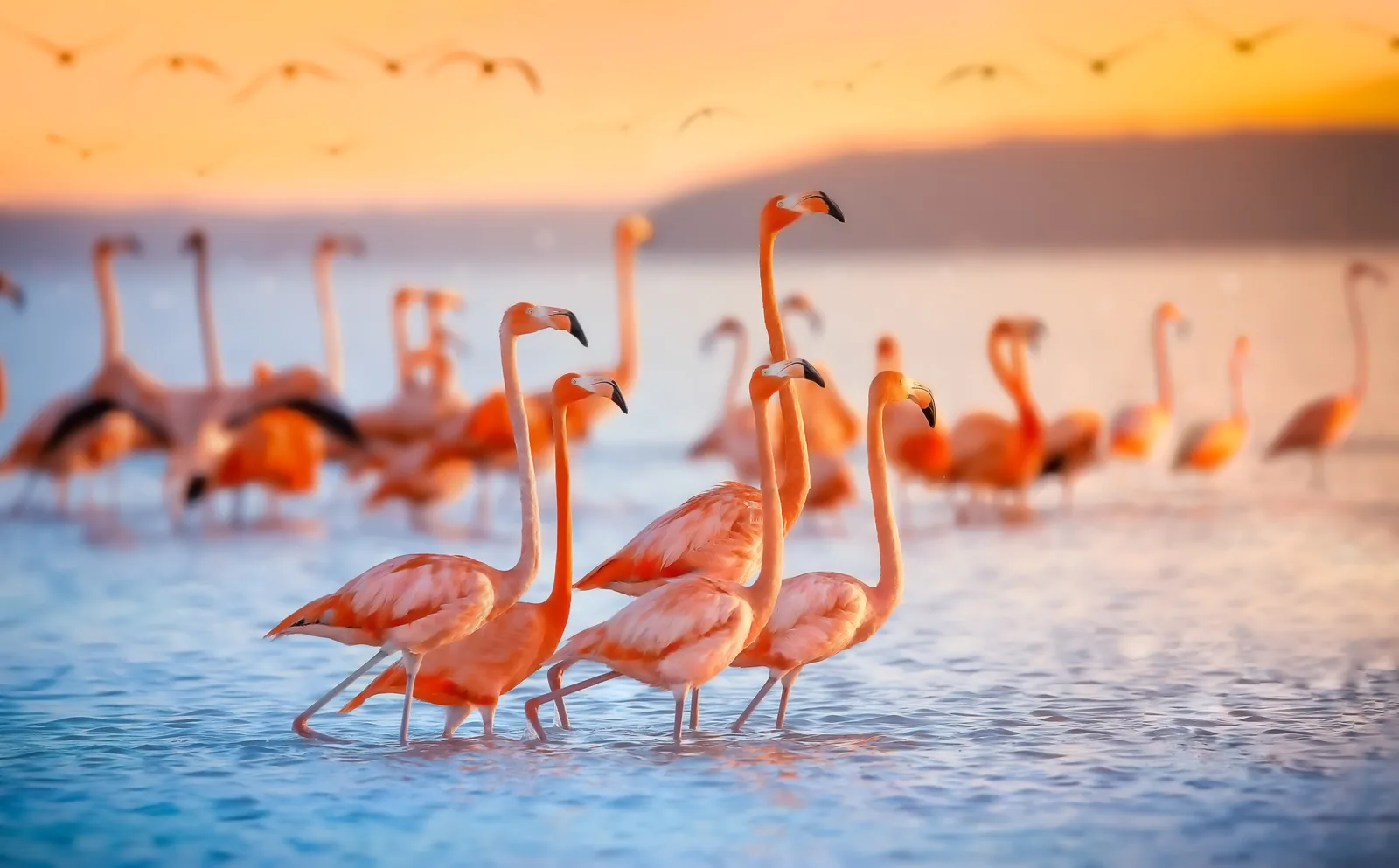
- Kenya has two species. Lesser flamingos are smaller and deeper pink with dark red bills; greater flamingos are taller and paler, with pink bills tipped in black.
- Their pink comes from pigments in the algae and tiny creatures they eat.
- They feed with their heads upside down, filtering water through their bills.
- Flocks march and flag their heads in tight groups, a display often linked to breeding.
- East Africa's lesser flamingos breed mainly at Lake Natron in Tanzania, then spread out to Kenya's lakes to feed.
Conservation and viewing rules
The lesser flamingo is listed as Near Threatened on the IUCN Red List. Kenya protects its key lakes as national parks and reserves, and in 2011 Lakes Bogoria, Nakuru and Elementaita were inscribed together on the UNESCO World Heritage List as the Kenya Lake System in the Great Rift Valley. Kenya Wildlife Service, the National Museums of Kenya and Nature Kenya count the birds regularly. Rising water, pollution and silt from farmland upstream are the main pressures.
- Stay on marked paths and viewpoints; walking toward a flock makes thousands of birds take off and waste energy.
- Move slowly and keep low near the shore.
- Never chase birds or ask a driver to push them into flight for a photo.
- Do not fly drones over the lakes; parks require special permission.
Photography tip: shoot into the light at dawn for silhouettes, or with the sun behind you for color. A long lens isolates a few birds against the water, and a wider lens shows the scale of a flock. When birds run across the surface to take off, a shutter speed of 1/2000 of a second freezes the wings.
Kenya Experience is Kenyan-led, with two U.S. companies behind it, and our Kenyan guides know these lakes season by season. Pay in full or monthly with no deposit; a specialist replies within two business days.