Parks and reserves. Updated November 2026. 3 min read.
Lake Bogoria National Reserve, in Baringo County, protects a narrow soda lake in Kenya's Rift Valley where hot springs boil and geysers spout along the shore. In many years it draws large flocks of lesser flamingos, and its woodland holds one of Kenya's few populations of greater kudu. It is about four to five hours from Nairobi and easy to pair with Lake Baringo and Lake Nakuru.
What it is, and who runs it
Lake Bogoria is a national reserve managed by the Baringo County government, not by Kenya Wildlife Service. The reserve covers about 107 square kilometers around a long, shallow alkaline lake under the steep Siracho escarpment. It is a Ramsar wetland of international importance, listed in 2001, and since 2011 part of the Kenya Lake System in the Great Rift Valley, a UNESCO World Heritage site it shares with Lakes Nakuru and Elementaita.
Hot springs and geysers
Bogoria sits over volcanic heat. Around two hundred hot springs feed the lake, and the main cluster at Loburu, on the western shore, has bubbling pools and small geysers that throw steaming water into the air. Local guides often boil eggs in the springs to show just how hot the water is.
The water is close to boiling, and the ground near the springs can be a thin crust. Stay on firm, marked ground, keep children close and follow your guide's lead. Rising lake levels in recent years have flooded some springs and changed the shoreline, so the exact layout may differ from older photos.
Flamingos and wildlife
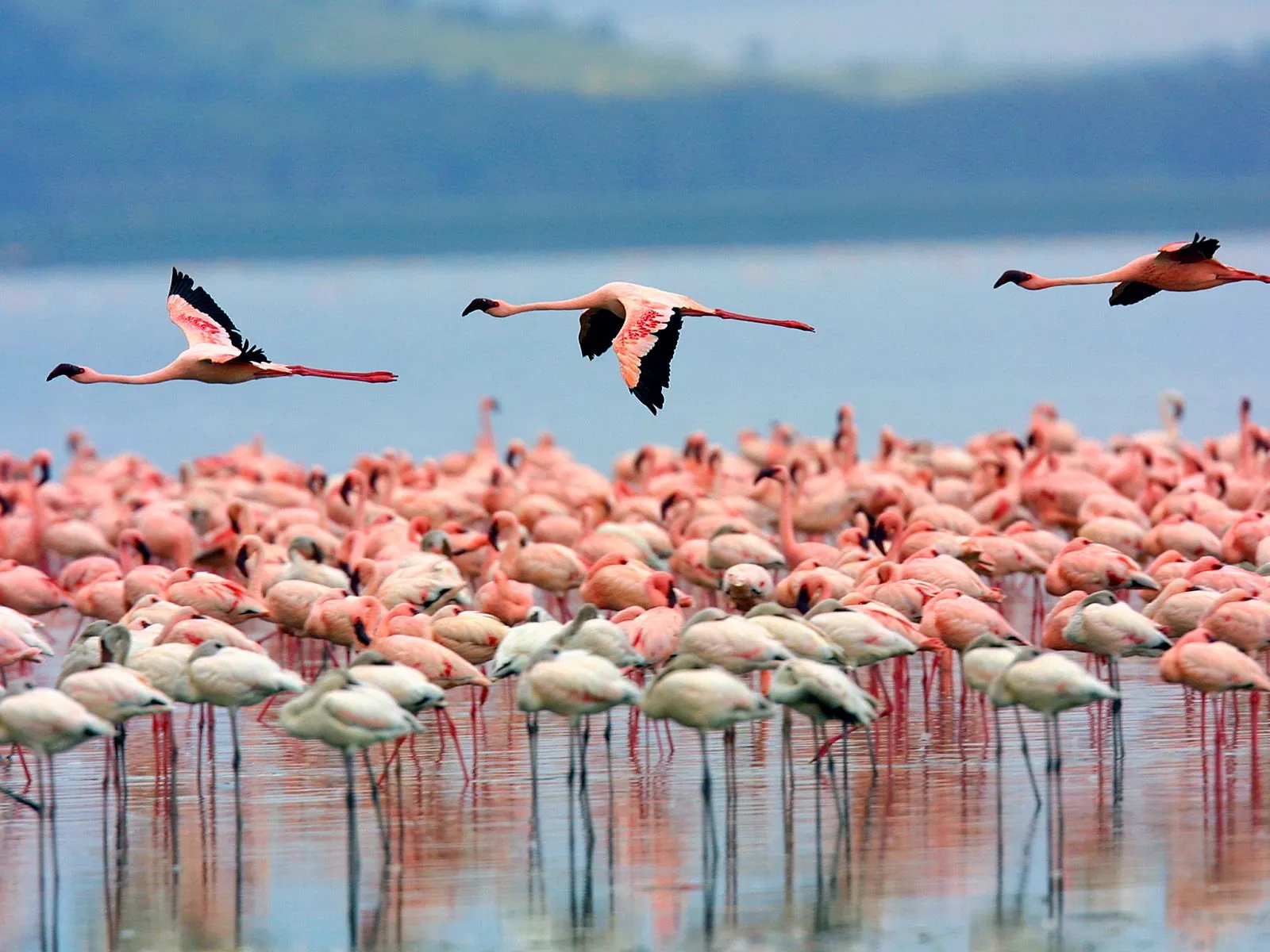
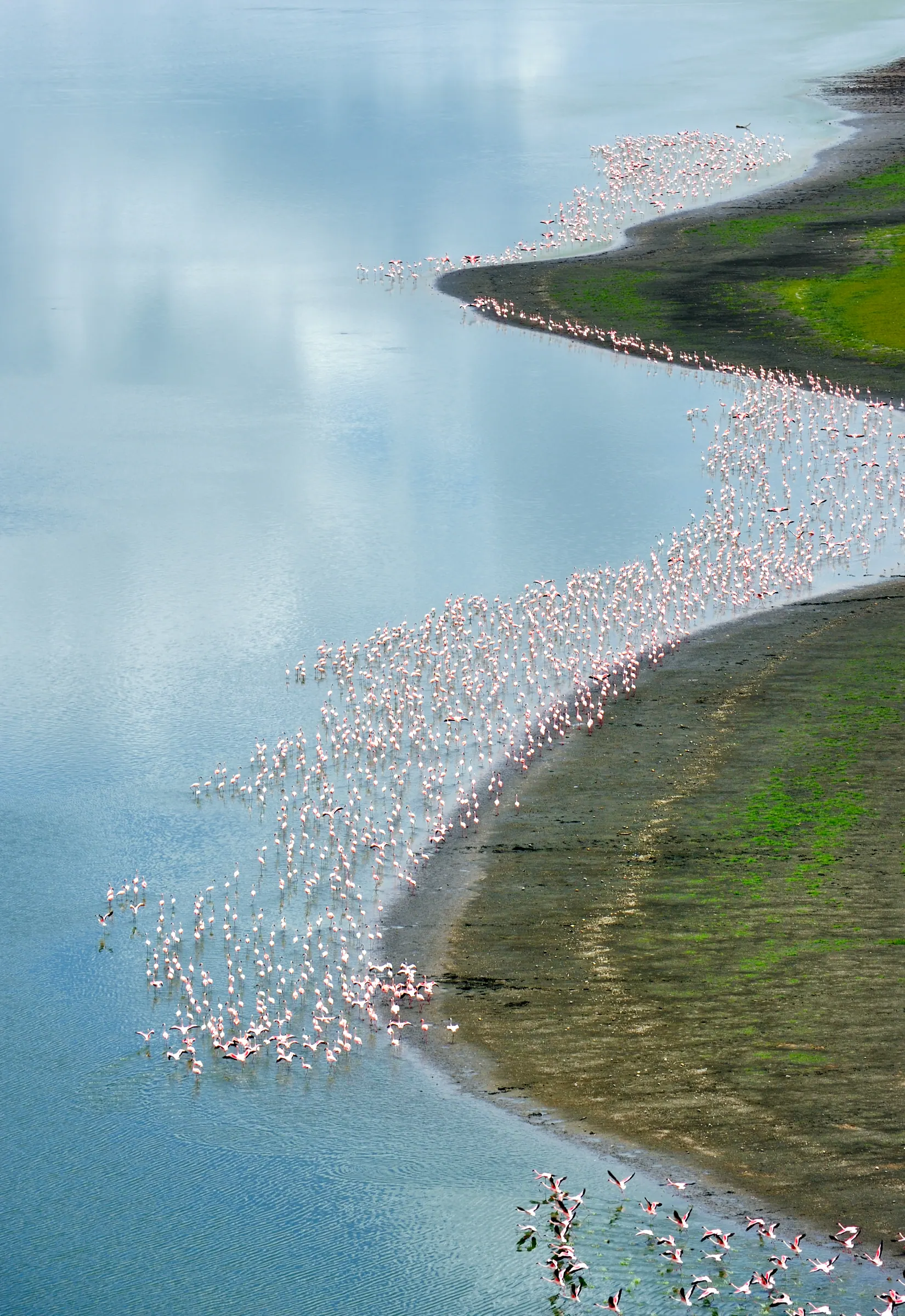
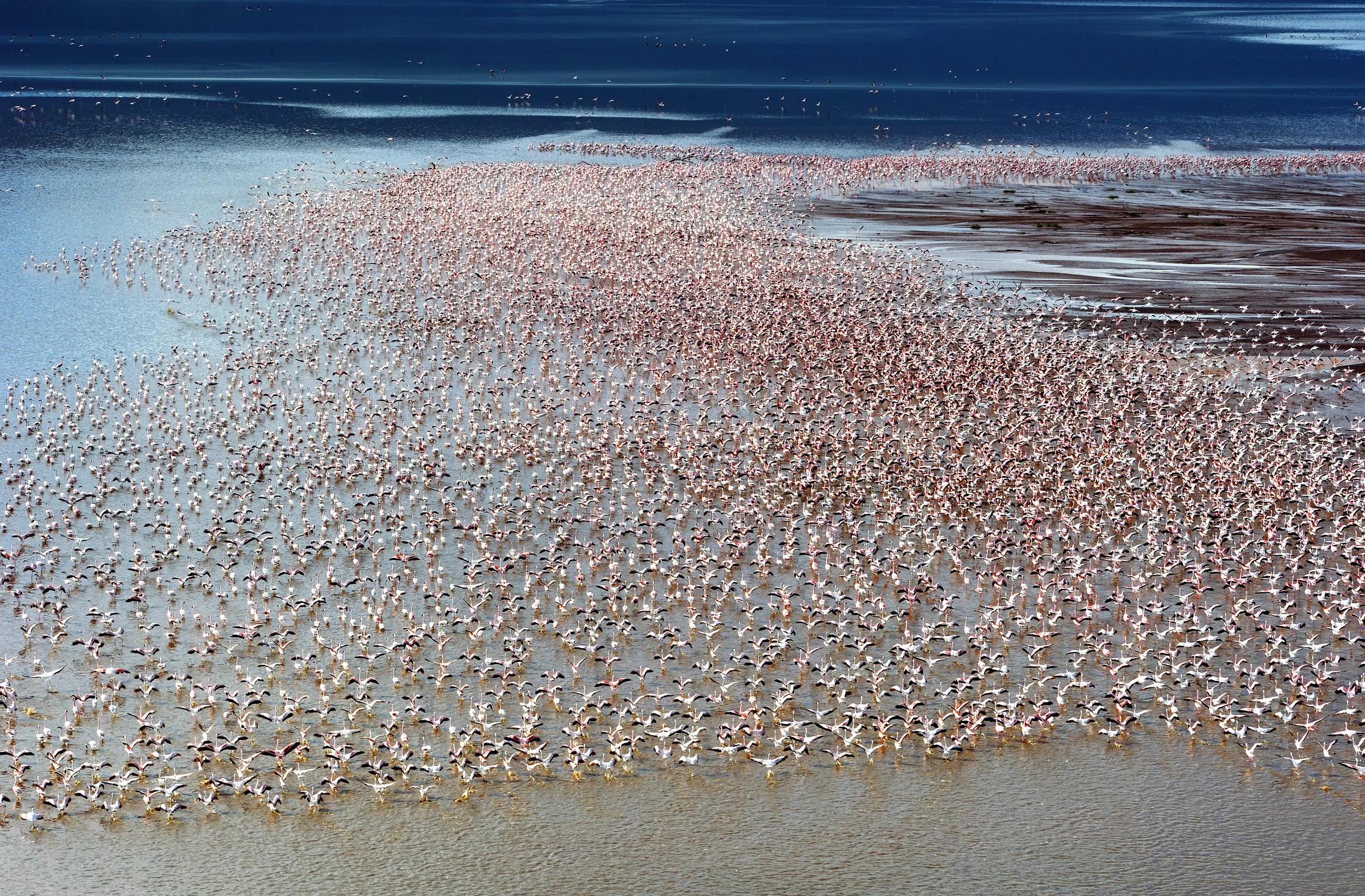
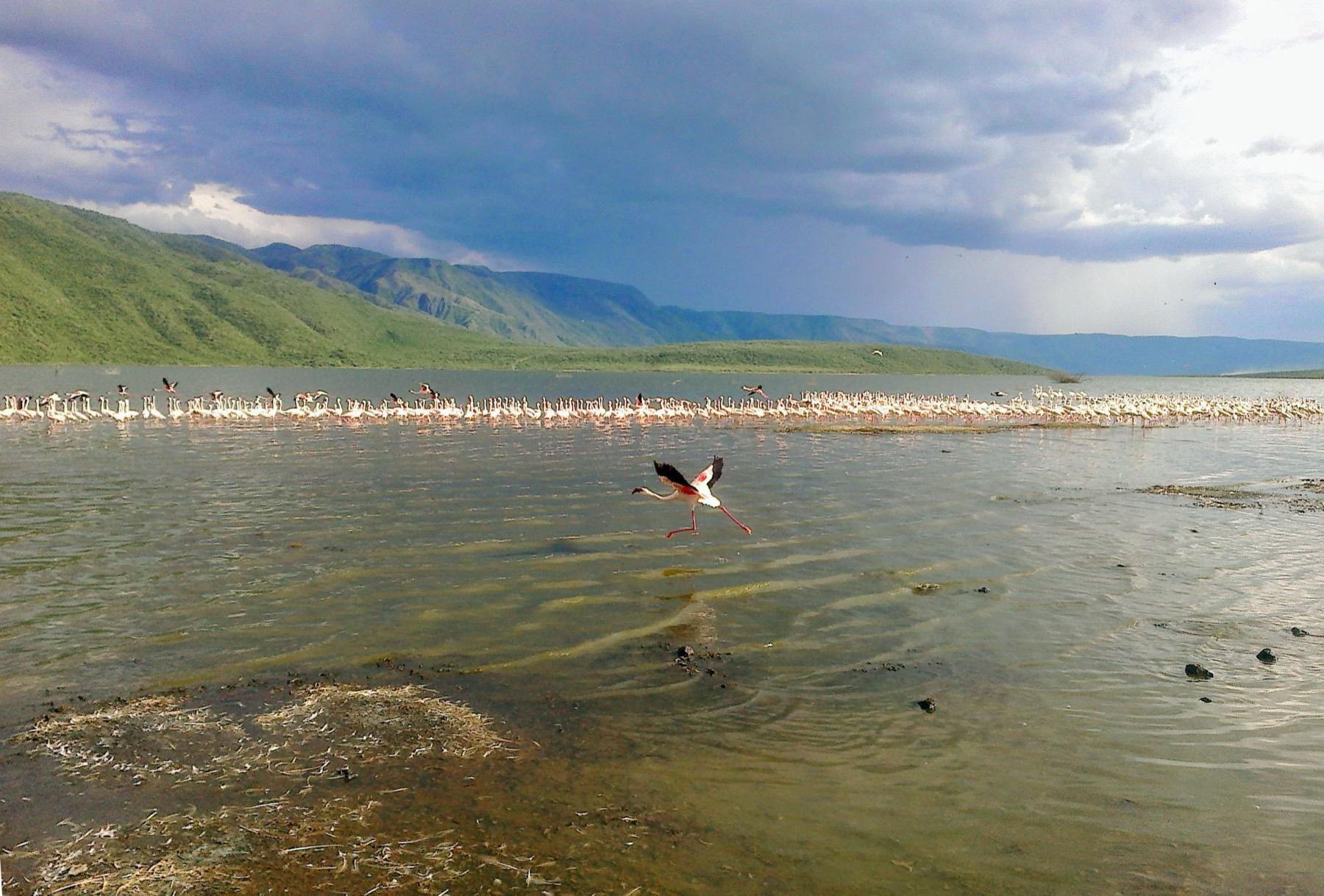
The lake's warm, salty water grows the blue-green algae that lesser flamingos eat, and at times hundreds of thousands gather here. Numbers rise and fall with water levels and with conditions on the other Rift Valley lakes, and the flocks move between Bogoria, Nakuru and other lakes from month to month. Some visits find the shore pink; others find only a few birds.
- Lesser flamingos, with smaller numbers of greater flamingos, in numbers that change by season and year
- Greater kudu, the males with long spiral horns, in the acacia woodland at the lake's southern end
- Zebra, impala, Grant's gazelle and dik-dik in the dry bush
- Birds of the dry country and woodland, with waders along the shore
When to visit
Bogoria is hot and dry for most of the year, and you can visit in any month. Flamingo numbers are impossible to predict far ahead, so we check recent reports before we plan a trip around them. Early morning and late afternoon bring the best light for photographs and a break from the midday heat, which is strong.
Bogoria shows how varied Kenya is. In a single week you can watch geysers in the morning, look for rhinos at Lake Nakuru the next day and stand above the Kerio Valley where Kenya's champion runners train.
Getting there and combining it
- From Nairobi: about 250 to 280 kilometers, roughly four to five hours via Nakuru and Marigat
- From Lake Nakuru: about two hours
- From Lake Baringo: under an hour
- The northern Loboi Gate is the usual entry, a short drive from the hot springs
One night nearby, or a long day from a base at Lake Baringo, is enough for most travelers. A Rift Valley route can run from Naivasha to Nakuru, Bogoria and Baringo, then climb the escarpment to Iten and the Kerio Valley, or continue west to Kakamega Forest. Lake Baringo, a freshwater lake just to the north, adds boat rides past hippos and crocodiles and some of the best birding in the Rift.
Traveling responsibly
Reserve fees are set by Baringo County and can change, so check before you travel. The Endorois community has deep ties to the lake and its springs, which hold cultural and spiritual meaning. Hire guides and buy crafts locally, ask before taking photos of people, keep well back from feeding flamingos, and leave the springs as you found them.
Plan your Rift Valley route with Kenya Experience. We are Kenyan-led, with two U.S. companies behind us, and you travel with Kenyan guides who know the Rift Valley. Pay in full or monthly with no deposit, and a specialist replies within two business days.