Parks and reserves. Updated November 2026. 3 min read.
Kisite-Mpunguti Marine Park and Reserve, off Shimoni on Kenya's far south coast, is one of the best places in the country to see wild dolphins and to snorkel over healthy coral. Day trips leave Shimoni by boat, stop at the reef and usually end with lunch on Wasini Island. From Diani it is about an hour to an hour and a half by road.
What it is, and who runs it
Kenya Wildlife Service manages the area, gazetted in 1978 in Kwale County near the border with Tanzania. It has two parts. Kisite Marine National Park, about 28 square kilometers around Kisite Island, is fully closed to fishing. Mpunguti Marine National Reserve, about 11 square kilometers around the Mpunguti islands, allows local fishermen to use traditional methods. Kisite-Mpunguti was the first Blue Park in Kenya, an international award for well-protected marine areas, and Kisite Island is an important nesting site for seabirds.
Dolphins, whales and the reef
- Indo-Pacific bottlenose dolphins, seen on many trips through the year, with humpback and spinner dolphins at times
- Humpback whales, usually passing between about July and October
- Hard and soft corals, with parrotfish, groupers, triggerfish and moray eels
- Green and hawksbill turtles over the reef
- Whale sharks, reported occasionally in some seasons
The sea is usually calmest and clearest from about October to March. The southeast monsoon, the kusi, can make crossings choppy from about June to September, though that is also whale season. Dolphins are wild and move freely, so sightings are likely on many days but never certain.
Snorkeling is from the boat over the reef inside the national park, usually for an hour or so, with masks and fins supplied by most operators. Strong swimmers can explore the deeper coral heads, while nervous swimmers can float in a life vest with the crew close by. Children who swim confidently usually love it.
Wasini Island and the Shimoni caves
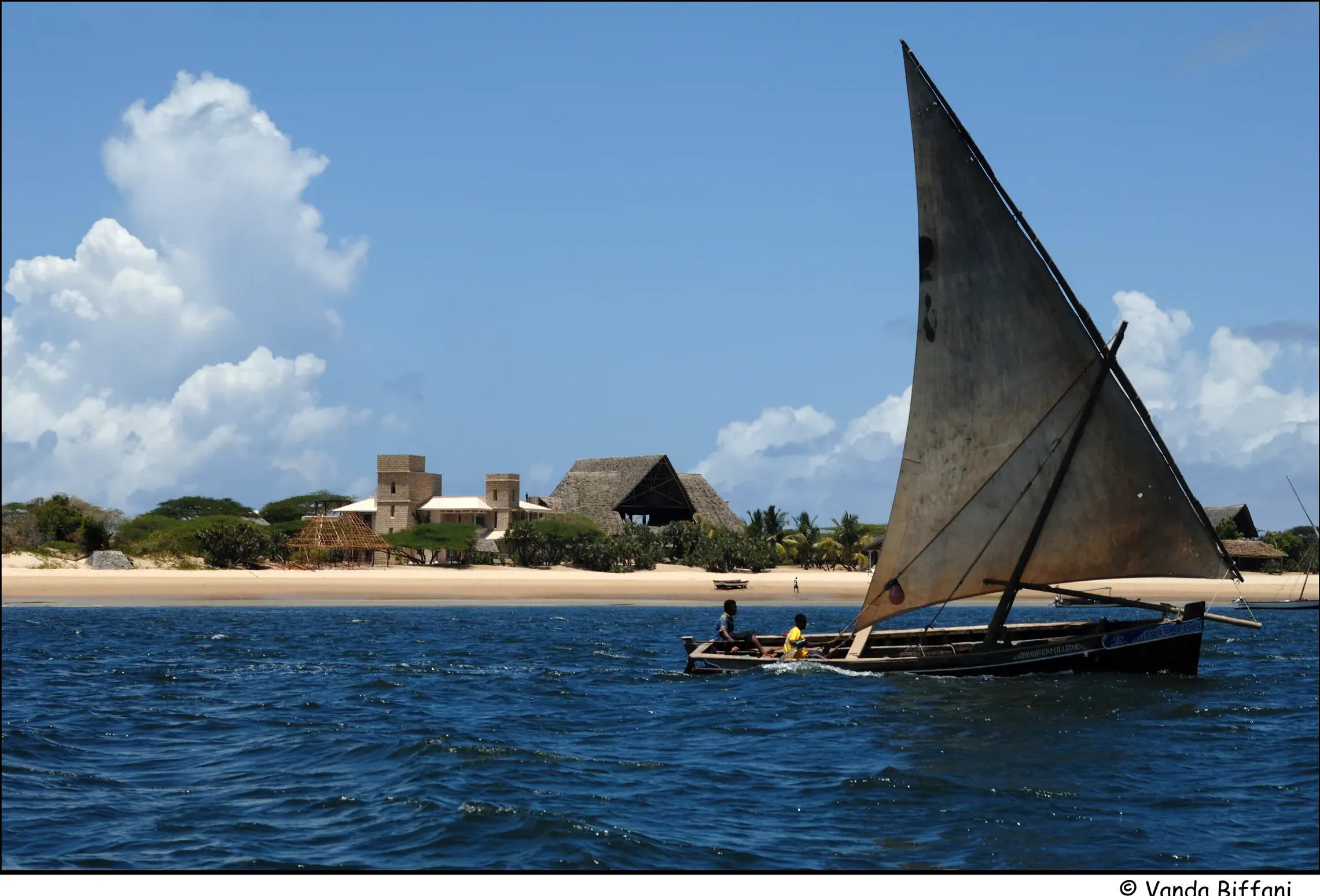
Wasini is a small island with a Swahili fishing village and no cars. A community boardwalk leads over the coral flats, and village restaurants serve seafood lunches, often with crab. On the mainland, the Shimoni caves are a network of coral caves that local history ties to the nineteenth-century East African slave trade. A guided visit is a sobering stop for anyone tracing the coast's history. Days here run on tide and wind, so your crew may change the order of the stops to give you the calmest water.
Getting there and how long to stay
- From Diani: about 55 kilometers to Shimoni, roughly an hour to an hour and a half by road
- From Mombasa: usually two hours or more by road, depending on the route across the water
- By air: fly from Nairobi to Ukunda, the airstrip for Diani, in about an hour
- By boat: most trips leave Shimoni jetty in the morning on a dhow or motorboat
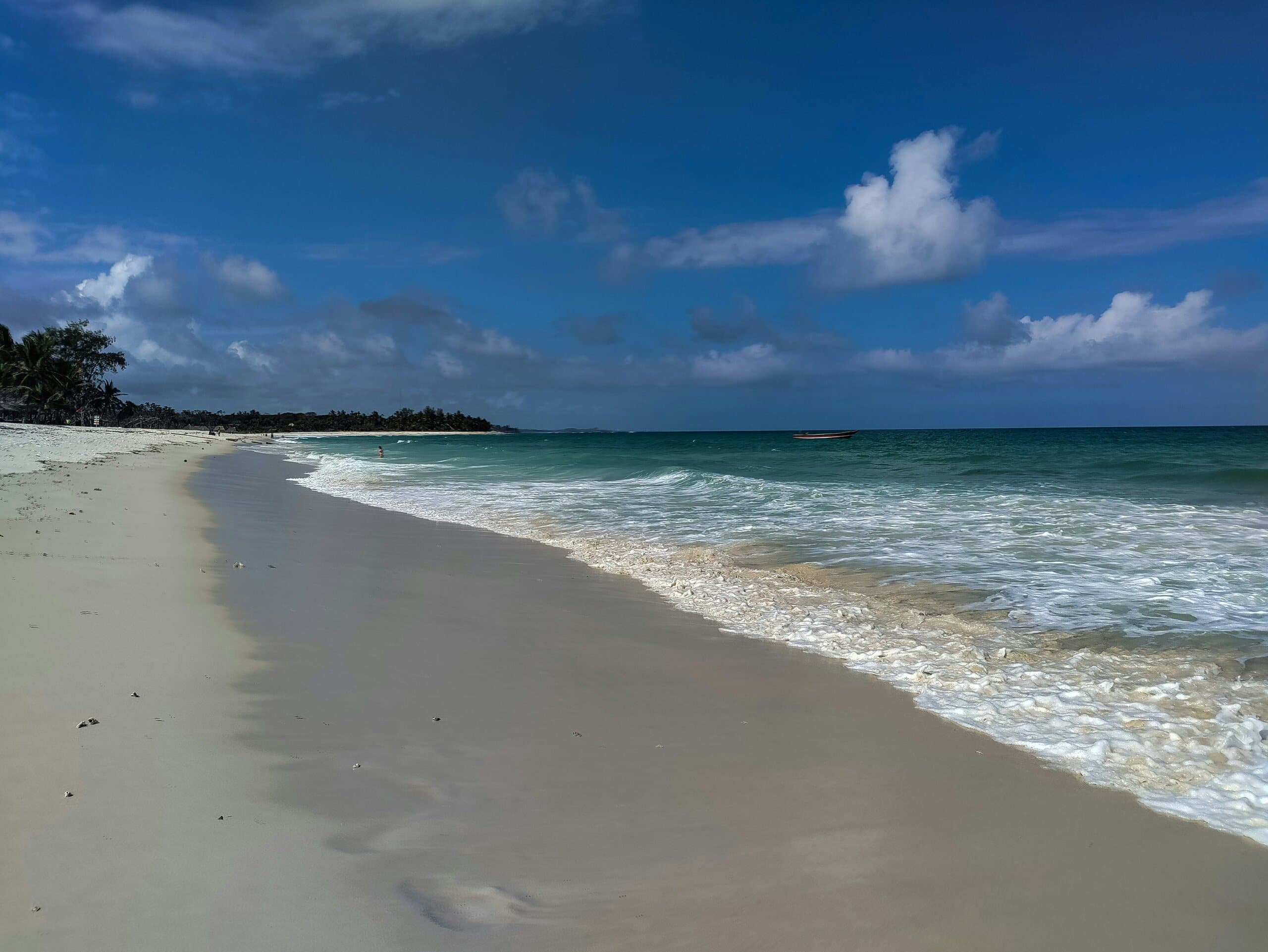
Kisite is a full day out from Diani or another south coast hotel. Many travelers stay on the coast for four to seven nights and give one day to Kisite and another to the forest and elephants of Shimba Hills. Getting to Kenya is simple: you apply for the eTA online, and Kenya Airways flies nonstop from New York to Nairobi.
Traveling responsibly
Park fees are set by Kenya Wildlife Service and change from time to time; choose a licensed operator who includes them. Ask how the crew approaches dolphins. Good operators slow down, stay to the side and let the animals choose to come close, and they never chase or surround a pod. Do not touch the coral, wear reef-safe sunscreen and keep plastic off the boat. Buying lunch and crafts on Wasini supports the island's families.
Kenya is one of the few countries where a week can hold the Big Five and wild dolphins. Kenya Experience is Kenyan-led and works with Kenyan guides, with two U.S. companies behind us. Pay in full or monthly with no deposit, and a specialist replies within two business days.