Wildlife. Updated November 2026. 3 min read.
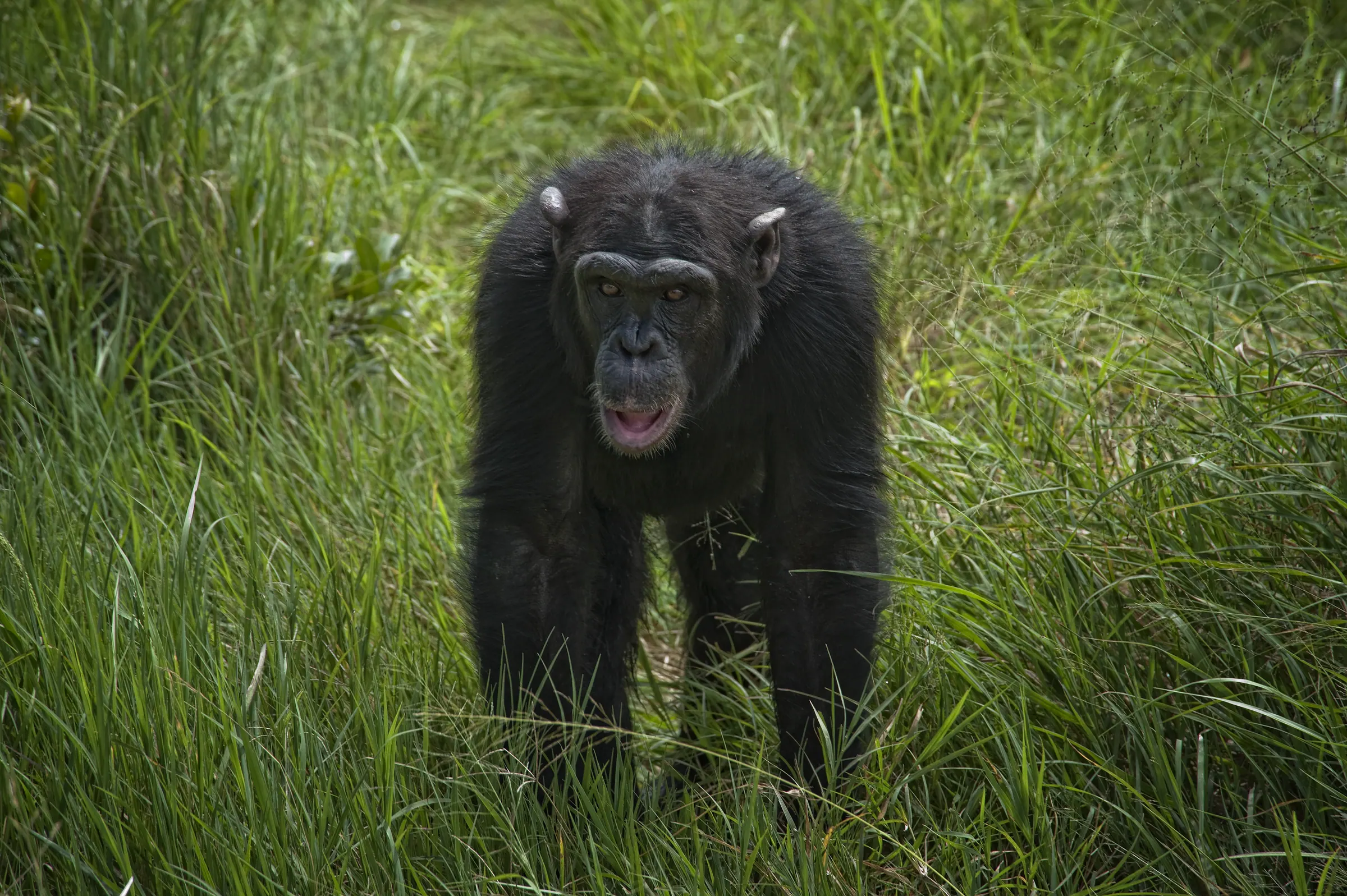
The only place to see chimpanzees in Kenya is the Sweetwaters Chimpanzee Sanctuary at Ol Pejeta Conservancy in Laikipia. Chimps are not native to Kenya: Sweetwaters gives a lifelong home to chimpanzees rescued from the illegal pet and bushmeat trades in West and Central Africa. It is a story of Kenya opening its doors to animals in trouble, and a visit fits easily into a rhino safari at Ol Pejeta, home to the last two northern white rhinos on Earth.
Why there are chimps in Kenya
In 1993 a chimpanzee rescue center in Burundi had to close when civil war broke out. Ol Pejeta opened its doors, under an agreement with Kenya Wildlife Service and the Jane Goodall Institute, and Sweetwaters began. Since then it has kept taking in chimps confiscated from traffickers, taken from the bushmeat trade or kept in cramped conditions by private owners. Ol Pejeta says the sanctuary now cares for 35 chimpanzees.
What a visit is like
The chimps live in two groups in large natural enclosures on either side of the Ewaso Nyiro River, with space to climb, forage and socialize. New arrivals start in a quarantine enclosure with round-the-clock veterinary care, the chimps have set feeding times and they sleep indoors at night. You watch from outside the enclosures, so what you see depends on where the chimps choose to be. Chimps are active by day and often rest in the midday heat, so a morning visit tends to be livelier.
Ol Pejeta lies on the equator near Nanyuki, about three to four hours' drive north of Nairobi, or a short flight to Nanyuki. Most visitors spend two or three nights on the conservancy and combine the chimps with game drives for black rhinos, elephants and lions, with Mount Kenya on the skyline on clear mornings.
The sanctuary closed to visitors for about three years during the COVID-19 pandemic and reopened in March 2024. Opening hours and visit formats can change, so we confirm the details with Ol Pejeta when we book.
Behavior worth knowing
- Chimps are our closest living relatives and live in complex social groups with clear hierarchies.
- Many residents arrived traumatized. Learning to live in a group, groom and forage is part of their recovery.
- Watch for grooming, which builds friendships, and for displays where a male charges, stamps or throws things to show status.
- In the wild, chimps use tools, from sticks for fishing termites out of mounds to stones for cracking nuts.
- Chimps can live for decades, so a rescue is a lifelong commitment.
Conservation status
Chimpanzees are listed as Endangered on the IUCN Red List. Wild populations in West and Central Africa face habitat loss, hunting for bushmeat and the capture of infants for the pet and entertainment trade, which usually means killing the mother. Rescued chimps cannot safely be returned to the wild, so sanctuaries like Sweetwaters care for them for the rest of their long lives. Wild chimpanzees in East Africa live in western Uganda and western Tanzania.
Visiting responsibly
- Stay behind the barriers and never offer food.
- Keep your voice down and avoid imitating chimp calls or gestures, which can upset them.
- If you have a cold, cough or fever, skip the visit; chimps can catch human illnesses.
- Avoid any place in Africa that offers touching, holding or selfies with apes. Demand for those experiences fuels the trade that brought these chimps here.
Photography tip: bring a lens of at least 200mm, since the chimps may be some distance away, and focus on faces and hands. Where you shoot through a fence, put the lens close to the wire so it blurs out of the frame. Never use flash.
Kenya Experience is Kenyan-led, with two U.S. companies behind it. We combine Sweetwaters with Ol Pejeta's rhinos and the rest of your trip, with Kenyan guides; pay in full or monthly with no deposit, and a specialist replies within two business days.