Wildlife. Updated November 2026. 5 min read.
Ask a Kenyan walking guide which animal worries them most on foot, and the answer is rarely the lion. It is the buffalo, nyati in Kiswahili, and above all the old bull resting alone in a thicket by the river. From a safari vehicle, buffalo are among the easiest of the Big Five to find. On foot, they are the animal that sets the rules.
The short answer to where: almost every big savanna and mountain forest park in Kenya has buffalo. For the biggest herds, go to the Maasai Mara or Tsavo. For close, reliable sightings in a small park, go to Lake Nakuru. For buffalo at night, stay at one of the Aberdare lodges that overlook floodlit waterholes. You can see them in any month, and the dry seasons, roughly June to October and January to March, pull herds to rivers and swamps where they are easiest to watch.
Where to see buffalo in Kenya
| Park | Why go | Good to know |
|---|---|---|
| Maasai Mara | Herds of hundreds on the plains and along the Mara and Talek rivers; lone bulls in the croton thickets | Mara lions hunt buffalo, so this is where you may see the two together |
| Lake Nakuru | A dense population in a small fenced park, often grazing near the lake shore | Easy to combine with rhinos and flamingos in a day |
| Aberdare | Buffalo at waterholes and salt licks below the lodges, lit after dark | Mountain forest at altitude; nights are cold |
| Tsavo East and West | Big herds in dry country, often red with dust | Look near rivers and springs in the dry months |
| Amboseli | Bulls and herds belly-deep in the swamps below Kilimanjaro | Pairs well with the elephant herds |
| Ol Pejeta, Lewa and Meru | Buffalo alongside rhinos, in places that offer walks with armed rangers | Good for seeing all of the Big Five in one area |
Nairobi National Park has buffalo within sight of the city, and hikers meet them in the lower forest on Mount Kenya, where the national park rules on guides and rangers exist for a reason.
What you are looking at
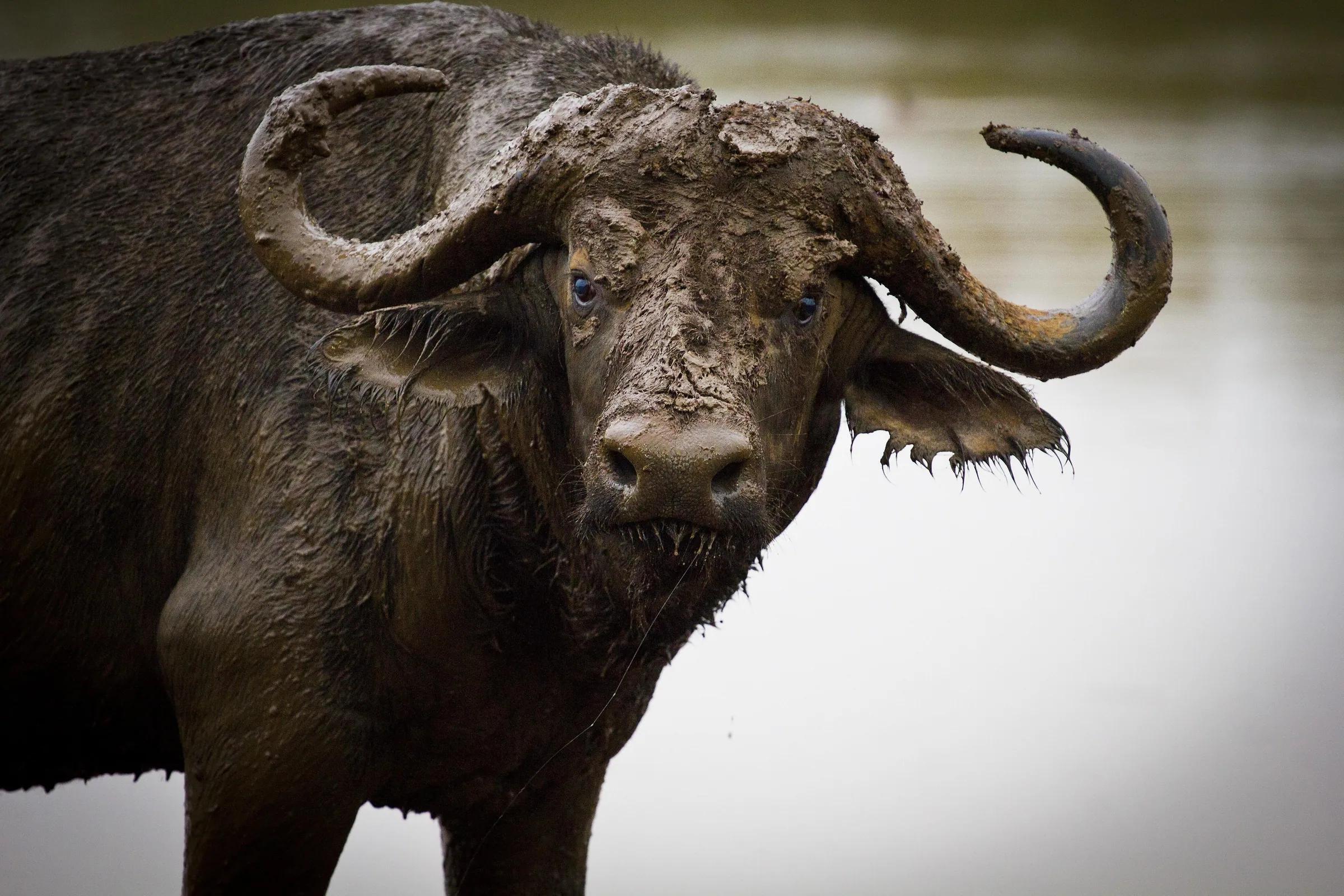
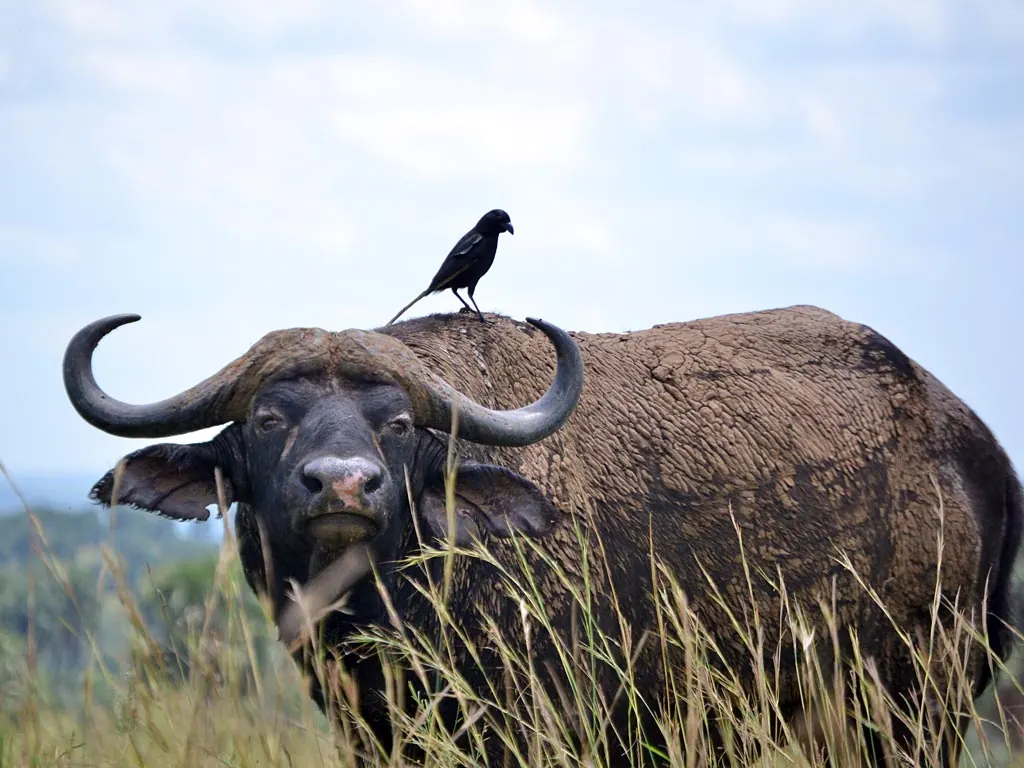
The African buffalo of the savanna, usually called the Cape buffalo, is a heavy, black-gray wild cow. A big bull can weigh somewhere around 500 to 900 kilograms; cows are smaller and browner. Both sexes carry horns, but in a mature bull the horn bases meet across the forehead in a thick shield called the boss. It takes years to harden, and guides use it to age a bull at a glance: a soft, hairy boss belongs to a young male, a hard, cracked one to an old campaigner. Buffalo have a very good sense of smell, which is why walking guides always check the wind first.
Behavior to watch for
- Dagga boys: older bulls that leave the breeding herd and live alone or in small bachelor groups near water, caked in mud. Dagga is a southern African word for mud. These are the buffalo you are most likely to meet on foot.
- The stare: a buffalo that lifts its nose, faces you and holds still is assessing you. When a whole herd turns as one to stare, your guide will usually ease back.
- Oxpeckers: red-billed and yellow-billed oxpeckers ride buffalo and pick off ticks. They also peck at wounds and drink blood, so the partnership is less friendly than it looks. Cattle egrets walk at the herd's feet catching insects it flushes.
- Mobbing: when lions grab a calf, the herd sometimes turns and charges. Buffalo drive lions off kills and occasionally kill them.
- Wallowing: buffalo roll in mud to cool down and to coat their skin against biting insects.
- Group decisions: researchers have described resting females standing, gazing one way and lying down again, with the herd later moving in the direction most of them faced, a kind of vote.
Three things most people do not know
First, despite looking like cattle, the African buffalo has never been domesticated. It is too strong and too short-tempered, and herders across Kenya give it a wide berth. Second, the rinderpest epidemic of the 1890s, a cattle disease that swept through Africa with imported livestock, killed a huge share of East Africa's buffalo and wildebeest and devastated Maasai herds too. Buffalo numbers recovered over the following decades. Third, the buffalo earned its place in the Big Five honestly: hunters feared a wounded buffalo for its habit of circling into cover. Kenya banned sport hunting in 1977, and today that respect belongs to the guides who walk among them.
On foot near buffalo
Walking safaris in the Laikipia and Mara conservancies, at Ol Pejeta and in the Aberdares put you on the same ground as buffalo, always with a trained guide and, where required, an armed ranger. Walk in single file, keep quiet, never run, and do exactly what the guide says. Lodge paths in buffalo country are walked with an escort after dark; buffalo graze lodge lawns and camp edges at night more often than guests imagine. If you are hiking on Mount Kenya, the forest belt below the moorland is buffalo habitat, so stay with your guide and do not wander off the trail.
How to photograph buffalo
Shoot from a low window rather than the roof hatch, so a bull looks as heavy and level-eyed as he does in person. A zoom around 100 to 400 mm covers both a herd on the plain and a head-and-horns portrait. Focus on the eyes and wait for the stare, or for an oxpecker to land on the boss. Late afternoon light behind a moving herd lights up the dust. At an Aberdare waterhole after dark, raise your ISO, brace the camera on the window ledge and never use flash.
Conservation status
The IUCN Red List moved the African buffalo to Near Threatened in its latest assessment, because numbers are falling outside protected areas. The pressures are loss of grazing land, snaring for bushmeat, drought and disease shared with livestock. In Kenya most buffalo live inside national parks, reserves and conservancies, and the Kenya Wildlife Service and the Wildlife Research and Training Institute count them in national surveys. Check the Red List for the current status; your park and conservancy fees help pay for the rangers who protect the herds.
Trips where you will see buffalo
Almost every safari we plan includes buffalo. A Mara and Lake Nakuru combination gives you big herds and close views in five to seven days, and adding Ol Pejeta or the Aberdares brings walks and night waterholes. If buffalo are part of a Big Five goal, our Big Five page explains how the five fit together on one route.