Wildlife. Updated November 2026. 3 min read.
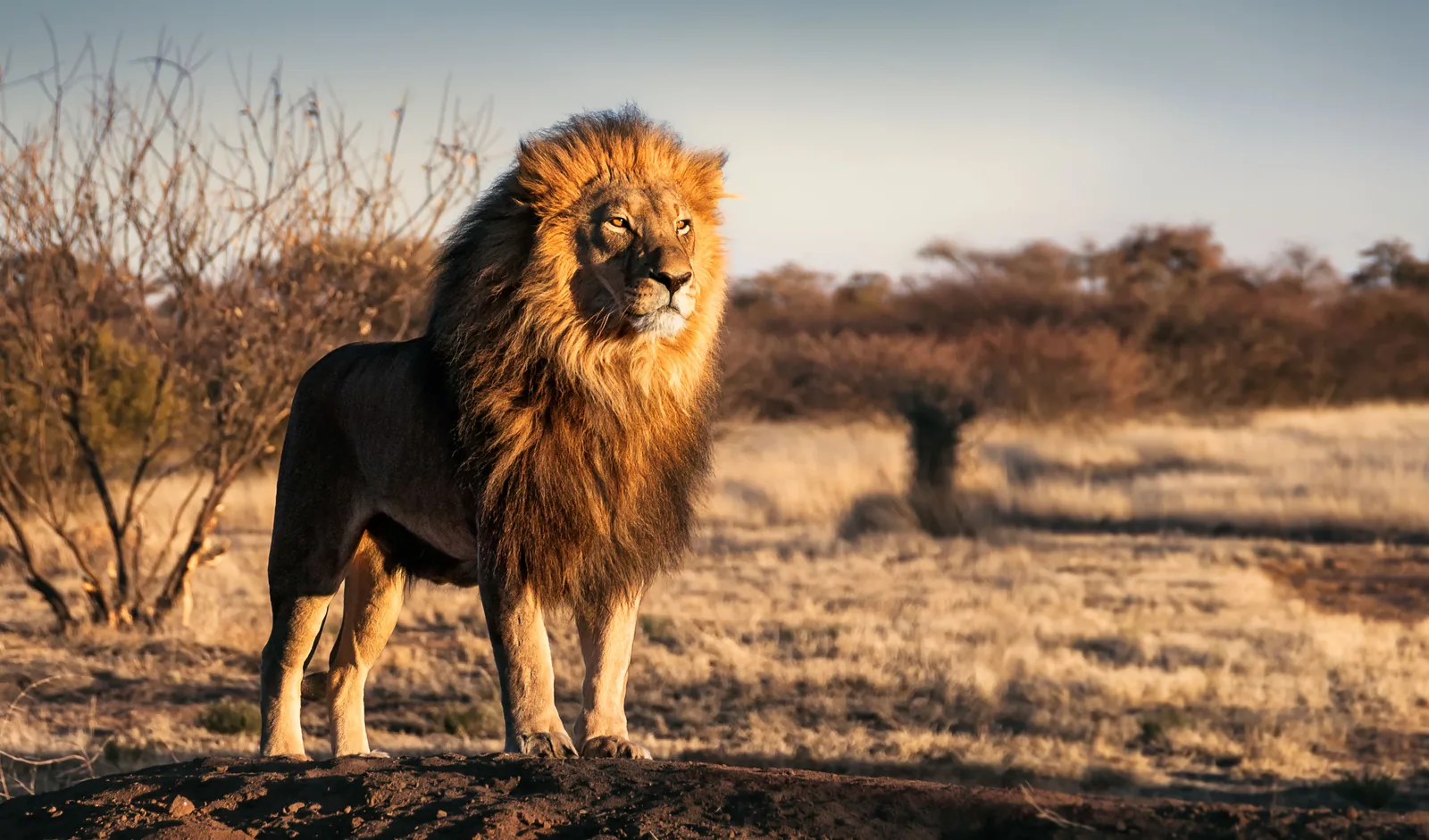
Few places on Earth let you watch wild lions as easily as Kenya. The Maasai Mara and the community conservancies around it are the best place, with large, well-studied prides on open plains, and Amboseli, Tsavo, Laikipia and Nairobi National Park, where lions hunt within sight of a capital city's skyline, all have lions too. Your best chance anywhere is early morning, when prides are still active after the night.
The best parks for lions
- Maasai Mara National Reserve: big prides in open country, easy to see from the vehicle in most months
- Mara conservancies such as Mara North, Naboisho and Olare Motorogi: fewer vehicles at each sighting, with walks and night drives
- Amboseli National Park: lions around the swamps and the open lake bed, where Maasai communities work with conservation groups to reduce conflict
- Tsavo East and Tsavo West: wild, thinly visited country, home to the maneless lions of Tsavo, where many males have short manes or none at all
- Nairobi National Park: lions with the city skyline behind them, a short drive from the airport
- Ol Pejeta and other Laikipia conservancies: lions alongside rhinos, with night drives
When to go, and what time of day
Lions are in these parks all year. The dry seasons, usually June to October and January to March, make them easier to find because the grass is short and prey gathers near water. From about July to October the Great Migration brings huge herds to the Mara, and the prides there eat well. In the green seasons the grass grows tall and lions can be harder to spot, though there are fewer vehicles.
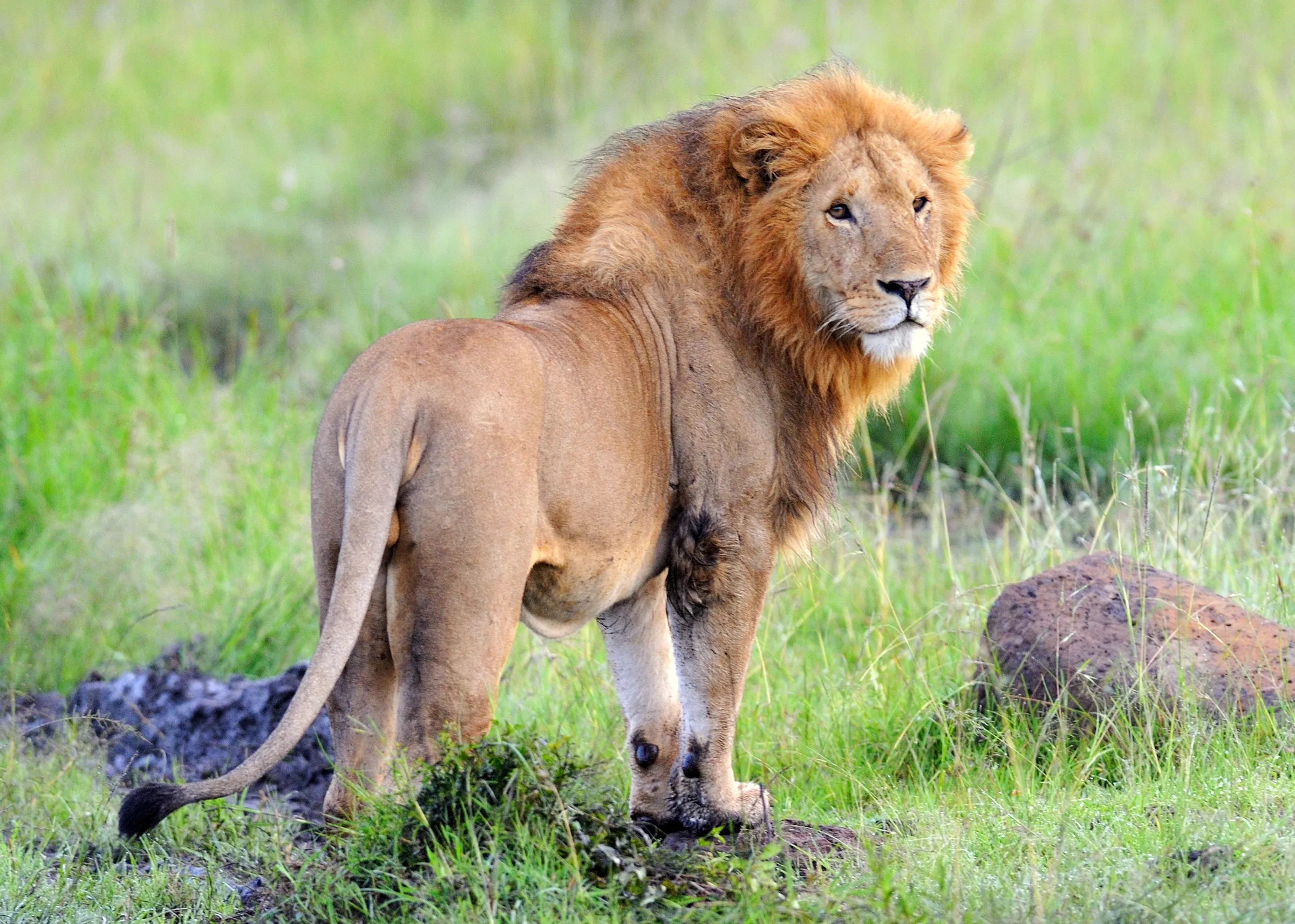
Lions rest for most of the day, often for 18 hours or more. They hunt mostly at night and around dawn and dusk. Leave camp at first light to find them still on the move, perhaps on a fresh kill, and go out again in the late afternoon when they start to stir. At midday, look for tawny shapes in the shade of bushes and trees.
How guides find lions
- Fresh tracks on dirt roads at dawn, before other vehicles drive over them
- Roaring at night: a lion's roar carries for miles, and guides note the direction before breakfast
- Vultures circling or sitting in a tree, a sign of a kill nearby
- Zebra, wildebeest and gazelle all standing still and staring the same way
- Termite mounds and rocky outcrops, which lions use as lookouts
Lion behavior worth knowing
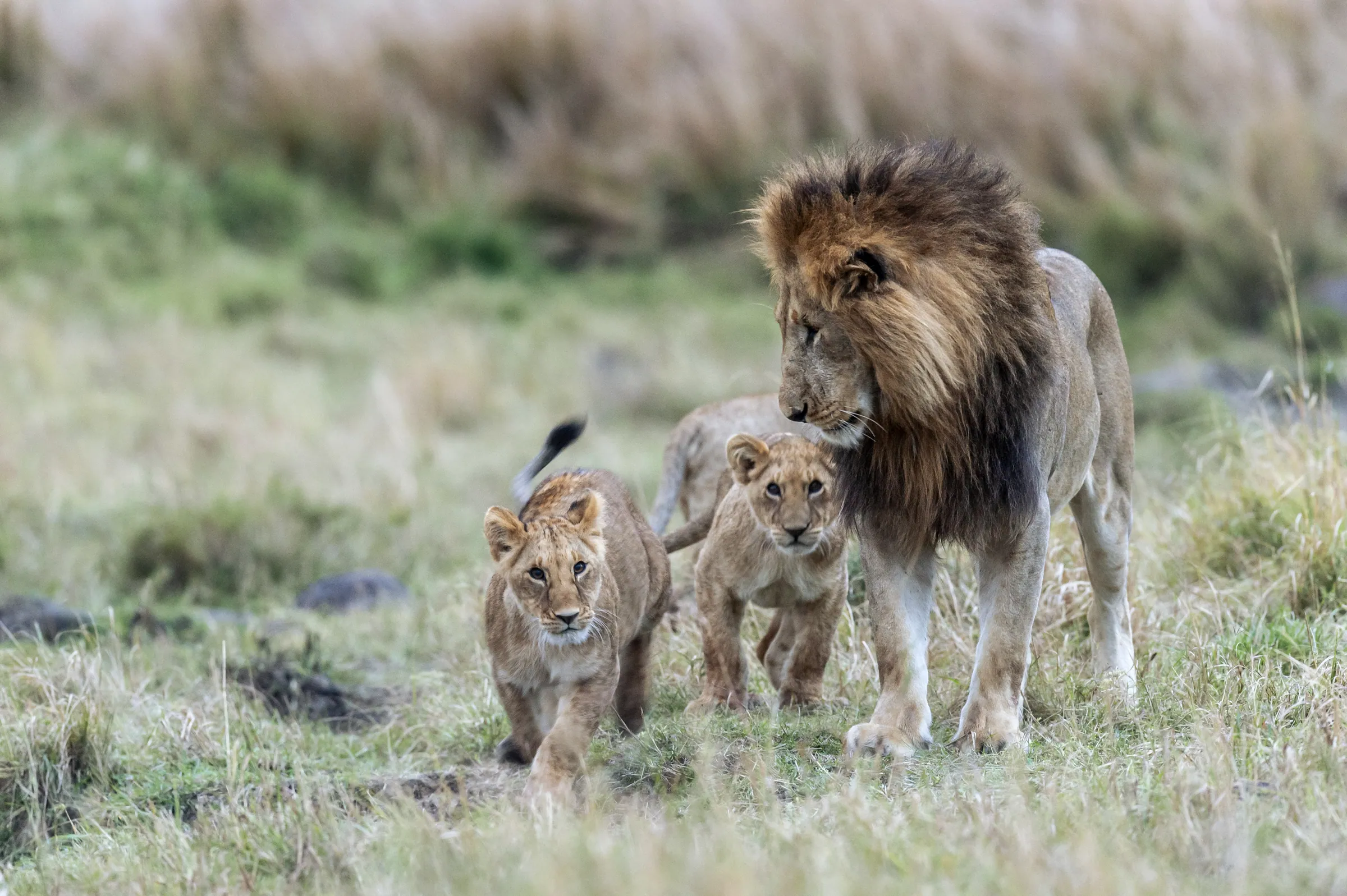
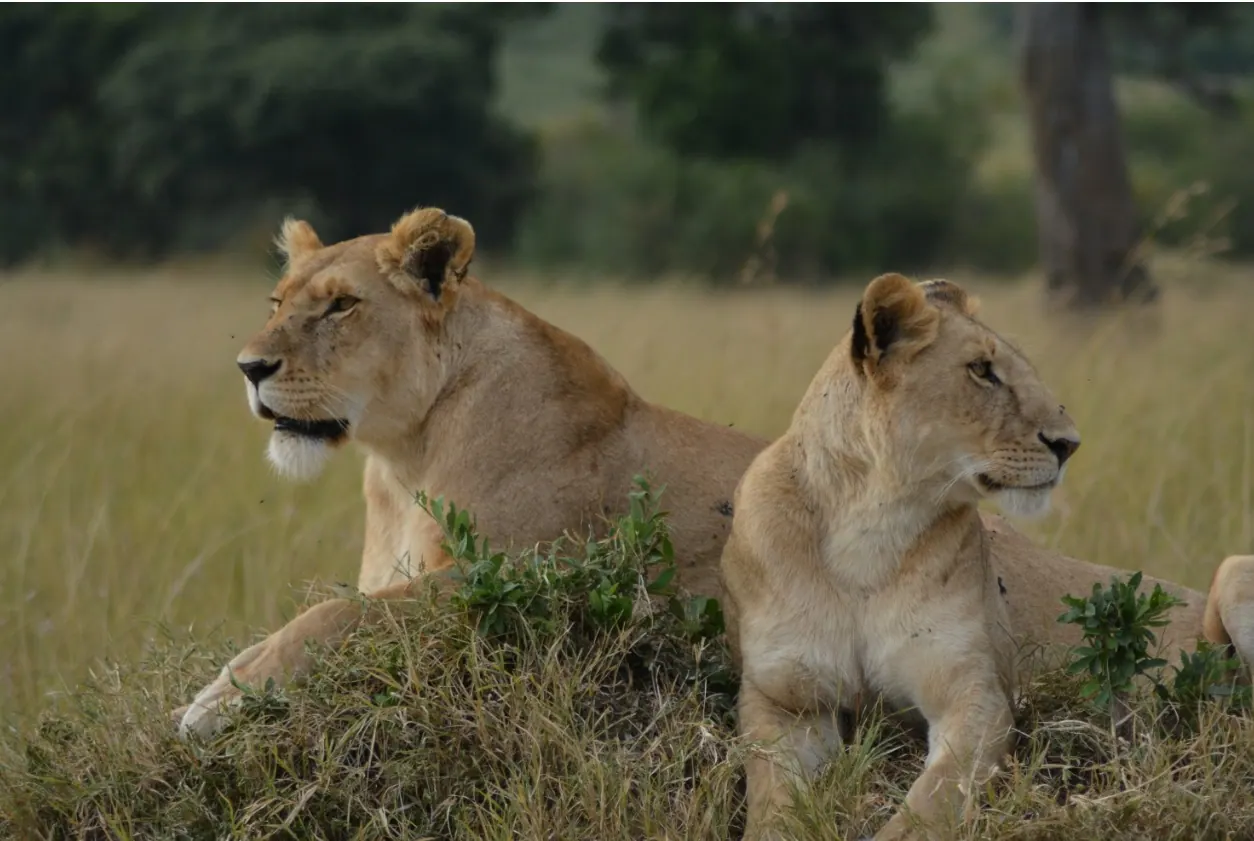
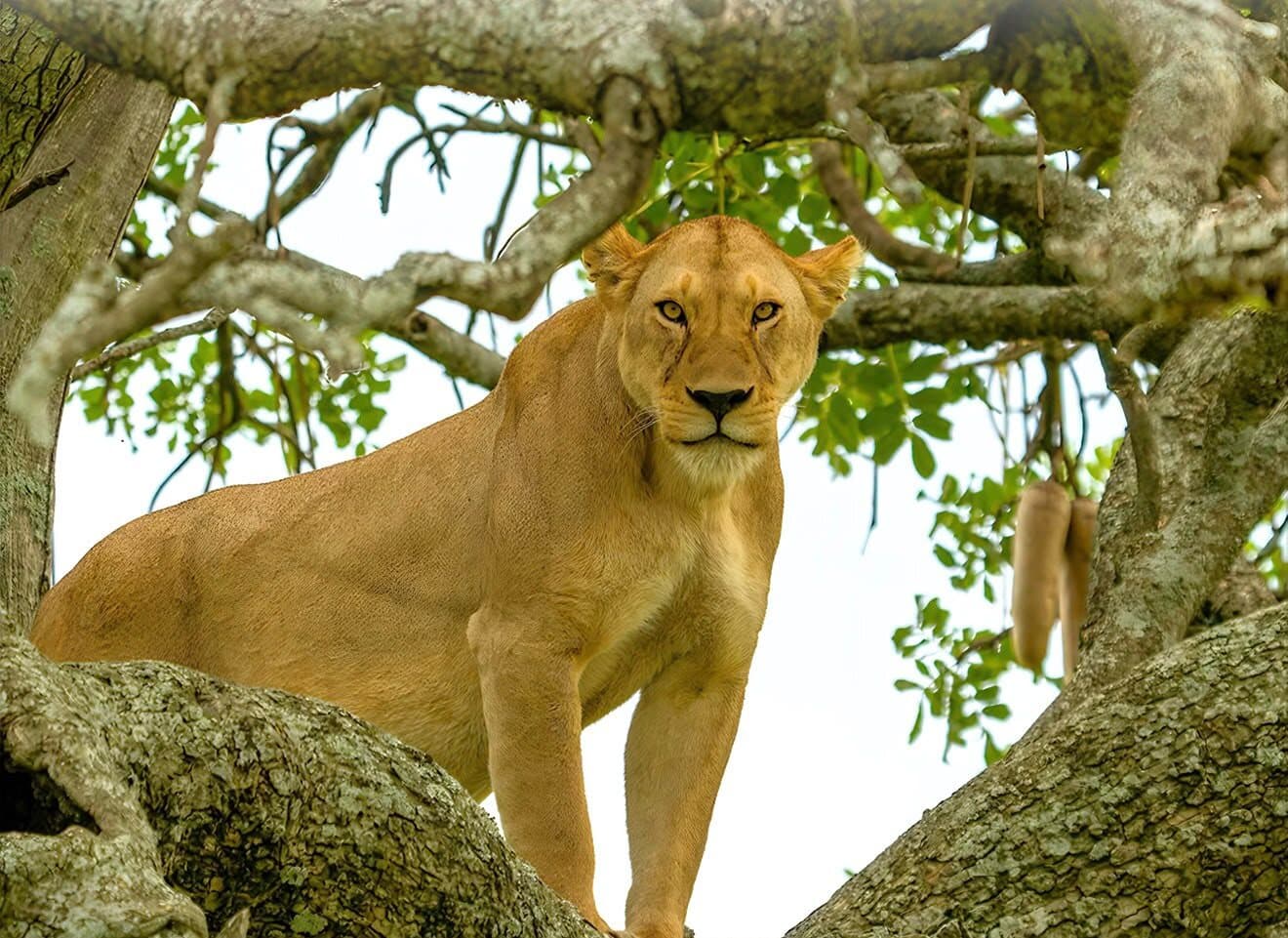
Lions are the only truly social cats. A pride is built around related females, who raise cubs together and do most of the hunting, often as a team. Males usually live in coalitions of two or more, often brothers, and defend the pride's territory against rival males. When a new coalition takes over, it may kill young cubs, which is one reason pride life can be tense. Lions climb trees now and then, to escape biting flies or catch a breeze. A lion lying flat with its tail twitching is alert; a lion that stands and stares at your vehicle is telling you it is close enough.
Lions in Kenya today
The IUCN lists the lion as Vulnerable. Kenya's 2025 national wildlife census estimated about 2,500 lions, slightly fewer than in 2021, with a fall in the Mara ecosystem. The main threats are the loss of open range to farms, fences and settlements, and conflict with herders when lions kill livestock, which can lead to spearing or poisoning. Programs that strengthen livestock enclosures, compensate herders and employ young Maasai as lion guardians have shown that people and lions can share the land. Your park and conservancy fees help pay for that work.
Watching lions ethically
- Keep your voice low and stay seated; lions see a vehicle as one shape, and a person standing up breaks it
- Never get between a lioness and her cubs, or between a hunting pride and its prey
- Follow the vehicle limits, such as the Mara Triangle's 10-minute rule when more than five vehicles are waiting
- Do not ask your guide to drive off-road where it is banned, or to chase a hunt
- No spotlights at night unless you are on a licensed night drive with a trained guide
Photography tip: shoot from a low window at the lion's eye level instead of from the roof. Be ready in the first hour after sunrise, when lions yawn, groom and greet each other, and set a fast shutter speed of about 1/1000 second for cubs at play.