Wildlife. Updated November 2026. 3 min read.
Kenya gives you some of Africa's best chances to see a leopard, the most secretive of the big cats, from the river forests of the Mara to the doum palms of Samburu. The best places are the Maasai Mara and its conservancies, Samburu and Buffalo Springs reserves, Lake Nakuru National Park and the Laikipia conservancies that offer night drives. Leopards are shy and mostly nocturnal, so plan at least three days in good leopard country and go out at dawn and dusk.
The best parks for leopards
- Maasai Mara: the wooded banks of the Mara and Talek rivers and the rocky outcrops and gullies that cut across the plains
- Mara conservancies: off-road driving where allowed and night drives give you more chances than in the reserve
- Samburu and Buffalo Springs: the acacia and doum palms along the Ewaso Ng'iro river, where leopards are often seen in daylight
- Lake Nakuru National Park: the yellow fever tree woodland and the cliffs above the lake
- Laikipia conservancies, including Ol Pejeta: night drives in leopard country, and in 2019 a rare black leopard was photographed in Laikipia
- Tsavo West and Meru: rocky hills and riverine bush with leopards, though sightings take more patience
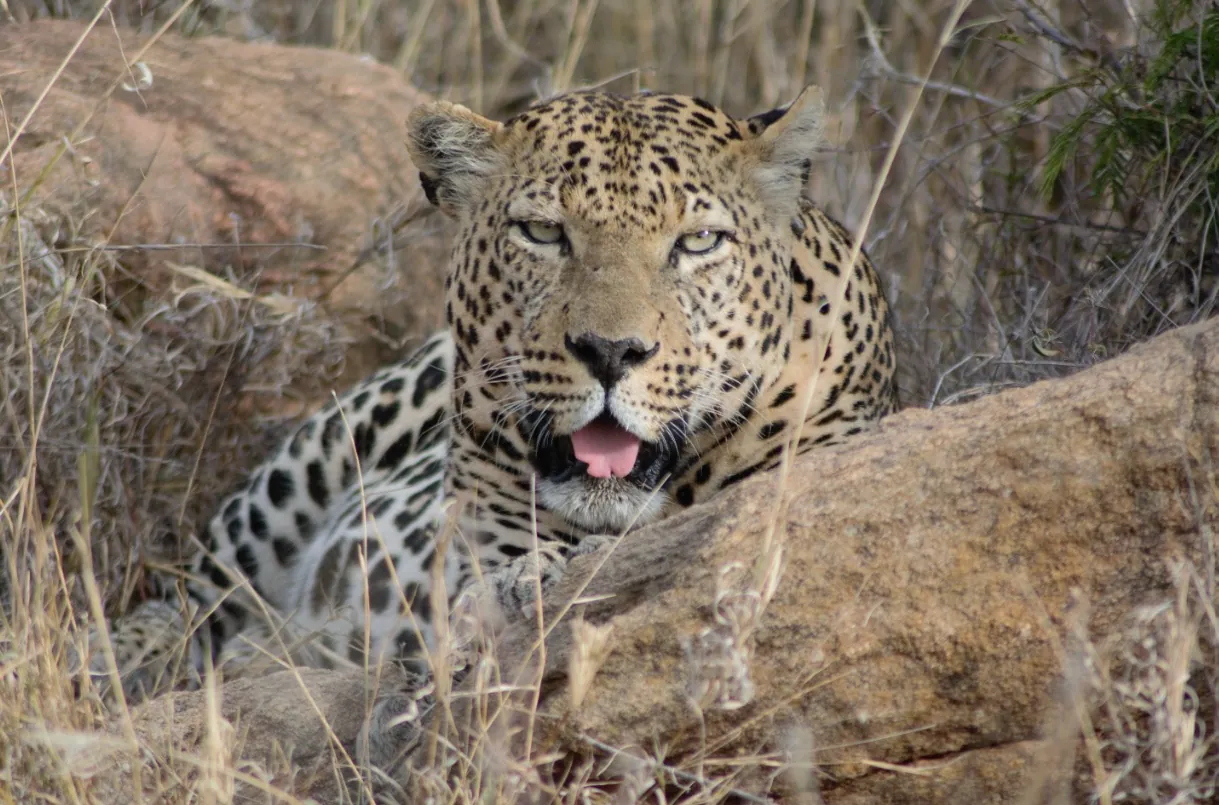
When to go, and what time of day
Leopards are present all year. The dry seasons, usually June to October and January to March, are best because the bush thins out and leopards stay close to water and prey. In the rains the grass grows tall and leaves fill the trees, so a resting leopard is easy to miss.
Leopards hunt mostly at night and are most visible in the first and last hours of daylight, when they move between resting spots. In the heat of the day they lie up in a tree, a thicket or a rocky crevice. If your camp offers a night drive, take it; it is the best way to see a leopard doing what leopards do.
How guides find leopards
- Alarm calls: the bark of a baboon, the snort of an impala or the chatter of vervet monkeys often means a leopard is near
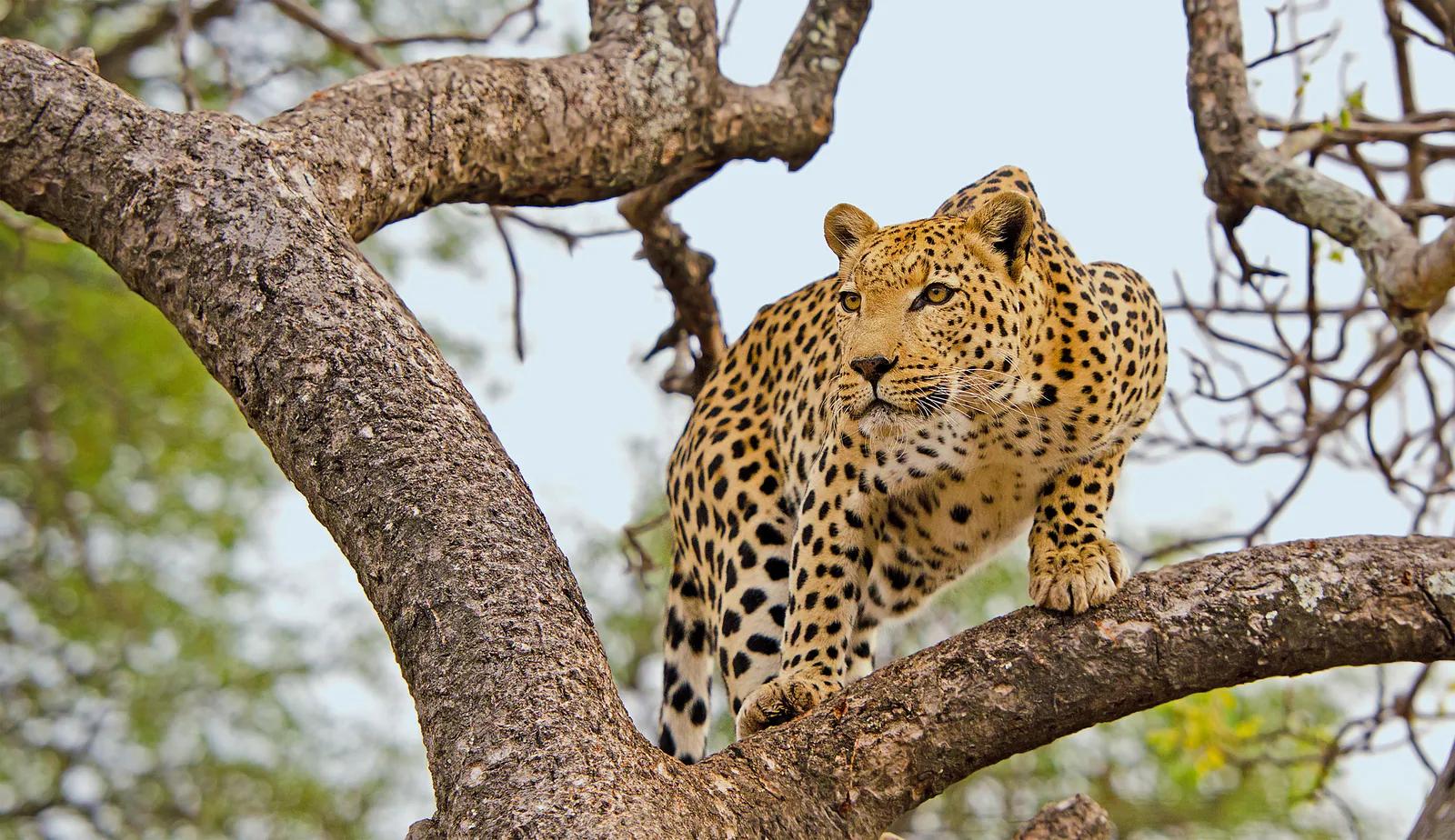
- Scanning big trees with horizontal branches, especially along rivers, for a hanging tail or a carcass in the fork
- Tracks and drag marks across a sandy road where a leopard has pulled a kill
- Local knowledge: many leopards keep home ranges for years, and guides know which trees and gullies each one uses
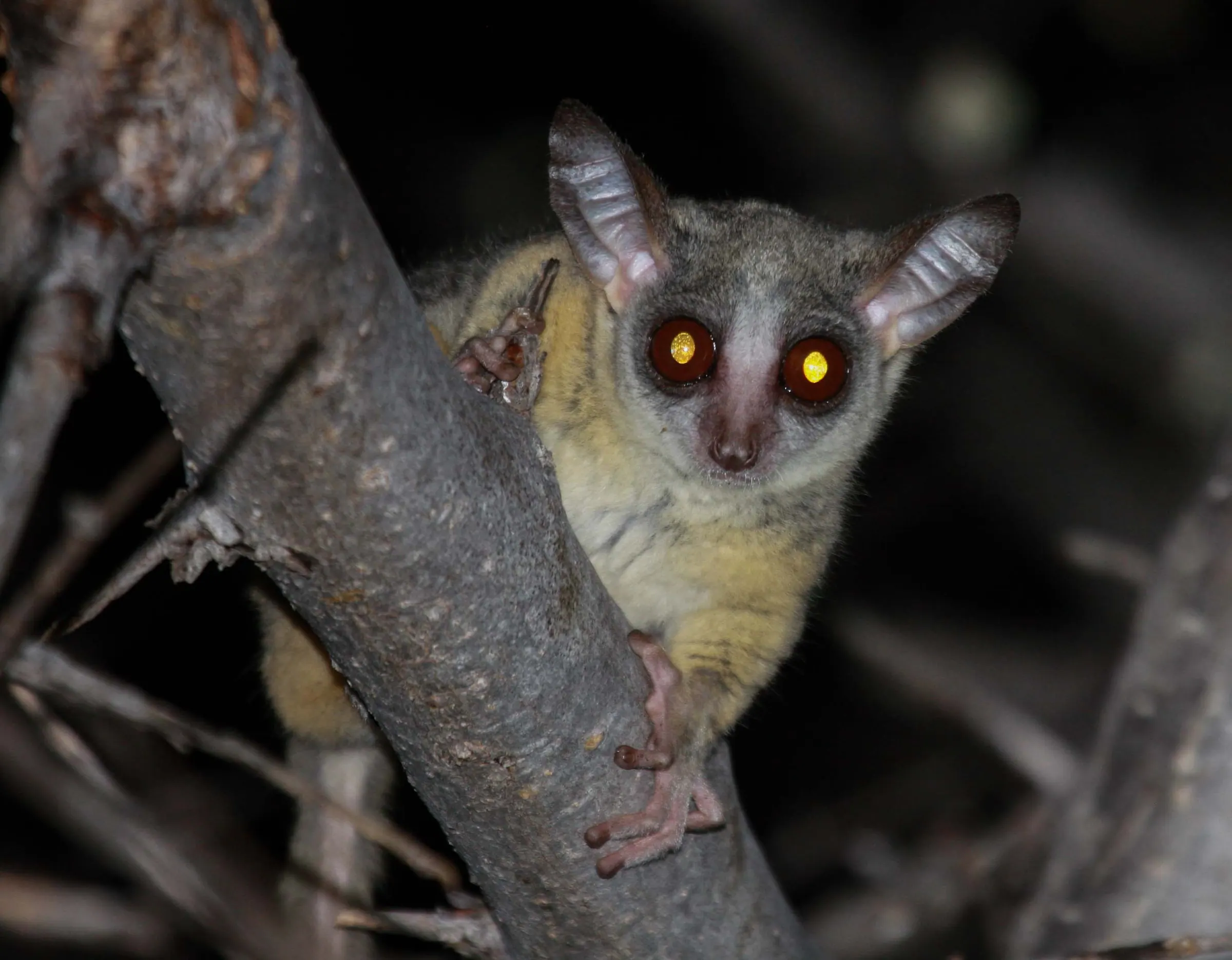
Leopard behavior worth knowing
Leopards live alone, except for a mother with cubs. They are the strongest climbers of the big cats and often haul a kill into a tree to keep it from lions and hyenas, then return to feed over several days. That is why a leopard on a kill can be the best sighting of a trip: it may stay in the same tree for a day or two. Females raise cubs on their own and hide them in dens among rocks or thickets for their first weeks. A leopard that flattens its ears, stares hard or starts to climb down because of your vehicle is under pressure, and it is time to move back.
Leopards in Kenya today
The IUCN lists the leopard as Vulnerable. Leopards are hard to count, and Kenya has no precise national figure. They adapt well and still live in forests, farmland and hills outside the parks, but that brings them into conflict with people when they take goats, sheep or calves. Habitat loss, snaring, retaliatory killing and the illegal trade in skins are the main threats. Conservancies that link community land with the reserves give leopards the space they need.
Watching leopards ethically
- Keep back from the tree; never park directly under a leopard or block the way down
- Turn off the engine when your guide says it is safe, and keep voices low
- Do not crowd a mother with cubs, and leave if she moves them
- On night drives, use only the guide's light, ideally with a red filter, and move the beam off the cat once you have seen it
- Accept that sometimes the right choice is to leave a leopard alone
Photography tip: a leopard in a tree against a bright sky fools your camera's meter. Use spot metering on the cat or add one to two stops of exposure compensation, and bring a long lens of 400 mm or more, because the best leopard trees are rarely next to the road.