Wildlife. Updated November 2026. 4 min read.
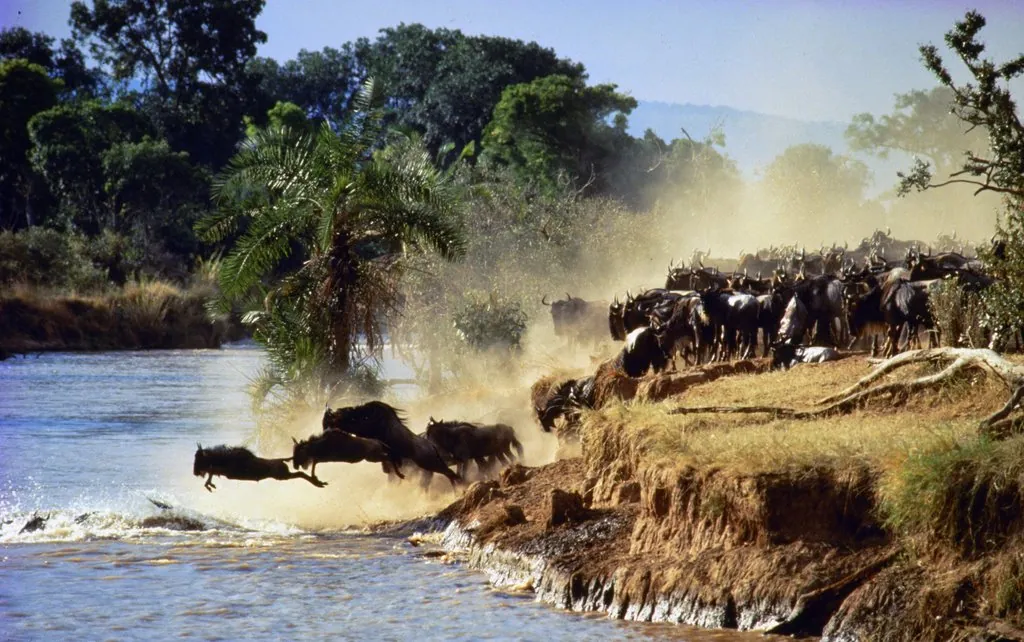
During the migration, every vehicle at a Mara River crossing faces the herds massing on the bank. Our guides keep one eye on the water, where a dark shape that was not there an hour ago is drifting slowly toward the landing point. Nile crocodiles, mamba in Kiswahili, have been waiting at those crossings far longer than anyone has been watching them.
Kenya's best crocodile country is the Mara River, where big adults gather at the crossing points from about July to October; Lake Turkana, home to one of the largest Nile crocodile populations in Africa; the Galana River in Tsavo East; and Lake Baringo. Our hippos page covers the rivers and lakes the two animals share. This page is about the crocodile itself: where to find the big ones, how they live, and how to stay safe near their water.
Where to see crocodiles
| Place | What you see | Best time |
|---|---|---|
| Mara River, Maasai Mara | Large crocodiles at the crossing points and basking on sandbanks | July to October for crossings; basking all year |
| Galana River, Tsavo East | Crocodiles in the pools below Lugard Falls and along the river | Dry months, when the river shrinks |
| Lake Turkana and Central Island | A huge population; Central Island's crater lakes are a breeding ground | An expedition trip; calm mornings for the boat |
| Lake Baringo | Crocodiles alongside hippos on early boat trips | Early morning |
| Tana and Ramisi rivers | Crocodiles in the coast's rivers and estuaries | With a local guide; not a standard stop |
| Mamba Village and Haller Park, Mombasa | Crocodiles at close range in captive settings | Check opening days and feeding times first |
What you are looking at
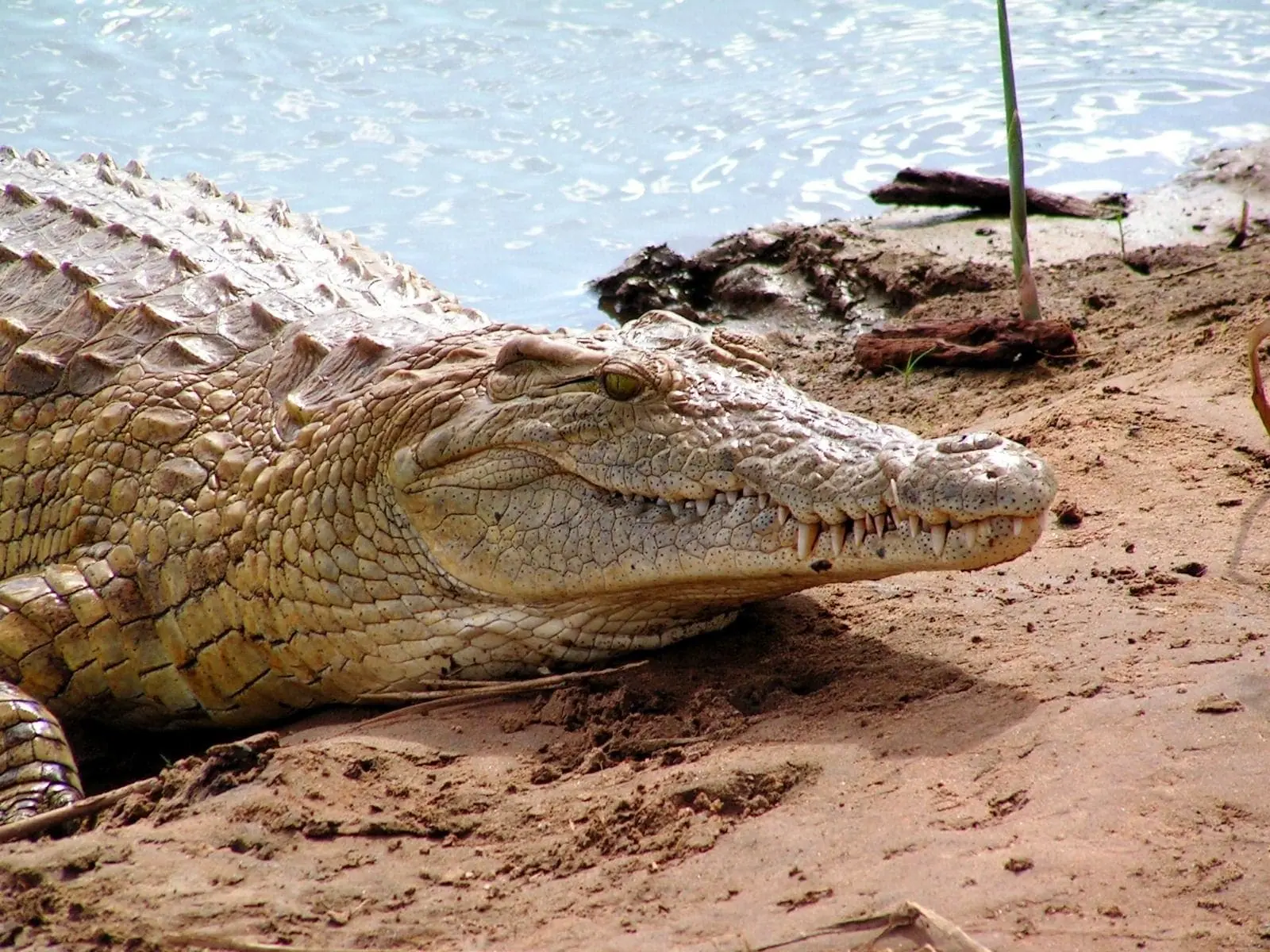
The Nile crocodile is Africa's largest reptile. Big males can reach about 5 meters and weigh several hundred kilograms; females are much smaller. The bony plates along the back, called scutes, help soak up the sun's heat. Because a crocodile cannot make its own body heat, its day is a cycle of basking and cooling: out on the sandbank in the early sun, often with the jaws wide open to shed heat, then back into the water as the day warms. A slow metabolism means a big crocodile can go a long time between large meals, which is how the Mara's crocodiles survive the months between migrations on fish and the odd unlucky antelope.
Behavior to watch for
- Gaping: a crocodile lying with its mouth wide open is cooling down, not threatening you.
- The approach: only the eyes and nostrils show, and the animal closes distance with almost no ripple.
- The death roll: a crocodile grips and spins its whole body to tear off pieces it cannot swallow whole.
- Sharing: several crocodiles often feed on one carcass with surprisingly little fighting.
- Nesting: in the dry season females dig nests in sandbanks and guard them for weeks; nest temperature decides whether the young are male or female.
- Hatching: babies call from inside the eggs, and the mother digs them out and carries them to the water in her jaws.
Three things most people do not know
First, mamba is the Kiswahili word for crocodile. The snake called the black mamba takes its English name from a southern African language, so in Kenya a guide saying mamba near the river means the reptile. Second, crocodiles catch only a small share of the wildebeest that die at the Mara crossings. Many more drown or are trampled in the panic, and researchers estimate that thousands drown in an average year. Those carcasses feed fish, vultures, marabou storks and crocodiles for weeks, and the whole river system with them. Third, UNESCO lists the Lake Turkana National Parks as a World Heritage Site in part because they are a breeding ground for the Nile crocodile, along with hippos and venomous snakes.
Safety near water
- Never swim or wade in a river or freshwater lake unless your guide or lodge tells you a specific spot is safe.
- Keep well back from the bank at riverside camps and picnic sites; a crocodile can launch out of shallow water very fast.
- Do not wash, fish or fill bottles at the water's edge.
- At the Mara's designated hippo pools, stay with the ranger and on the marked path.
- Keep children close and out of reach of the water at all times near rivers.
- You may hear that Lake Baringo's crocodiles are harmless. Do not test it.
How to photograph crocodiles
Get low. From a boat on Baringo or a low vehicle window at the Mara, put your eye line near the water and the crocodile fills the frame with menace instead of looking like a log. Side light in the early morning shows the texture of the scutes. Focus on the eye. At a crossing, pre-focus on the water near the landing point with a 300 to 400 mm lens and a fast shutter, around 1/2000 of a second, because a strike lasts a moment. Close up at Mamba Village or Haller Park, a wide lens through the fence gives the scale.
Conservation status
The IUCN lists the Nile crocodile as Least Concern across Africa. In Kenya crocodiles are protected by law, after heavy hunting for skins in the mid-1900s. The ongoing challenge is conflict with people who fish, water livestock and wash in rivers and lakes, especially along the Tana, at Baringo and on Turkana, where attacks still happen. The Kenya Wildlife Service handles problem animals and compensation claims. Healthy crocodile populations depend on healthy rivers, which is why the forests that feed the Mara River matter so much.
Trips where you will see crocodiles
A Mara safari between July and October gives you crocodiles at the crossings, with basking adults in any month. Tsavo East adds the Galana, and a Rift Valley route can include a dawn boat on Baringo. Lake Turkana is a true expedition, with Central Island reached by boat from the lake shore, and we plan it only with careful timing and local partners.