Maasai Mara. Updated November 2026. 4 min read.
There is no single crossing. There are about a dozen places where the Mara River's banks drop low enough for a wildebeest to try, and the herds pick one on a logic nobody has decoded. Here is where they are, which ones the guides watch, and how to spend a morning waiting well.
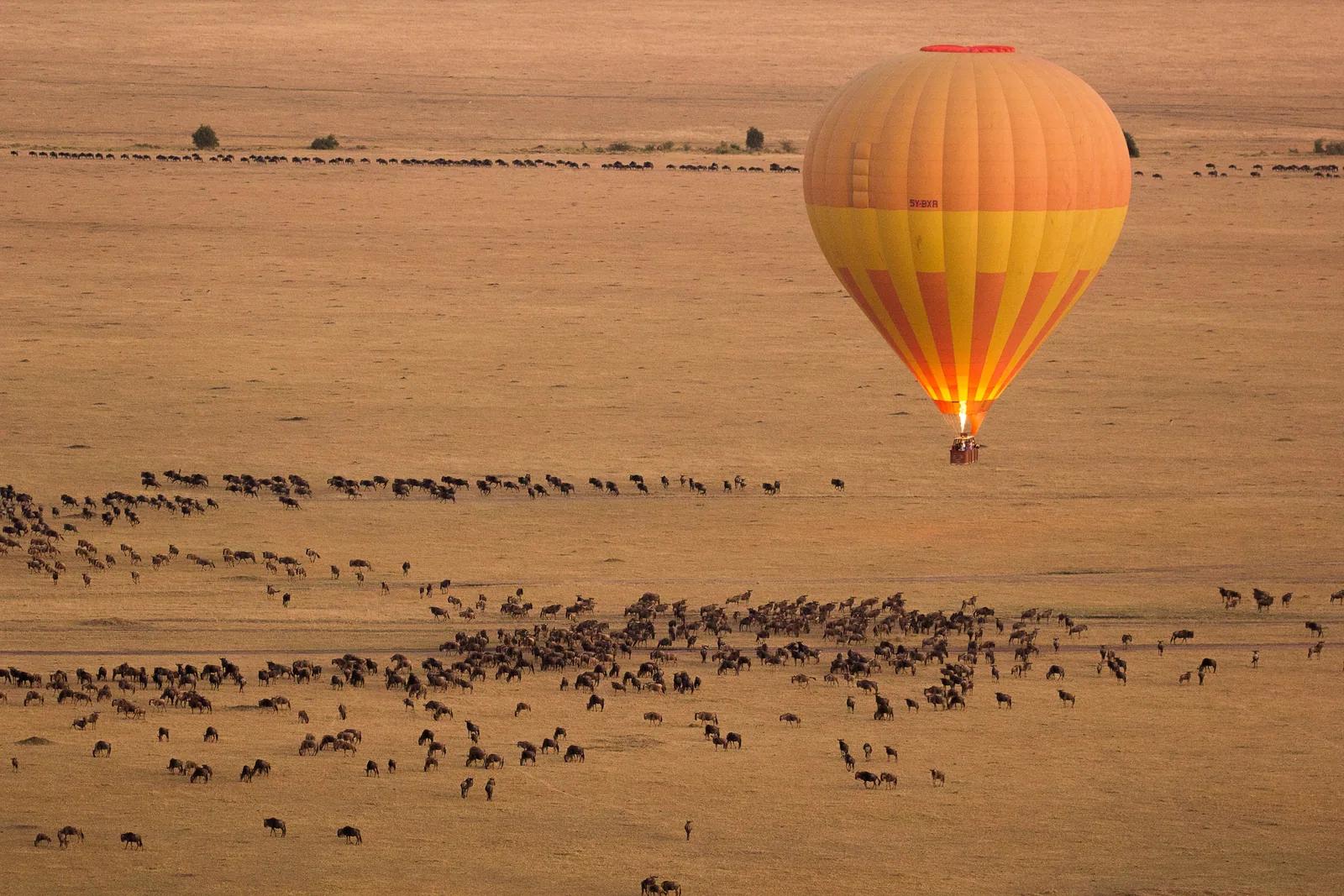
The crossings happen from about late July to October, when the herds are in Kenya and moving between the main reserve, the Mara Triangle on the river's west bank, and the conservancies. They go in both directions, often at the same few points, and most often in the middle of the morning, after the herds have gathered on the bank at dawn. Nobody can promise you one on a given day: not us, not any camp, not any guide. What a good guide can do is put you at the right stretch of river, at the right time, and keep you there.
How a crossing works
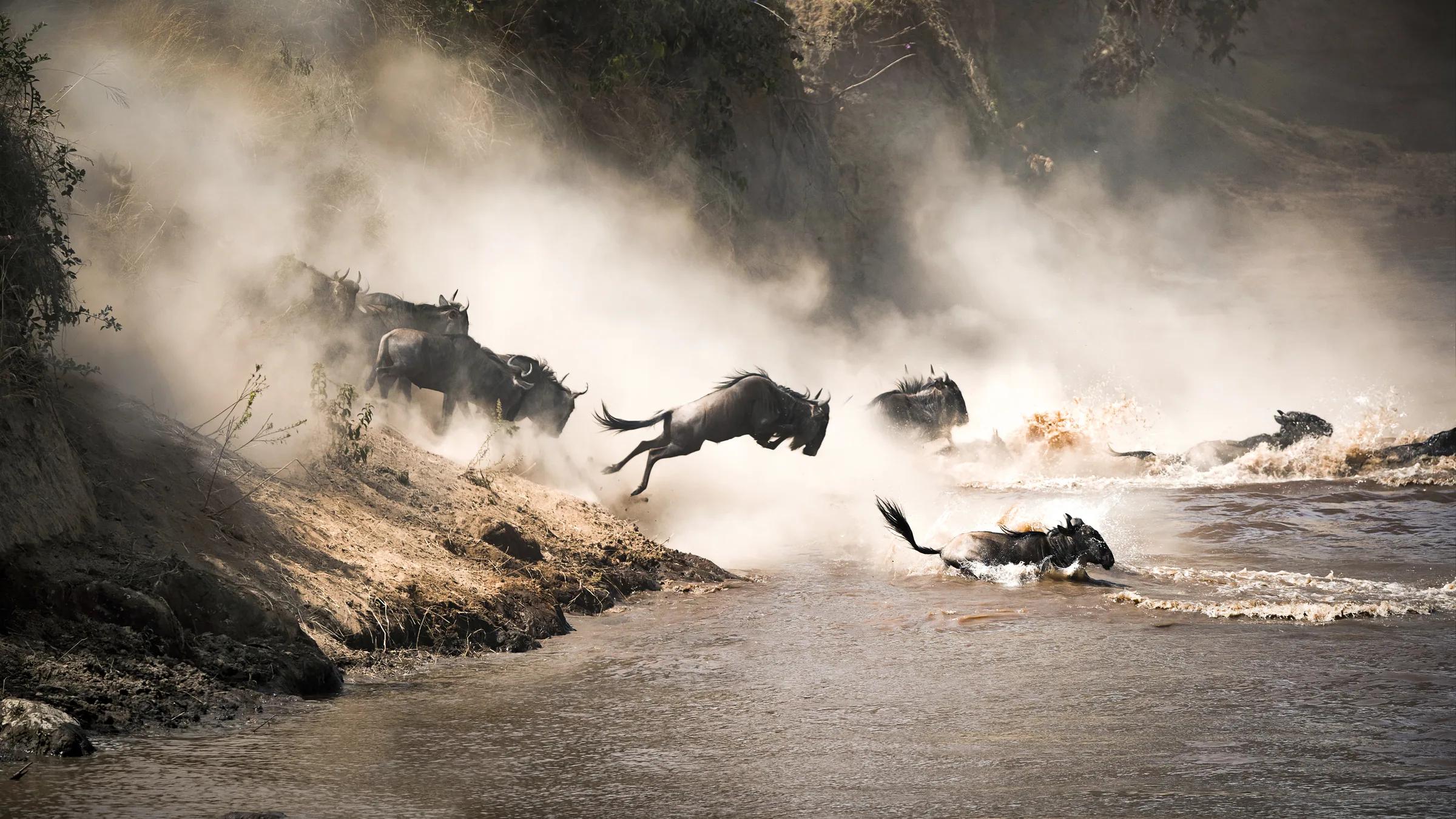
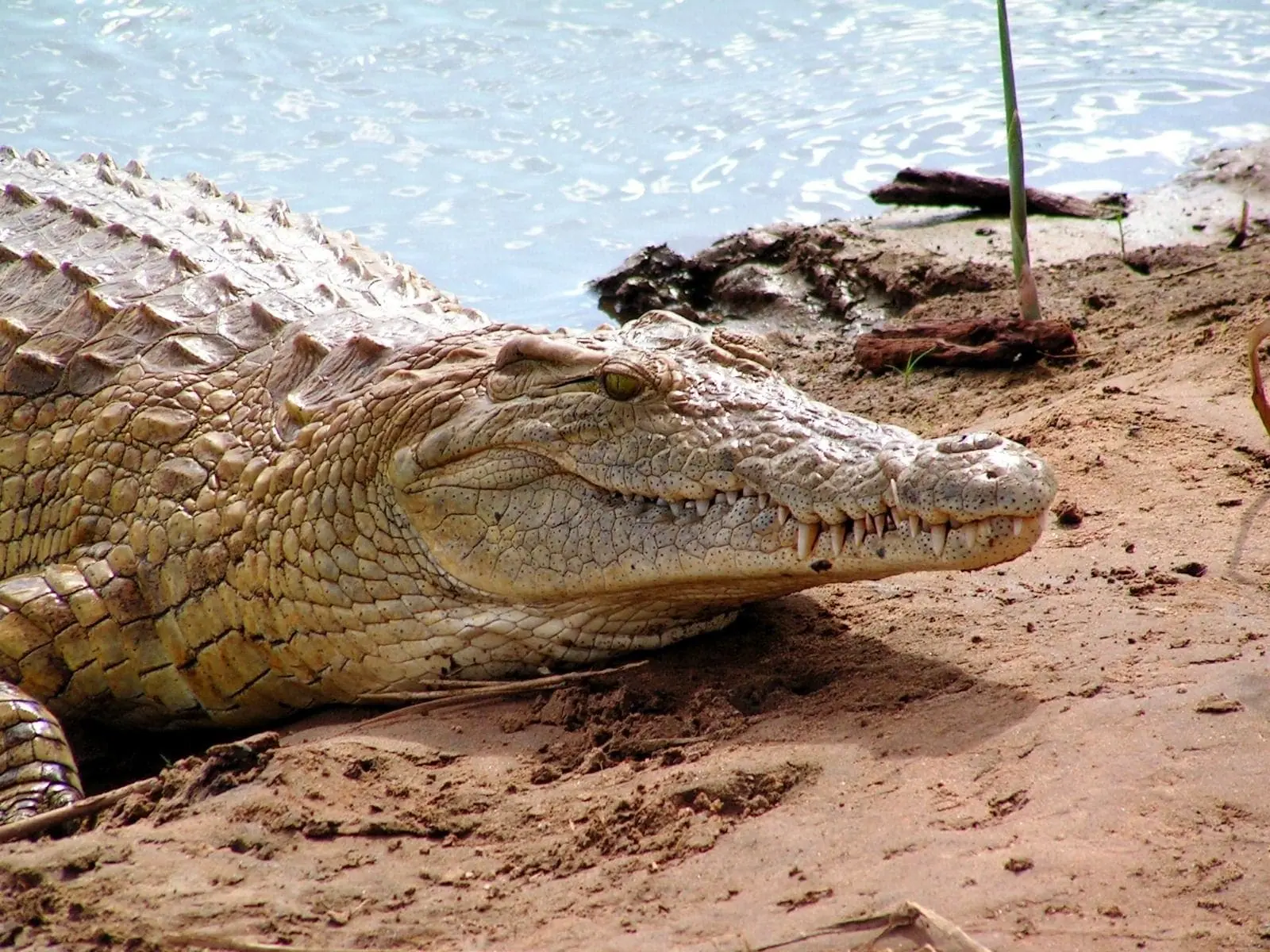
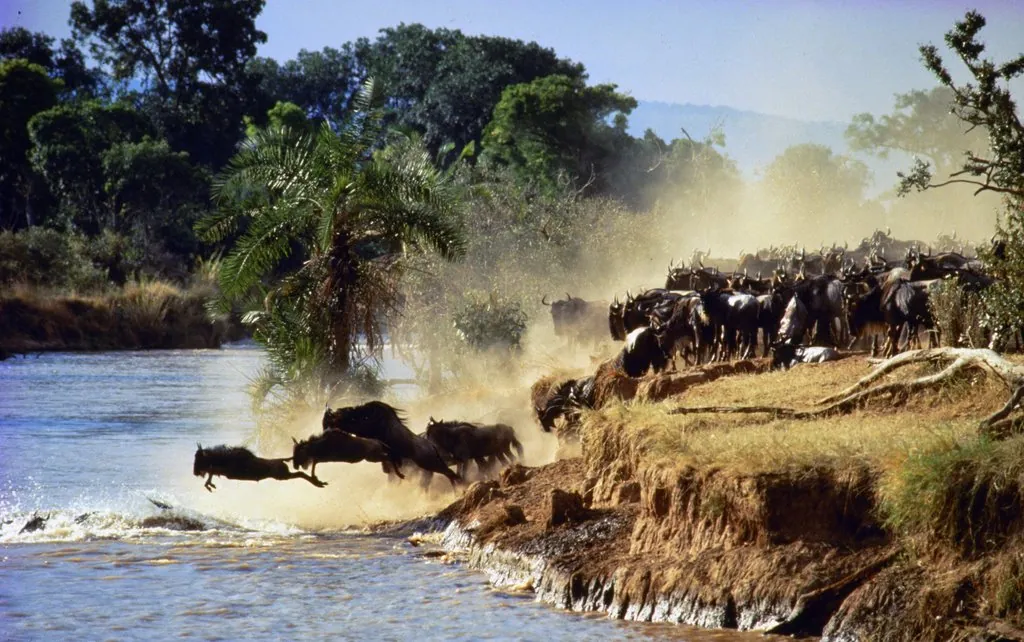
The Mara River rises in the Mau forest to the north and flows south through the reserve into the Serengeti in Tanzania. Through the migration months it sits across the herds' path between grazing grounds. A crossing usually starts with a build-up: herds drift to the bank, mass in their thousands, walk away, come back. Zebra often go first. Then one animal commits, and the rest follow in a rush that can last minutes or, at some points, hours. Crocodiles wait in the water, and lions and hyenas often wait on the far bank. The river is not the only one: the Talek River, which joins the Mara in the centre of the reserve, has smaller crossings near the Talek camps.
The crossing points
These are the points the guides talk about, from south to north and across both banks. Names vary: guides, maps and camps use different names for the same place, and our guides may know a point by another name. The map on our Maasai Mara map page shows where they are.
| Point | Where | What it is known for |
|---|---|---|
| Sand River | South-east, at the Tanzania border | Shallow and often dry; the first herds enter Kenya here in July |
| Purungat, Peninsula, Fig, U crossing, Miti Moja | The Mara Triangle, near the Purungat bridge | Several points close together; big numbers |
| The Lookout crossings | The Triangle | Narrow, high channels; can draw up to 100 vehicles |
| BBC crossing | The southern river, best seen from the Triangle's west bank | A heavily eroded funnel; the most back-and-forth crossings |
| Entim (Forest) crossing | Central | Long crossings, sometimes lasting days; fewer crocodile attacks |
| Serena crossing | Just south of Mara Serena | Easy for the animals; lighter traffic |
| Mawe Mawe (the rocky crossing) | Near the central camps | Heavy traffic; reliable action and crocodiles |
| Cul-de-sac (Kaburu) | Central reserve | Herds funnelled through a thicket; active most of the season |
| Pontoon | North, beside Mawe Mawe | Steep, collapsing banks; stampedes; vehicle numbers restricted |
Why nobody can promise a crossing
The herds are not on a timetable. Rain far to the south decides when they arrive; rain on one side of the river or the other decides where the fresh grass is; and on the day, the mood of the herd decides everything. Herds can stand on the bank for hours and then walk away. A single lion in the grass, a crocodile surfacing, the wind, a vehicle in the wrong place: any of these can turn a crossing back. The same point can see three crossings in a day and then none for a week.
The honest odds, as guides put it: on a three-night stay in August, most visitors see at least one crossing, many see several, and some see none. Odds are a little lower in late July and early October, when fewer herds are on the river, and similar in September. A fourth night improves them more than anything else you can buy.
The guide's method: where to wait, and why
- Start at dawn: find where the herds are gathering, not where they crossed yesterday
- Read the build-up: big numbers on one bank, zebra at the front and animals walking toward the water are the signs that matter
- Choose one stretch and commit: the best crossings go to guides who park back from the bank and wait, not to those who chase radio calls
- Wait with a view: crossings are most likely mid-morning, so a packed breakfast and lunch keep you in place
- Know which bank: some crossings are best seen from the Triangle side, others from the east; your ticket and your camp decide which you can reach
- Use the quiet points: Serena and Entim draw fewer vehicles than the Lookouts or Mawe Mawe
The bank matters for practical reasons too. The Mara Triangle, west of the river, is run separately from the Narok County side by the Mara Conservancy. A reserve ticket runs from 6am to 6pm, and whether you can cross between the two sides on the same day depends on the current arrangements and bridges; your guide plans the day around them, because the wrong ticket can cost a second day's fee.
Rules and etiquette at the river
At the busiest points, rangers manage where vehicles park, and both managements fine guides for driving off-road or crowding the herds. Check the current park rules on the Mara Triangle and Narok County sites. The etiquette is simple, and it is what makes crossings happen:
- No engines running at the bank, and no revving to get a better spot
- Never position between the herds and the water; a vehicle in the path is the most common reason a crossing is abandoned
- Stay back from the edge until the herd commits, then hold your position
- Keep voices low and stay seated
- Let the guide decide when to move
Our game drive etiquette guide explains the wider rules, and our where to stay guide shows which camps are closest to the crossing points.