Maasai Mara. Updated November 2026. 5 min read.
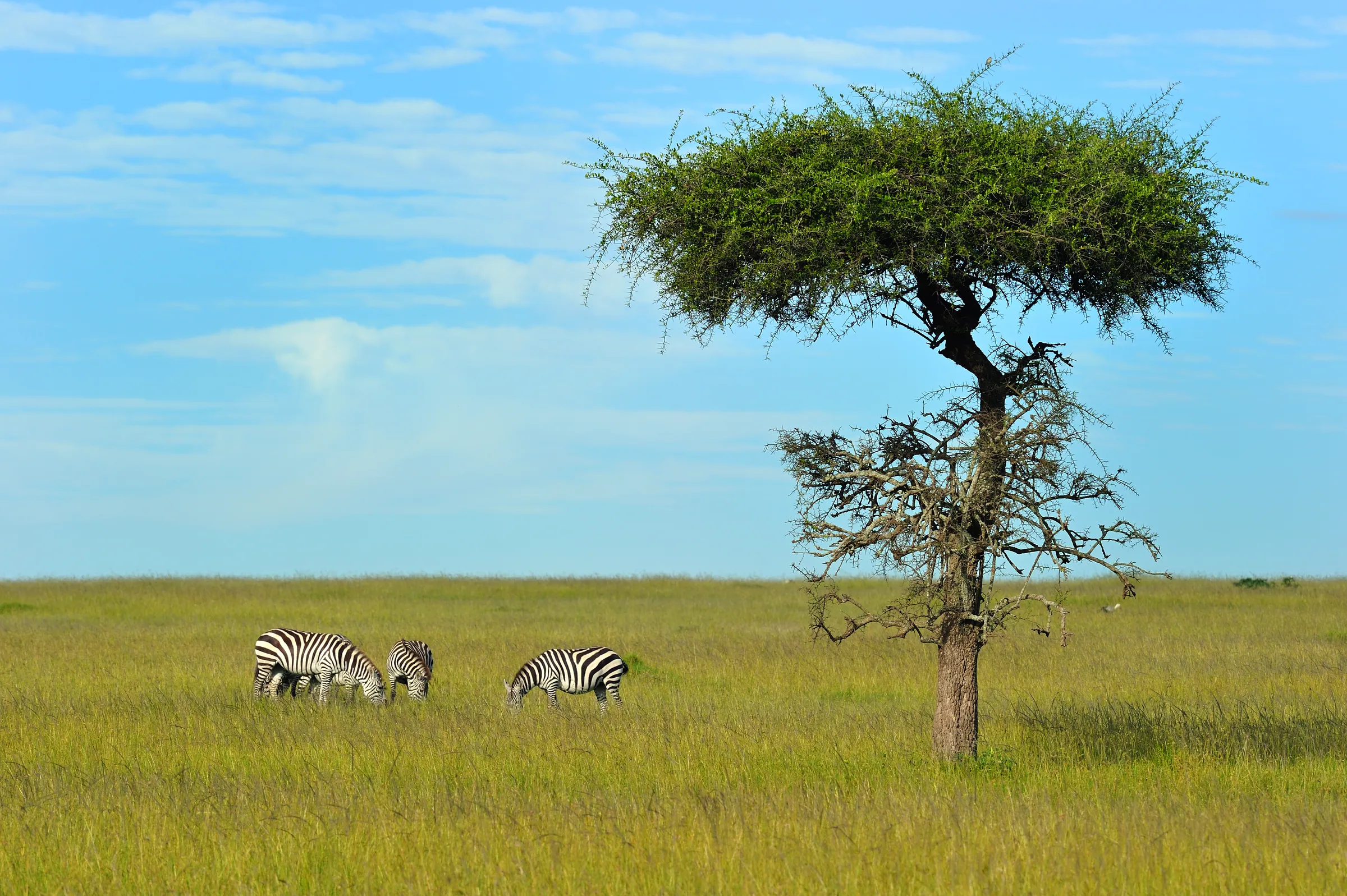
There are two ways into the Mara: an hour in a Cessna or six hours through the Rift Valley and Narok. One costs more, the other costs a day. Both end at a gate where a ranger checks your ticket and a zebra checks you.
The short answer: fly from Nairobi's Wilson Airport to an airstrip near your camp in about an hour, for about $200 to $250 one way, or drive 225 to 275 km through the Rift Valley and Narok in about 5.5 to 6.5 hours, including a stop. Flying saves most of a day and lands you close to your camp; driving costs less, shows you the Rift Valley, and means the same vehicle and guide stay with you for your game drives. Many of our travelers do one of each: drive in, fly out. This page lays out every option. The drive itself, leg by leg, has its own page, as does Wilson Airport.
By air: Wilson Airport to the Mara airstrips
Scheduled safari flights to the Mara leave from Wilson Airport, Nairobi's small-plane airport, not from the international airport at JKIA. The main airlines on the route are Safarilink and Airkenya, with Governors' Aviation also flying to the Mara. At the time of writing there are typically two departures a day, one in the morning and one in the afternoon; schedules change by season, so your booking confirms the times. The flight takes about an hour, sometimes a little less or more, because most flights are milk runs that land at two or three strips before yours. Fares are from about $200 to $250 one way per person.
The luggage rule matters: about 15 kg (33 pounds) per person including hand luggage, in a soft bag that fits the plane's cargo pod. Our Wilson Airport and safari flight luggage pages explain check-in, connections from international flights and what to pack.
| Airstrip | Area it serves |
|---|---|
| Keekorok | The south-east of the reserve, near Keekorok and the Sand River plains |
| Ol Kiombo | The central reserve, close to the Talek and Mara rivers |
| Musiara | The north of the reserve, by the Musiara marsh |
| Serena | The Mara Triangle, west of the river |
| Kichwa Tembo | Just outside the Triangle in the north-west, below the escarpment |
| Angama | On the Oloololo escarpment above the Triangle |
| Mara North | Mara North Conservancy |
| Ngerende | Camps on the Mara River north of the reserve |
| Olare Orok | Olare Motorogi Conservancy |
| Ol Seki | Naboisho Conservancy |
| Siana | The eastern conservancies around Mara Siana |
By road: the route through Narok
The road leaves Nairobi on the A104, turns onto the B3 at Limuru and drops down the escarpment into the Rift Valley at Mai Mahiu, then runs across the valley floor to Narok, the last town of any size. At Narok the route splits. The C12 heads south to the eastern gates, Sekenani, Talek and Oloolaimutia, which serve most of the reserve's camps. The C13 heads west toward the Musiara and Oloololo gates and the Mara Triangle. The last 60 to 80 km is gravel or rough road and takes about an hour, more after rain. Allow 5.5 to 6.5 hours in all with a stop in Narok, and leave Nairobi early, because the gates close at 6pm. Our by road page has the drive leg by leg, with the stops and road conditions by season.
Drive times to each gate
| Gate | Road from Narok | Time from Nairobi | Best for |
|---|---|---|---|
| Sekenani | C12 | 5.5 to 6 hours | The main eastern gate; most road safaris and the camps around Sekenani and Keekorok |
| Talek | C12 | 5.5 to 6 hours | Camps along the Talek River and the conservancies to the north-east |
| Oloolaimutia | C12 | About 6 hours | Lodges and camps on the eastern boundary |
| Musiara | C13 | About 6.5 hours | The north of the reserve and Mara North |
| Oloololo | C13 | About 6.5 hours | The Mara Triangle |
From other parks, the coast and Tanzania
- Laikipia, Lake Nakuru and Lake Naivasha: Nanyuki, Nakuru and Naivasha have airstrips with Mara connections in season, which saves the road back through Nairobi; by road, Naivasha to the Mara is a good half-day
- The coast: a flight from the Mara to Diani or Mombasa takes about 2 to 2.5 hours, usually with a stop, which makes safari and beach an easy pairing
- The Serengeti: there is no open road border for tourists at the Sand River, even though the two parks touch. Combinations with Tanzania either fly via Nairobi or go by road through the Isebania border post, which is a long day
- Amboseli: there is no direct road that makes sense; most people fly via Wilson or drive back through Nairobi
What it costs
| Option | Rough cost | What is included |
|---|---|---|
| Scheduled flight | From about $200 to $250 per person one way | The seat and about 15 kg of luggage; your camp collects you at the strip |
| Private vehicle and driver-guide from Nairobi | About $350 to $500 for the vehicle, round trip | The vehicle, fuel and driver to and from the Mara; on a safari, the same vehicle does your game drives |
| Shared safari van | Less per seat | A seat on a group departure, on a fixed schedule |
| At the gate | Reserve fee per person plus a vehicle fee | The reserve fee is $100 or $200 per adult per day by season; see our park fees page |
The comparison is closer than it looks. Two people flying return pay about $800 to $1,000 in fares. Two people driving share the cost of a vehicle that also does their game drives. For a family of four or more, the road usually wins on price; for a couple on a short trip, the day saved often wins.
Which to choose
Fly if you have fewer than three nights in the Mara, if your camp is in a conservancy far from the road, or if you are going on to the coast. Drive if you are a family or group, if you want the Rift Valley on the way, or if you want the same guide and vehicle for the whole safari. Our fly-in versus road safari guide works through the trade-off in full. Our usual compromise is the best of both: drive in through the Rift Valley, with a stop at the escarpment viewpoint and lunch in Narok, then fly back to Wilson at the end, which turns a six-hour return drive into a one-hour hop and gives you a last morning game drive.
Whichever you choose, we arrange it end to end: the vehicle or flight, the strip, the gate, the fees and the timing, so you arrive with your ticket in hand and daylight to spare.