Wildlife. Updated November 2026. 5 min read.
By the second day of a safari, most guests stop asking what that brown animal is. That is a shame, because the antelopes are the animals you will see most in Kenya, and they are far more varied than the lions that eat them. Kenya has about 30 species, from the Kirk's dik-dik, about the size of a hare, to the eland, which can weigh as much as a small car. Learn a handful of clues and every game drive gets richer.
The quick answer: in the Maasai Mara and most savanna parks you will see impala, Thomson's and Grant's gazelles, topi, hartebeest and waterbuck every day. Go north to Samburu or east to Tsavo for gerenuk, beisa oryx and lesser kudu. The rare ones, bongo, sable, roan and sitatunga, each live in one or two places and are worth a detour. The cheat sheet below sorts them by size, with the horns that give each away.
Cheat sheet: size, horns and where
| Antelope | Size | Horns | Where in Kenya |
|---|---|---|---|
| Kirk's dik-dik | Tiny, about hare-sized | Males only; short spikes | Dry bush: Samburu, Tsavo, Laikipia, Mara edges |
| Suni | Tiny | Males only; short spikes | Coast and highland forests; rarely seen |
| Thomson's gazelle | Small | Both sexes; females' thin | Open plains: Mara, Amboseli, Nairobi NP |
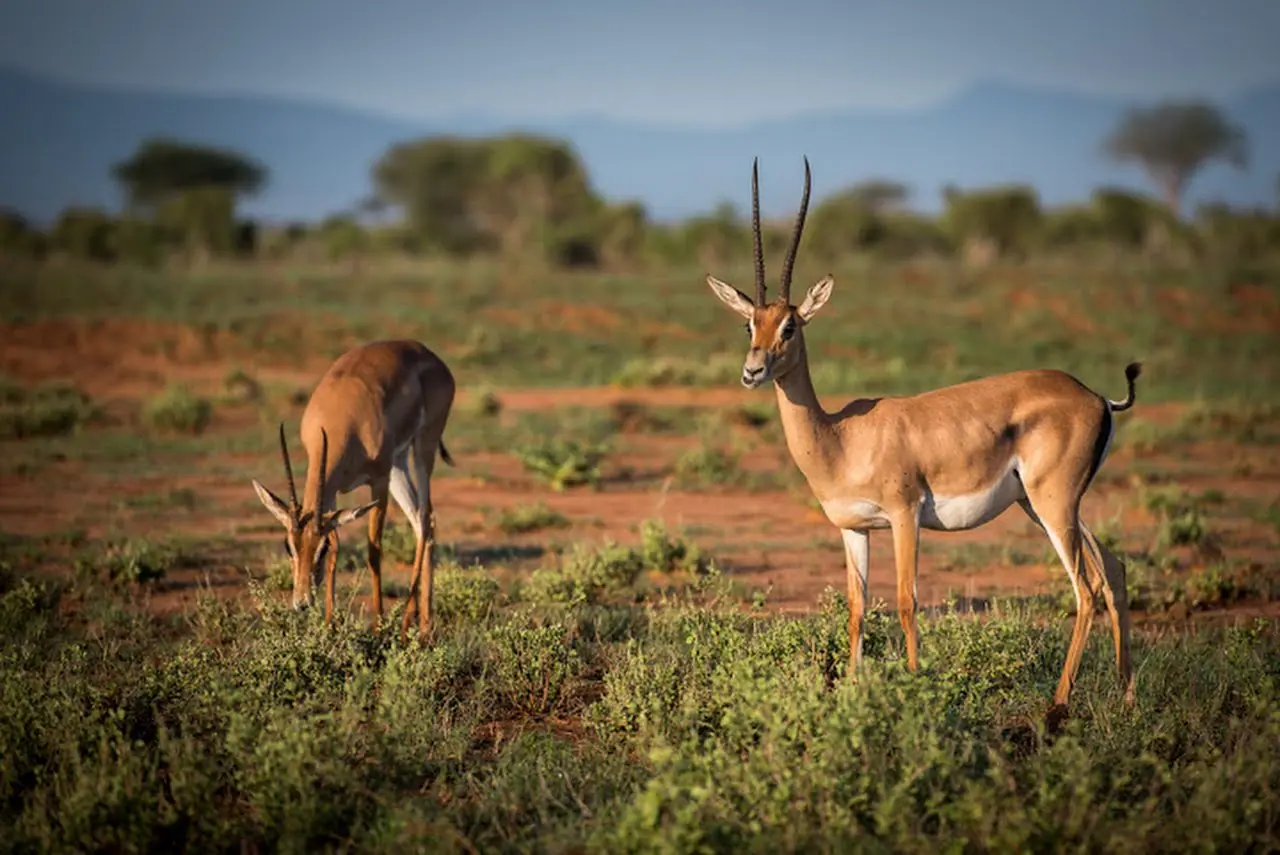
| Grant's gazelle | Medium | Both sexes; long and lyre-shaped | Mara, Amboseli, Tsavo, Samburu, Nairobi NP |
| Impala | Medium | Males only; lyre-shaped | Woodland edges almost everywhere |
| Gerenuk | Medium, long neck | Males only; thick, hooked | Samburu, Tsavo East, Meru, Amboseli |
| Bushbuck | Medium | Males only; short spiral | Riverine and forest edges countrywide |
| Lesser kudu | Medium-large | Males only; long spirals | Dry bush: Tsavo, Samburu, Meru |
| Topi | Large | Both sexes; ringed, curved | Mara and the far west |
| Hartebeest (kongoni) | Large, long face | Both sexes; bracket-shaped | Mara, Nairobi NP, Laikipia, Tsavo |
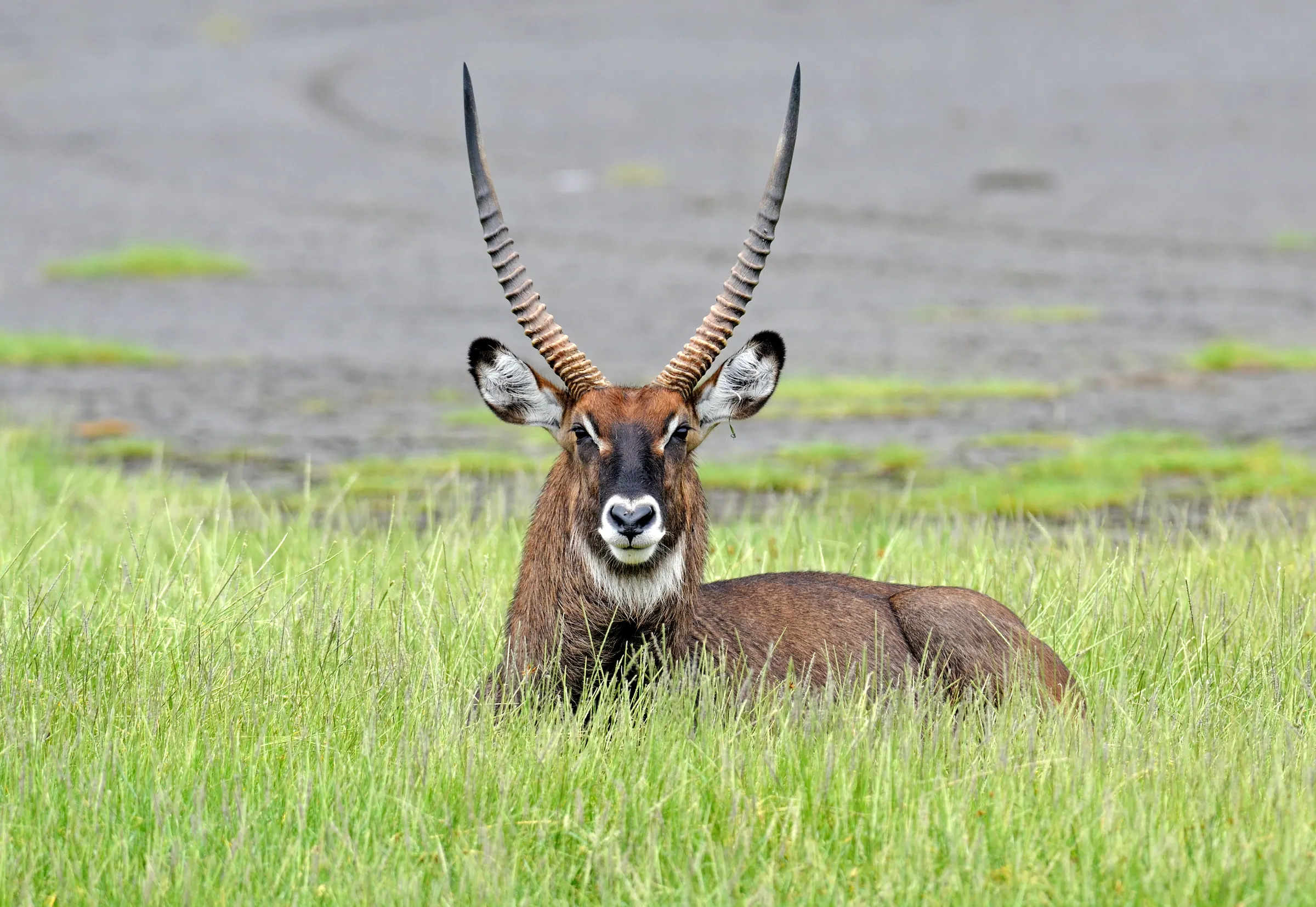
| Waterbuck | Large, shaggy | Males only; long, ringed | Near water: Nakuru, Naivasha, Mara, Samburu |
| Beisa oryx | Large | Both sexes; long, straight | Samburu, Tsavo East (fringe-eared), Meru |
| Sable and roan | Large | Both sexes; scimitar curves | Sable in Shimba Hills; roan in Ruma |
| Mountain bongo | Large, striped chestnut | Both sexes; spiral | Aberdare and Mount Kenya forests; very rare |
| Eland | Huge | Both sexes; tight spirals | Mara, Nairobi NP, Laikipia, Nakuru |
How to tell them apart in ten seconds
- Thomson's gazelle: a bold black stripe along the flank and a tail that never stops flicking.
- Grant's gazelle: bigger, no strong flank stripe in most animals, and a white rump patch that runs up above the tail.
- Impala: a black M on the rump made by two dark stripes and the tail, and black tufts above the back hooves.
- Waterbuck: a white ring on the rump, which guides cheerfully compare to a toilet seat.
- Topi: dark purple patches on the upper legs, as if wearing jeans, and often standing on a termite mound.
- Hartebeest: a long, sad face and horns that rise from a single pedicle like a bracket.
- Dik-dik: almost always in pairs, with a twitching, mobile snout.
- Gerenuk: a giraffe-like neck, and it stands upright on its hind legs to browse.
The everyday antelopes
Impala live where grass meets woodland and are the most-seen antelope in Kenya; our impala page explains the herds, the roar and the leap. Thomson's gazelles, or tommies, are the small, quick gazelle of the short-grass plains and a favorite meal for cheetahs. Topi and hartebeest graze the Mara in their thousands, and lions take a lot of them; our topi and hartebeest page covers both. Waterbuck stay close to water, which makes the shores of Lake Nakuru and Naivasha reliable places for them.
The dry-country specialists
North and east of Mount Kenya the bush gets thinner and the antelopes change. The gerenuk browses on its hind legs, the beisa oryx carries rapier horns and can go a long time without drinking, and the lesser kudu slips through the commiphora bush with its striped flanks. These are part of the reason a trip to Samburu feels like a different country from the Mara. Our oryx and gerenuk pages go deeper, and the Samburu Special Five page explains the northern set.
The rare ones worth a detour
- Mountain bongo: a striped forest antelope, critically endangered, with a breeding and rewilding program on Mount Kenya. Wild sightings are very rare.
- Sable antelope: in Kenya found only in Shimba Hills, south of Mombasa, an easy day trip from Diani.
- Roan antelope: in Kenya found only at Ruma National Park near Lake Victoria, where a small population survives under protection.
- Sitatunga: a swamp antelope with splayed hooves for walking on floating reeds, best seen from the platforms at Saiwa Swamp.
- Hirola: often called the world's most endangered antelope, found only in eastern Kenya near the Somali border, with a sanctuary population in Ishaqbini and a small one in Tsavo East.
Behavior to watch for
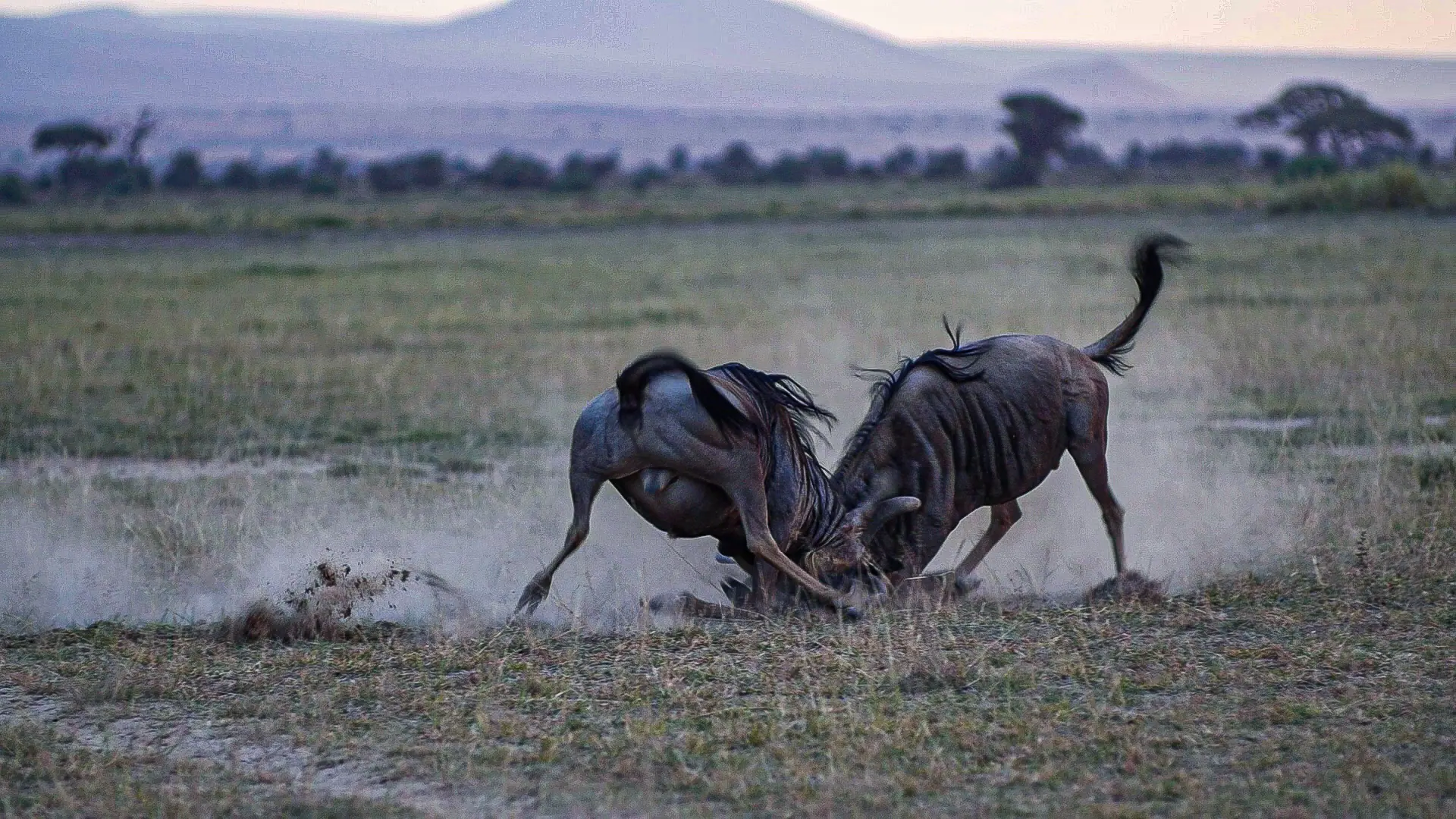
Watch for stotting, the stiff-legged bounce Thomson's gazelles do when a predator is near, which seems to tell it that they are fit and not worth chasing. Male topi and impala hold territories and spar with locked horns. Many antelope mothers hide newborns in long grass and come back only to feed them, so a calf lying flat alone is usually not abandoned. Dik-dik pairs mark their territory with dung middens you will see beside the road.
Three things most people do not know
- Several dry-country antelopes, including oryx, gerenuk, dik-dik and eland, can get most of the water they need from their food.
- On parts of the Mara and Serengeti plains, male topi gather on small display grounds where females come to choose a mate, a system called a lek.
- The impala is not a gazelle. It sits in a group of its own, with no close living relatives.
How to photograph antelopes
Antelopes give you the best behavior photos on a safari because they are always doing something. Use a fast shutter, 1/1600 of a second or faster, for leaping impala and stotting gazelles. Backlight in the hour after sunrise turns a herd into silhouettes with glowing edges. For portraits, wait for an animal to look up and turn its head, and frame the horns, because they are what tells the species apart.
Conservation
Most of Kenya's common antelopes are listed as Least Concern, but the picture outside parks is worrying. A widely cited 2016 study found that wildlife in Kenya's rangelands fell by roughly two thirds between 1977 and 2016. The IUCN lists the Thomson's gazelle and gerenuk as Near Threatened, the beisa oryx as Endangered and the mountain bongo and hirola as Critically Endangered, at the time of writing. Community conservancies and the parks you visit are where these numbers can be turned around.