Wildlife. Updated November 2026. 5 min read.
Drive across the open plains of Buffalo Springs at noon, when the heat has pushed almost every animal into the shade, and there is often one still standing out in the full sun: a beisa oryx, choroa in Kiswahili, with a pair of horns like rapiers and a face painted in black and white. Our northern guides like to point out that it is not suffering. The oryx is one of the best-adapted large mammals in Kenya, and once you understand how it copes with heat and thirst, you watch it differently.
Kenya has two forms. The beisa oryx lives north of the Tana River, in Samburu, Buffalo Springs and Shaba national reserves, Meru National Park, Lewa and the dry conservancies of northern Laikipia. The fringe-eared oryx, with black tufts on the tips of its ears, lives south and east of the Tana, and Tsavo East is the best place to find it. Both are resident all year. Our Samburu Special Five page explains how the oryx fits into the northern set of five; this page is about the oryx itself.
Where to see oryx in Kenya
| Place | Which oryx | Good to know |
|---|---|---|
| Buffalo Springs National Reserve | Beisa | Open plains south of the Ewaso Ng'iro river; often the most reliable oryx in the north |
| Samburu National Reserve | Beisa | Herds on the open ground back from the river, sometimes mixed with Grevy's zebra |
| Shaba National Reserve | Beisa | Lava country and springs with very few vehicles |
| Meru National Park | Beisa | The drier northern and eastern parts of the park |
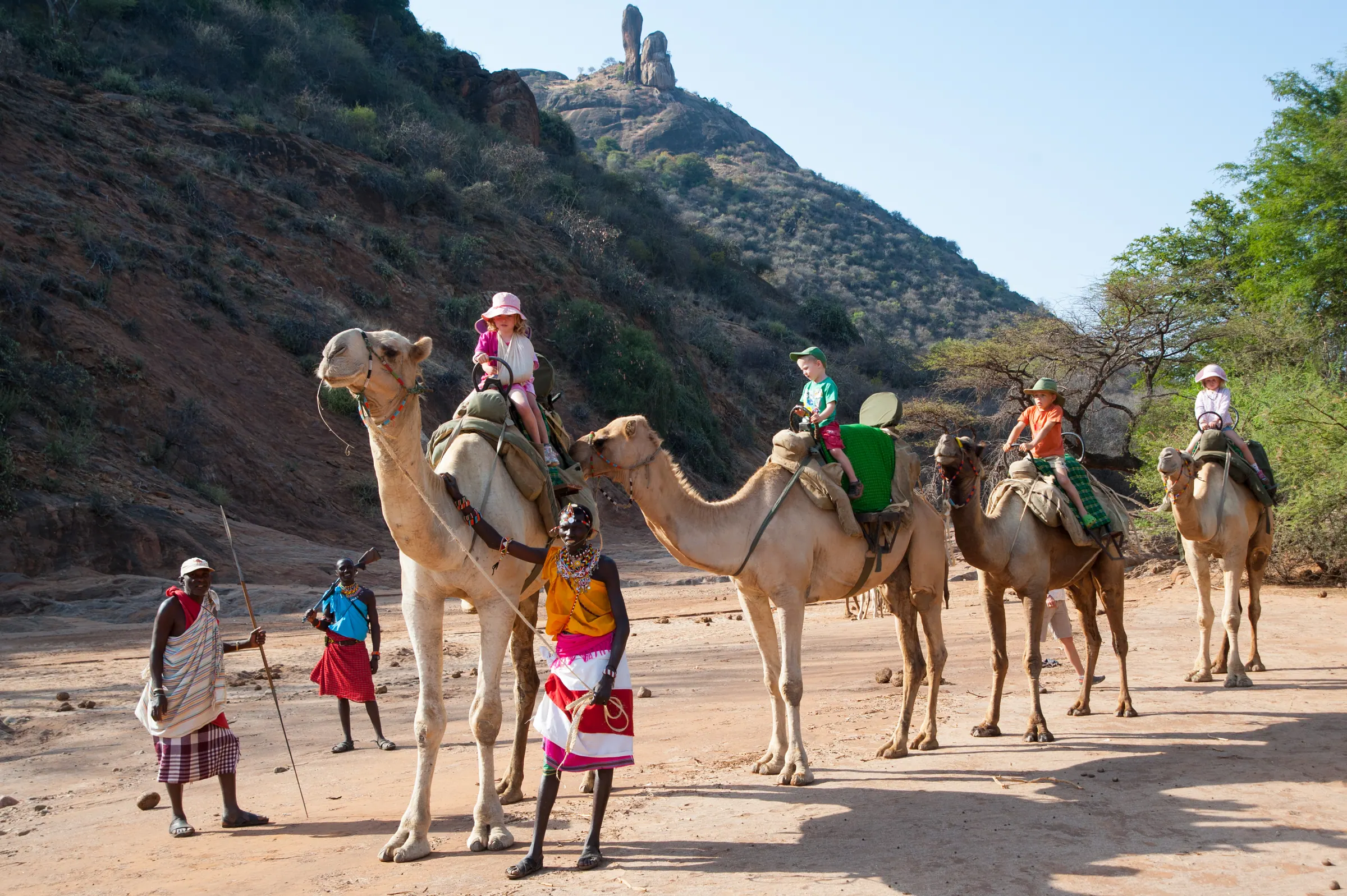
| Lewa and northern Laikipia | Beisa | Conservancies where you can also walk, ride or take a night drive |
| Tsavo East National Park | Fringe-eared | The open plains east of the Galana river, often with red dust on pale coats |
What you are looking at
An adult oryx stands about 1.2 meters at the shoulder and weighs somewhere around 115 to 200 kilograms, with males the heavier. Both sexes carry long, straight, ringed horns, often 75 centimeters or more; a female's are usually thinner and sometimes longer than a male's. The coat is a pale sandy gray that reflects sunlight, split from the white belly by a black stripe along the flank, with black garters on the legs and a black mask across the face. The fringe-eared oryx of Tsavo is a little tawnier and carries those ear tufts, which are the quickest way to tell the two apart.
How an oryx lives without drinking
Oryx drink when water is there, but they can go a long time without it. Research on oryx and related desert antelopes points to a set of tricks that work together.
- It lets its body heat up. Instead of sweating to stay cool, an oryx can let its body temperature climb several degrees during the day and lose that heat in the cool of the night, which saves a great deal of water.
- It keeps its brain cool. Blood heading to the brain passes through a fine net of small arteries at the base of the skull, bathed in cooler blood returning from the nose, so the brain stays cooler than the body.
- It feeds when plants are wettest. Leaves and grasses hold more moisture at night and before dawn, and oryx graze and browse then. They also dig for roots, bulbs and wild melons.
- It wastes little. Oryx produce concentrated urine and dry dung, holding on to water other animals lose.
Behavior to watch for
- Herds of a few animals to a few dozen, females, young and males together, often walking in a loose line across open ground.
- Sparring: males drop their heads and clash and fence with their horns, usually more ritual than real fight.
- The stare: oryx watch a vehicle steadily and then trot off with heads high, which is when the horns look longest.
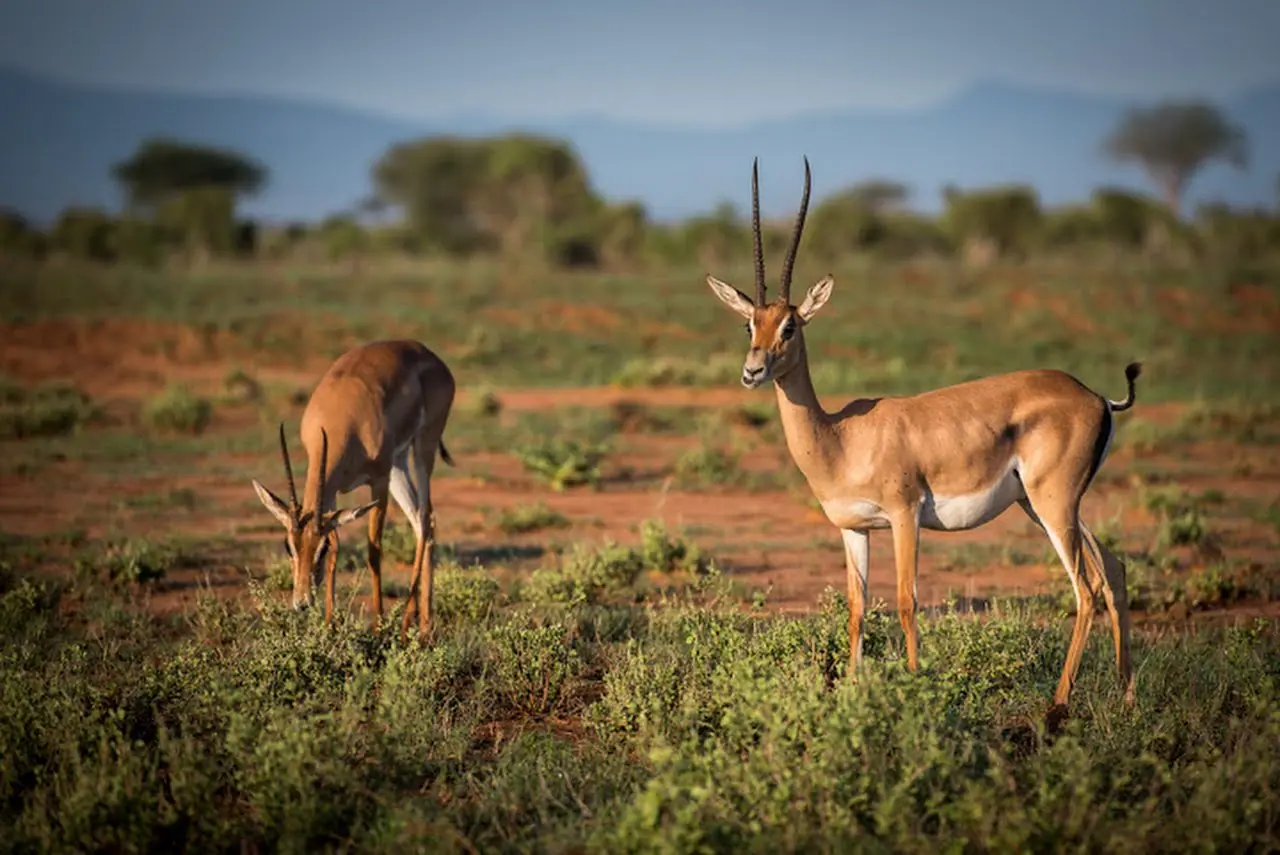
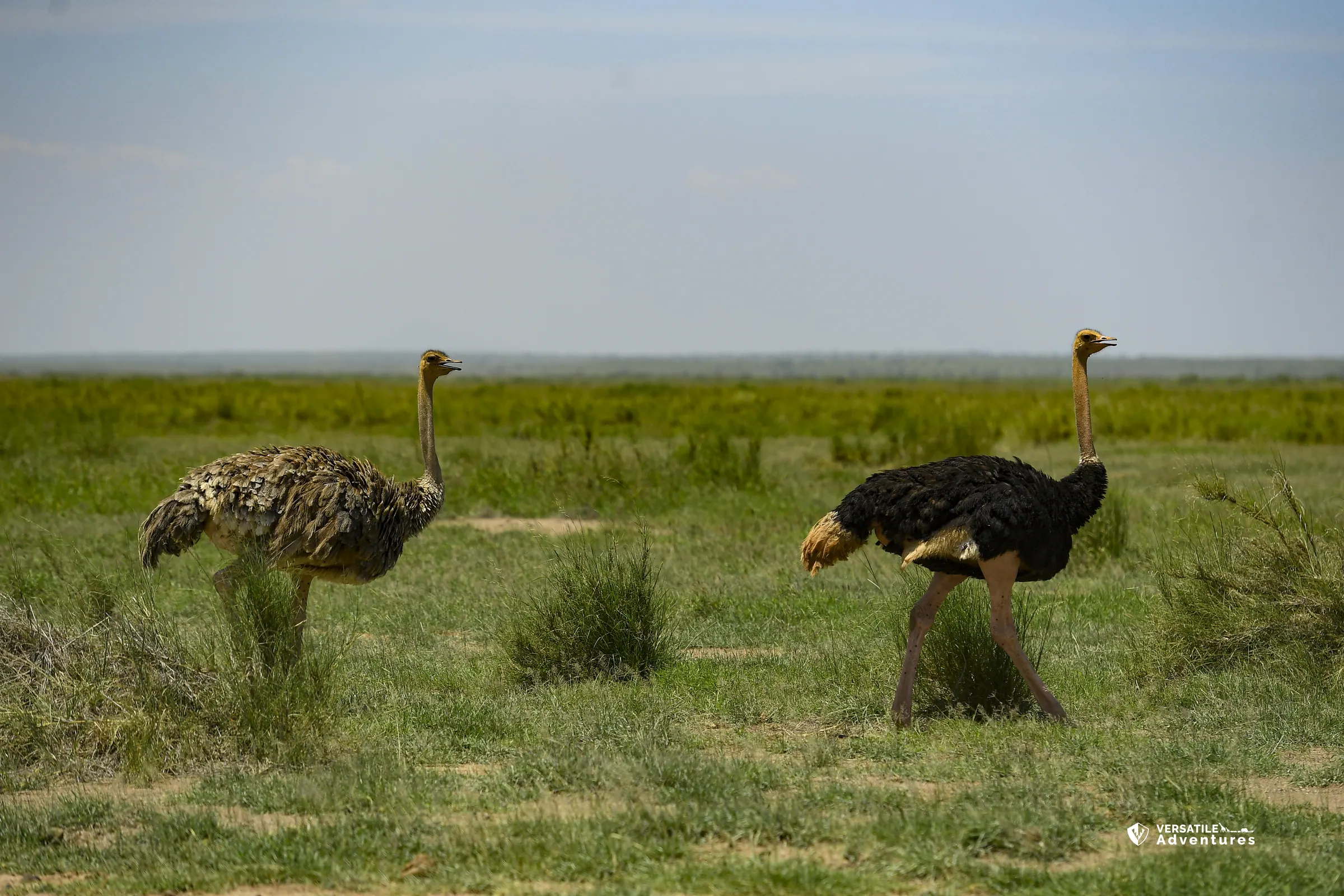
- Company: oryx often graze near Grevy's zebra, ostriches and Grant's gazelles, which gives the group more eyes for predators.
- Standing their ground: when threatened, an adult lowers its head and points those horns forward, and lions approach adults with care.
Three things most people do not know
First, seen side-on, an oryx's two straight horns line up so closely that they can look like one, and writers have long suggested oryx as one possible source of the unicorn legend. Second, those horns are dangerous. There are records of lions being badly hurt or even killed by an oryx, which is why big cats prefer calves. Third, the oryx is at the center of one of Samburu's strangest stories. In 2002 a lioness the Samburu came to call Kamunyak, the blessed one, adopted a series of oryx calves, walking beside them instead of eating them. It did not end well for at least one calf, but guides still talk about it.
How to photograph oryx
Oryx stand in the open, which makes them easy to find but hard to light: by mid-morning the sun flattens the face mask. Go out early and late, keep the sun behind you or slightly to the side, and wait for a side-on pose that shows the full length of the horns. A zoom around 200 to 400 mm is right. In Samburu, frame an oryx against doum palms, red earth or the blue line of the hills instead of plain sky. Heat shimmer ruins long shots after about ten in the morning, so ask your guide to get closer rather than zooming further.
Conservation status
The IUCN lists the beisa oryx, including the fringe-eared form, as Endangered at the time of writing, after steep declines across its range in Kenya, Ethiopia and Somalia. Oryx compete with livestock for grazing and water, suffer in long droughts and are hunted for meat and hides. In northern Kenya, community conservancies supported by the Northern Rangelands Trust, alongside the national reserves, shelter many of the herds you will see. Check the Red List for the latest assessment; your reserve and conservancy fees help pay for the rangers.
Trips where you will see oryx
For beisa oryx, plan two or three nights in Samburu or Buffalo Springs, ideally with a night or two at Lewa or in Laikipia on the way. You will usually see oryx on the first drive. For the fringe-eared form, add Tsavo East to a coast trip; it fits neatly between Nairobi and Mombasa or Diani. Our antelopes field guide shows how the oryx compares with the other big antelopes you will meet.