Wildlife. Updated November 2026. 5 min read.
Scan the Mara plains with binoculars and you will notice that many termite mounds have an antelope standing on top, motionless, head up, looking out across the grass. Our guides call them the lookouts. Usually it is a topi, nyamera in Kiswahili, and sometimes its long-faced cousin the hartebeest, kongoni. Learn to read those two and you will often spot the lions before anyone else in the vehicle does, because the lookouts saw them first.
Both are common in the Maasai Mara and its conservancies, where you will see them on almost every drive in any month. Hartebeest also live in Nairobi National Park, Amboseli, Laikipia and parts of Tsavo, and a longer-horned western form survives at Ruma National Park near Lake Victoria. Our antelopes field guide puts both in context with the other plains antelopes; this page is about these two.
Topi or hartebeest? How to tell them apart
| Feature | Topi | Hartebeest |
|---|---|---|
| Kiswahili | Nyamera | Kongoni |
| Coat | Glossy red-brown with a purple sheen | Plain, pale tawny or sandy brown |
| Legs | Dark slate-blue patches on the upper legs, like a pair of jeans | Plain, without dark patches in Coke's hartebeest |
| Face | Long, with a dark blaze down the front | Very long and narrow, a famously mournful look |
| Horns | Ringed, curving up and back like a lyre | Rising from a bony base on top of the head, then bending out and back like a bracket |
| Where in Kenya | Mainly the Mara and the far west | Mara, Nairobi NP, Amboseli, Laikipia, Tsavo, Ruma |
The topi: lookout, show-off and trickster
Topi climb termite mounds for two reasons. A raised spot lets them see predators early in long grass, and for a territorial male it is a stage: standing tall on a mound tells rivals and females that this patch is taken. In parts of the Mara and Serengeti, males crowd together on small display grounds called leks, and females walk in to choose a mate. Researchers working in the Mara have also recorded something guides love to tell: male topi giving false alarm snorts, as if a predator were near, when a female is about to wander off their territory, so that she stays. Topi are fast, too, and among the quickest antelopes on the plains over a long run.
The hartebeest: Kenya's forms
The hartebeest you will see in the Mara, Nairobi National Park and the southern rangelands is Coke's hartebeest, the kongoni of the Kiswahili name. In western Kenya and parts of Laikipia, a darker, longer-horned form takes over, usually called Jackson's hartebeest and closely related to the lelwel hartebeest of Uganda and South Sudan. Ruma National Park in Homa Bay County is one of the places to see it, alongside Kenya's last roan antelope. The hirola of eastern Kenya, sometimes called Hunter's hartebeest, is a different animal in a genus of its own and one of the rarest antelopes in the world.
Why lions take so many
Topi and hartebeest live on open grass in the same places as the Mara's lions, they are big enough to feed a pride, and they are around all year, not only when the migration passes through. Lions take wildebeest and zebra in season and turn to topi, hartebeest and warthog the rest of the time. Cheetahs take topi calves. Watch a lookout closely: a topi staring hard in one direction, stamping or snorting, is often looking straight at a cat you have not seen yet.
Behavior to watch for
- Mound sentinels: one animal up high, the rest grazing below, with the watch passing from one to another.
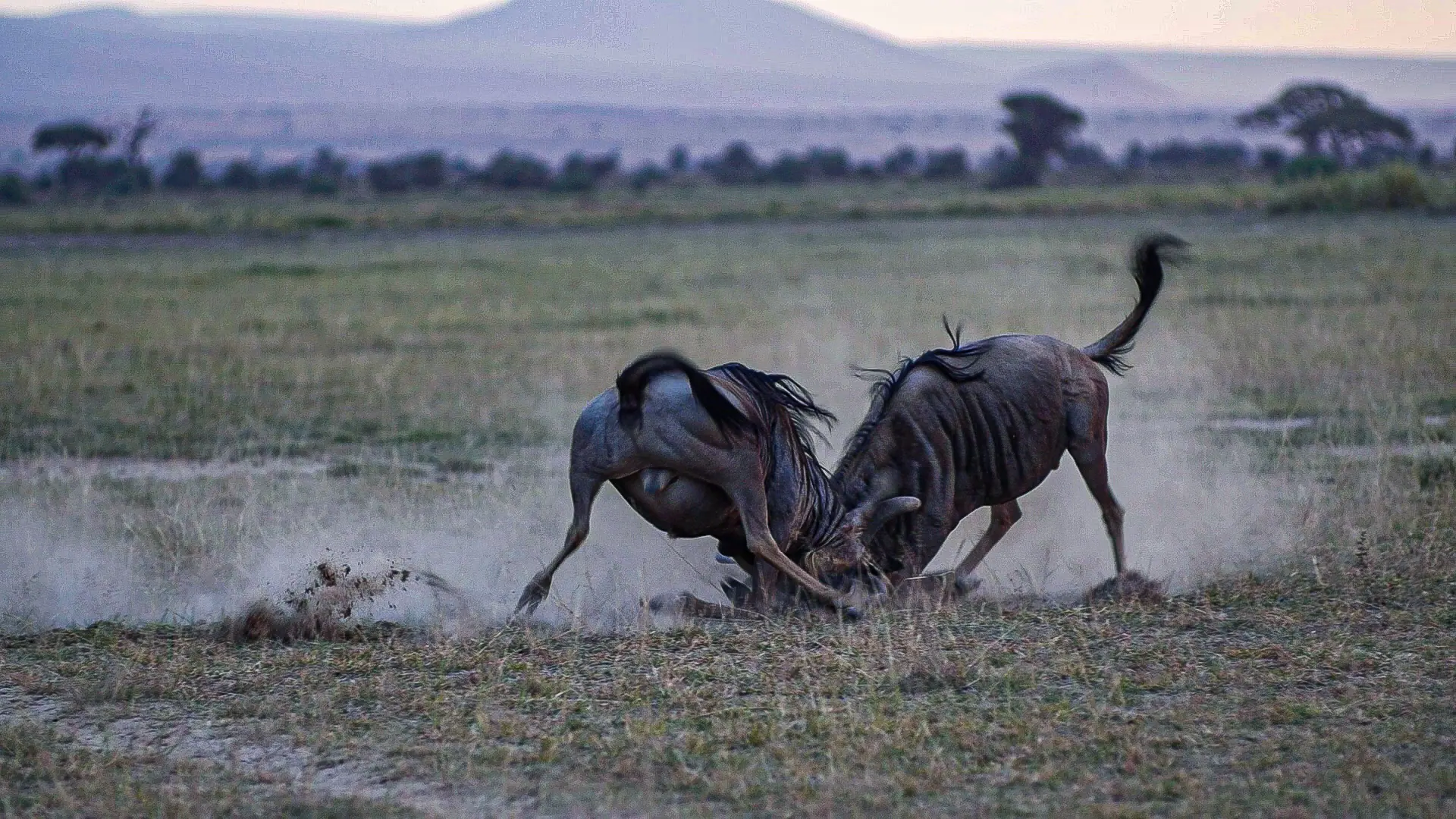
- Horn fights: male topi and hartebeest drop to their knees and lock horns at territory edges.
- Dung and grass marking: topi rub their faces on grass stems and males leave dung piles on their ground.
- Calves: topi calves follow their mothers within a short time of birth, and many are born in a concentrated season in the Mara.
- Mixed herds: both graze alongside wildebeest and zebra and benefit from the extra eyes.
Three things most people do not know
First, topi and hartebeest are close relatives of the wildebeest; all three belong to the same small group of grazing antelopes, which is why they share that sloping back and long face. Second, the name hartebeest comes from old Dutch and Afrikaans and means something like deer-beast, given by early settlers in southern Africa. Third, a topi's preference for mounds is so strong that guides use it to find termite mounds in tall grass, and the mounds in turn mark where predators lie up in the shade.
How to photograph topi and hartebeest
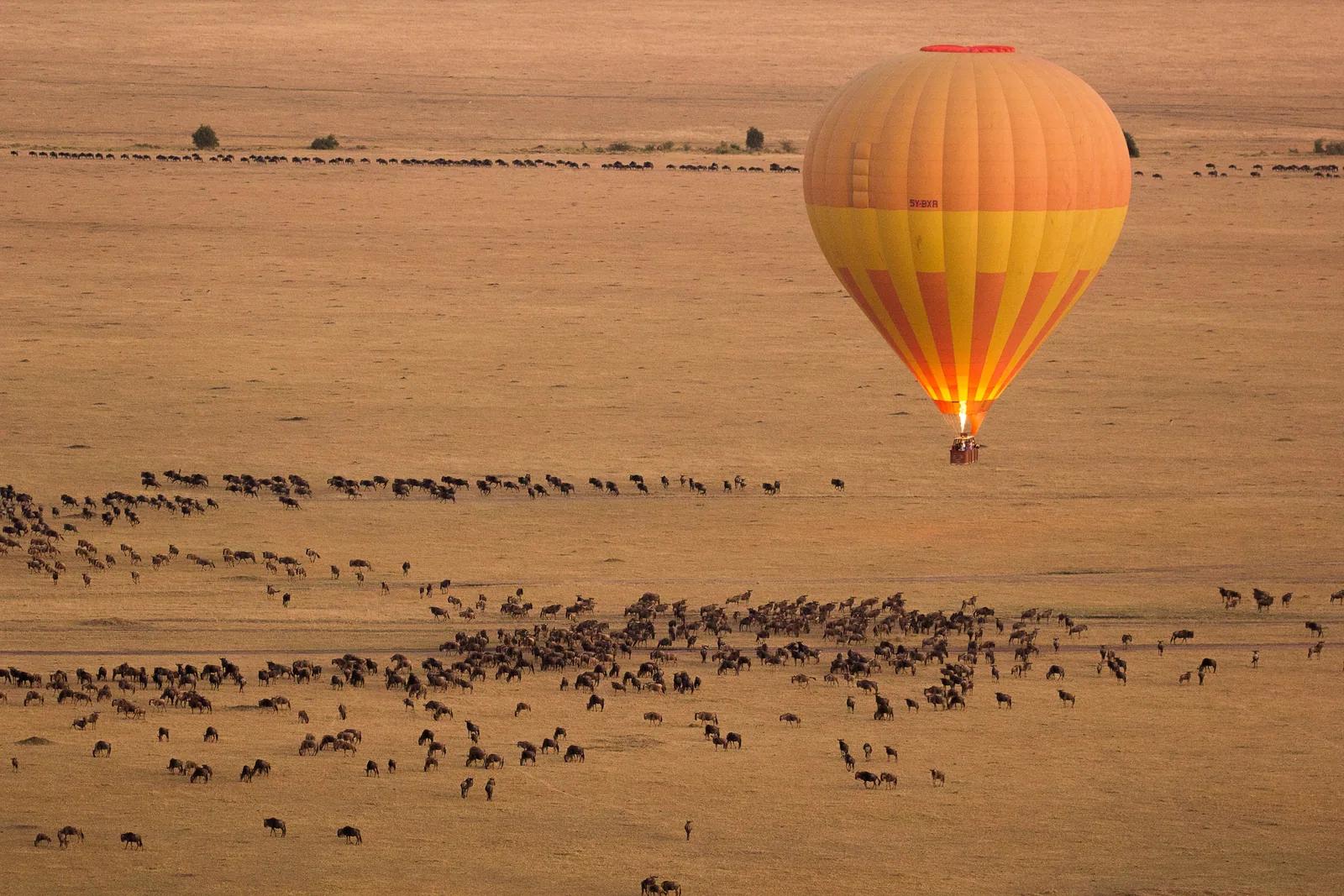
The classic image is a topi on its termite mound against a big Mara sky, ideally with a balloon or a storm cloud behind. Shoot from a low angle so the animal stands above the horizon line, with a zoom around 100 to 400 mm. The topi's coat shines in low sun, so the hour after sunrise brings out the purple sheen and the jeans on the legs. For hartebeest, a head-on portrait shows that long face and the bracket horns best. When males spar, use a fast shutter, 1/1600 of a second or quicker.
Conservation status
The IUCN lists both the topi and the hartebeest as Least Concern as species at the time of writing, though some hartebeest forms are threatened elsewhere in Africa, and taxonomists continue to debate how the topi group should be split. In the Mara itself the picture is less comfortable: long-term counts have recorded steep declines in topi and hartebeest since the 1970s and 1980s, linked to fencing, farming and settlement on the land around the reserve. The conservancies that pay Maasai landowners to keep land open are part of the answer.
Trips where you will see them
Any Mara safari of three nights or more will give you topi and hartebeest every day, and in the conservancies you can sit with a herd and watch the sentinels change shift. Nairobi National Park shows you kongoni on a layover. For Jackson's hartebeest and the roan, add Ruma to a western Kenya trip around Lake Victoria.