Wildlife. Updated November 2026. 4 min read.
Around the third morning of a safari, someone in the vehicle says just impala as the guide slows down. Our guides smile, because the impala is about to be the most interesting animal of the drive. It is the antelope that leaps, roars, grooms its neighbors and feeds every predator in the park, and in Kiswahili it is swala pala.
You will see impala in almost every park in Kenya with a mix of grass and trees: the Maasai Mara, Lake Nakuru, Nairobi National Park, Lake Naivasha, Tsavo, Samburu, Meru and the Laikipia conservancies. They are rarer on the wide-open plains, where Thomson's gazelles take over, and in dense forest. They are active all day, all year, which is exactly why people stop looking at them.
How to tell an impala from a gazelle
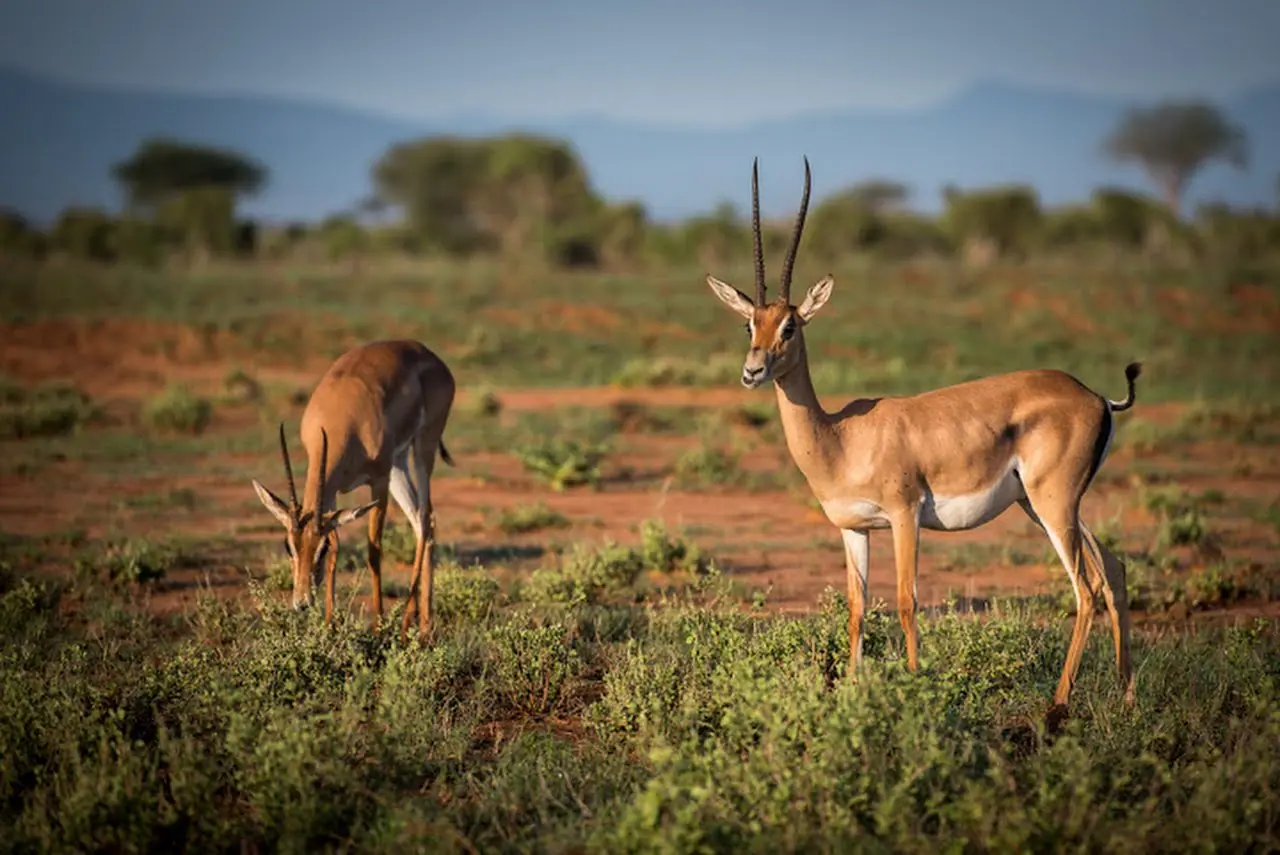
| Clue | Impala | Thomson's gazelle | Grant's gazelle |
|---|---|---|---|
| Size | Medium, about 40 to 75 kg | Small, about 15 to 30 kg | Medium, similar to impala |
| Horns | Males only, lyre-shaped | Both sexes; females' thin | Both sexes; long, curved back |
| Flank | Two-tone, red-brown back over fawn sides | Bold black stripe | Faint or no stripe in most |
| Rear | Black M made by two stripes and the tail | Small white rump, black tail always flicking | White patch running up above the tail |
| Habitat | Woodland edges | Short-grass plains | Plains and dry bush |
Herds, harems and the roar
Female impala live in herds with their young. In the breeding season a strong male takes over a territory and the females in it, chasing off rivals and herding the females together. Other males gather in bachelor herds, sparring and waiting for their chance. A territorial male makes a loud, rasping series of roars and snorts, a surprising sound from an antelope, and guests hearing it for the first time often think a big cat is nearby. Fights are clashes of horns and pushing, and the winner is usually the one with more stamina. In East Africa, where rain falls in two seasons, breeding is spread over more of the year than in southern Africa, so you can see young impala in many months.
The leap
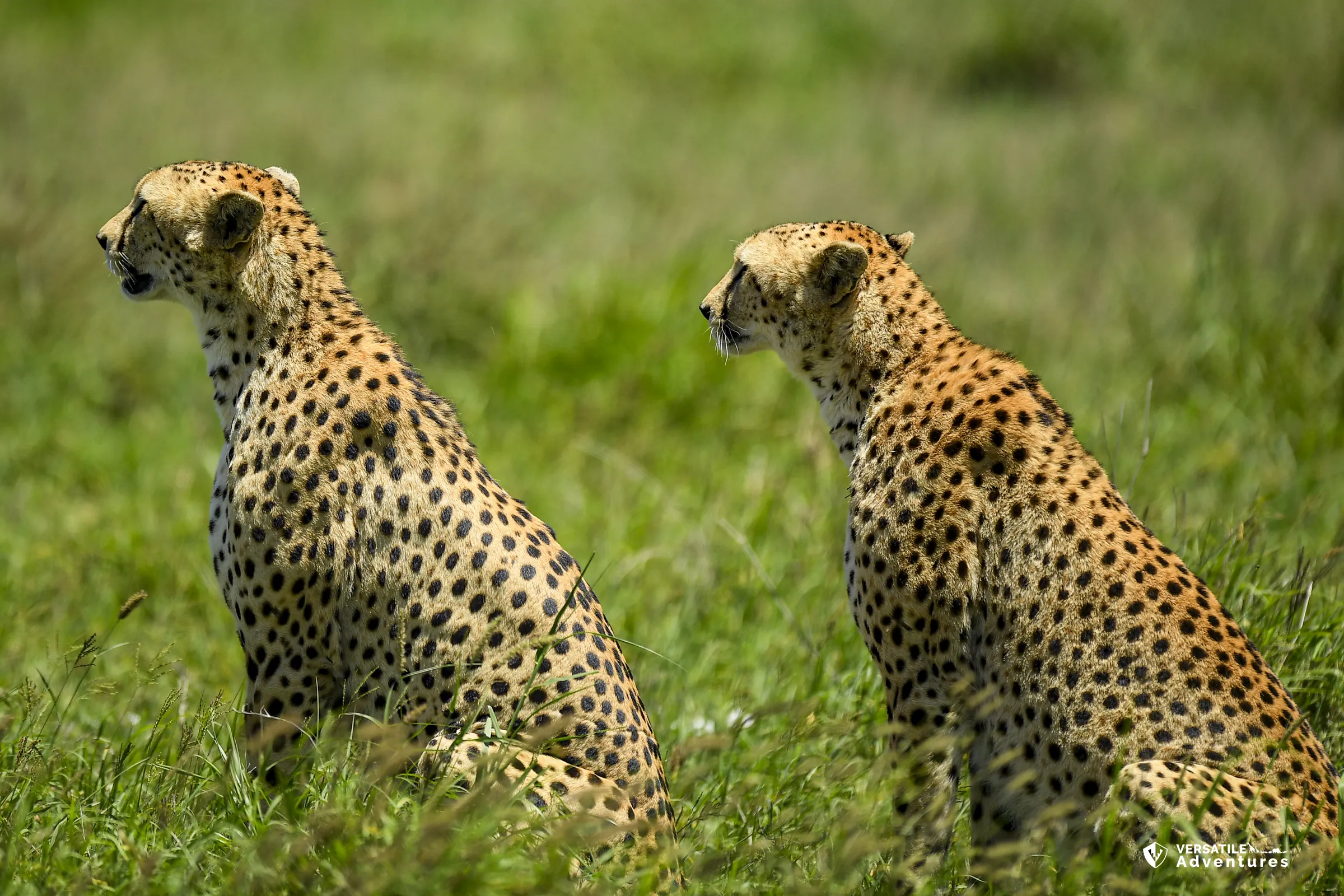
When a predator appears, a herd of impala explodes in all directions, with animals leaping high and far, sometimes over each other and over bushes. The leaps are thought to confuse a hunter trying to fix on one target. Impala also make a sharp alarm snort that sets every animal nearby on edge, and guides listen for it as a sign that a leopard or cheetah is close.
The McDonald's of the bush
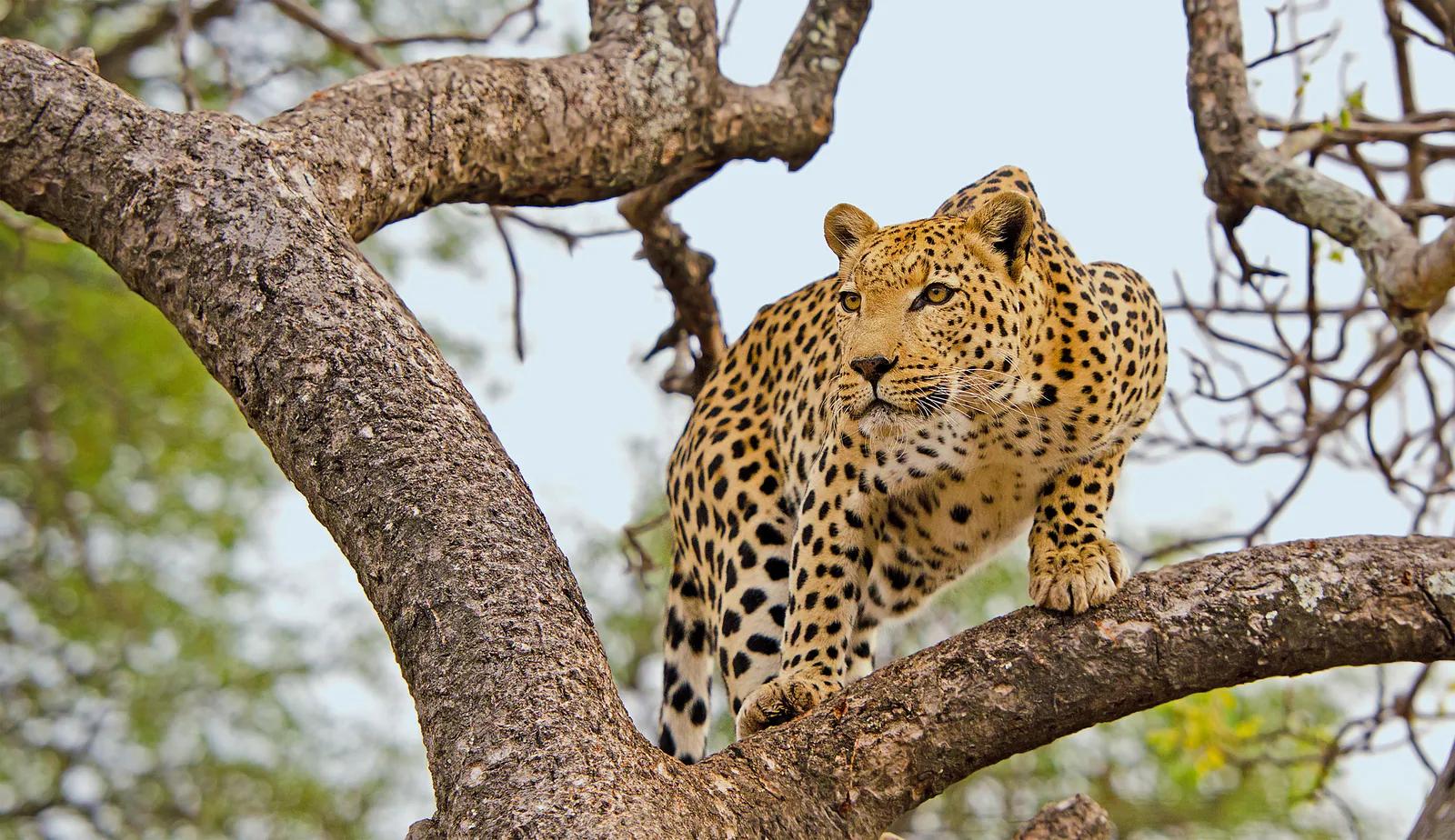
Guides across Africa tell the same joke: look at the back of an impala and you will see a black M, made by the two dark stripes on the rump and the tail between them. That is the M of McDonald's, and the impala is fast food for everything. Lions, leopards, cheetahs, wild dogs, hyenas and pythons all eat impala, and eagles take the young. In the Mara and Samburu, the impala you see hanging in a tree is usually a leopard's kill.
Behavior to watch for
- Mutual grooming: two impala take turns nibbling ticks from each other's necks and heads, a few strokes each, in a careful exchange.
- Browsing and grazing: impala eat grass when it is green and switch to leaves and shoots in the dry season, which lets them live in so many habitats.
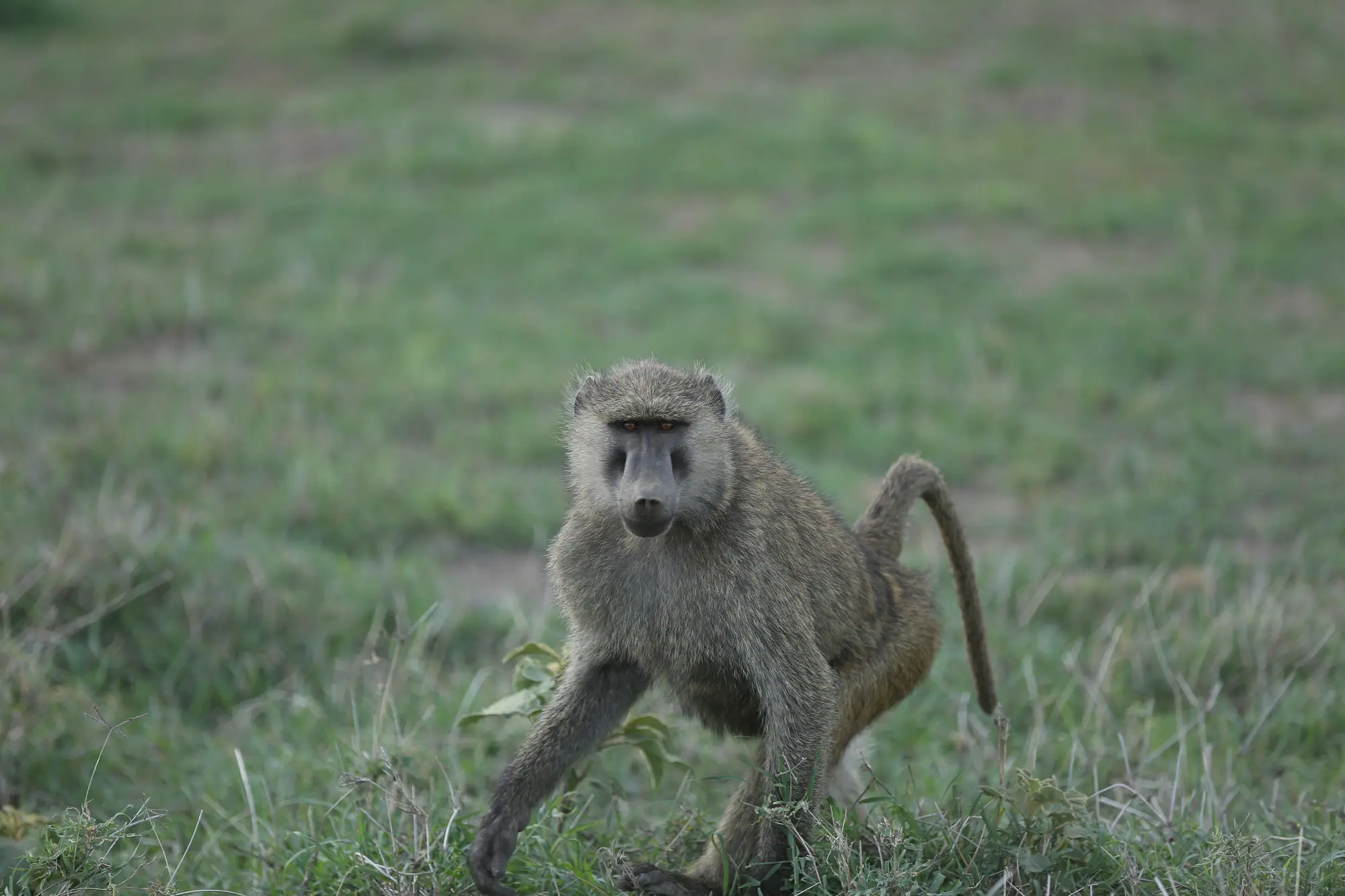
- Impala and baboons: they often feed together, and each benefits from the other's alarm calls.
- Hidden young: a mother leaves her newborn lying still in cover for its first days and returns to feed it.
- The scent tufts: the black tufts above the back hooves cover glands that leave a scent trail, which may help a scattered herd regroup.
Three things most people do not know
- The impala is not a gazelle. It is the only living member of its own group of antelopes, with no close relatives.
- Only males have horns. A herd with no horns at all is a group of females and young.
- The impala's success comes from being a generalist: by switching between grass and leaves it can live where pure grazers or pure browsers would struggle.
How to photograph impala
Because impala are everywhere, you have time to wait for behavior. Set a fast shutter, 1/2000 of a second, for leaps and fights, and use burst mode. Backlit males at sunrise, with breath steaming on a cold Mara morning, make strong portraits. Two males locked in a fight are the most dramatic shot; wait for the moment they push apart. For the M, you need an animal walking away from you, which happens more often than you would like.
Conservation status
The IUCN lists the impala as Least Concern. It is common across East and southern Africa, and in Kenya it does well in parks and conservancies. Outside them impala share the general pressure on rangeland wildlife: farms and fences, bushmeat snaring and drought. The national parks and the community conservancies, paid for in part by your fees, are where they are safest.
Trips where you will see impala
Every safari route. If you want to watch impala behavior and the predators that follow them, Lake Nakuru and the Mara's river woodlands are excellent, and Samburu adds impala alongside gerenuk and oryx. Our antelopes field guide covers the rest of the family.