Planning a safari. Updated November 2026. 6 min read.
The best light in the Mara lasts about 40 minutes, twice a day. Everything else on this page is about being in the right place, with the right settings, when it comes.
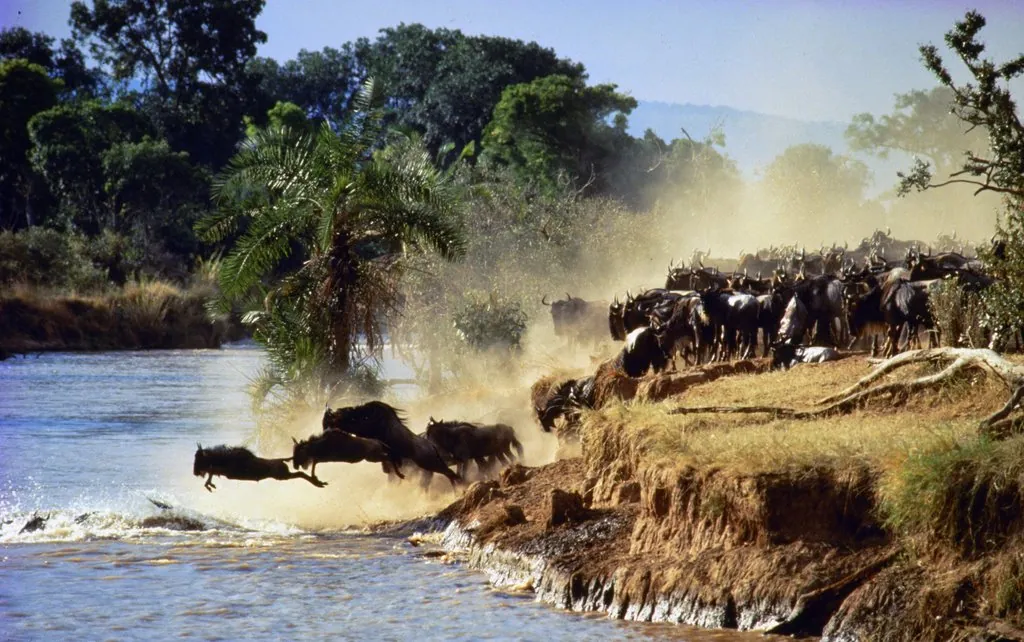
The short answer: be out at first light and stay out until the last, because those are the hours when both the light and the animals are at their best. For action, use shutter priority at 1/1000 of a second or faster. For portraits, use aperture priority at f/5.6 to f/8. Let ISO float on auto with a cap of 3200 to 6400, keep autofocus on continuous, shoot in bursts, and expose for the animal rather than the sky. On a phone, stay on the optical zoom settings and tap to focus on the eye. Then let your guide do the rest: Kenyan guides know where the light will fall and how to place the vehicle for it.
The light and the shape of the day
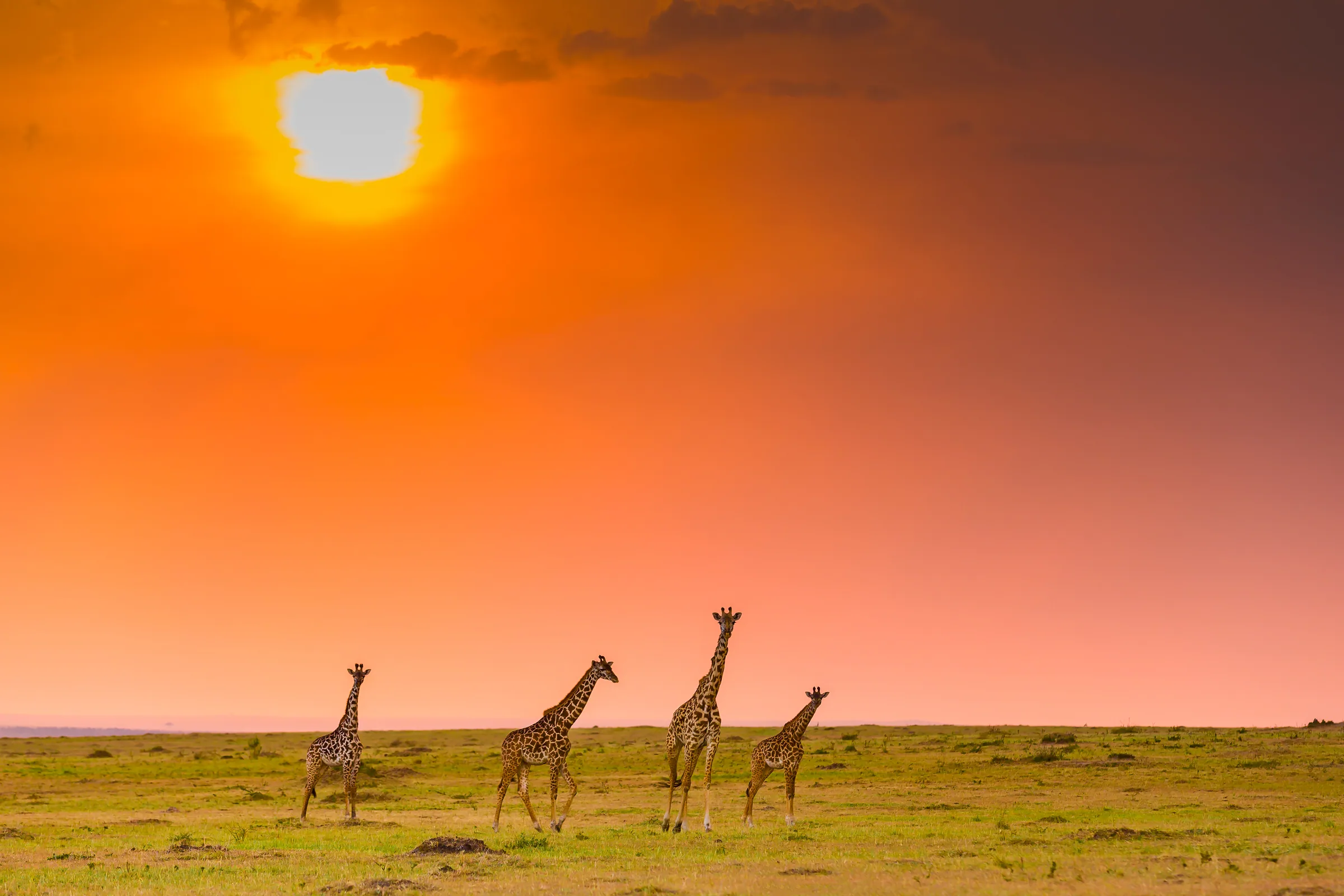
Kenya sits on the equator, so the day hardly changes through the year. The sun rises at about 6:30 and sets at about 6:45, and it climbs and falls fast. Golden light is short, and by about 9am it is already hard and white. Midday is flat, hazy and dusty, and the animals are resting in the shade anyway. In the dry season, roughly July to October, dust and haze soften the light and make the sunsets orange. In the rains, the air is clearer, the grass is green and the skies can be dramatic, with storm clouds behind elephants and rainbows over the plains.
| Time | The light | What to shoot |
|---|---|---|
| About 6:00 to 6:30 | Blue pre-dawn | Cats still on the move, silhouettes; high ISO and a steady rest |
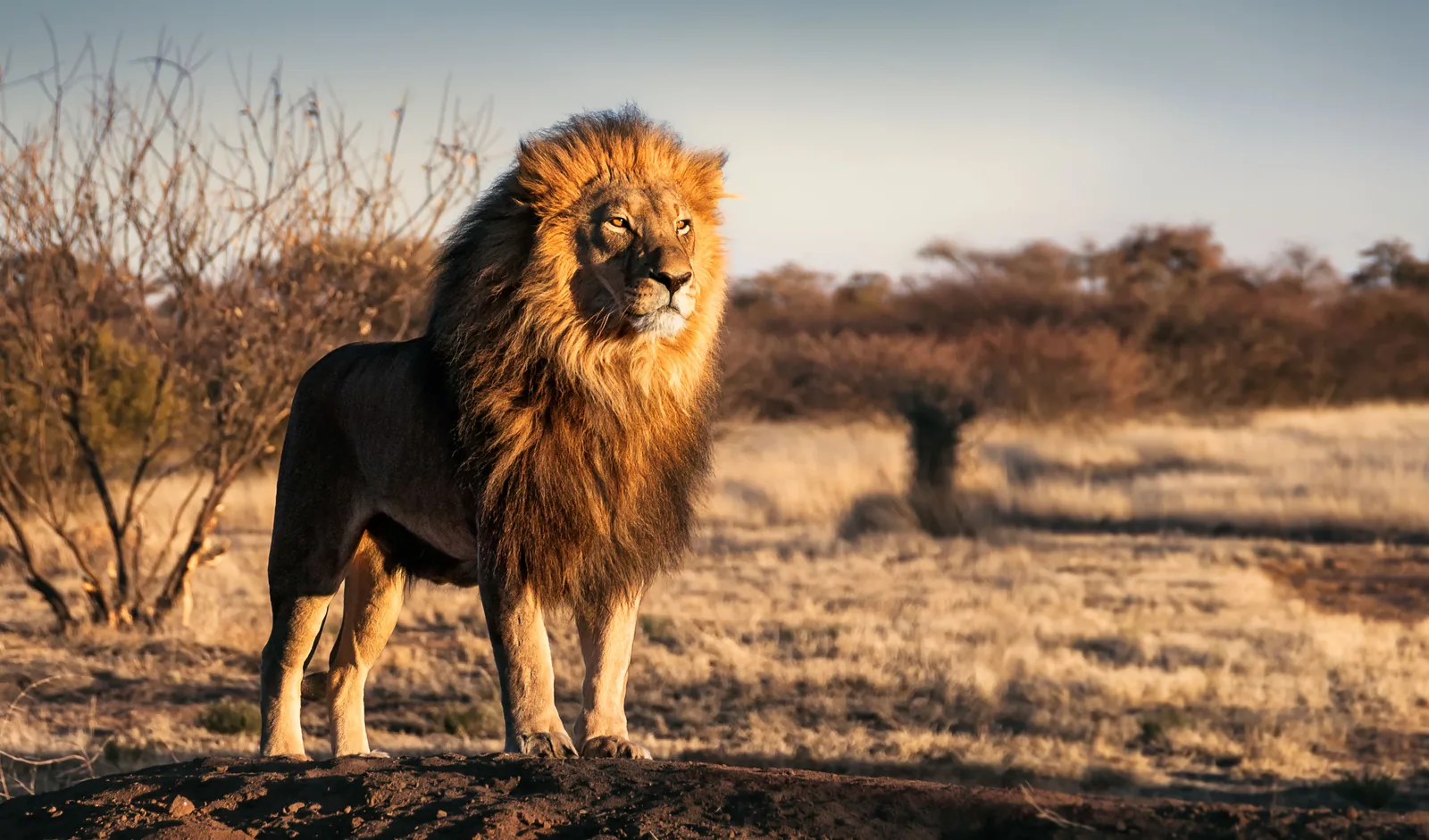
| About 6:30 to 7:15 | Low and golden | Portraits, backlit dust, balloons over the plains |
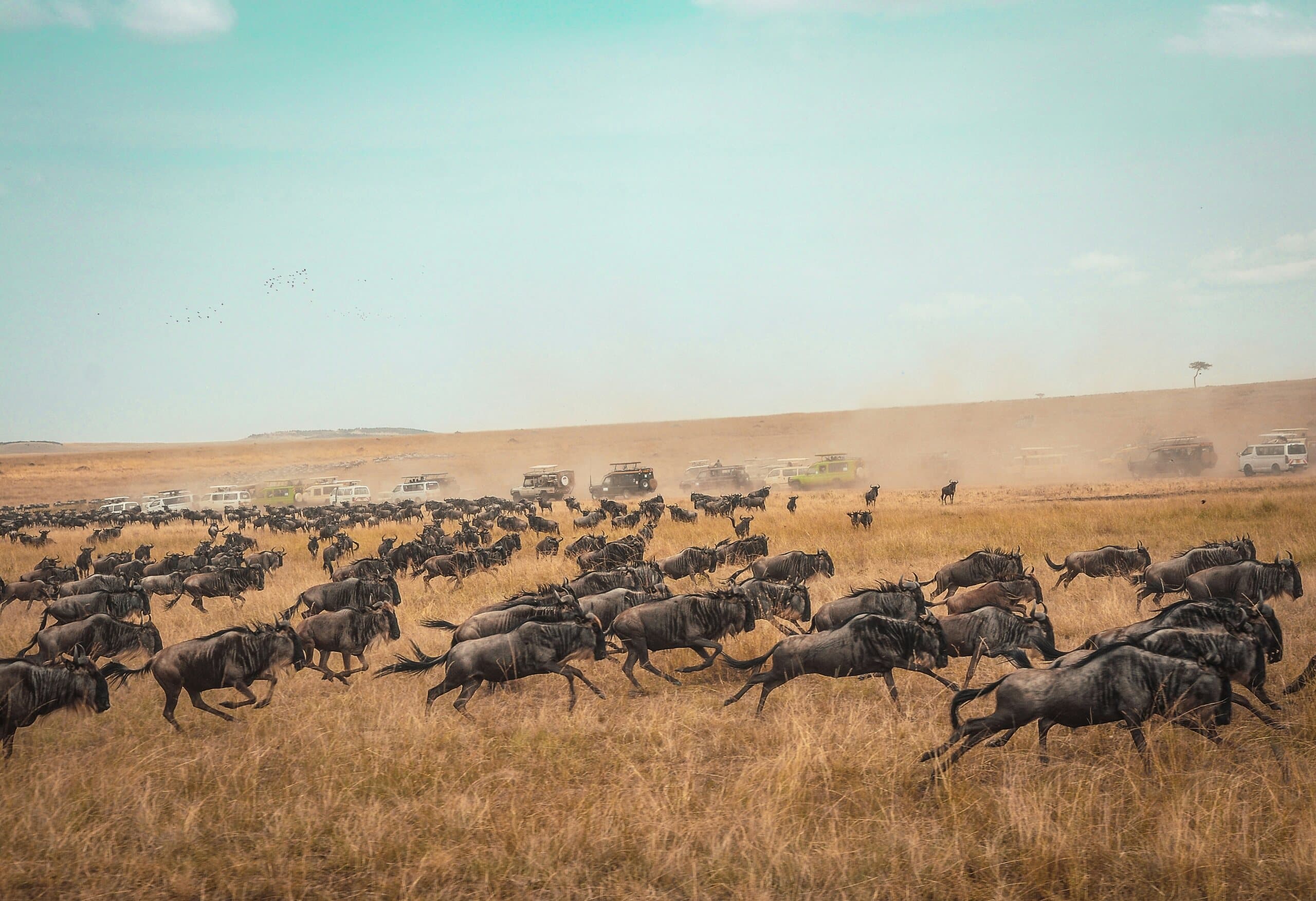
| About 7:15 to 10:00 | Bright, getting harder | Action: hunts, birds, herds on the move |
| About 10:00 to 4:00 | Flat, harsh, heat haze | Back at camp: rest, back up, birds in the shade |
| About 4:00 to 6:00 | Softening | Afternoon drives usually start around 4pm |
| About 6:00 to 6:45 | Golden to dusk | Portraits, silhouettes against the sky, the last frames |
Tell your guide on the first evening that you want to be out at first light, and ask whether a packed breakfast is possible so you do not have to come back in at the best time of the morning. On a private vehicle that is easy to arrange.
Camera settings that work
| Situation | Mode | Shutter | Aperture | ISO |
|---|---|---|---|---|
| Action: a cheetah sprint, birds in flight, a river crossing | Shutter priority | 1/1000 or faster | Whatever the camera chooses | Auto, capped at 3200 to 6400 |
| Portrait of a resting animal | Aperture priority | Keep it fast enough for your lens; around 1/500 is a safe floor with a long lens | f/5.6 to f/8 | Auto, capped at 3200 to 6400 |
| Animal in its landscape | Aperture priority | Fast enough for a steady rest | f/8 or a little narrower for depth | As low as the light allows |
| Dawn and dusk | Aperture priority | Watch it does not drop too low; brace on the bean bag | Wide open | Auto, up to the 6400 cap |
| Silhouette against the sky | Aperture priority | Fast | f/8 | Low; dial exposure down until the animal goes black |
- Continuous autofocus, with eye or animal detection if your camera has it, and burst mode for anything that moves
- Expose for the animal, not the sky. A bright sky fools the meter into making the animal dark; add a little exposure compensation or meter on the animal
- Shoot a few frames as soon as you stop, then refine. Sightings end without warning
- Turn off the beep and the fake shutter sound. Quiet vehicles get closer views
Phone photography
- Use the optical steps only, usually 1x, 2x or 3x and whatever your phone's telephoto offers. Digital zoom beyond that turns fur into paint
- Tap to focus on the eye, then slide the exposure down a touch so the sky keeps its color
- Hold the shutter for a burst when something is moving, and pick the best frame later
- Wipe the lens before every drive. Dust on a phone lens is the most common reason for soft, hazy safari photos
- Ask to borrow your guide's binoculars: hold the phone lens against the eyepiece and you have a long telephoto for a distant leopard
- Brace the phone on the window frame or the roof edge, not in the air
- Play to its strengths: landscapes, the vehicle in the scene, camp, people and short videos
Lenses and gear, in brief
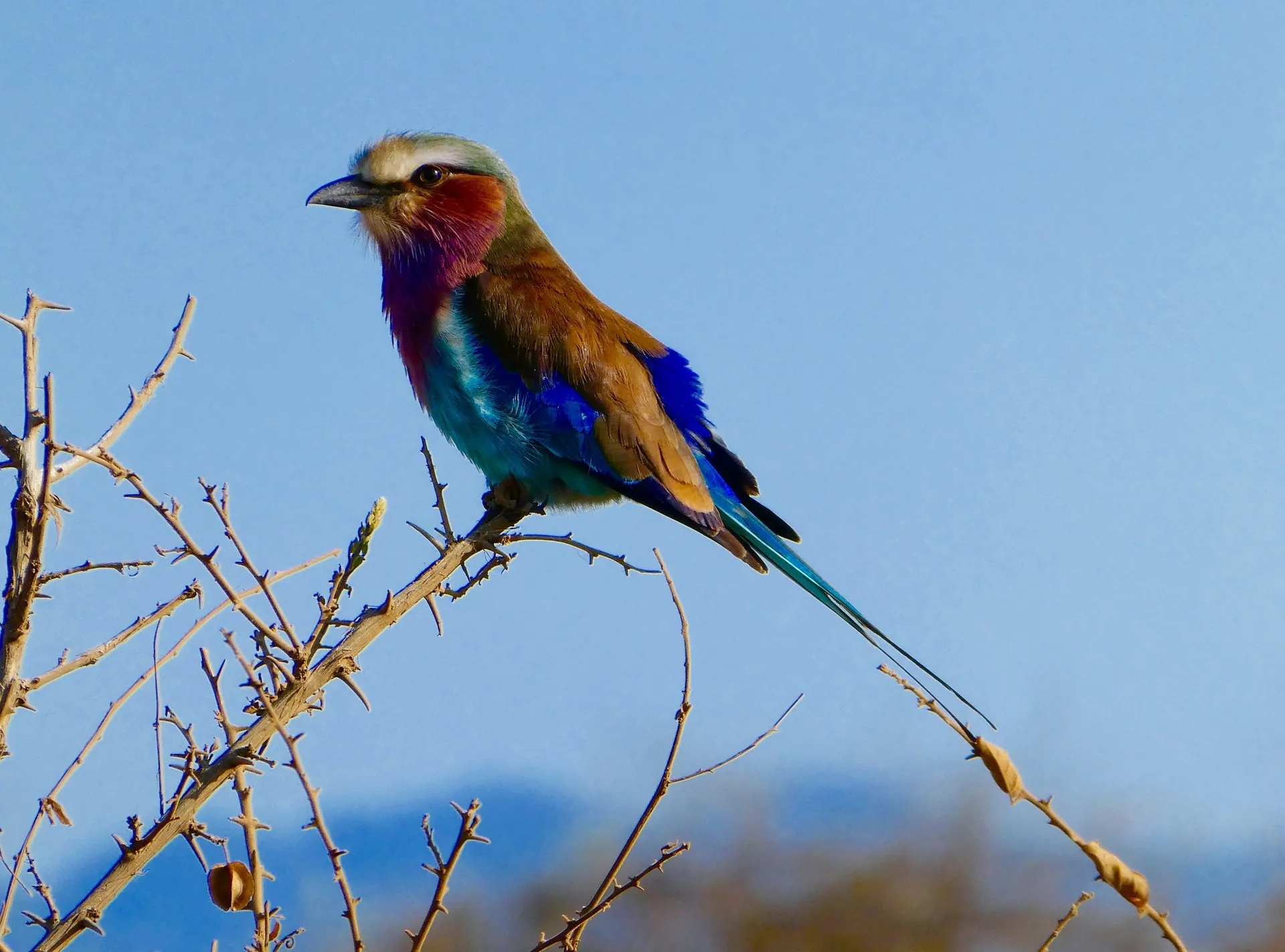
A 100-400 or a 200-600 zoom covers most wildlife. A 24-70 handles landscapes, camp and the vehicle, and a phone does everything else. A teleconverter adds reach for birds. In a vehicle, a bean bag on the window rail or the roof edge is the Kenyan tripod; a real tripod has no room to stand and picks up engine vibration. Our safari gear guide covers the kit in detail, including binoculars, and how to fit it all into the 15 kg limit on light aircraft.
Composition: what makes a frame
- Get low. Eye level is the angle that makes animal portraits work. Shoot from the window rather than the roof when the animal is close, and in an open-sided vehicle use the lower rows
- Leave space in front of the animal, in the direction it is looking or moving
- Put animals in their landscape: an elephant small under Kilimanjaro says more than a tight crop
- Wait for behavior. A yawn, a cub climbing on its mother or a lioness stalking low beats any static portrait
- Watch the background. Ask your guide to move a few meters for clean grass instead of a branch through a head
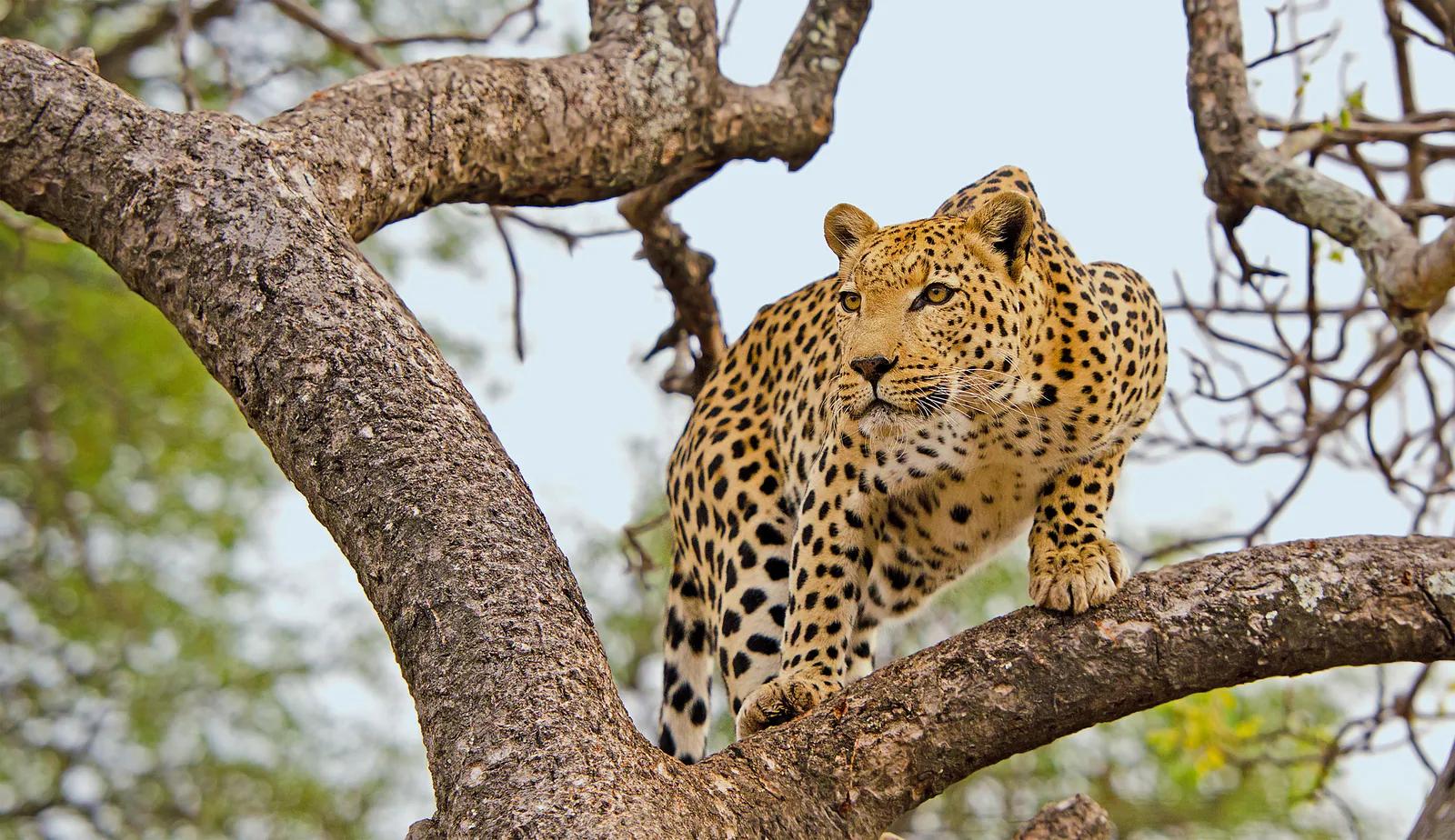
- Turn the camera for giraffes, trees and leopards in acacias
Dust, heat and backup
- Cover the camera between sightings with a buff, a scarf or a pillowcase. Keep it off the floor
- Carry lens cloths and a blower brush, and clean every evening
- Change lenses inside the vehicle, with the windows closed or your back to the wind
- Do not leave the camera in the sun on the dashboard or the roof
- Bring two memory cards at least, copy the day's photos every night, and do not format a card until you are home
- Carry a power bank for the phone and spare batteries for the camera; our plugs guide covers chargers
Balloon mornings
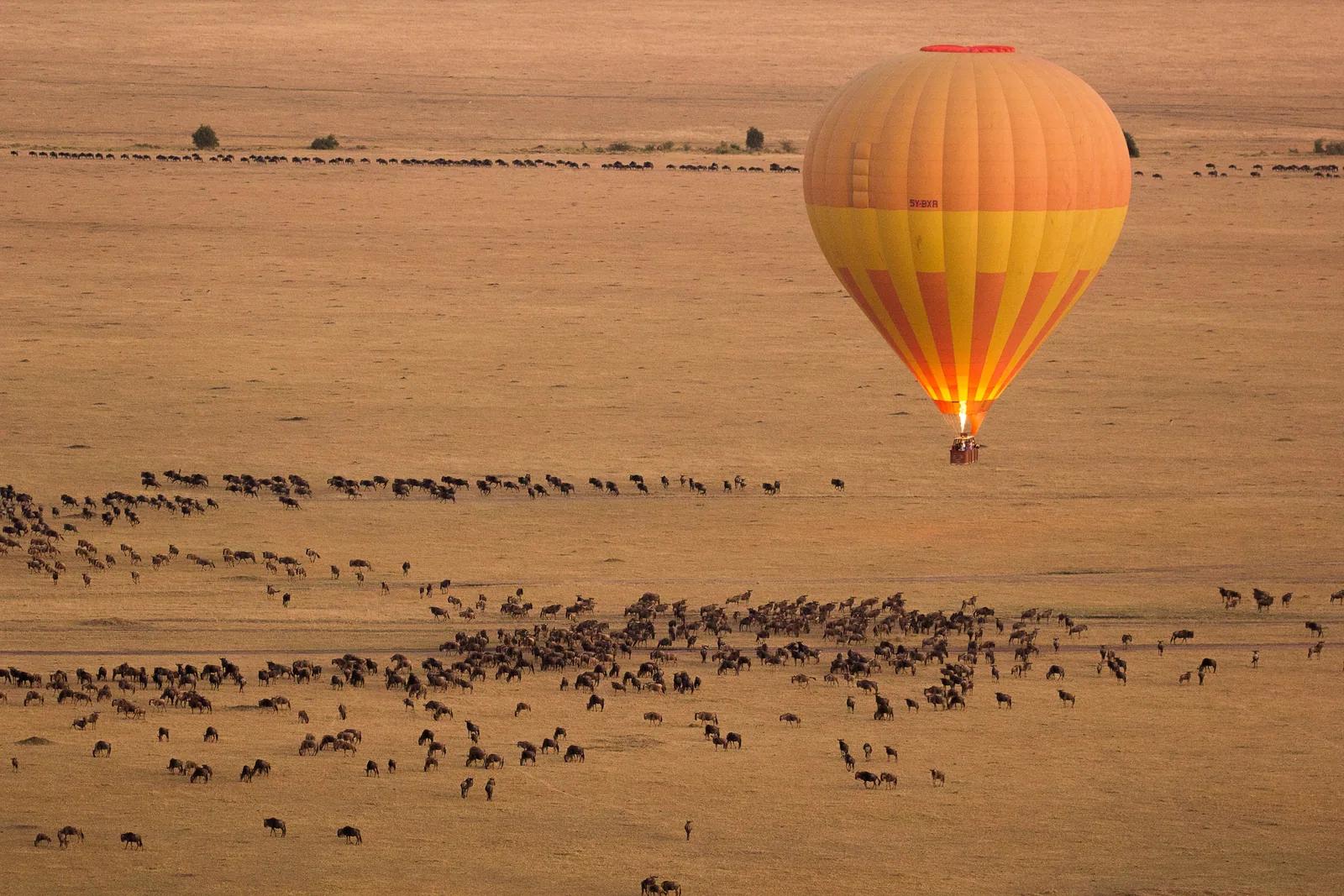
A balloon flight over the Mara is a wide-angle morning. Launch happens in the half-dark, so raise the ISO and shoot the burner glowing against the envelope. Once you are up, the light arrives fast: shoot the shadows of the balloons on the plains and the herds below. Carry one camera with a wide or standard zoom on a strap, plus your phone, and leave the long lens in the vehicle.
Photographing people, and the rules
Ask before you photograph anyone, and accept no as an answer. In Maasai and Samburu villages a posed portrait is sometimes paid for at a price agreed in advance, and children are never photographed without a parent's consent. Never use flash on animals. Drones need permits from the Kenya Civil Aviation Authority and are not allowed in national parks or reserves. Our photography and drones rules page has the details, and game drive etiquette covers how to behave at a crowded sighting.
Planning a trip around photography
Photography rewards time and control. A private vehicle lets you leave before dawn, stay with a sighting for an hour and ask for the vehicle to be turned for the light. At fly-in camps, open-sided vehicles give the best angles, and a private-vehicle supplement keeps other guests from rocking the vehicle as you shoot. Three nights or more in one place gives you time to learn where the animals are. Tell us when you plan that photography matters, and we will build the days around the light.