Planning a safari. Updated November 2026. 7 min read.
The vehicle is your seat, your window and your shade for eight hours a day. A pop-top minivan and a Land Cruiser feel much the same on the first morning in the sunshine. By the third afternoon, after rain in the Mara, you will know they are not the same.
The short answer: Kenya safaris use three kinds of vehicle. The pop-top minivan is the budget standard and does well on tarmac and dry park roads. The closed 4x4 Land Cruiser with a pop-top roof is the mid-range standard for road safaris: it collects you in Nairobi, drives the highway between parks and handles any track in any season. The open-sided 4x4 is the camp vehicle at fly-in lodges and conservancies, the best seat for views and photographs, and it is not allowed on the highway. Which one you get depends mostly on whether you drive between parks or fly.
The three vehicles side by side
| Pop-top minivan | Closed 4x4 Land Cruiser with pop-top | Open-sided 4x4 | |
|---|---|---|---|
| What it is | A Toyota HiAce-type van with a roof that lifts up | A Toyota Land Cruiser with a lifting roof and opening windows | A Land Cruiser with the sides cut away, raised tiers of seats and a canopy |
| Seats | Usually seven | Usually seven, in three rows behind the driver | Tiered benches; conservancy camps cap guests at six per vehicle |
| Drive | Two-wheel drive, low to the ground | Four-wheel drive, high clearance | Four-wheel drive, high clearance |
| Best on | Tarmac and dry roads: Nairobi, Naivasha, Nakuru | Any track in any season, plus the highway between parks | Game drives inside one park or conservancy |
| Weak spot | Mud and black cotton soil; the Mara after rain | Glass and roof frame between you and the view | Cold at dawn, dusty, exposed in rain, no highway use |
| Photography | The pop-top works; low seats and a bumpier ride | Good: stand under the roof or shoot from a window on a bean bag | Best: no glass, raised seats, angles close to eye level |
| Extras to expect | Basic | Often charging points, a fridge or cooler and a first-aid kit | Depends on the camp: blankets, ponchos, drinks |
| Who gets it | Day trips, budget and group-join tours | Private and mid-range road safaris | Fly-in guests and conservancy camps |
The pop-top minivan
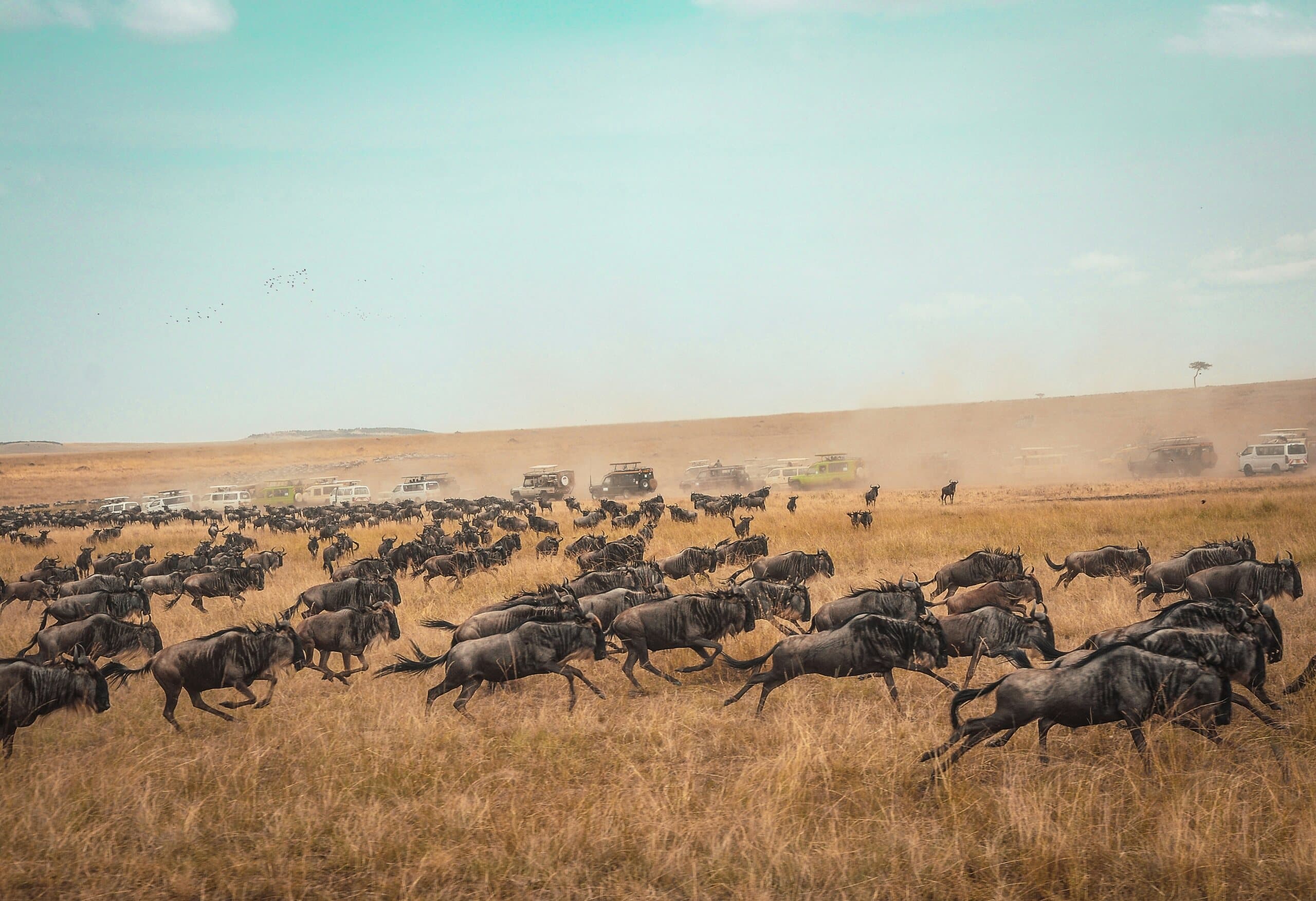
The minivan is the vehicle in most budget safari photos: a white Toyota HiAce-type van with a roof that lifts on struts so you can stand and look out. It seats about seven, it is two-wheel drive and it sits low. On the tarmac from Nairobi to Naivasha and Nakuru it is comfortable and perfectly adequate, and it is what many day trips and cheap group departures use. Its problem is the ground. Black cotton soil turns to glue after rain, and a low two-wheel-drive van can get stuck or have to stay on the main tracks while the 4x4s go where the lions are. In the Mara in the rains, or on rough roads in Samburu and Tsavo, that matters.
The closed 4x4 Land Cruiser
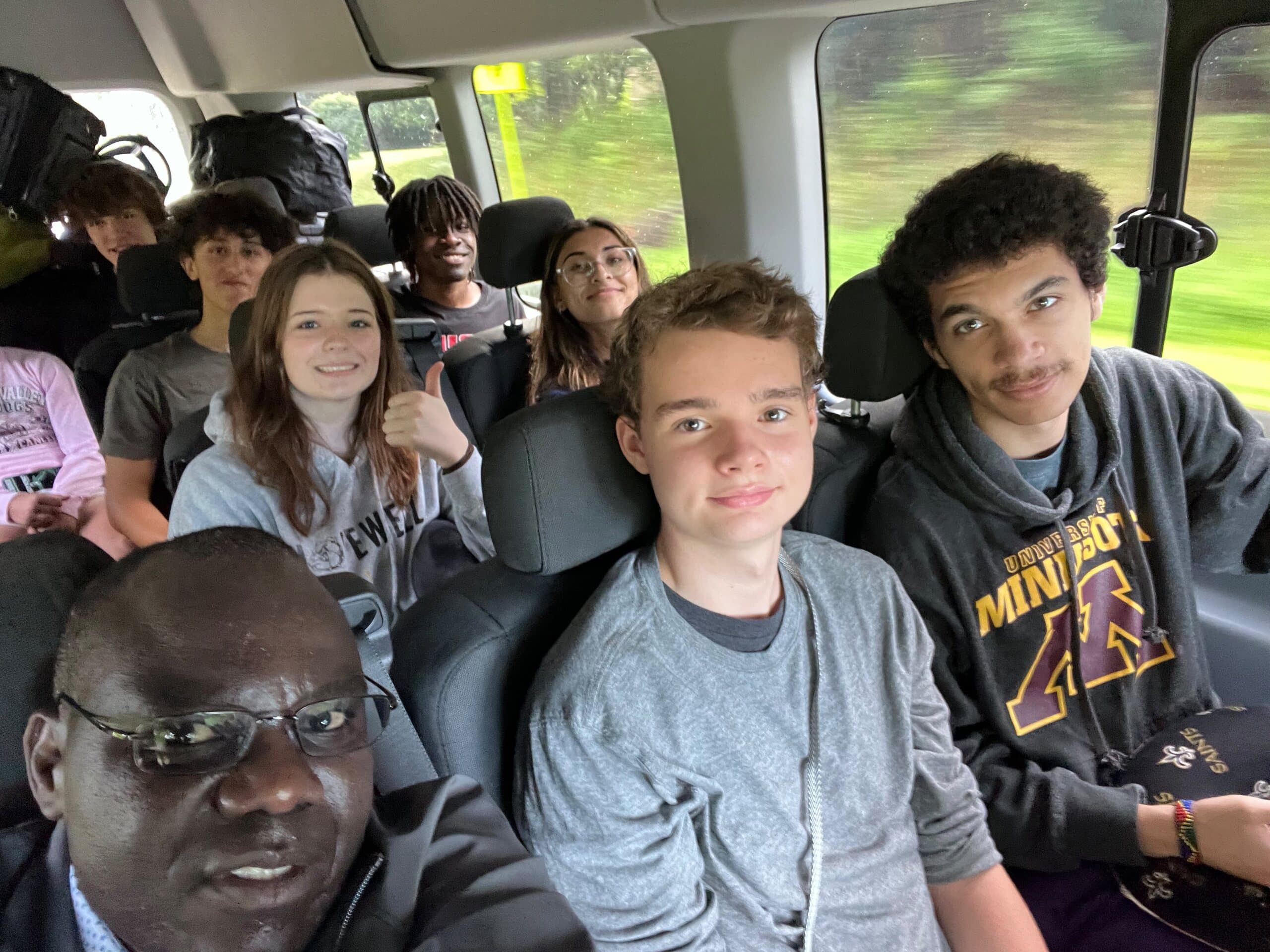
The closed Land Cruiser with a pop-top roof is the workhorse of the Kenyan road safari. It is the vehicle that collects you from your Nairobi hotel, drives the highway to the Mara or Amboseli, and then goes out on game drives with the same guide for the rest of the trip. Four-wheel drive and high clearance mean it handles mud, river beds and rocky tracks. The roof lifts so everyone can stand in the shade with a clear view on every side, and the windows open for photographs from your seat. Many have charging points, a cooler or fridge for water, and a first-aid kit. A seven-seat layout with fewer people in it is the comfortable way to travel: everyone gets space for a camera bag and a turn at the best side of the vehicle.
The open-sided 4x4
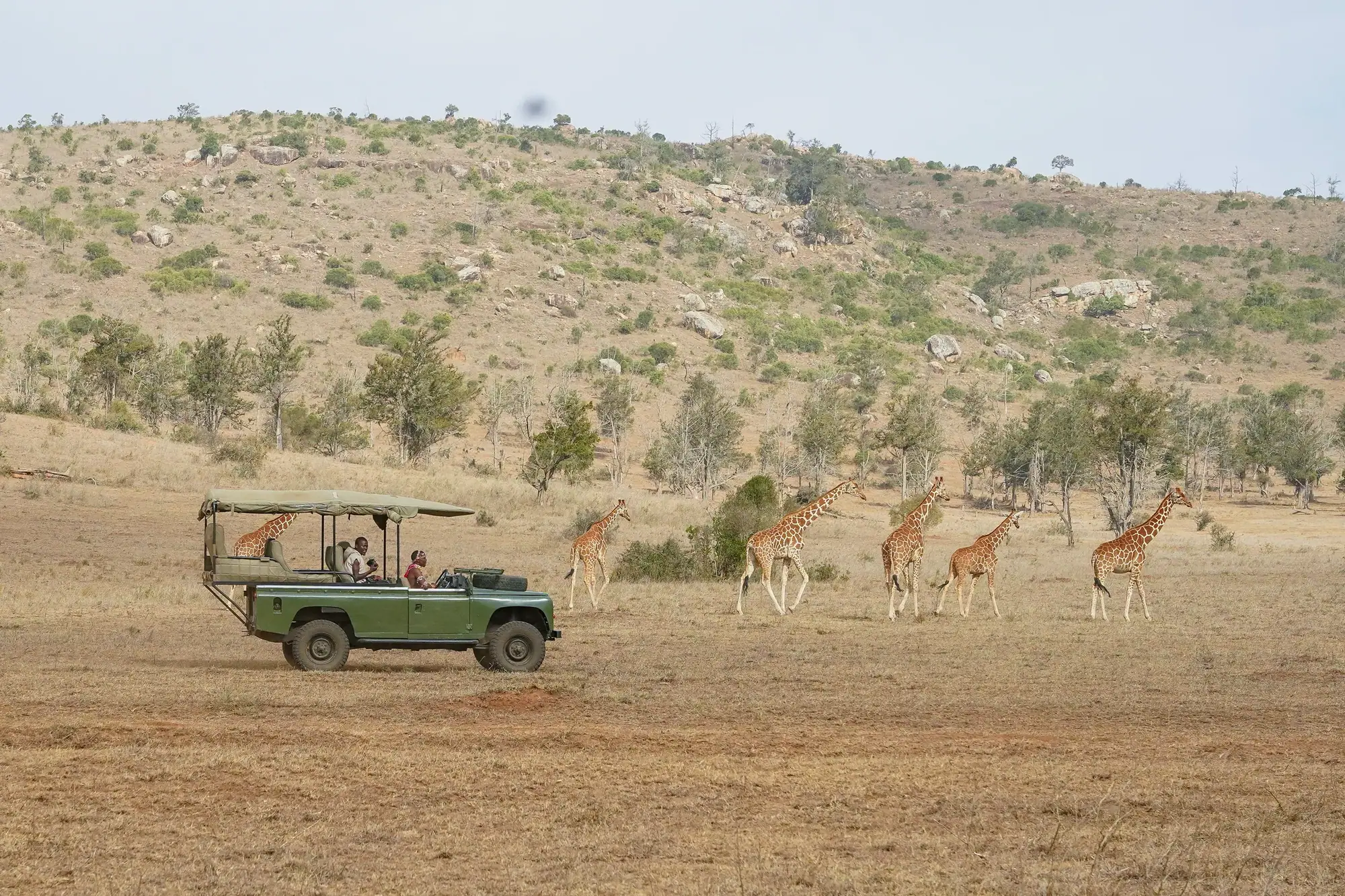
Fly in to a camp in the Mara conservancies, Laikipia or Samburu and you will be met at the airstrip by an open-sided Land Cruiser. The sides are cut away and the seats rise in tiers, so the back row sees over the front. There is no glass between you and the animals, which makes it the best vehicle for photography and for the feeling of being out in the open. It is also cold at dawn, so bring a warm layer even in the dry season, and it is dusty and exposed in a downpour. Open vehicles are not allowed on public highways, which is why they stay inside the park or conservancy and you only meet them on fly-in trips or at camps with their own fleets. At most fly-in camps the vehicle is shared with other guests unless you pay for a private one.
Specialist vehicles
- Photographic vehicles: Land Cruisers fitted with bean-bag mounts, swivel seats or drop-down sides for low angles. Worth asking for on a photography trip
- Stretched Land Cruisers: longer bodies with an extra row, for groups of eight or nine who want to stay together
- 4x4 minibuses: larger four-wheel-drive buses used for school and church groups on main routes
Which vehicle each kind of trip gets
| Trip type | The vehicle you usually get | Worth knowing |
|---|---|---|
| Budget group-join from Nairobi | A minivan, sometimes a Land Cruiser | Ask which before you pay; the price gap is small |
| Private road safari | A closed 4x4 Land Cruiser with a pop-top | The same vehicle and guide for the whole trip |
| Fly-in safari | The camp's open-sided 4x4, usually shared | A private vehicle is a daily supplement |
| Road and fly-in mixed | A Land Cruiser on the road legs, camp vehicles at fly-in camps | You may change guides between parks |
| Schools and large groups | Several Land Cruisers or 4x4 minibuses | Plan the seat count per vehicle before anything else |
| A photography trip | A private Land Cruiser or a photographic vehicle | Book a private vehicle at every fly-in camp too |
For the bigger choice behind this table, driving between parks or flying, see our guide to fly-in versus road safaris. For what changes when the vehicle is yours alone, see private versus shared safaris.
What the difference costs
A safari vehicle with a professional guide costs roughly $250 to $400 a day on a private trip, fuel and the guide's costs included in most quotes. Choosing a minivan instead of a Land Cruiser saves perhaps $50 to $80 a day. Split across a family, that is very little per person, and it is the first saving to give back if your route includes the Mara in the rains or rough roads anywhere.
| Choice | Rough cost | Per person, family of four |
|---|---|---|
| Private Land Cruiser with guide | About $250 to $400 a day | About $60 to $100 a day |
| Private minivan with guide | Perhaps $50 to $80 a day less | About $12 to $20 a day less |
| Private vehicle at a fly-in camp | A supplement of about $300 to $500 a day | About $75 to $125 a day |
On a seven-day road safari, the minivan saving comes to about $350 to $560 for the whole vehicle. If one afternoon is lost to a stuck van or a detour around a flooded track, it was not a saving. For the full picture of what a trip costs, see our Kenya safari cost guide.
Window seats and how many people
Seat count matters more than the badge on the front. A full seven-seat vehicle means shared roof space, elbows in every photograph and little room for camera bags. Four to six people is comfortable for most families and friends. On a shared departure, ask how many seats the company sells per vehicle, and ask to see a photo of the seating layout. For groups of seven or more who all care about the view, price two vehicles: the cost per person often barely moves.
What to ask your operator
- Is it a Land Cruiser or a minivan, two-wheel or four-wheel drive, and how many seats will you sell in it?
- Does the whole roof lift (a pop-top), or is it a small sliding hatch? A pop-top gives shade and a view all round; a hatch gives neither
- Do the seat belts work in every seat?
- Does it carry two spare tires?
- On remote routes, is there an HF radio or a satellite phone as well as mobile signal?
- Is there a cooler with drinking water and somewhere to charge a phone or camera battery?
- Who drives? In Kenya the guide is usually also the driver. Ask whether your guide holds Kenya Professional Safari Guides Association (KPSGA) certification, and at what level
- Is it the same vehicle and guide for the whole trip, or do you change at fly-in camps?
If you are thinking of driving yourself, our guide to driving in Kenya covers hiring a 4x4, the roads and the park rules. For the wider checklist on operators, see how to choose a safari company.
What we use
On our road safaris and itineraries you travel in a private 4x4 safari vehicle with a pop-top roof, driven by a professional Kenyan driver-guide, and the vehicle is yours for the trip. On fly-in itineraries and at conservancy camps, game drives are in the camp's own vehicles, which are usually open-sided. We tell you before you book whether those drives are shared, and we price a private vehicle there if you want one. Tell us your group size and we will say how many vehicles and seats your quote assumes. Ask us for our partners' licences and the vehicle details on your quote.