Wildlife. Updated November 2026. 4 min read.
Guests photograph lions, leopards and elephants. Then they photograph warthogs, again and again, usually at breakfast. A family of warthogs kneeling on the lodge lawn, tails twitching, is one of the most cheerful sights on a Kenyan safari, and the animal's mix of ugliness and dignity wins people over by the second day. In Kiswahili it is ngiri.
You will see warthogs in almost every savanna park in Kenya: Nairobi National Park, Lake Nakuru, the Maasai Mara, Amboseli, Tsavo, Samburu, Ol Pejeta and Hell's Gate, where you may pass them on a bicycle. Unlike most wild pigs, warthogs are active by day and sleep in burrows at night, so any game drive will turn them up. The desert warthog, a close relative, lives in Kenya's dry north-east.
Behavior to watch for
- Kneeling: warthogs drop onto their wrists to graze short grass, and they grow thick calluses there. A warthog kneeling and walking forward on its knees is completely normal.
- Tails up: when warthogs run, they carry their thin tails straight up, tuft at the top. In tall grass it may help piglets follow their mother.
- Backing in: a warthog reverses into its burrow, usually an old aardvark hole, so it faces out with its tusks toward anything that follows. Piglets go in first.
- Rooting: in the dry season, when grass is short, warthogs dig for roots and bulbs with the hard edge of the snout.
- Wallowing: mud baths cool them and coat the skin against insects and sun.
- Families: sows and piglets live in groups called sounders. Adult males often live alone or in small bachelor groups, and visit the sounders in the breeding season.
Kenya's wild pigs
| Pig | Where in Kenya | How to see it |
|---|---|---|
| Common warthog | Savanna parks across the country | Any daytime game drive |
| Desert warthog | The dry north-east, including parts of Tsavo East and the land toward Somalia | Rarely; ears bend back at the tips |
| Bushpig | Forests, thickets and farmland edges | Mostly at night; rarely seen |
| Giant forest hog | Aberdare and Mount Kenya forests, and some western forests | At night from the Aberdare waterhole lodges, with luck |
The giant forest hog is the largest wild pig in the world, and the Aberdares are one of the best places anywhere to see one, at a floodlit waterhole after dark.
Three things most people do not know
- The warts are not warts. They are thick pads of skin on the face, and they help protect the eyes and jaw when males fight. Males have two pairs, females one smaller pair.
- Pumbaa is a Kiswahili word. It means to be foolish or dazed, and hakuna matata, the song's catchphrase, means no worries.
- Warthogs fight back. A sow with piglets will charge a cheetah or a jackal, and the curved lower tusks are sharp enough to injure a predator badly.
Who eats warthogs
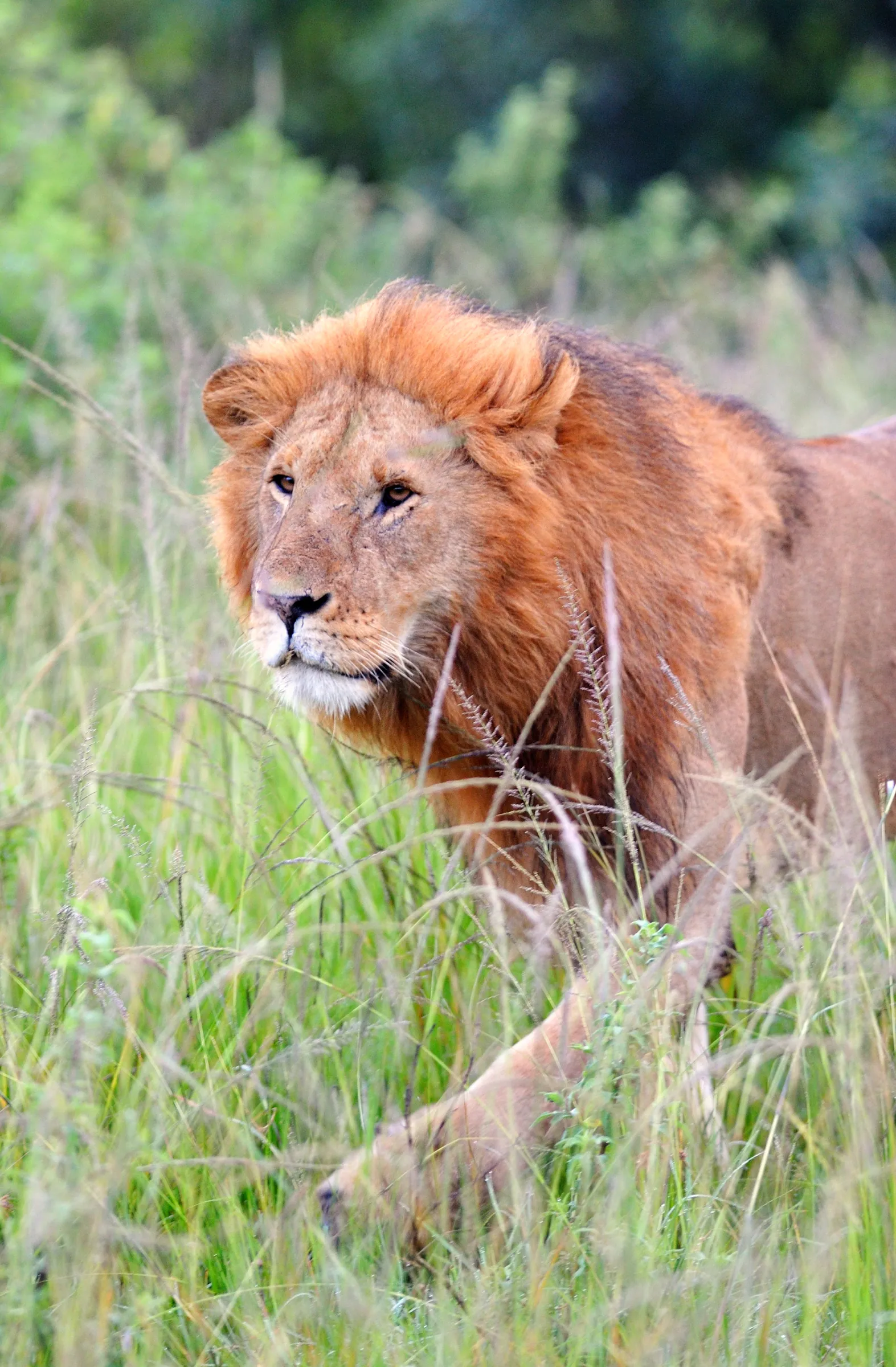
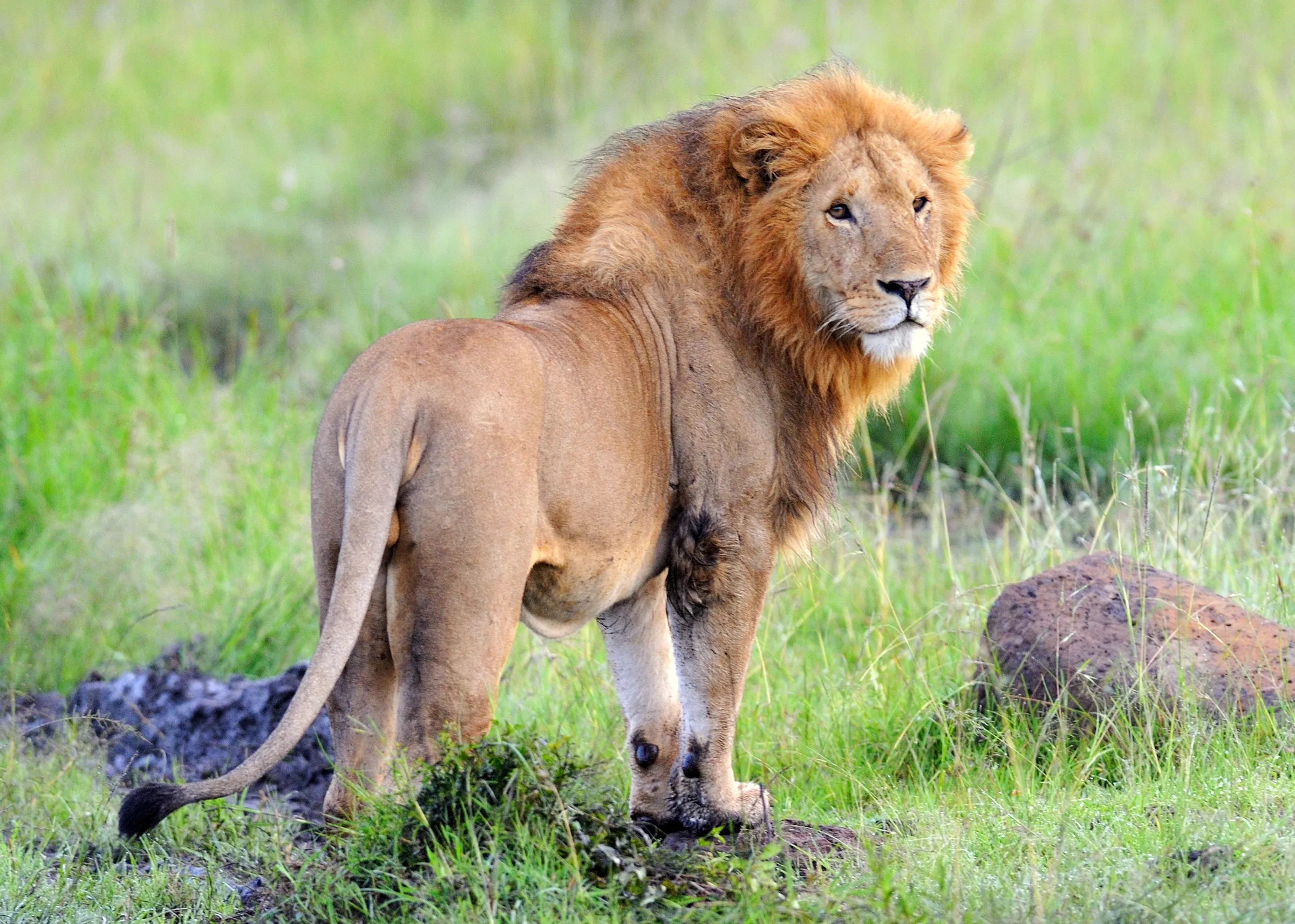
Lions are the main predator of adult warthogs, and in the Mara you may watch a lioness waiting beside a burrow at dawn or digging one out. Leopards, cheetahs, spotted hyenas and wild dogs take warthogs too, and eagles and pythons take piglets. A warthog can run at around 50 kilometers an hour in short bursts, and the burrow is usually its best defense.
Warthogs at your lodge
Many lodges in Nairobi National Park, at Lake Nakuru, at Naivasha and in Laikipia have warthogs that graze the lawns, because short, watered grass is exactly what they like. They are wild animals, not pets. Do not feed them, do not try to get between a sow and her piglets, and give a male with big tusks room on the path. They will usually trot away with their tails up, which is the photo you want anyway.
How to photograph warthogs
Get low. From the vehicle window or, at a lodge, crouched at a safe distance, a warthog's face at eye level is all character. The kneeling pose and the running line of tails are the classic shots: for the run, use a fast shutter around 1/1600 of a second and pan with the family. Soft early light flatters the bristly mane and keeps the shadows off the face.
Conservation status
The IUCN lists the common warthog as Least Concern, and it is widespread in Kenya's parks and on many ranches and conservancies. Outside protected areas warthogs are hunted for bushmeat and killed as crop pests, and drought hits them hard because short grass disappears first. The desert warthog of the north-east is less known, and its range overlaps with some of Kenya's most remote country.
Trips where you will see warthogs
Every safari circuit includes warthogs. A day in Nairobi National Park before or after your flight, a stay at Lake Nakuru or the Mara, or a cycle through Hell's Gate will almost certainly give you a family with their tails up.