Wildlife. Updated November 2026. 5 min read.
Leave a tent unzipped at a safari camp for five minutes and you may meet the most skilled thieves in Kenya. Vervet monkeys know which bag holds the sugar sachets, and they can open a zip faster than you can put down your coffee. They are also the start of a much bigger story: Kenya has about 20 kinds of primate, from troops of baboons on the savanna roads to black-and-white colobus leaping through the coast forest and bushbabies calling outside your lodge at night.
You will see baboons and vervets on almost every safari without trying. For the forest monkeys, go to Kakamega Forest in the west, Diani on the south coast, the forests of Mount Kenya and the Aberdares, and Saiwa Swamp near Kitale. This page is the overview. We have separate pages on colobus monkeys, bushbabies and the rescued chimpanzees at Ol Pejeta, so here you get the whole cast and where to find each.
Kenya's primates at a glance
| Primate | Where in Kenya | How to recognize it |
|---|---|---|
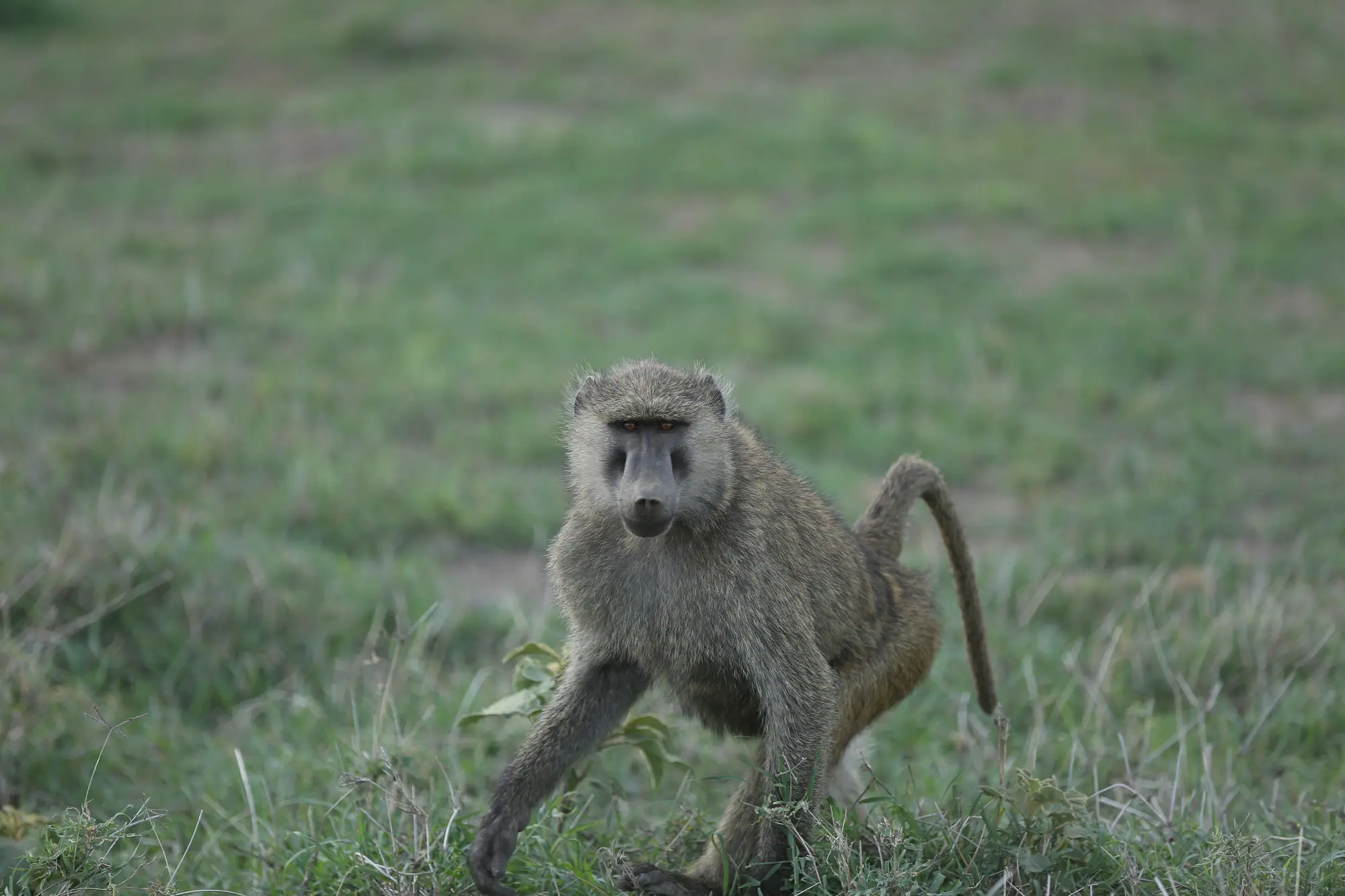
| Olive baboon | Mara, Nakuru, Naivasha, Hell's Gate, Laikipia | Big, olive-gray, in troops of dozens |
| Yellow baboon | Amboseli, Tsavo and the coast | Slimmer, yellowish, long-legged |
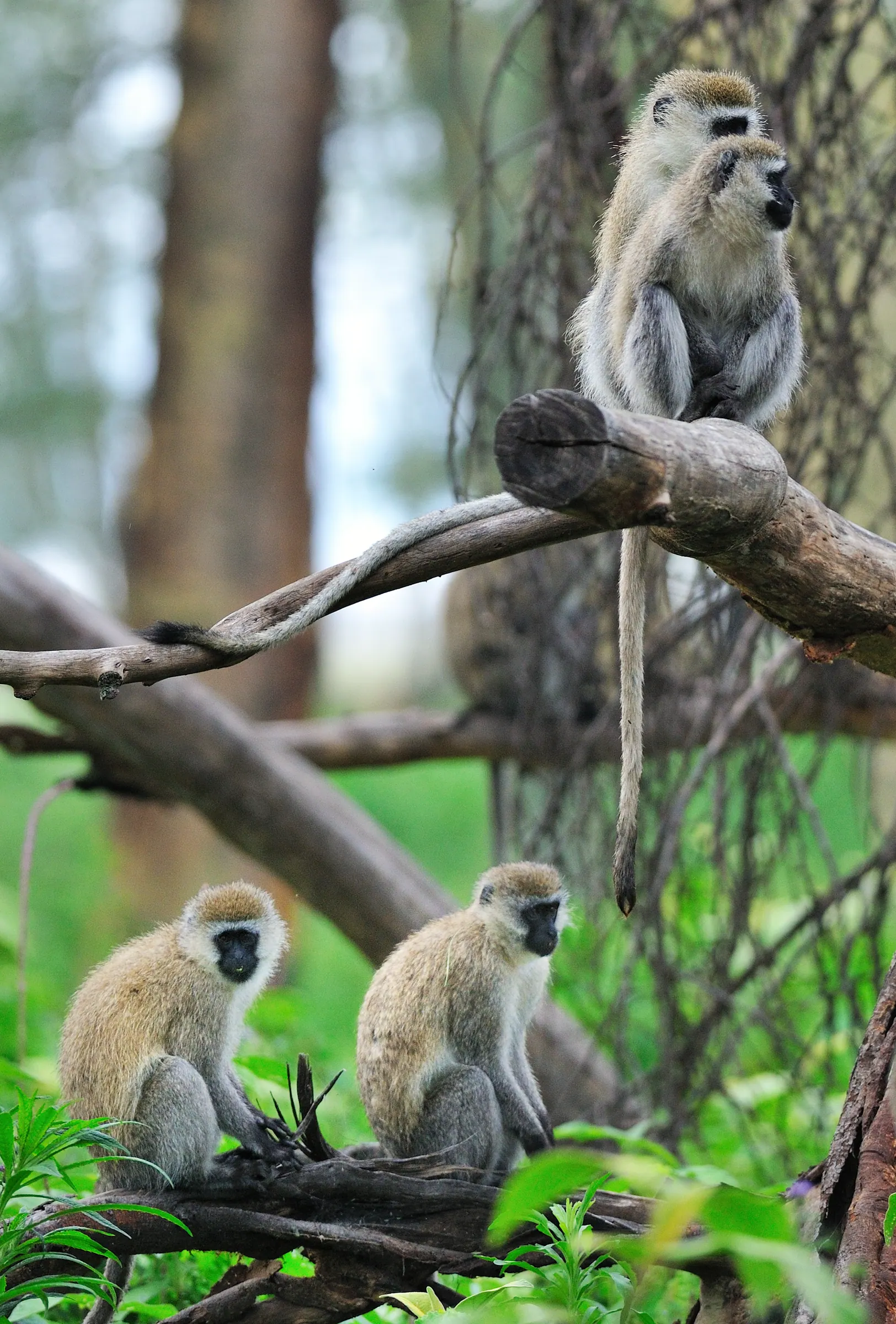
| Vervet monkey | Almost anywhere with trees, including camps and lodges | Small and gray, with a black face |
| Sykes' and blue monkeys | Coast forests such as Diani and Arabuko-Sokoke; highland forests | Dark, long-tailed; Sykes' has a white throat |
| Red-tailed monkey | Kakamega Forest | A white spot on the nose and a red tail |
| De Brazza's monkey | Saiwa Swamp, Mount Elgon and the far west | A white beard and an orange brow band |
| Black-and-white colobus | Highland forests, Kakamega, Naivasha; Diani and Shimba Hills on the coast | Black with a white cape and a white plume of a tail |
| Patas monkey | Dry grassland in the north and west, including parts of Laikipia | Tall, reddish and long-legged; runs rather than climbs |
| Tana River red colobus and mangabey | Lower Tana River forests only | Red-capped colobus; a crested, gray-brown mangabey |
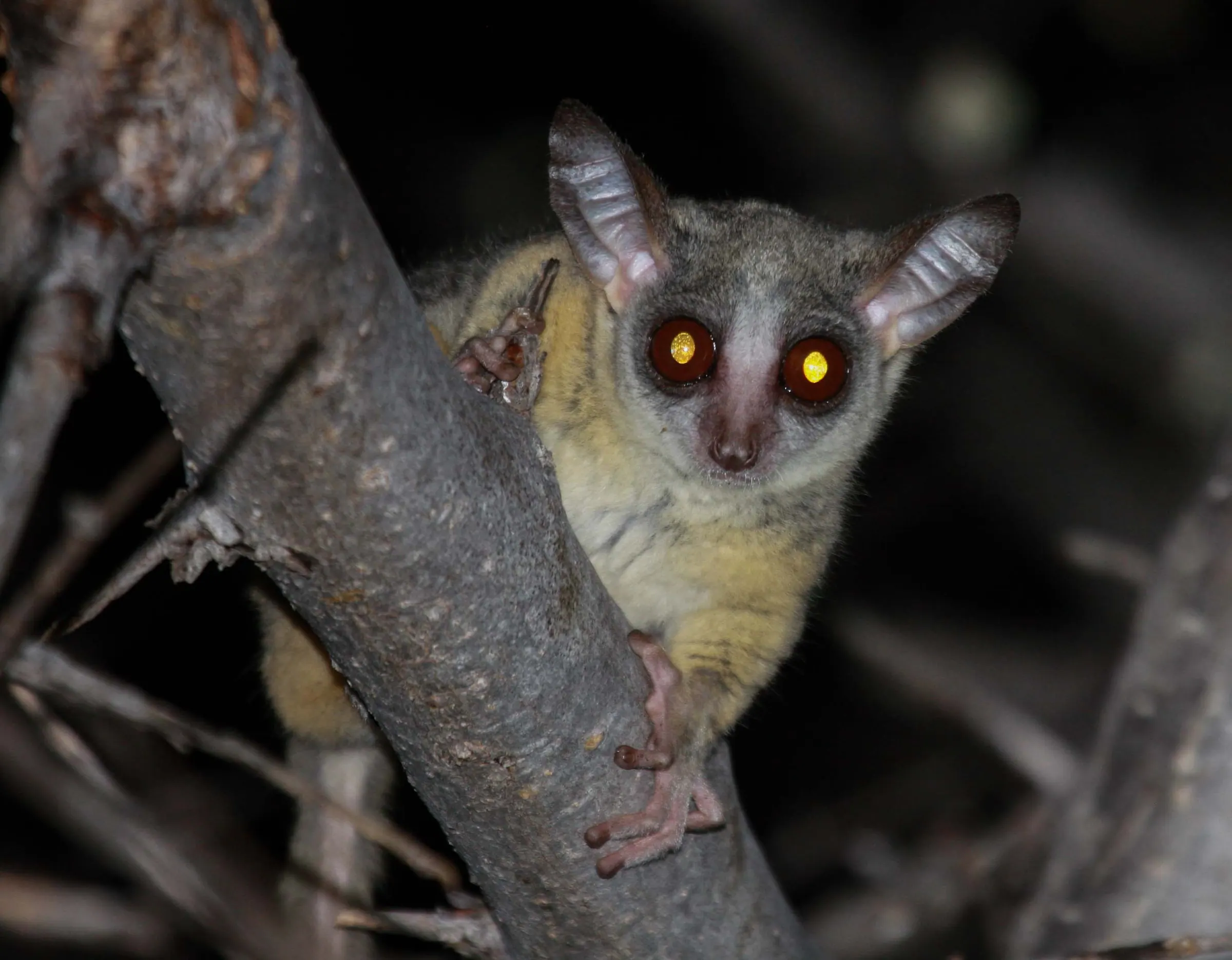
| Bushbabies (galagos) | Lodges across Kenya and the coast forests | Big eyes shining in the torchlight, loud cries at night |
Baboons
Olive baboons live in the west and center of the country, and yellow baboons in the south-east and on the coast; around Amboseli the two meet and interbreed. A troop is a complex society of related females, rival males and constant grooming, and an hour watching one from the vehicle is better than most documentaries. Baboons often travel with impala, whose sharp noses and the baboons' sharp eyes make an effective early-warning system against leopards. Big males have long, sharp canines, so give them space and never get between a male and food.
Vervets, the camp thieves
Vervet monkeys are small, gray and everywhere: riverside trees in the Mara, acacias at Naivasha, hotel gardens in Nairobi and the beach bars of Diani. They live in troops, sleep in tall trees and spend much of the day on the ground. They have learned that safari guests carry food, which is why camps hand out warnings and lock boxes. Zip your tent, keep food out of sight and never leave a bag on a veranda.
Forest monkeys
Kakamega Forest, the last of the Guineo-Congolian rainforest in Kenya, is the primate capital of the country, with black-and-white colobus, red-tailed monkeys, blue monkeys and, at night, pottos and galagos. On the coast, Sykes' monkeys raid gardens at Diani and Watamu. The Angolan black-and-white colobus of the Diani forest is the subject of our colobus page, where we explain the Colobus Conservation rope bridges over the beach road. De Brazza's monkey, shy and beautifully marked, is easiest at Saiwa Swamp National Park near Kitale, where it lives in the swamp forest beside the walking trails.
Kenya's rarest monkeys
The Tana River red colobus and the Tana River mangabey live only in a few patches of riverine forest on the lower Tana River, and both are listed as Endangered by the IUCN. The reserve set up to protect them has a contested legal status, and the area sits inside a government travel advisory zone, so it is a conservation story rather than a trip we offer. Our Tana River Primate Reserve page explains why it matters.
Night primates and the chimpanzees
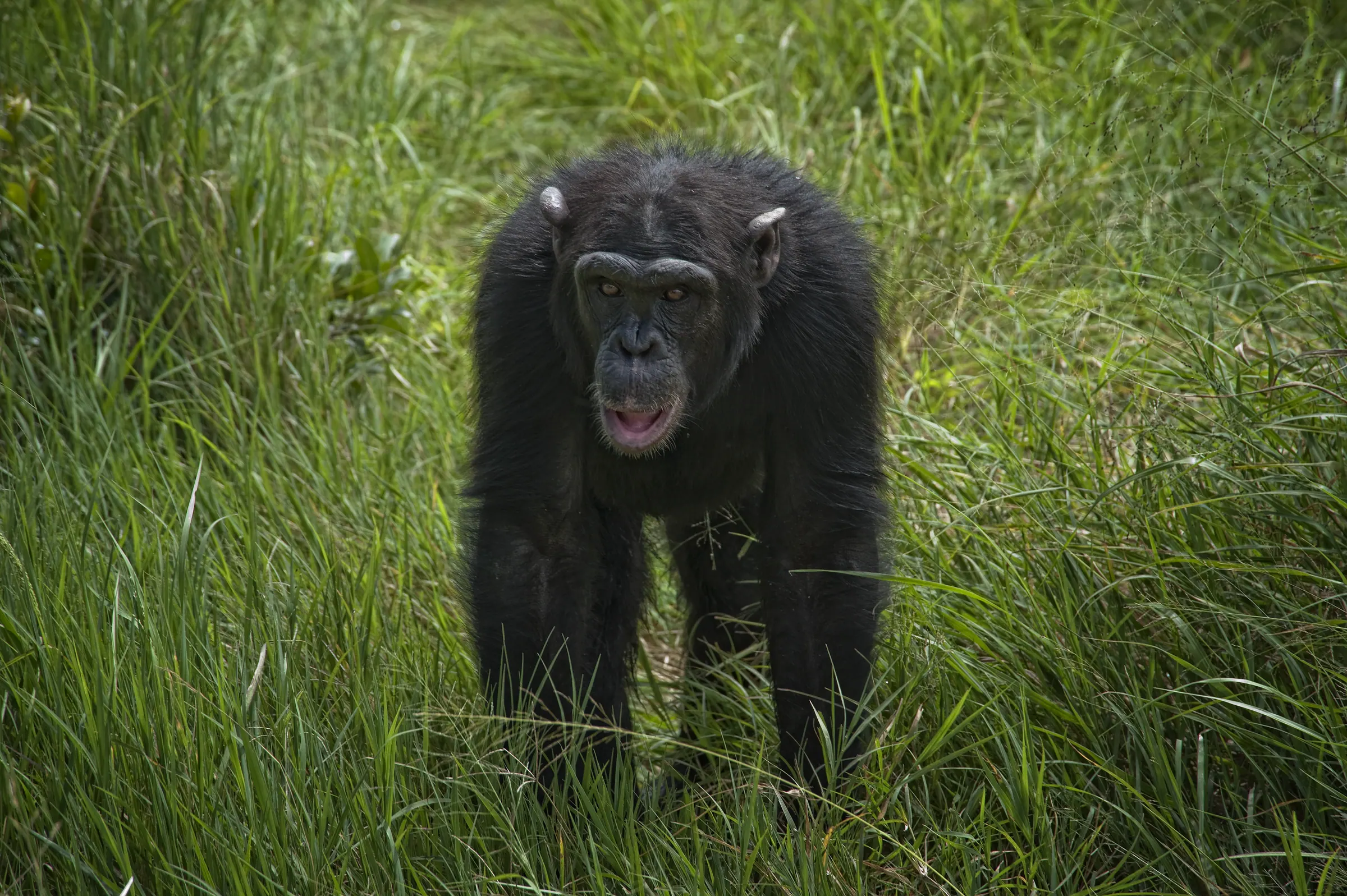
Galagos, or bushbabies, are small, wide-eyed primates that hunt insects and lick tree gum at night. Kenya has several species, from the cat-sized greater galago, whose cry sounds like a baby, to tiny lesser galagos that leap between branches. Many lodges have them in the garden after dark. Chimpanzees are not native to Kenya. The chimps at Sweetwaters Sanctuary in Ol Pejeta were rescued from trafficking and abuse elsewhere in Africa, and visiting them supports their lifelong care.
Three things most people do not know
- Research on Amboseli's vervets showed that they give different alarm calls for leopards, eagles and snakes, and that other vervets respond to each call in a different way: climbing, looking up or looking down.
- Amboseli's baboons have been studied continuously since 1971, one of the longest-running field studies of any wild primate.
- Colobus monkeys have no thumbs, or only a tiny stump. The name comes from a Greek word meaning docked or cut short.
Monkey etiquette
- Never feed monkeys or baboons. Fed animals become aggressive, lose their fear of people and are often shot as a result.
- Keep car windows up near baboon troops at park gates and picnic sites, and lock the vehicle when you step away.
- Do not stare or bare your teeth at a baboon; both read as a challenge.
- Zip your tent and keep food, sugar and fruit inside closed bags or the lock box your camp provides.
- Do not pick up or touch a monkey, however tame it seems; bites need medical care.
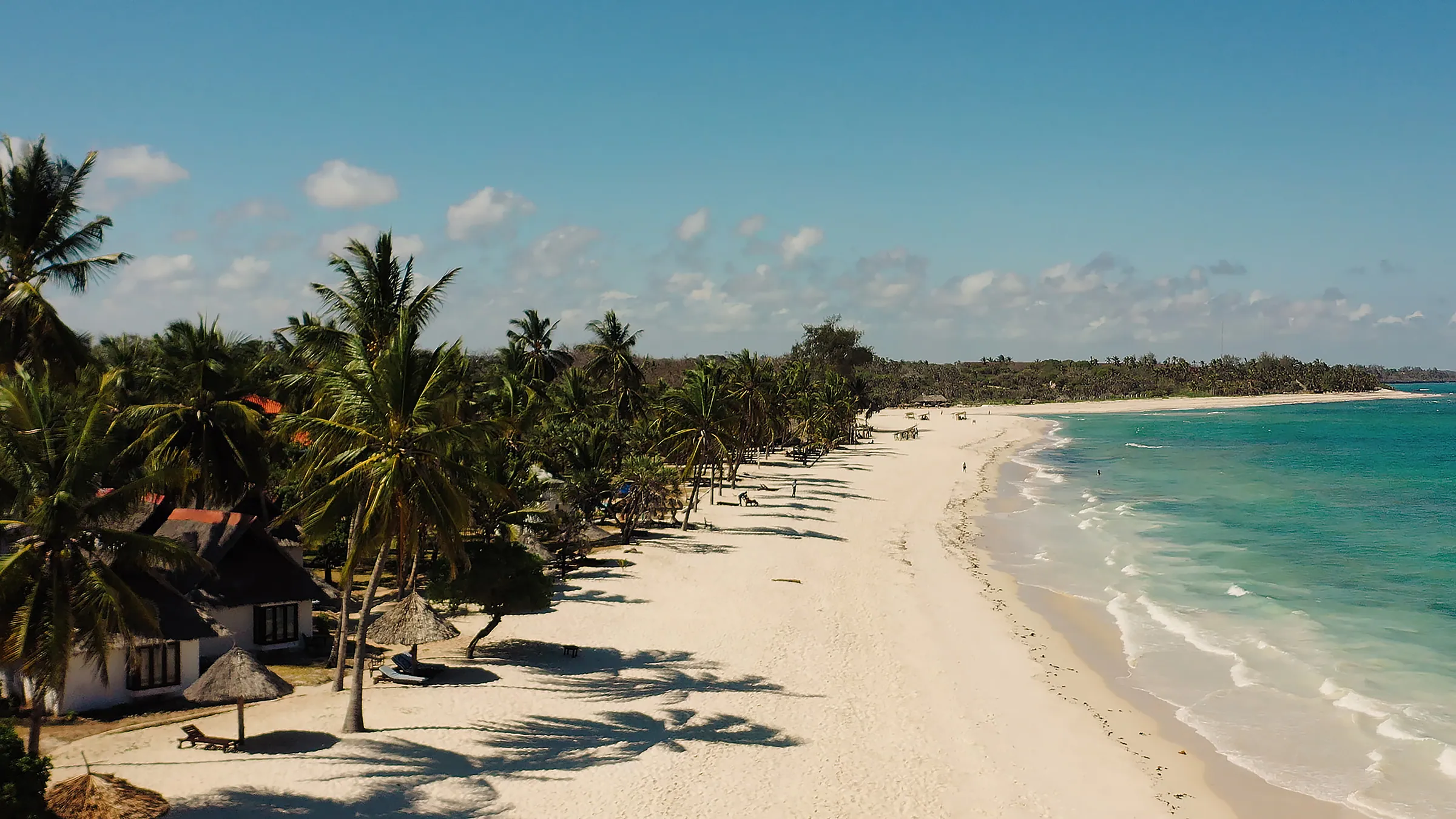
- On the coast, slow down on the Diani beach road, where colobus and Sykes' monkeys cross.
How to photograph primates
Forest monkeys sit in deep shade against a bright sky, so expose for the animal and accept a pale background, or wait for one to come lower. A lens around 100 to 400 mm and a higher ISO handle Kakamega's canopy. Baboon troops give you behavior shots: grooming, babies riding on their mothers' backs, young males sparring. Get down to their level from the vehicle window and keep the shutter fast for youngsters at play.
Conservation
Most of Kenya's primates, including baboons, vervets and Sykes' monkeys, are listed as Least Concern by the IUCN, but forest species depend on forests that keep shrinking. The Tana River species are Endangered, and the coast's colobus suffer from forest clearing, roads and power lines, which is the problem Colobus Conservation in Diani works on. Check the Red List for current status.