Wildlife. Updated November 2026. 3 min read.
Laikipia, the high plateau northwest of Mount Kenya, is the best place in Kenya to look for African wild dogs. Here private ranches and community conservancies have joined up to keep vast spaces open, and packs range across them and into neighboring Samburu and Isiolo. Wild dogs are rare and travel far, so no one can promise a sighting, but a few days with a Kenyan guide who follows recent reports gives you a real chance.
Where to look
Wild dogs need huge territories. In Kenya their stronghold is the Laikipia, Samburu and Isiolo landscape, where ranches, conservancies and community lands connect without fences that block them. This shared model, with landowners, herders and conservationists managing land together, is one of Kenya's great conservation stories. Ol Pejeta is easy to reach and reports packs moving through, and other Laikipia conservancies track packs and share sightings. Packs also appear in Samburu and Buffalo Springs, and occasionally in Tsavo, though less predictably.
- Choose a conservancy that allows off-road driving, so your guide can follow a pack when it moves.
- Stay at least three nights. A pack can cover long distances in a single day.
- Ask us before booking which areas have had recent sightings or an active den.
Best months and time of day
Wild dogs hunt mostly at first light and again in the late afternoon, then rest in shade through the heat of the day, so plan to be out at dawn. Sightings are possible all year. When a pack dens, the adults return to the same place for around three months while the pups are small, which makes them easier to find, though good guides keep well back. In the dry seasons, roughly January to March and June to October, the grass is shorter and tracks are easier to read.
Behavior worth knowing
- A pack is a family, usually with one breeding pair and the others helping to raise the pups.
- They hunt as a team, running down prey such as impala and dik-dik over long distances.
- After a hunt, adults carry food back in their stomachs and regurgitate it for the pups and any dog that stayed behind.
- Each dog's coat pattern is unique, which is how researchers recognize individuals.
- They twitter, chatter and whoop to keep in touch, a sound you may hear before you see them.
Conservation status in Kenya
The African wild dog is listed as Endangered on the IUCN Red List, and Laikipia shows both how fragile and how resilient they are. According to the Mpala Research Centre, wild dogs had nearly disappeared from the county by the 1990s, then recovered to more than 300 animals through conservation work. In 2017, during a drought, canine distemper spread from domestic dogs and the population crashed. Packs have since begun to rebuild, and Kenya's 2025 national wildlife census reported declines since the first census in 2021, so the work continues. The main threats are disease from domestic dogs, conflict with herders and loss of open land. Vaccination campaigns for domestic dogs and support for herders sit at the heart of the response.
Watching them well
- Never drive into a pack or between dogs during a hunt.
- Keep well back from dens and limit your time there; disturbance can make a pack move its pups.
- Do not share exact den locations online.
- Turn off the engine and stay quiet once a pack settles.
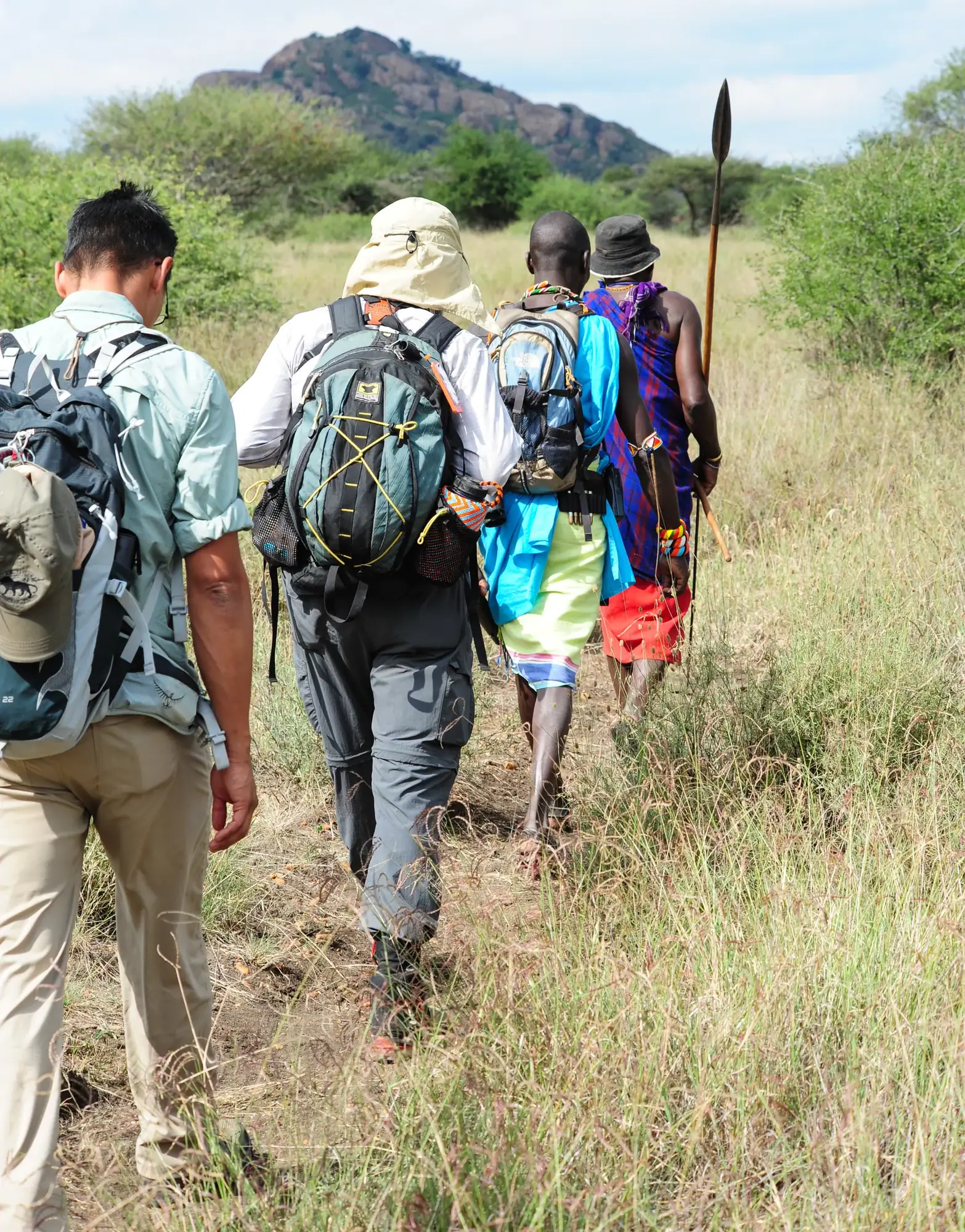
- On walking safaris, follow your guide's lead and keep a respectful distance.
Photography tip: wild dogs move fast and low. Use continuous autofocus, a shutter speed of at least 1/1000 of a second and a burst. Some of the best frames come at rest, when the pack greets after a nap with tails high and faces pressed together. Early light brings out the gold, black and white of their coats.
Kenya Experience is Kenyan-led, with two U.S. companies behind it. We place you with Kenyan guides in the right conservancy, you can pay in full or monthly with no deposit, and a specialist replies within two business days.