Wildlife. Updated November 2026. 5 min read.
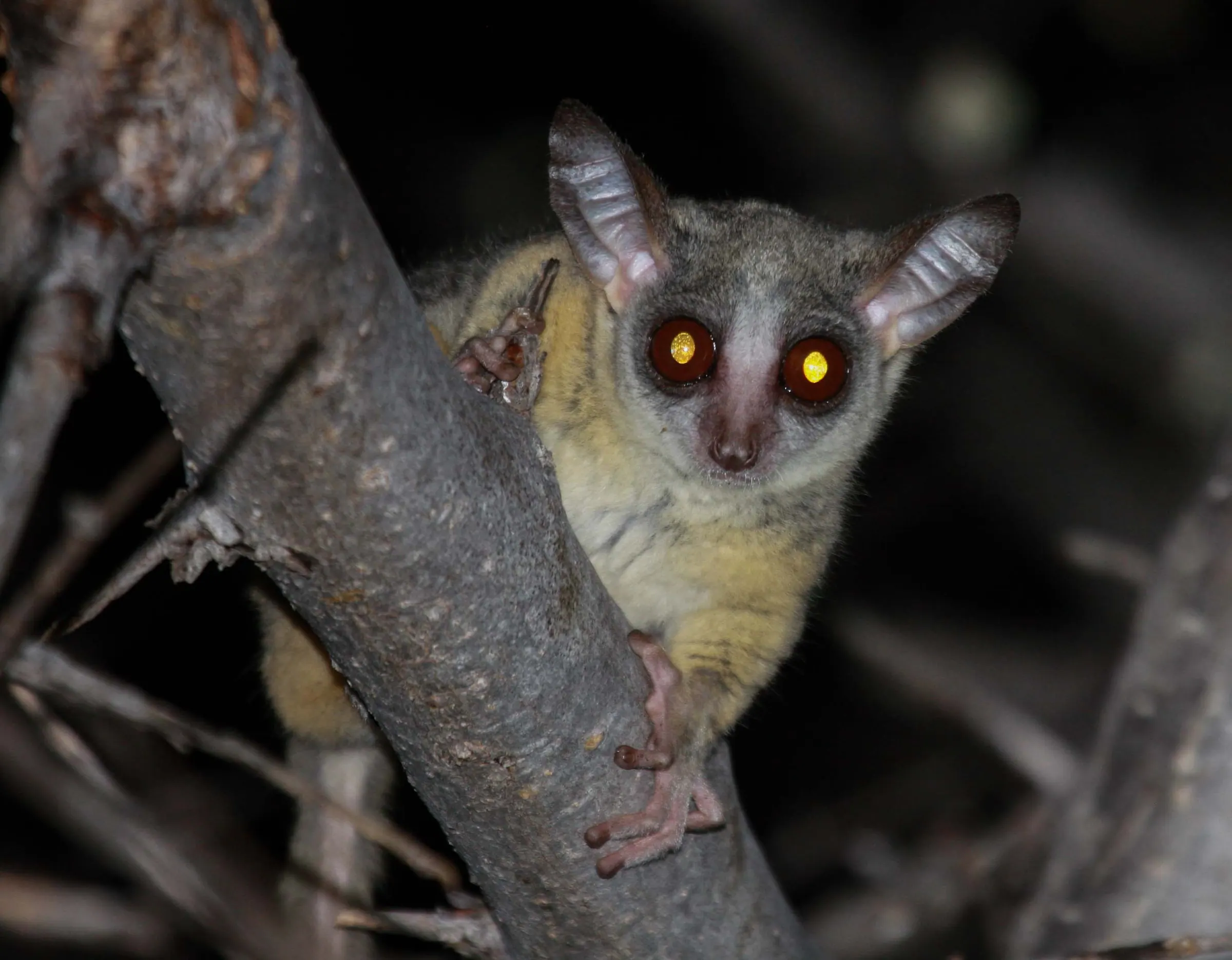
Most game drives end as the sun goes down, just as half of Kenya's wildlife is waking up. On a night drive, the spotlight sweeps the grass and picks up eyes: the green glow of a bushbaby in an acacia, a pair of hyenas trotting purposefully toward somewhere, a genet slipping along a branch, and once in a while the low shape of a leopard on the move. It is a different safari, and many of our guests rank it among the best hours of their trip.
The rule is simple. As a rule, night drives are not allowed in Kenya Wildlife Service national parks, such as Amboseli, Nakuru and Tsavo, or in the Maasai Mara National Reserve, where vehicles must be back at camp or out of the reserve by dusk. They are allowed in private and community conservancies, which set their own rules: the Mara conservancies, the Laikipia conservancies such as Ol Pejeta, Lewa, Loisaba and Borana, the group ranches of the Chyulu Hills, and private sanctuaries next to Tsavo such as Taita Hills and Lumo. If a night drive matters to you, where you sleep decides it.
Where night drives are allowed
| Area | Night drives? | Good to know |
|---|---|---|
| Maasai Mara National Reserve and Mara Triangle | No | Game drives end at dusk; vehicles stay on tracks |
| Mara conservancies (Mara North, Olare Motorogi, Naboisho, Ol Kinyei, Enonkishu and others) | Yes | Run by camps with conservancy guides; often included in the rate |
| KWS national parks (Amboseli, Nakuru, Tsavo East and West, Nairobi, Meru and others) | No | Some lodges overlook floodlit waterholes instead |
| Laikipia conservancies (Ol Pejeta, Lewa, Loisaba, Borana and others) | Yes | Rules and availability vary by conservancy and camp |
| Chyulu Hills group ranches and conservancies near Amboseli | Yes, at some camps | Combine with Amboseli by day |
| Tsavo's private sanctuaries (Taita Hills, Lumo) | Yes | A way to add night viewing to a Tsavo trip |
| Samburu community conservancies | At some camps | Not inside Samburu, Buffalo Springs or Shaba reserves |
| Aberdare tree lodges | No drives, but floodlit waterholes | Watch elephants and buffalo from the lodge after dark |
What you see at night
- Bushbabies, or galagos: small primates with huge eyes, leaping between branches.
- Genets and civets: spotted, cat-like hunters, genets often in trees, civets on the ground.
- Spotted hyenas on the move, and with luck the shy striped hyena and the termite-eating aardwolf.
- Springhares in Laikipia: hopping rodents that look like tiny kangaroos in the spotlight.
- White-tailed mongoose, porcupine and honey badger, all mostly nocturnal.
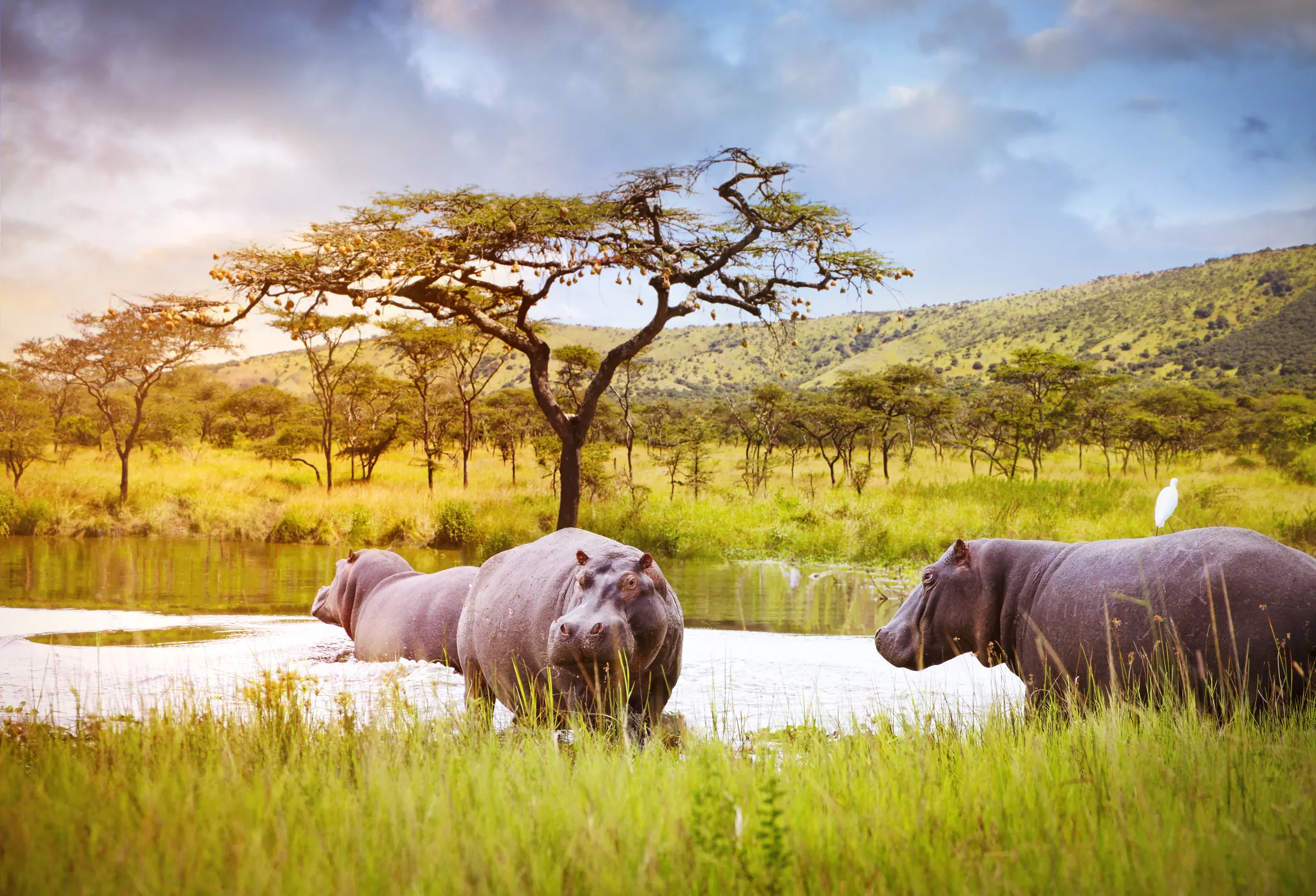
- Hippos out of the water, grazing on the banks.
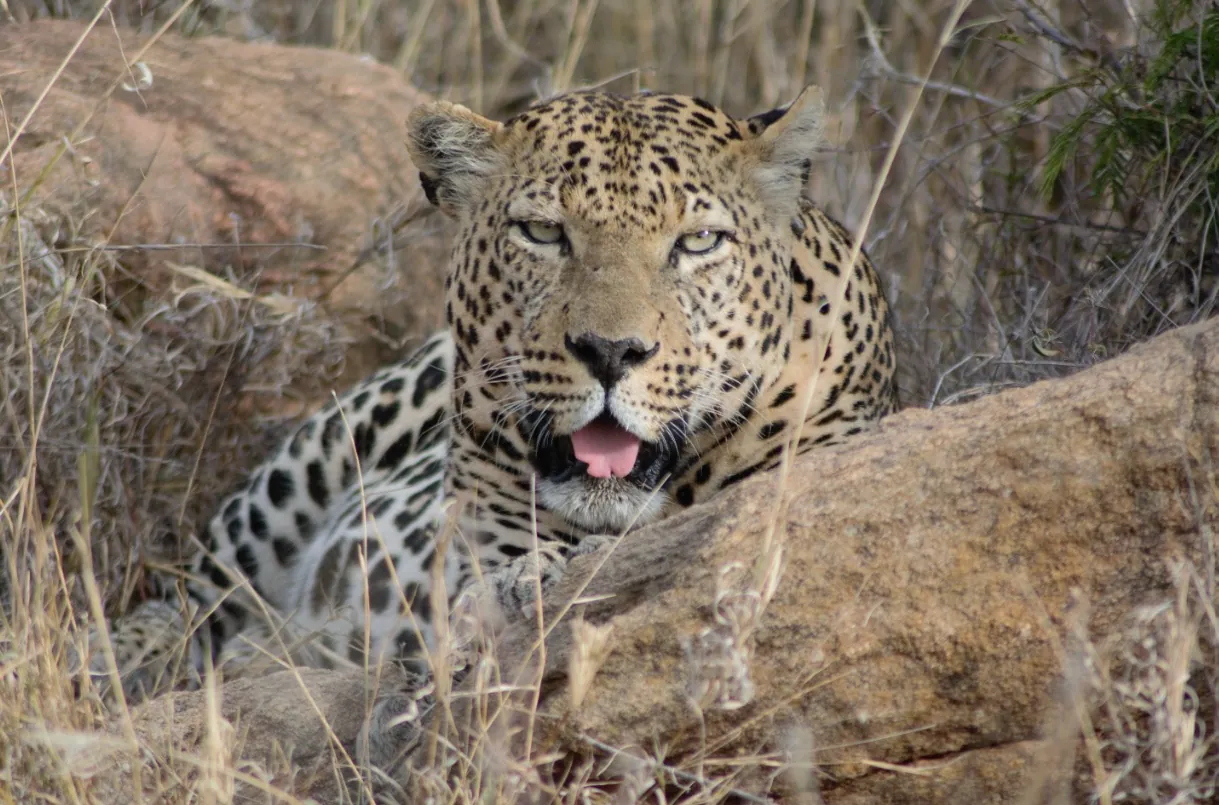
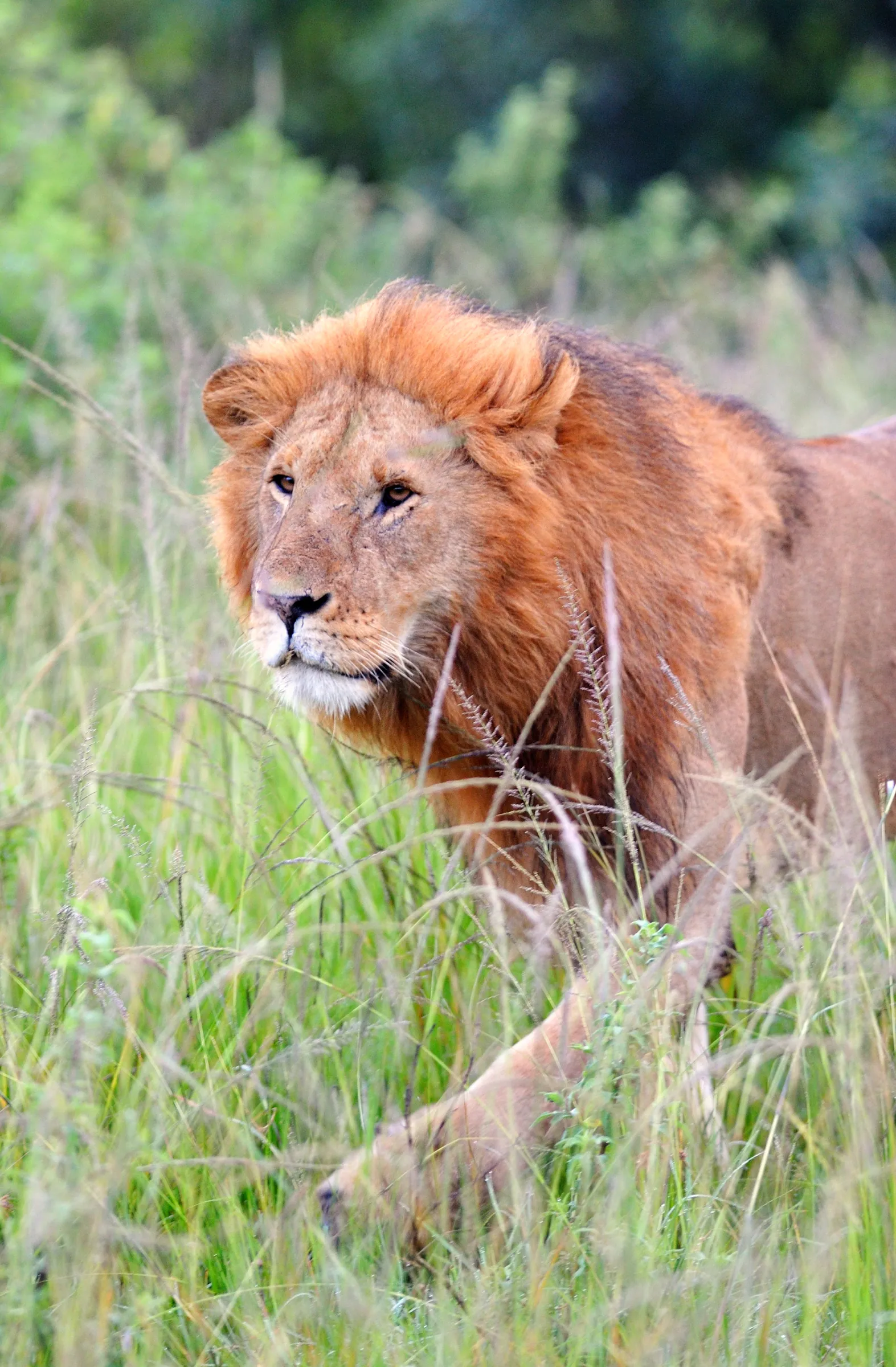
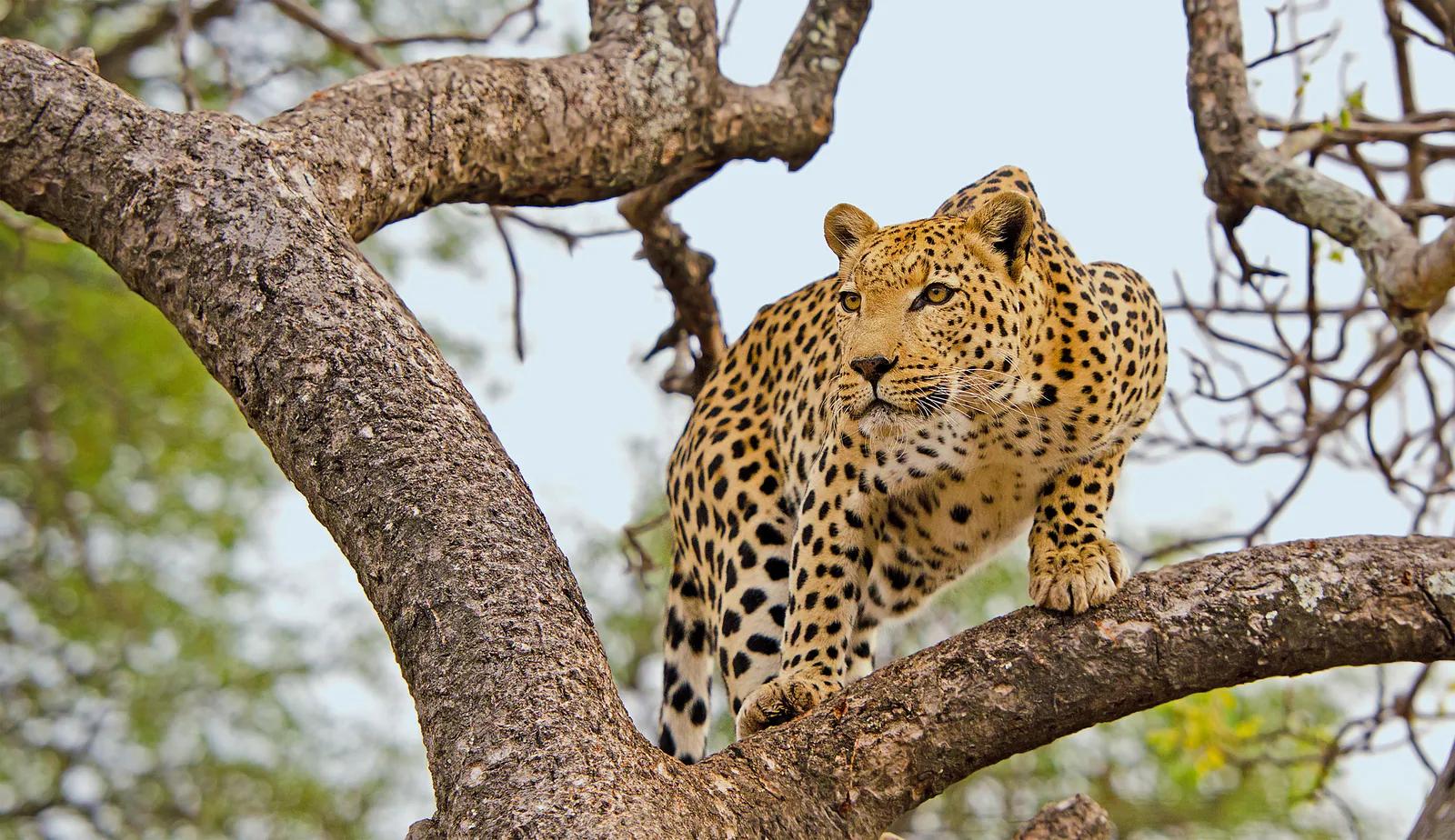
- Lions hunting, which is what they do mostly at night, and leopards leaving the day's resting tree.
- Owls and nightjars: Verreaux's eagle owl, the giant of the night, and nightjars on the track.
- The rare prizes: aardvark and ground pangolin, which even guides see only a few times a year.
How a night drive works
Many conservancy camps combine the evening game drive with sundowners: you stop for a drink as the sun sets, then drive back to camp slowly in the dark with the spotlight on. Others go out after dinner for an hour or two. A guide drives and a spotter, often a local Maasai or Samburu tracker, works the light, sweeping slowly from side to side and looking for eyeshine. The color and height of the eyes tells the spotter a lot: low and bright green might be a hyena or a jackal; high in a tree, a bushbaby or a genet. The drive is slow and quiet, and when something is found, the guide stops, the engine goes off and you watch.
The rules that protect the animals
- Spotlights are often fitted with red filters, which many animals see less well, so they are disturbed less.
- Guides keep the light off the eyes of prey animals during a hunt, so the light does not decide who lives.
- No flash photography, ever. It blinds animals for minutes and can ruin a predator's hunt.
- Limited time at each sighting, and no chasing animals with the light.
- Stay seated and keep voices low; sound carries far at night.
Children and night drives
Children often love night drives, especially the bushbabies and the eyeshine game. Camps set their own minimum ages for night activities, often similar to their game drive rules, and some ask that families book a private vehicle so a tired child does not cut the drive short for others. We confirm the rule at each camp and, for families, usually book a private vehicle anyway.
Photography at night
Night photography on safari is hard, and best treated as a bonus. Use your fastest lens, open the aperture wide, raise the ISO as high as your camera handles well, and brace the camera on a beanbag or the window frame. Ask your spotter to hold the light steady on the animal rather than move it while you shoot. Many guests find that watching through binoculars, without a camera, gives them the better memory.
Three things most people do not know
First, lions do most of their hunting at night, so the sleepy cats you see by day are often resting after work. Second, aardvarks dig the burrows that warthogs, hyenas, porcupines and many others later use, so the animal you will probably never see shapes the whole savanna. Third, an animal's eyeshine comes from a reflective layer behind its retina that helps it see in low light, which is why a spotlight turns a dark plain into a field of glowing eyes.
What it costs, and how we include it
In most conservancy camps a night drive is part of the activity program and included in the nightly rate, along with the conservancy fee; a few charge extra for private drives. That is one more reason we often plan two or three nights in a Mara or Laikipia conservancy, with a drive into the national reserve for the river and the open plains. Our conservancies page explains how the Mara conservancies work and what they cost, and our Mara guide explains the reserve's rules.