History. Updated November 2026. 8 min read.
A thousand years before Columbus crossed the Atlantic, dhows from Arabia, Persia and India were riding the monsoon to the Kenyan coast, and Chinese porcelain bowls were being set into the walls of coral-stone tombs. Out of those meetings came a people, a building style, a faith on the shore and a language, Kiswahili, that more than 100 million people now speak, most of them as a second language.
So what was the Swahili coast? A chain of African trading towns, running from southern Somalia to Mozambique, that grew rich from about the 8th century by linking the East African interior to the Indian Ocean world. In Kenya the towns that mattered were Shanga, Manda and Pate in the Lamu archipelago, Lamu itself, Malindi, Gedi, Mombasa and smaller places such as Mnarani and Jumba la Mtwana. The Swahili were Bantu-speaking Africans who traded, married and prayed with merchants from across the sea. The old colonial idea that these were Arab colonies has been overturned by archaeology: the towns were African, and cosmopolitan. Our history timeline gives the coast a single card. This page tells the story, and where to stand in it.
The monsoon engine
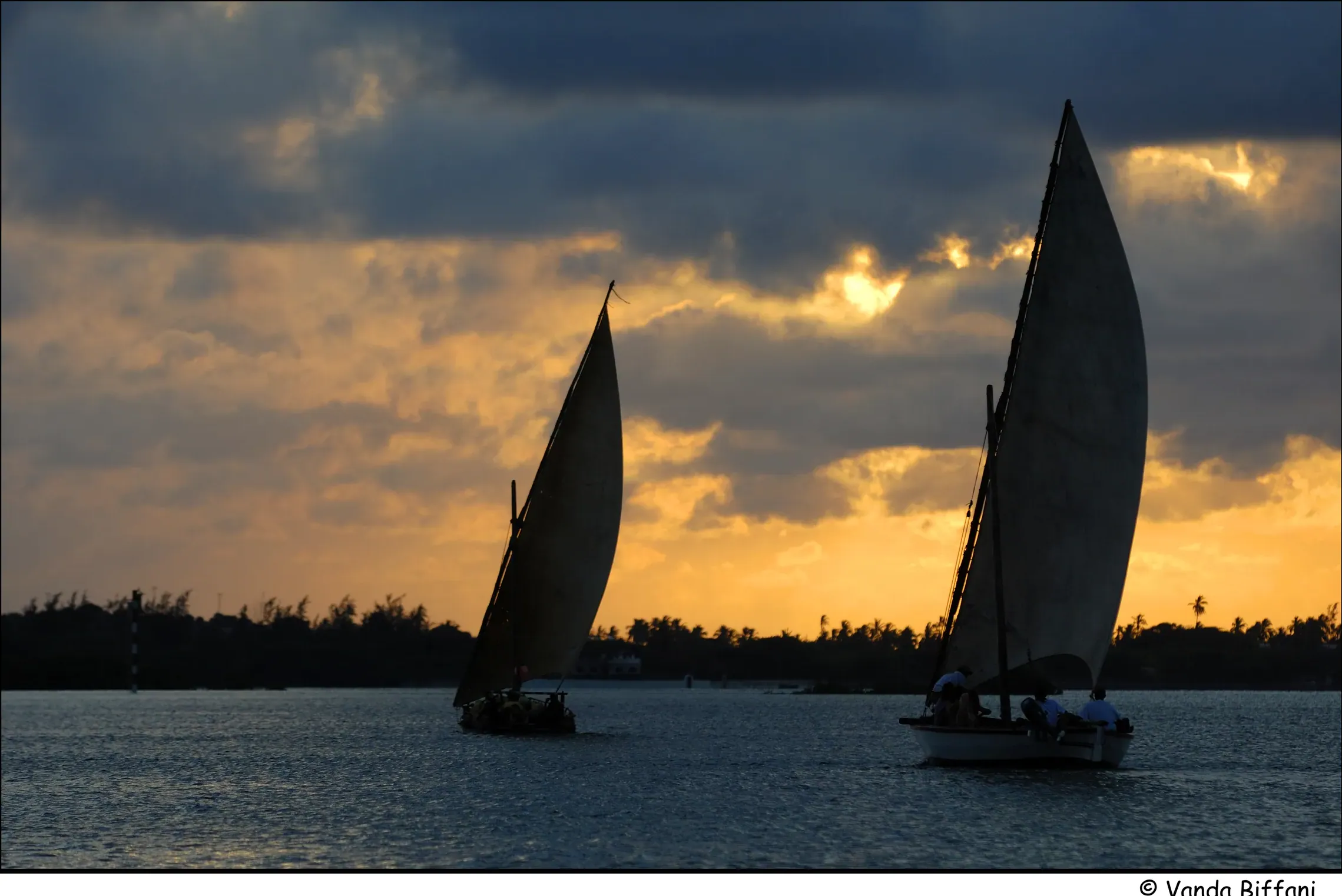
Everything on this coast ran on two winds. From about November to March the kaskazi, the northeast monsoon, blows steadily from Arabia and western India toward Africa. From about April to September the kusi, the southwest monsoon, blows the other way. A captain could sail from the Gulf or Gujarat to Mombasa in a few weeks, trade through the season and ride the opposite wind home. That rhythm set the calendar of every port: ships in, markets full, ships out, then long months when the town belonged to itself.
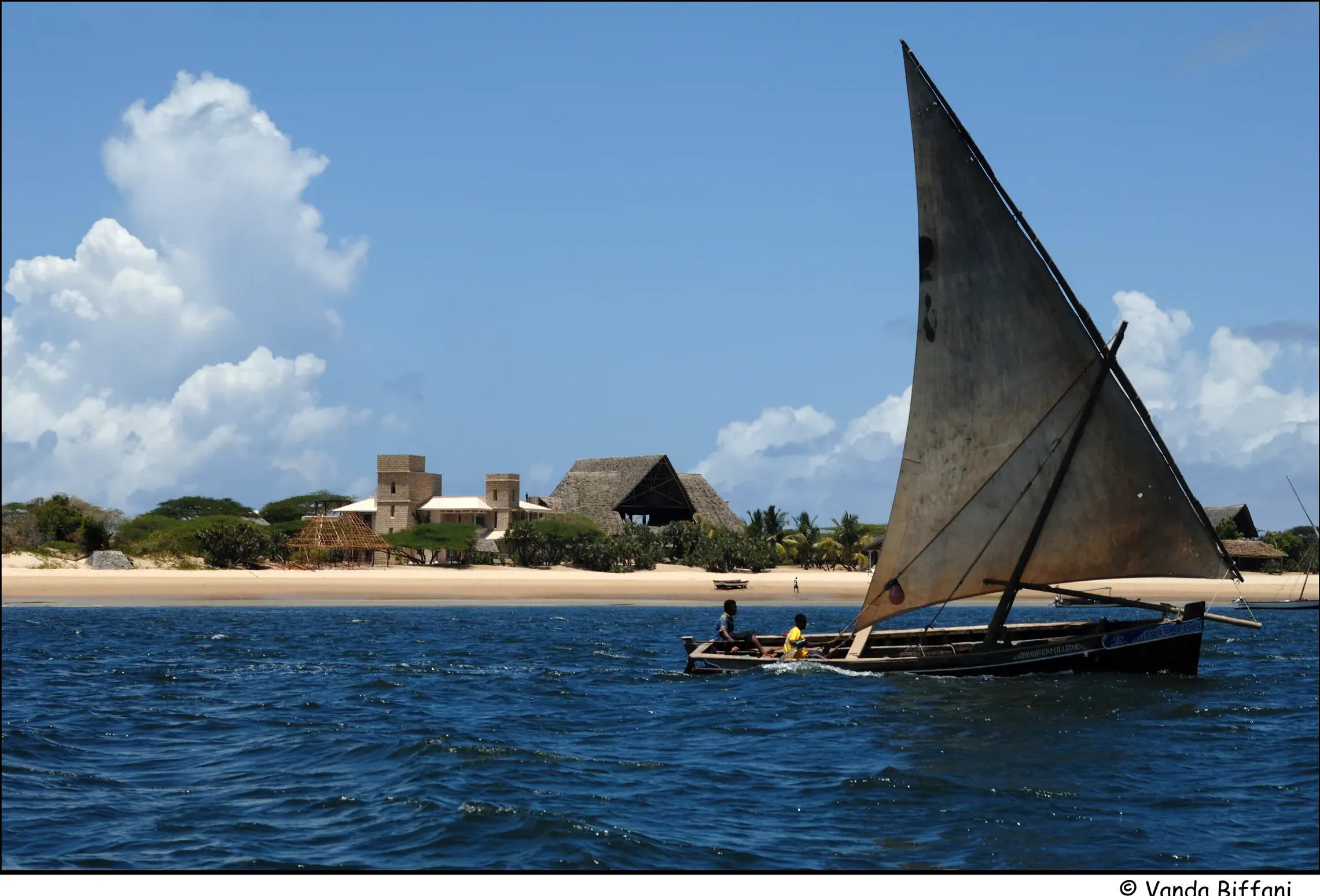
You can still feel it. Fishermen in Kilifi and Watamu talk about kaskazi and kusi as the seasons, the sea is calmer in the kaskazi months, and the best diving and dhow sailing on the Kenyan coast falls roughly between October and March. When the kusi blows in June and July, the reef breaks white and the dhows stay close to shore.
Trade here is old. A Greek merchant's handbook from the first century CE, the Periplus of the Erythraean Sea, already describes ships sailing down this coast for ivory, tortoiseshell and rhino horn. By about the 9th century the towns were exporting gold that came up the coast from the south, ivory, mangrove poles for roofing in treeless Arabia, ambergris, iron and enslaved people, and importing cotton cloth from India, glass beads, glazed pottery from Persia and, increasingly, porcelain from China.
The stone towns, 8th to 15th centuries
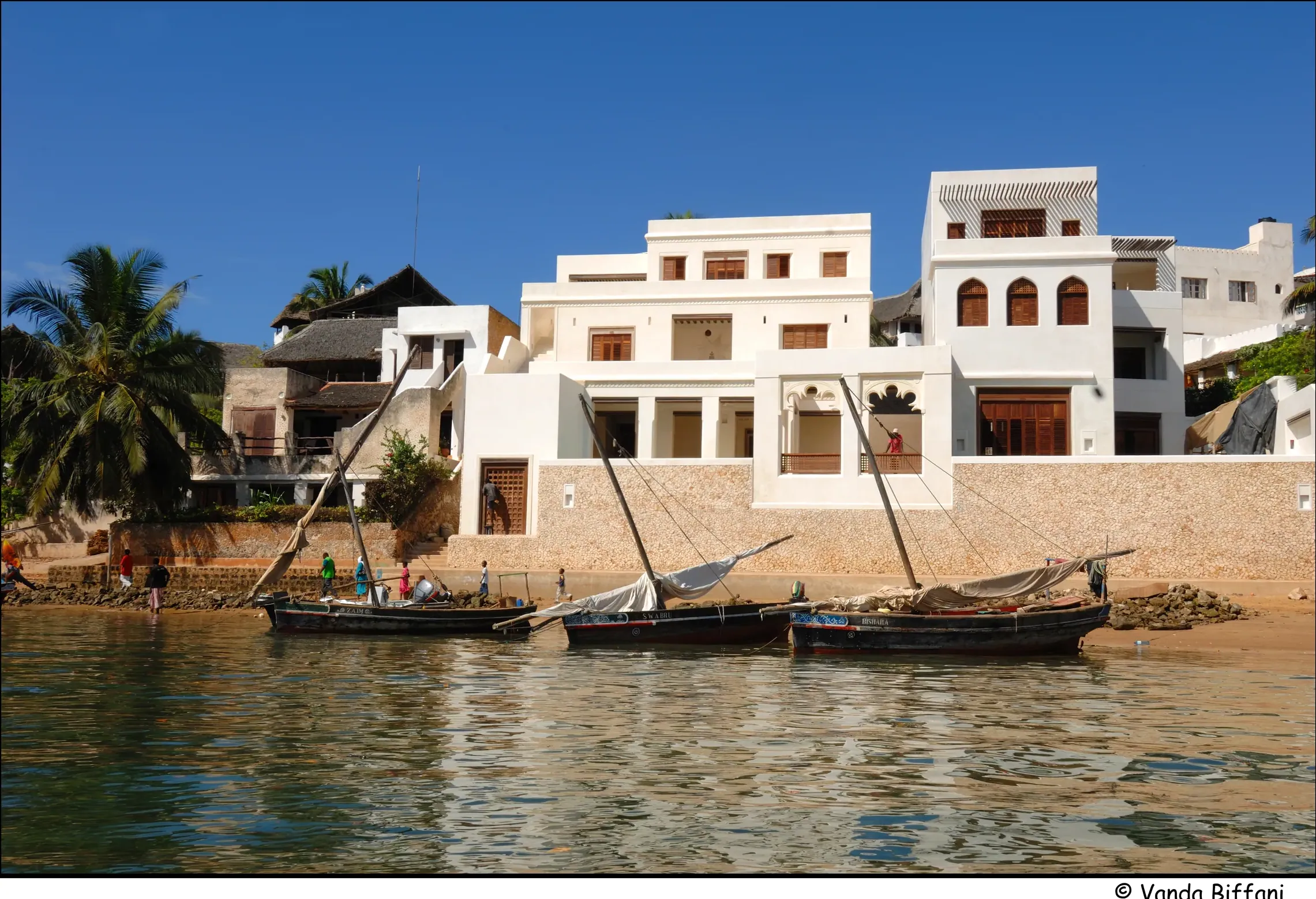
The earliest settlements were built of mud and thatch. Over the centuries the wealthy rebuilt in coral rag and lime, roofed with mangrove poles, and the stone town took its classic shape: a Friday mosque, the houses of merchant families around courtyards, deep wells, tombs topped by tall pillars, and a beach where dhows were hauled up at low tide. At Shanga, on Pate Island, archaeologists found a sequence of mosques going back to the late 8th century, among the earliest evidence of Islam south of the Sahara. Manda was trading across the ocean by the 9th century. Gedi, inland from Watamu, was walled and wealthy by the 15th. Mombasa and Malindi were rival city-states with their own rulers when the first Europeans arrived.
The Moroccan traveler Ibn Battuta stopped at Mombasa in 1331. He described a large island town of pious people with strongly built wooden mosques, and sailed on to Kilwa, in today's Tanzania, which he counted among the most beautiful towns he had seen. His account is one of the few written descriptions of the coast before the Portuguese.
China comes to Malindi
In 1414 a giraffe arrived at the Ming court in Beijing, carried by envoys from Bengal, and the following year envoys from Malindi brought another. Court officials greeted the animals as the qilin, a creature of good omen, and a court painting of the 1414 giraffe still survives. Between about 1417 and 1422 the great fleets of the admiral Zheng He reached the East African coast, calling at Malindi and the Somali ports, before the Ming emperors turned inward and the voyages stopped.
Chinese porcelain had been reaching the coast through Indian Ocean middlemen for centuries before the fleets came, and it is the most common luxury find on Swahili sites. Look for blue-and-white bowls set into pillar tombs and the walls of mosques, and for the porcelain and Persian glazed wares in the museum cases at Fort Jesus and Gedi.
A language made on the waterfront
Kiswahili is a Bantu language, a close relative of the Mijikenda languages spoken just inland, and its grammar is entirely African. What the trade gave it was vocabulary. Words for commerce, religion, law and the sea came from Arabic: kitabu (book), saa (hour), safari (journey, from Arabic safar). The name itself comes from the Arabic sawahil, the coasts. Later layers came from Persian, Hindi (pesa, money, from paisa), Portuguese (meza, table) and English. The word gereza, prison, is thought to come from the Portuguese igreja, church, perhaps because of a church in Fort Jesus that later held prisoners.
Swahili poets were writing long verse epics in Arabic script by the 18th century; the Utendi wa Tambuka of 1728 is often cited as the oldest dated Swahili manuscript. Colonial missionaries and officials switched it to the Latin alphabet. Today Kiswahili is the national language of Kenya and Tanzania, an official language of the East African Community and a working language of the African Union. If you want to learn some before you go, start with greetings; our Kenyan greetings guide has them.
Islam on the coast
Islam arrived with the traders, and the Shanga mosques show it was practised there by the 8th century. Over the following centuries most coastal towns became Muslim, and Swahili Islam took its own forms: the Maulidi celebrations of the Prophet's birthday, which still fill Lamu's waterfront, the Shafi'i school of law shared with ports across the ocean, and a tradition of religious poetry. The coast is still largely Muslim. In the old towns, cover shoulders and knees, ask before photographing people, and expect most mosques to be closed to non-Muslim visitors; a good guide will explain them from the doorway.
1498: the end of the first golden age
Vasco da Gama's ships arrived in April 1498. Mombasa turned them away. Malindi, Mombasa's rival, welcomed them and gave da Gama a pilot for the crossing to India. Within a decade the Portuguese were back with guns: they sacked Mombasa in 1505 and again in 1528 and 1589, forced the towns to buy licences to trade, and in 1593 began Fort Jesus to hold the coast. The towns did not die at once, but the open trade that made them rich was broken, and by the early 1600s several, Gedi among them, had been abandoned. The Omanis drove the Portuguese out of Mombasa in 1698 and a new era began, which our Fort Jesus page follows.
| When | What happened |
|---|---|
| 1st century CE | The Periplus describes Greek and Arab traders on the coast |
| Late 700s | The first mosques at Shanga, on Pate Island |
| 800s to 1100s | Manda, Shanga and early Mombasa trade gold, ivory and mangrove poles |
| 1331 | Ibn Battuta visits Mombasa |
| 1300s to 1400s | The stone towns at their height: Gedi, Jumba la Mtwana, Mnarani, Malindi |
| 1414 to 1422 | Giraffes reach the Ming court; Zheng He's fleets call at Malindi |
| 1498 | Vasco da Gama at Mombasa and Malindi |
| 1505 to 1589 | Portuguese attacks on Mombasa; the trade comes under Portuguese licence |
| 1593 to 1596 | Fort Jesus built at Mombasa |
| 1698 | Omani forces take Fort Jesus |
Where to stand today
| Site | What you see | Base | Time needed |
|---|---|---|---|
| Fort Jesus Museum, Mombasa | Finds from the coastal towns, including Chinese porcelain and Persian glazed pottery | Mombasa, Nyali or Diani | Half a day with Old Town |
| Mombasa Old Town | The Mandhry Mosque, traditionally dated to 1570, carved doors and the old dhow harbor | Mombasa | Two to three hours on foot |
| Jumba la Mtwana | A 14th-century town by the sea: mosques, tombs and houses among baobabs | Mtwapa, about 15 km north of Mombasa | Two hours |
| Mnarani ruins | Mosques and pillar tombs above Kilifi Creek | Kilifi | One hour |
| Gedi ruins | A walled town in forest: the Great Mosque, the palace and dozens of houses | Watamu or Malindi | Two hours |
| Vasco da Gama pillar | The Portuguese navigation pillar on the shore at Malindi | Malindi | Thirty minutes |
| Lamu Old Town and Takwa | The oldest lived-in Swahili town, and ruins on Manda Island | Lamu or Shela | Two to three days, flying in to Manda |
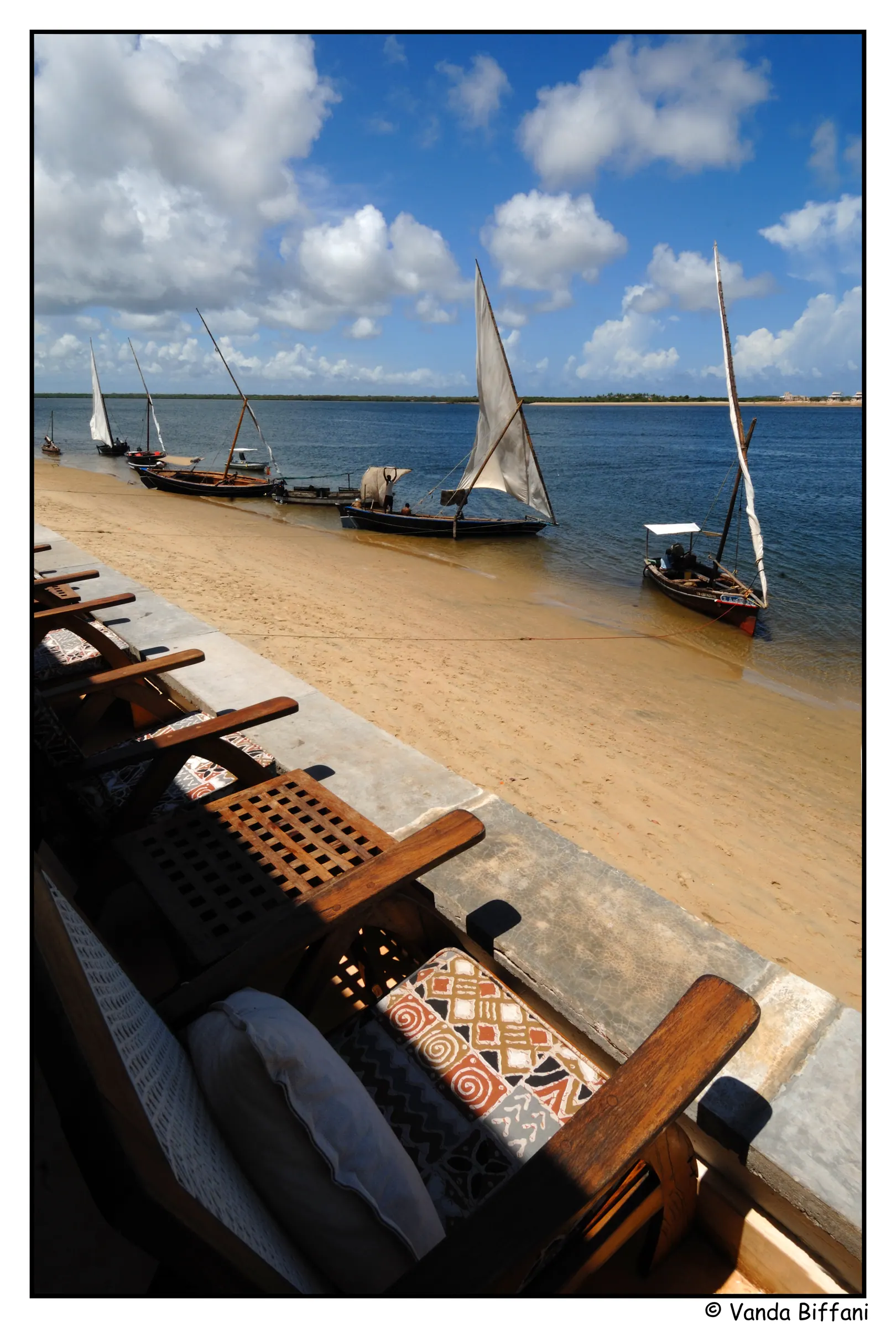
Lamu is the town that best preserves what all of these places once were, and UNESCO listed its Old Town in 2001. There are no cars in the Old Town: you walk its lanes past carved doors and coral-stone houses, cross to Manda for the ruins of Takwa by boat, and end the day on a dhow. Everything else in the table sits between Mombasa and Malindi, and the whole trail fits around a beach stay in Watamu or Diani, with Lamu as a two- or three-night finale. Our Lamu page explains how to get there and where to stay.
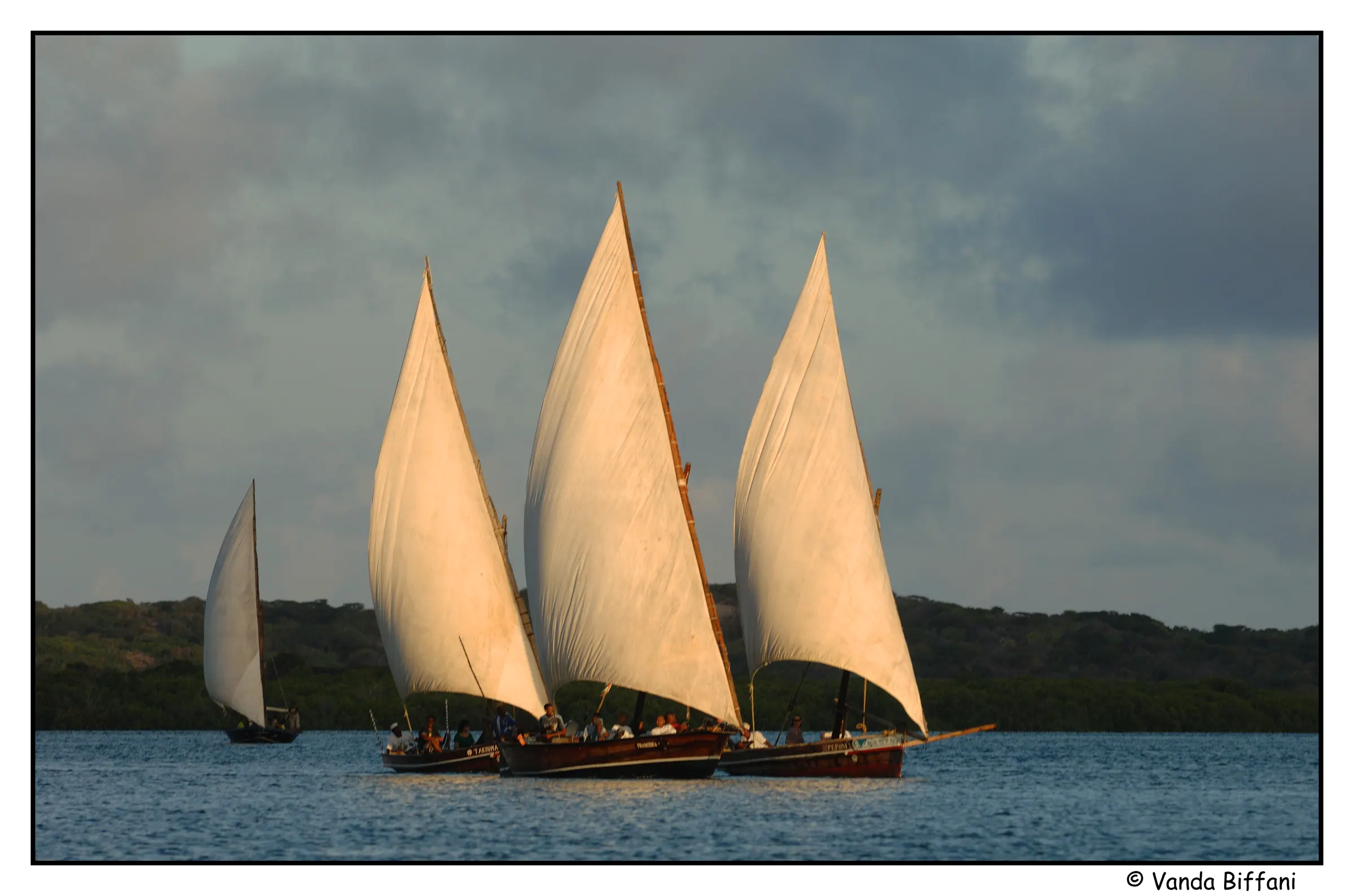
A three-day Swahili history trail
- Day one, Mombasa: Fort Jesus at 8am before the heat, Old Town on foot with a local guide, a long lunch of biryani or pilau, and a sunset dhow on the creek
- Day two, north along the coast: Jumba la Mtwana in the morning, Mnarani at Kilifi Creek at midday, Gedi in the late afternoon when the forest cools, then the night in Watamu
- Day three, Malindi: the Vasco da Gama pillar, the small Portuguese chapel and the museum on the seafront, then back to Watamu for a swim
- Optional extra days, Lamu: fly north to Manda, then two or three nights in the Old Town or Shela, with Takwa and a dhow trip through the archipelago
Add a Kenyan historian or an Old Town guide for the first day and the visit stops being stones and starts being stories. University and school groups can ask us to request a talk from museum staff at Fort Jesus. The detailed pages for Gedi and Fort Jesus cover each site in depth.
Further reading
- Mark Horton and John Middleton, The Swahili: The Social Landscape of a Mercantile Society (2000)
- Chapurukha Kusimba, The Rise and Fall of Swahili States (1999)
- UNESCO's World Heritage pages for Lamu Old Town, Fort Jesus and Gedi, linked in our sources below