History. Updated November 2026. 5 min read.
At midnight on December 12, 1963, the lights went down over a crowded field off Langata Road in Nairobi, the British flag was lowered, and when the lights came up the black, red and green flag of Kenya was flying. That field is now Uhuru Gardens. Every December, Kenyans at home and thousands flying in from the U.S. mark the date as Jamhuri Day, and the Christmas season starts in earnest.
How did it happen so fast? Only four years earlier Kenya was under a State of Emergency, and its best-known leader was in detention in the northern desert. Between 1960 and 1963, three constitutional conferences in London, two elections and Kenyatta's release turned a settler colony into an African-run state. Kenya gained internal self-rule on June 1, 1963, full independence on December 12, 1963, and became a republic exactly a year later. Our Mau Mau page covers the war that came before; this page covers the negotiations, the night itself and what it left unresolved.
Lancaster House: three conferences in London
The first Lancaster House conference opened in January 1960, the same month the Emergency was lifted. Britain's colonial secretary, Iain Macleod, accepted that Kenya would move to African majority rule, to the alarm of many settlers. African politicians then split into two parties: the Kenya African National Union (KANU), drawing on the Kikuyu and Luo heartlands and led in Kenyatta's absence by James Gichuru, Oginga Odinga and Tom Mboya, and the Kenya African Democratic Union (KADU), led by Ronald Ngala and Daniel arap Moi, which spoke for smaller communities afraid of domination and argued for majimbo, a federal system of strong regions.
KANU won the most votes in the February 1961 election but refused to form a government until Kenyatta was freed, so KADU led a minority government with Ngala as Leader of Government Business. Kenyatta was moved from Lodwar to Maralal and released in August 1961. A second London conference in 1962 produced a compromise constitution with regions and a Senate. KANU won the May 1963 election clearly, and on June 1, 1963, Kenyatta became prime minister of a self-governing Kenya. That date is now Madaraka Day. A final conference in September and October 1963 settled the independence constitution.
The night of December 11 to 12, 1963
Prince Philip, Duke of Edinburgh, represented the Queen at the ceremony. Tens of thousands of people filled the grounds, many having walked from across the city and beyond. Just before midnight the lights were switched off; in the dark the Union Jack came down, and with the lights back on Kenya's flag went up and the new anthem was played. Kenyatta's call to the nation, then and for years after, was harambee, pull together, and it became the national motto on the coat of arms. Kenya joined the United Nations days later.
The flag carries the colours of KANU with a Maasai shield and two spears added: black for the people, red for the blood shed for freedom, green for the land, white for peace, and the shield and spears for the defence of freedom. The anthem, Ee Mungu Nguvu Yetu, O God of all creation, was written by a commission of musicians to a melody based on a Pokomo lullaby from the Tana River. Both are easy to see on a visit: the shield and spears appear on almost every government building, and schoolchildren sing the anthem every morning.
From dominion to republic
At independence the Queen remained head of state, represented by Malcolm MacDonald, the last governor turned governor-general. On December 12, 1964, Kenya became a republic, with Kenyatta as president and Oginga Odinga as vice president. A month earlier KADU had dissolved itself into KANU, and the regions and Senate of the independence constitution were soon stripped of power and then abolished. Within a few years Kenya was in practice a one-party state, and it became one in law in 1982. Our page on the road to the 2010 constitution follows that story, and the founding leaders page asks what each of these men made of power.
| Date | Milestone |
|---|---|
| January 1960 | First Lancaster House conference; Emergency lifted |
| 1960 | KANU and KADU founded |
| February 1961 | First general election with an African majority |
| August 1961 | Jomo Kenyatta released |
| 1962 | Second Lancaster House conference; coalition government |
| May 1963 | KANU wins the general election |
| June 1, 1963 | Madaraka: internal self-rule, Kenyatta prime minister |
| December 12, 1963 | Independence at midnight |
| December 12, 1964 | Kenya becomes a republic; Kenyatta president |
What independence did not settle
Uhuru did not end every argument, and Kenyans will tell you so. Land was the biggest. Britain lent money for settler farms to be bought and divided under schemes such as the Million-Acre Scheme, but many of the most landless families, including former fighters and detainees, felt they gained little while well-connected Kenyans bought large farms. In the north-east, most Somali residents had told a British commission in 1962 that they wanted to join Somalia; the result was the Shifta War of 1963 to 1967, a hard counter-insurgency that is still remembered there. On the coast, the strip that Britain had held under the Sultan of Zanzibar passed to Kenya at independence, leaving its own questions about land and representation. Oginga Odinga's 1967 memoir took its title from a phrase of the day: Not Yet Uhuru.
Jamhuri Day today
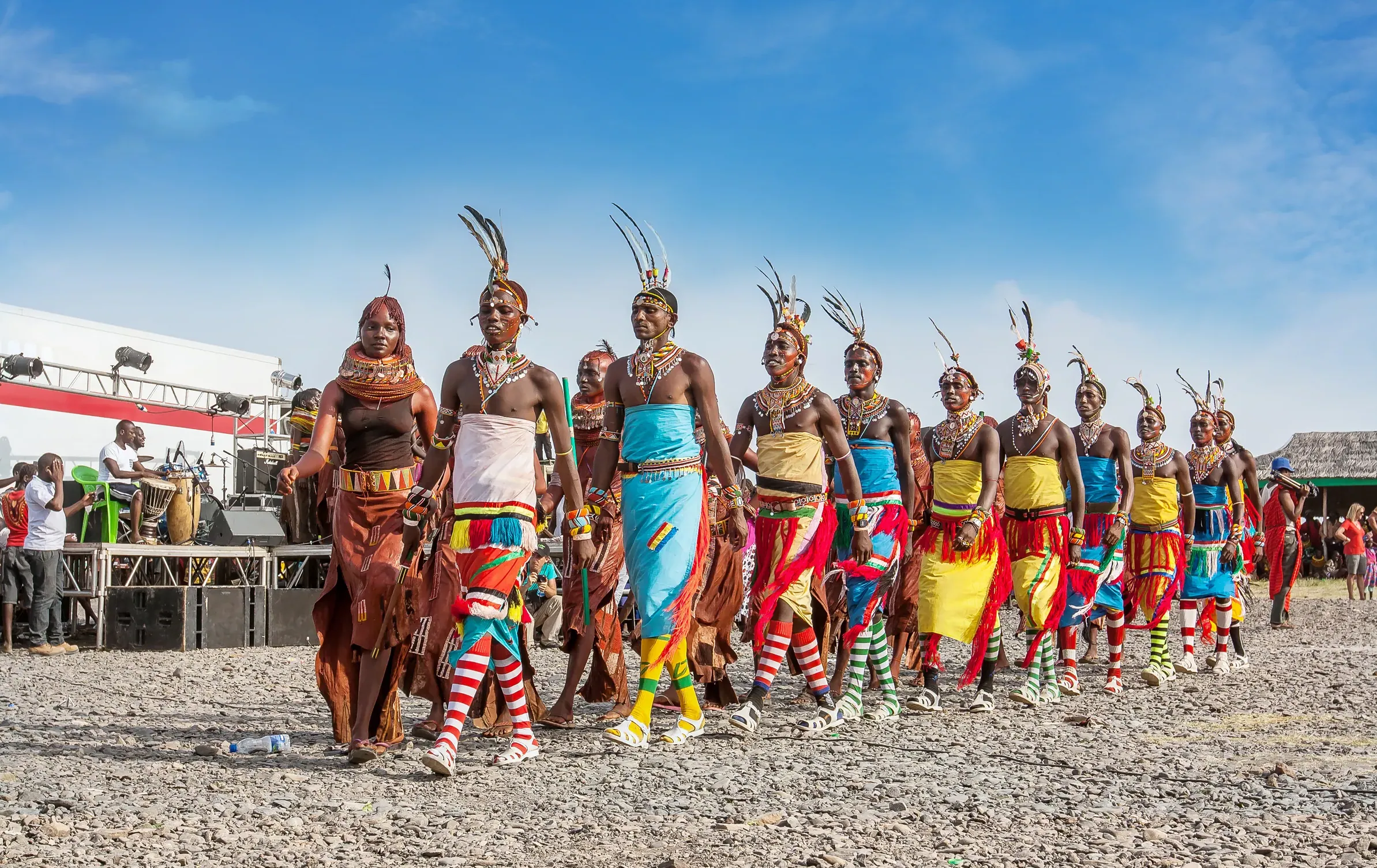
December 12 is a public holiday. The president gives an address at the national celebration in Nairobi, held in recent years at Nyayo National Stadium or Uhuru Gardens, with a military parade, flypasts and performances by dance troupes from across the country, and county governments hold their own events. Banks and government offices close, so do not plan visa errands or business meetings that day. It also falls at the start of the busiest travel fortnight of the year: flights from the U.S. and coast hotels fill from about December 15, so book by late summer. Our Jamhuri Day events page has the practical details for the day, and our December guide covers the season.
Where to stand
| Place | Why go | Time |
|---|---|---|
| Uhuru Gardens, Langata Road | The field where the flag first rose, now a memorial park with a museum and the independence monument | Two hours |
| Parliament Buildings | Where the first independent parliament sat; the Kenyatta mausoleum stands in the grounds and is seen from outside | One hour; tours by prior arrangement |
| KICC and the Kenyatta statue | The 1973 conference tower with a statue of Kenyatta in the courtyard and a rooftop view over the city | One hour |
| Nairobi National Museum | Galleries on the colonial era and independence | Two to three hours |
| Kenyatta House, Maralal | Where Kenyatta was held in 1961 before his release, now a small museum | On a northern trip |
A good Nairobi history morning starts at Uhuru Gardens, which sits on the way to the airport and Nairobi National Park, then heads into the city for Parliament, the KICC rooftop and lunch, with the National Museum after. If you are visiting in December, the gardens may be closed for preparations in the days before the 12th.
Further reading
- Oginga Odinga, Not Yet Uhuru (1967)
- Daniel Branch, Kenya: Between Hope and Despair, 1963 to 2011 (2011)
- Charles Hornsby, Kenya: A History Since Independence (2012)