History. Updated November 2026. 6 min read.
The 'Lunatic Line' cost about £5.5 million, killed about 2,500 of the men who built it, was held up at Tsavo by two lions, and created Kenya's capital almost by accident, at a swamp where the engineers needed a depot. It is the single most important thing the British built in East Africa, and the reason the country's map, cities and politics look the way they do.
The short story: between 1896 and 1901, Britain built a metre-gauge railway nearly 600 miles from Mombasa to Lake Victoria, mostly with indentured workers brought from British India. Its purpose was to reach Uganda, which Britain saw as the key to the Nile and the interior. Nairobi grew from the depot at the halfway point. To make the line pay, the colonial government invited European settlers onto the highlands it crossed, which set up the land conflict that led, fifty years later, to Mau Mau. Today a new standard-gauge line, the Madaraka Express, runs beside parts of the old route, and you can ride it.
Why build a railway to Uganda?
In the 1890s Britain was competing with Germany, France and Belgium for East and Central Africa. Uganda, on the northern shore of Lake Victoria, seemed the prize: fertile, populous, and close to the source of the Nile, which Britain wanted to control to protect its position in Egypt. A railway would also, its backers argued, end the caravan trade in enslaved people by making porters unnecessary. Critics in Parliament thought it absurd: an enormously expensive line through hundreds of miles of country they considered empty, to a place with little trade. A set of verses in the magazine Truth, edited by the radical MP Henry Labouchere, mocked it, ending with the line that gave it its nickname.
It clearly is naught but a lunatic line.Verses published in Henry Labouchere's magazine Truth, 1896
Who built it
Work began at Mombasa in 1896 under the chief engineer, George Whitehouse. Local labour was scarce and the British did not trust it, so the railway recruited from British India: about 32,000 indentured workers, mostly from Punjab and Gujarat, came on three-year contracts as platelayers, masons, carpenters and clerks. They worked through thornbush, waterless plains, the Rift Valley escarpment and malaria country. About 2,500 died from disease, accidents and animals. When the contracts ended most went home, but about 6,700 stayed, and with the traders who followed them they became the founding generation of Kenya's Asian community. Our page on Kenyans of Asian heritage tells what came next.
The line was not built through empty land. The Kamba, Maasai and above all the Nandi lived along its path. The Nandi, under their leader Koitalel Arap Samoei, raided the line for a decade, taking telegraph wire and iron for weapons, until Koitalel was killed at a meeting with a British officer in 1905. The railway was a conquest as much as a construction project.
The man-eaters of Tsavo
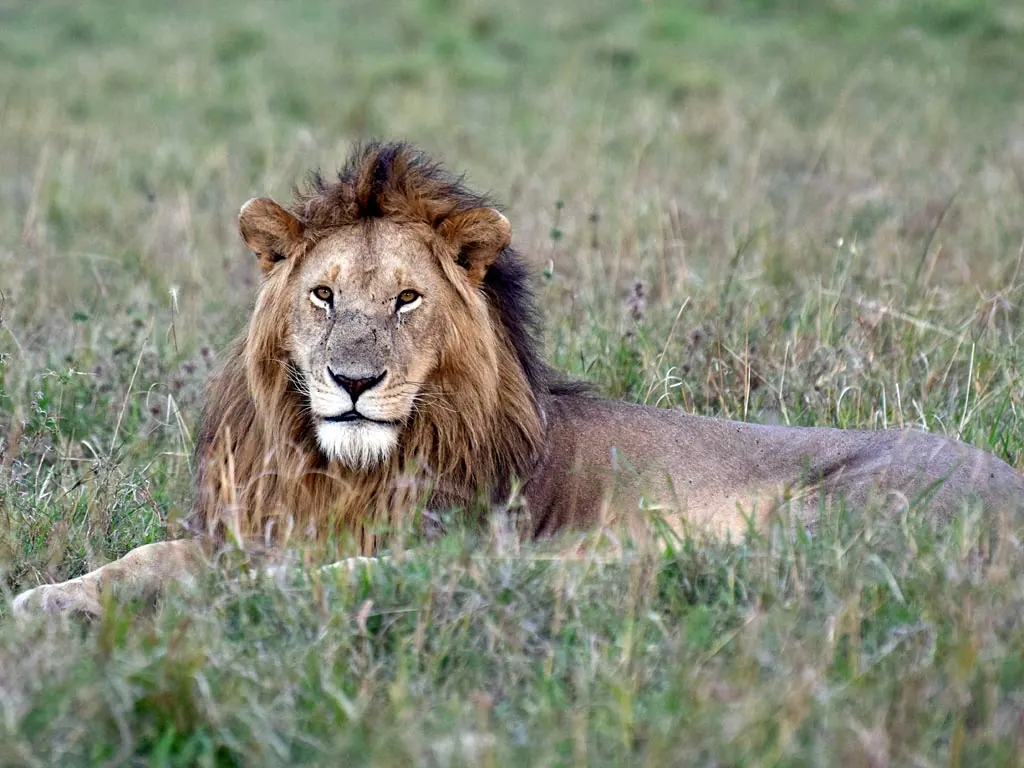
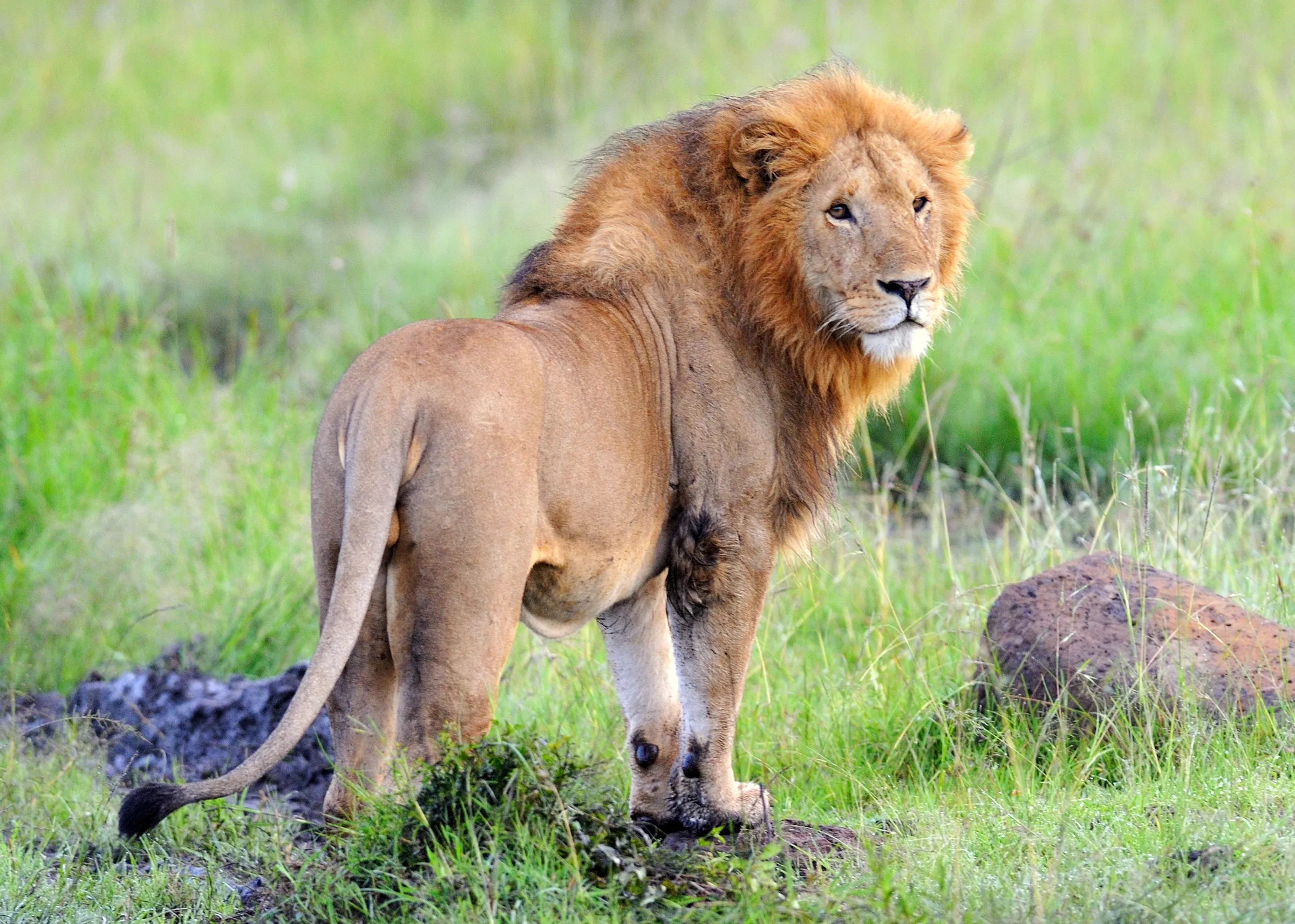
In March 1898 the railhead reached the Tsavo River, and Lieutenant Colonel John Henry Patterson arrived to build the bridge. For the next nine months two maneless male lions hunted the work camps at night, dragging men from their tents. At one point in December hundreds of workers fled down the line and construction stopped altogether. Patterson shot the first lion on December 9 and the second on December 29, 1898, and later wrote a best-selling book, The Man-Eaters of Tsavo.
Patterson claimed 135 victims. Researchers who analysed the lions' remains in 2009 estimated that the pair had eaten about 35 people between them, though nobody knows how many died in all. Patterson sold the skins to the Field Museum in Chicago in 1924, and the mounted lions are still on display there, so travelers from Chicago can see them before they fly. Two years later, at Kima station, a lion climbed into a railway carriage and killed a police superintendent, Charles Ryall; that carriage is now in the Nairobi Railway Museum.
A depot at a swamp: Nairobi, 1899
The line reached the edge of the Athi Plains in May 1899, at a place the Maasai called Enkare Nairobi, cool water, after the stream that ran through the swamp. It was flat, had water, and lay just below the steep climb to the highlands and the Rift, so the engineers made it their main depot and workshops. A town of tin sheds, tents and an Indian bazaar grew around it. In 1905 the protectorate's capital moved there from Mombasa. The street plan of downtown Nairobi, from Station Road to Moi Avenue, still follows the railway town.
The line reached Port Florence, now Kisumu, on Lake Victoria in December 1901, and steamers carried passengers and goods across the lake to Uganda. Branches and extensions followed; the line reached Kampala itself in 1931.
| Year | Railway milestone |
|---|---|
| 1896 | Construction begins at Mombasa |
| 1898 | The Tsavo man-eaters; the bridge is finished |
| 1899 | The railhead reaches Nairobi, which becomes the depot |
| 1900 | Superintendent Ryall killed by a lion at Kima |
| 1901 | The line reaches Kisumu on Lake Victoria |
| 1905 | Nairobi becomes the capital of the protectorate |
| 1931 | The line reaches Kampala |
| 2017 | The Madaraka Express opens between Nairobi and Mombasa |
What the railway made
The railway had to earn back its cost, and the colonial government decided that settlers growing export crops on the highlands were the way to do it. From the early 1900s it encouraged European settlement along the line, and African communities, the Maasai above all, lost land to it. Towns grew at the stations: Voi, Nairobi, Naivasha, Nakuru, Kisumu. Indian traders opened shops, dukas, at every halt. The line decided where Kenya's cities are, who owned the best land, and which communities met the colonial state first. Much of the history on our Mau Mau page starts here.
Riding the line today
The old metre-gauge overnight train between Nairobi and Mombasa, which travelers called the Lunatic Express, stopped running in 2017, when the new standard-gauge railway opened. The Madaraka Express runs from Nairobi Terminus at Syokimau to Mombasa Terminus at Miritini in about five to six hours, with stops including Voi for Tsavo East. At the time of writing, economy seats cost about KSh 1,000 and first class about KSh 3,000 one way; book through Kenya Railways a few days ahead, because trains fill, especially in December. From the window you cross the Tsavo plains, and elephants, giraffes and zebras are often in view. The old line still carries some services, including Nairobi commuter trains and an occasional train to Kisumu; check Kenya Railways for current schedules.
Where to stand
| Place | What is there | How to fit it in |
|---|---|---|
| Nairobi Railway Museum | Old locomotives and coaches, the Ryall carriage, photographs of the construction | Two hours, next to the central station |
| Tsavo River, Tsavo station | Where the line crosses the river between Tsavo East and Tsavo West, the site of Patterson's camp | On a Tsavo safari, with a guide |
| Voi | A railway town at the edge of Tsavo East; the Madaraka Express stops here | A train-and-safari stop |
| Kisumu | The end of the line, the old station and port on Lake Victoria, and the Kisumu Museum | A western Kenya trip |
| Field Museum, Chicago | The Tsavo man-eaters on display | Before you leave the U.S. |
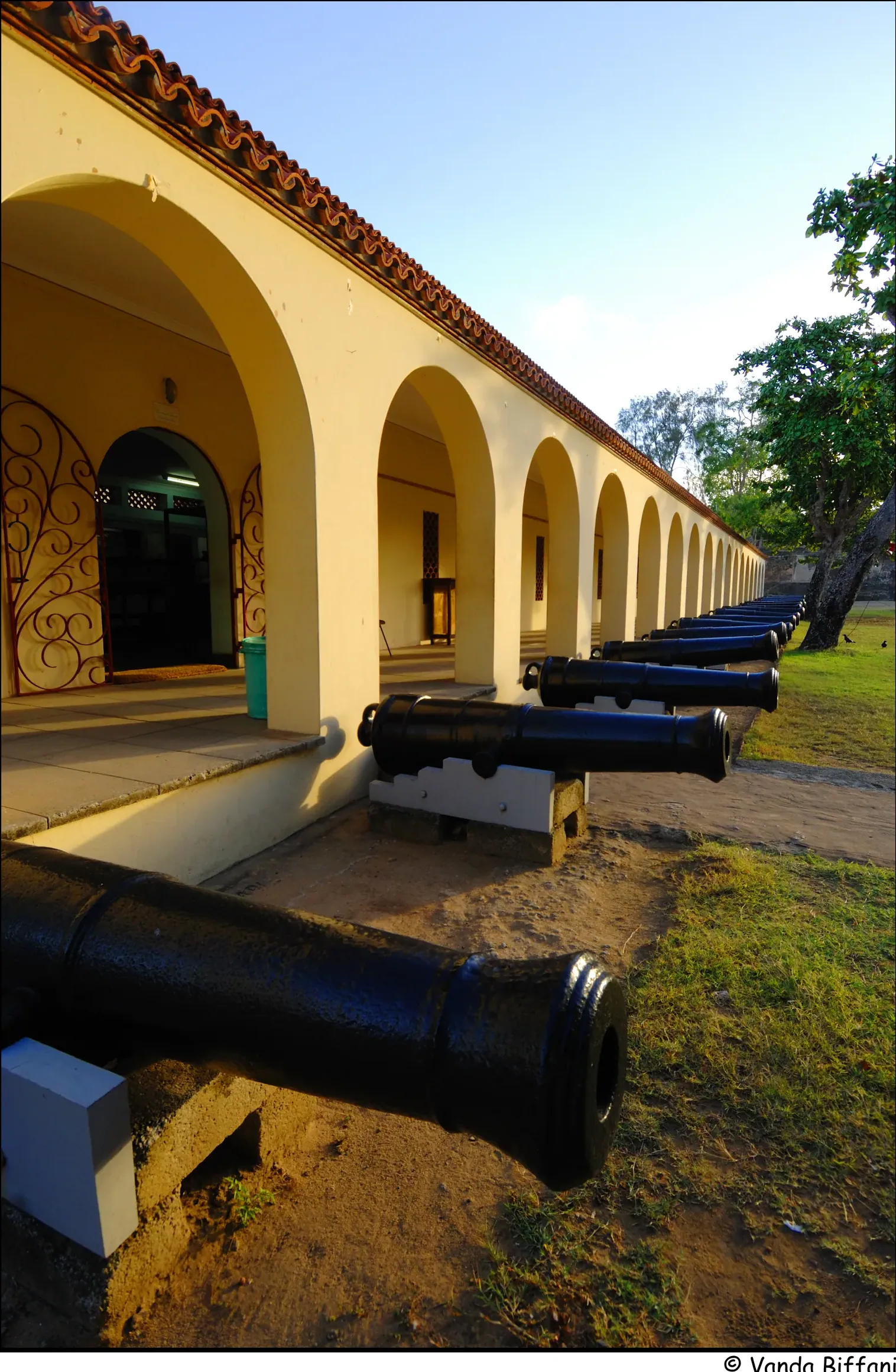
Our favorite way to tell this story is to live it: two nights in Nairobi with a morning at the Railway Museum, the Madaraka Express to Voi, two nights in Tsavo East and a drive past the Tsavo River, then the coast. School and university groups can pair it with a session on the Indian Ocean trade at Fort Jesus.
Further reading
- Charles Miller, The Lunatic Express (1971)
- J.H. Patterson, The Man-Eaters of Tsavo (1907)
- M.F. Hill, Permanent Way: The Story of the Kenya and Uganda Railway (1949)