History. Updated November 2026. 6 min read.
The most complete early human skeleton ever found belongs to a boy who died about 1.5 million years ago beside a river west of Lake Turkana. He was probably between eight and twelve years old. His bones are kept by the National Museums of Kenya in Nairobi, and if you are willing to travel far enough, you can stand on the ground where he was found.
Why is Kenya called a cradle of humankind? Because the Turkana Basin, and the Rift Valley south of it, have produced an unbroken run of fossils and stone tools covering more than four million years of human evolution, from early upright apes to Homo erectus. Ethiopia, Tanzania and South Africa have their own claims and their own famous finds, and scientists now see human origins as an Africa-wide story. But few places in the world have taught us as much as the eroding lake beds of northern Kenya. Our history timeline gives this era a card; this page explains the finds and how to see them, from an easy museum morning to an expedition.
Why the fossils are here
The Rift Valley is a crack in the continent that has been slowly opening for millions of years. Rivers and lakes on its floor buried animals, and sometimes our ancestors, in fine sediment, and volcanoes along the rift laid down layers of ash that geologists can date precisely. Then the land tilted and eroded, bringing those layers back to the surface. In the dry, almost treeless Turkana Basin, nothing hides the ground, so every rainy season washes new bones out of the slopes. Fossil hunters walk the gullies after the rains, looking for the gleam of bone.
Koobi Fora and the Leakeys
In 1968 Richard Leakey, son of the paleoanthropologists Louis and Mary Leakey, flew over the eastern shore of Lake Turkana and saw sediments he thought worth searching. The expeditions that followed, based at a spit of land called Koobi Fora, found hundreds of hominin fossils. Among the most famous are the skull known as KNM-ER 1470, found in 1972 and about 1.9 million years old, which pushed the history of our genus Homo back in time, and KNM-ER 3733, a Homo erectus skull found in 1975. Footprints left about 1.5 million years ago, found near Ileret and published in 2009, show early humans walking much as we do.
Much of this work was done by Kenyans. The fossil hunter Kamoya Kimeu led the field team for decades and found many of the key fossils, and Kenyan scientists now lead much of the research. Richard Leakey went on to run the Kenya Wildlife Service and founded the Turkana Basin Institute, a research base with Stony Brook University, before his death in 2022. Meave Leakey and Louise Leakey continued the family's work on the lake.
Turkana Boy
In August 1984 Kamoya Kimeu spotted a small piece of skull on a slope at Nariokotome, on the western side of the lake. Over the next seasons the team recovered most of a skeleton: skull, jaw, spine, ribs, arms and legs. Known as KNM-WT 15000, or Turkana Boy, he is a Homo erectus, sometimes called Homo ergaster, and the most complete skeleton of an early human from that period ever found. He was tall and slim, built for walking long distances in heat, with a body much closer to ours than to earlier hominins. His age at death is debated: earlier estimates said about twelve, later studies of his teeth suggest closer to eight or nine.
Older still: Lomekwi, Kanapoi and the Tugen Hills
- Lomekwi 3, west Turkana: stone tools about 3.3 million years old, announced in 2015 and older than any previously known, which suggests tool-making began before our genus Homo
- Lomekwi: a 3.5 million-year-old skull named Kenyanthropus platyops, the flat-faced man of Kenya, described in 2001
- Kanapoi and Allia Bay: Australopithecus anamensis, about 4.2 million years old, named in 1995, one of the earliest known upright walkers
- The Tugen Hills, Baringo: Orrorin tugenensis, about six million years old, announced in 2000 and one of the oldest candidates for a human ancestor
| Age (years ago) | Find | Where |
|---|---|---|
| About 6 million | Orrorin tugenensis | Tugen Hills, Baringo |
| About 4.2 million | Australopithecus anamensis | Kanapoi and Allia Bay, Turkana Basin |
| About 3.5 million | Kenyanthropus platyops | Lomekwi, west Turkana |
| About 3.3 million | The oldest known stone tools | Lomekwi 3, west Turkana |
| About 1.9 million | Skull KNM-ER 1470 | Koobi Fora, east Turkana |
| About 1.5 to 1.6 million | Turkana Boy | Nariokotome, west Turkana |
| About 1.5 million | Footprints of early humans | Ileret, east Turkana |
| About 1.2 million to 500,000 | Fields of hand axes | Olorgesailie, Kajiado |
| About 320,000 | Early Middle Stone Age tools and pigments | Olorgesailie, Kajiado |
Where you can see it
Nairobi National Museum. For almost every traveler, this is the place. Its human origins gallery on Museum Hill tells the story with original specimens and casts, including Turkana Boy, and the museum holds one of the most important fossil collections in the world in its research departments. Allow two to three hours, and combine it with the snake park and gardens next door. It is also the best rainy-afternoon activity in the city.
Olorgesailie. About 65 km southwest of Nairobi on the road to Lake Magadi, roughly an hour and a half each way, Olorgesailie is a National Museums of Kenya site where thousands of stone hand axes lie on the ground where they were made and dropped, protected under shelters along a walkway. Louis and Mary Leakey excavated here in the 1940s, and research by the Smithsonian with the National Museums has continued for decades. It is hot and open, so go early, bring water and hats, and pair it with Lake Magadi's flamingos on the same day.
Kariandusi and Hyrax Hill. On the road between Naivasha and Nakuru, Kariandusi is another hand-axe site, excavated by Louis Leakey in the late 1920s, with a small museum near Lake Elementaita. Hyrax Hill, on the edge of Nakuru town, is a prehistoric settlement site excavated by Mary Leakey in 1937, with pit dwellings and burials. Both take an hour and sit naturally on a Rift Valley lakes trip.
Sibiloi and Koobi Fora. The fossil sites themselves are in Sibiloi National Park, part of the Lake Turkana National Parks World Heritage Site, on the eastern shore in Marsabit County. There is a small museum and research camp at Koobi Fora. Getting there means a charter flight of two to three hours from Nairobi's Wilson Airport, or a multi-day 4x4 expedition with camping. Our Lake Turkana parks page covers the logistics. Nariokotome, on the western shore, is reached from Lodwar and is rarely visited.
| Site | From Nairobi | Time on site | Best for |
|---|---|---|---|
| Nairobi National Museum | In the city | Two to three hours | Everyone, any trip |
| Olorgesailie | About 1.5 hours by road | Two hours | A day out with Lake Magadi |
| Kariandusi and Hyrax Hill | About 2 to 2.5 hours by road | One hour each | A Naivasha or Nakuru stay |
| Sibiloi and Koobi Fora | Charter flight, 2 to 3 hours, or 2 to 3 days by road | One to two days | Expeditions and study tours |
Planning a Turkana expedition
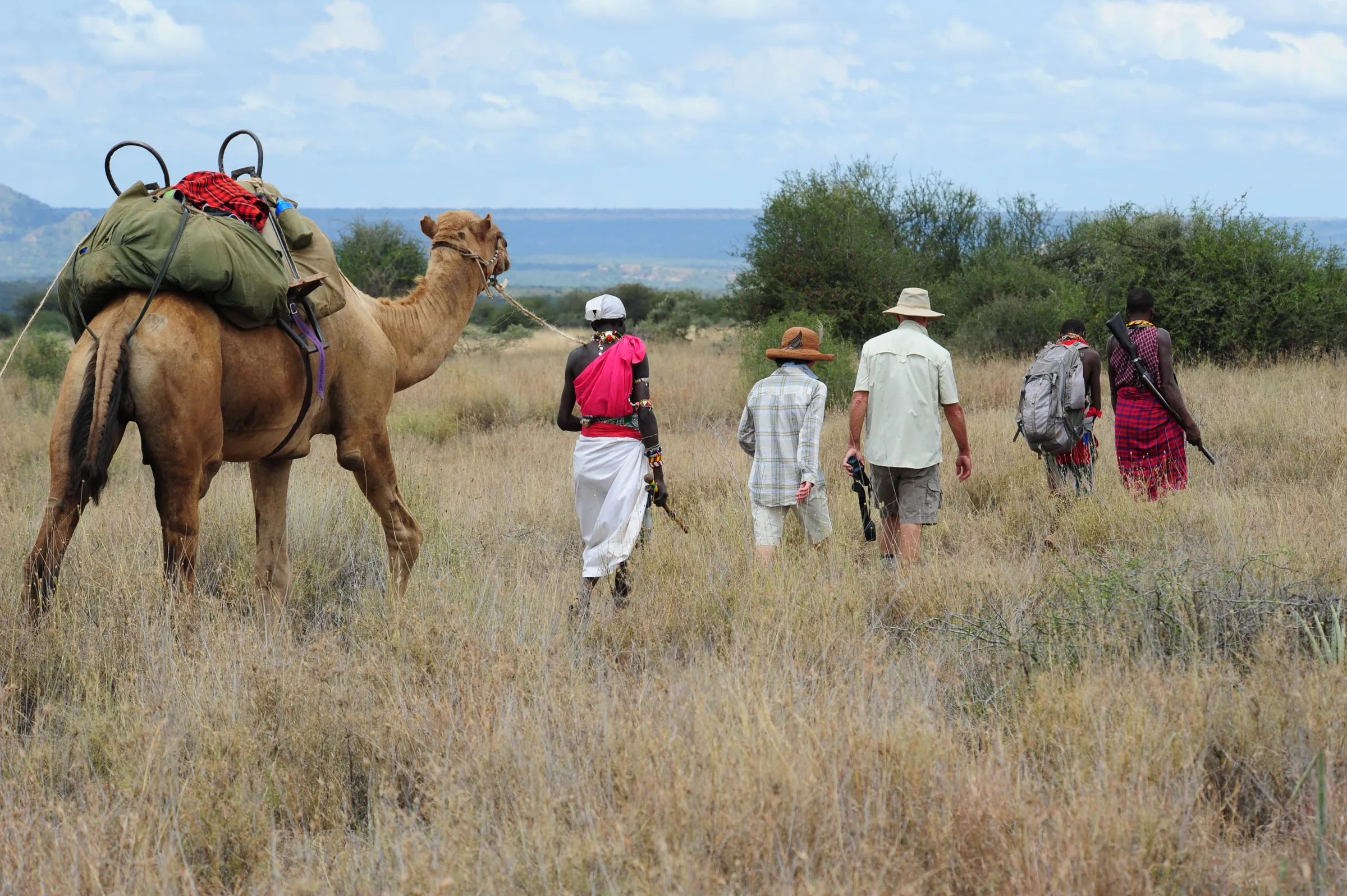
Lake Turkana is the world's largest permanent desert lake, the Jade Sea, and one of the most spectacular places in Africa. It is also hot, remote and expensive to reach. Daytime temperatures often pass 95 degrees Fahrenheit, wind can blow for days, and facilities are basic. A charter flight is the simplest way to see Koobi Fora; a road trip from Nairobi via Samburu, Marsabit or Maralal takes several days each way and suits travelers who want the journey as much as the fossils. Before you book, check the current U.S. State Department advisory for Kenya and confirm your travel insurance covers your route, and travel with an operator who knows the region well.
For university groups, a Turkana trip can be built around a field school or a visit arranged with researchers. That needs months of notice and depends on the season and on who is working on the lake that year. Ask us early and we will tell you honestly what is possible.
Further reading
- Richard Leakey and Roger Lewin, Origins Reconsidered (1992)
- Alan Walker and Pat Shipman, The Wisdom of the Bones (1996), on the discovery of Turkana Boy
- The Turkana Basin Institute and National Museums of Kenya websites, linked in our sources