History. Updated November 2026. 6 min read.
On World Environment Day in 1977, Wangari Maathai planted seven trees in Kamukunji Park in Nairobi. By the time she won the Nobel Peace Prize in 2004, the Green Belt Movement she started had planted more than 30 million trees across Kenya, almost all of them by rural women who were paid a little for every seedling that survived. Along the way she was mocked by the president, beaten by police and jailed, and she won.
Who was she? A biologist from the slopes of the Aberdares and Mount Kenya, one of the Kenyans flown to American colleges in the Kennedy Airlift, the first woman in East and Central Africa to earn a doctorate, a campaigner who tied trees to water, firewood, women's work and democracy, and later a member of parliament and a minister. This page tells her story and points you to the places in Kenya where you can walk in it. Our heritage travel page covers the Airlift itself.
Nyeri, Kansas and Nairobi
Wangari Muta was born on April 1, 1940, in the village of Ihithe in Nyeri, in the central highlands. She grew up among fig trees and clear streams, which she later wrote about as the world that deforestation took away. She was a brilliant student at Catholic schools, and in 1960 she was among about 300 Kenyans chosen to study in the U.S. through the Airlift organised by Tom Mboya with American supporters. She earned a degree in biology at Mount St. Scholastica College in Atchison, Kansas, in 1964, and a master's at the University of Pittsburgh in 1966.
Back in Nairobi, she studied in Germany and at the University of Nairobi, and in 1971 she became the first woman in East and Central Africa to earn a doctorate, in veterinary anatomy. She went on to chair the department and become an associate professor, again the first woman to do so. She married a politician, Mwangi Mathai, and they had three children. When he divorced her in 1979, the judge's comments and her response to them made national news, and she added a second 'a' to her surname in reply.
The Green Belt Movement
Working with the National Council of Women of Kenya in the 1970s, Maathai heard the same complaints from rural women again and again: streams drying up, firewood harder to find, food less nourishing. She saw a common cause in the loss of trees, and a common answer in planting them. On June 5, 1977, World Environment Day, the movement planted its first seven trees. It grew into a network of women's groups that raised seedlings in nurseries and planted them on farms, school grounds and public land, with a small payment for each tree that lived.
The trees were the start, not the point. Green Belt groups learned to run nurseries, keep accounts and meet as citizens, and the movement's civic education sessions asked why Kenyans had so little say over their land and government. That made it political in a one-party state, and it made Maathai a target.
Uhuru Park, Freedom Corner and Karura
In 1989 the ruling party announced a 60-storey complex for its newspaper group in Uhuru Park, central Nairobi's main open space, with a large statue of President Moi. Maathai led the opposition to it. She was ridiculed in parliament and by the president, and her organisation was evicted from its offices. But foreign lenders withdrew, and the project was abandoned. The park is still a park.
In 1992 she joined mothers of political prisoners on a hunger strike at a corner of Uhuru Park they renamed Freedom Corner. Police broke it up and she was beaten unconscious. The prisoners were released the following year. In 1998 and 1999 she led protests against the allocation of parts of Karura Forest, on Nairobi's northern edge, to private developers. In January 1999, as she and supporters tried to plant trees there, they were attacked by guards and she was injured. The public outcry helped save the forest, which is now one of the most popular green spaces in the city.
Parliament and the Nobel Prize
When Kenya's opposition united to defeat KANU in 2002, Maathai won the Tetu seat in Nyeri with about 98 percent of the vote and became assistant minister for environment and natural resources. On October 8, 2004, the Norwegian Nobel Committee awarded her the Nobel Peace Prize for her contribution to sustainable development, democracy and peace. She was the first African woman, and the first environmentalist, to receive it. In her Nobel lecture in Oslo she spoke about trees, rights and the responsibility of each generation.
In the course of history, there comes a time when humanity is called to shift to a new level of consciousness, to reach a higher moral ground.Wangari Maathai, Nobel lecture, Oslo, December 10, 2004
She was not above criticism. In 2004 she was widely criticised for remarks reported in the press about the origins of HIV, which she said had been taken out of context, and some in government thought her too ready to speak abroad about Kenya's failings. She published her memoir, Unbowed, in 2006, and a book on African leadership, The Challenge for Africa, in 2009. She died of cancer in Nairobi on September 25, 2011, at 71. The African Union marks March 3 as Wangari Maathai Day, alongside Africa Environment Day.
| Year | Milestone |
|---|---|
| 1940 | Born in Ihithe, Nyeri |
| 1960 to 1966 | Studies in Kansas and Pittsburgh through the Airlift years |
| 1971 | Doctorate from the University of Nairobi |
| 1977 | Green Belt Movement founded on World Environment Day |
| 1989 | Stops the tower in Uhuru Park |
| 1992 | Beaten at Freedom Corner during a mothers' hunger strike |
| 1999 | Attacked while planting trees in Karura Forest |
| 2002 | Elected MP for Tetu; assistant minister from 2003 |
| 2004 | Nobel Peace Prize |
| 2006 | Publishes Unbowed |
| 2011 | Dies in Nairobi |
Where to stand
- Karura Forest, Nairobi: about 1,000 hectares of forest with walking and cycling trails, a waterfall and caves once used by Mau Mau fighters. Managed by the Kenya Forest Service with the Friends of Karura Forest; a modest entry fee applies. Give it a morning
- Uhuru Park and Freedom Corner, central Nairobi: the open space she saved, a short walk from the city center. Combine it with the Mau Mau memorial in the same park
- The Wangari Maathai Institute for Peace and Environmental Studies, University of Nairobi: an academic institute rather than a museum, worth a visit for study groups by arrangement
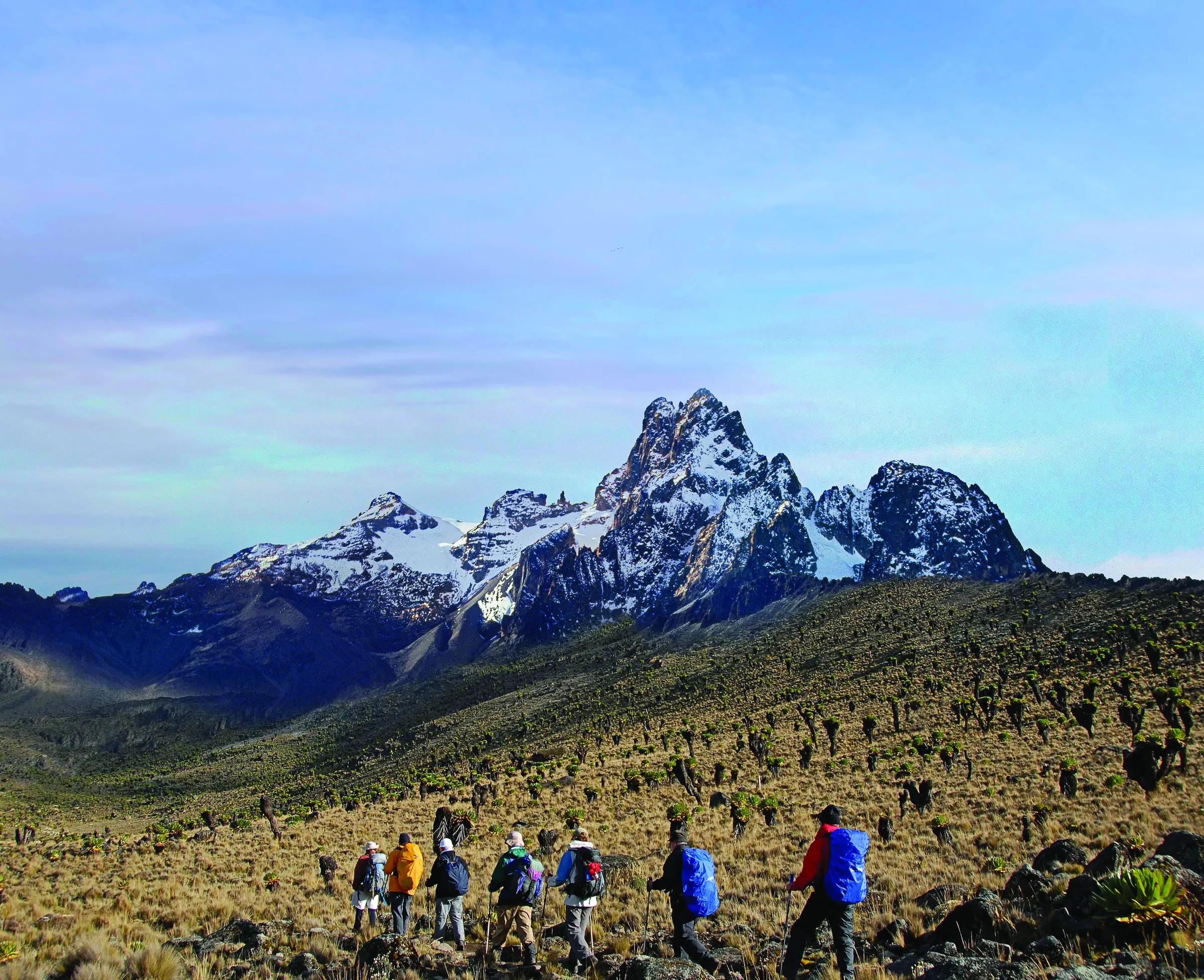
- Nyeri: her home county, where the highland streams and the forest edge she wrote about meet coffee and tea farms. It fits on the way to the Aberdares or Mount Kenya
- A tree planting with a community group: we can arrange for groups and families to plant with a local organisation, with the trees recorded so you can follow them
Kenya has taken up her cause in its own way: in 2023 the government declared a national tree-planting holiday on November 13 and set a goal of growing 15 billion trees by 2032. When groups of students ask us how to honour her, our answer is the one she gave: plant something and look after it.
Further reading
- Wangari Maathai, Unbowed: A Memoir (2006)
- Wangari Maathai, The Green Belt Movement: Sharing the Approach and the Experience (revised 2003)
- The Nobel Prize's pages on her 2004 award and lecture, linked in our sources