History. Updated November 2026. 6 min read.
On August 27, 2010, in Uhuru Park in Nairobi, President Mwai Kibaki signed Kenya's new constitution into law in front of a huge crowd. It was the end of a campaign that had lasted two decades and cost lives, and it changed almost every part of how Kenya is governed: a Bill of Rights, a Senate, a Supreme Court and, above all, 47 county governments with their own budgets.
Why did Kenya need a new constitution? Because the one it had at independence had been amended, piece by piece, into a framework for concentrated presidential power, and in 1982 into a one-party state. Multi-party politics came back in 1991, but the rules stayed largely the same. A first new draft was rejected in 2005; a disputed election and the violence of 2007 and 2008 made reform unavoidable; and in 2010 Kenyans voted yes. For visitors, especially Kenyan-Americans, the result matters every day: it is why your family's county has a governor, and why you can hold a U.S. passport and remain Kenyan.
1963 to 1991: from regions to a one-party state
The independence constitution, agreed at Lancaster House, gave Kenya a parliament with two chambers, a Senate and a House of Representatives, and seven regional assemblies with real powers, the majimbo system KADU had demanded. It did not last. Within two years of independence the regions had lost their powers and KADU had merged into KANU. In 1966 the Senate was merged into a single National Assembly. Amendments widened presidential powers and allowed detention without trial. By the end of the 1960s Kenya was a one-party state in practice.
In 1982, after Oginga Odinga moved to register a new party, parliament added Section 2A, making KANU the only legal party. Opposition went underground or into exile, and critics were detained. In the late 1980s churches, lawyers, students and figures such as Kenneth Matiba, Charles Rubia and Odinga himself pushed for change; in July 1990 rallies on Saba Saba day, the seventh day of the seventh month, were violently broken up. With donors suspending aid, the government repealed Section 2A in December 1991. Multi-party elections followed in 1992 and 1997, both won by Daniel arap Moi amid deadly violence in the Rift Valley.
Bomas and the 2005 referendum
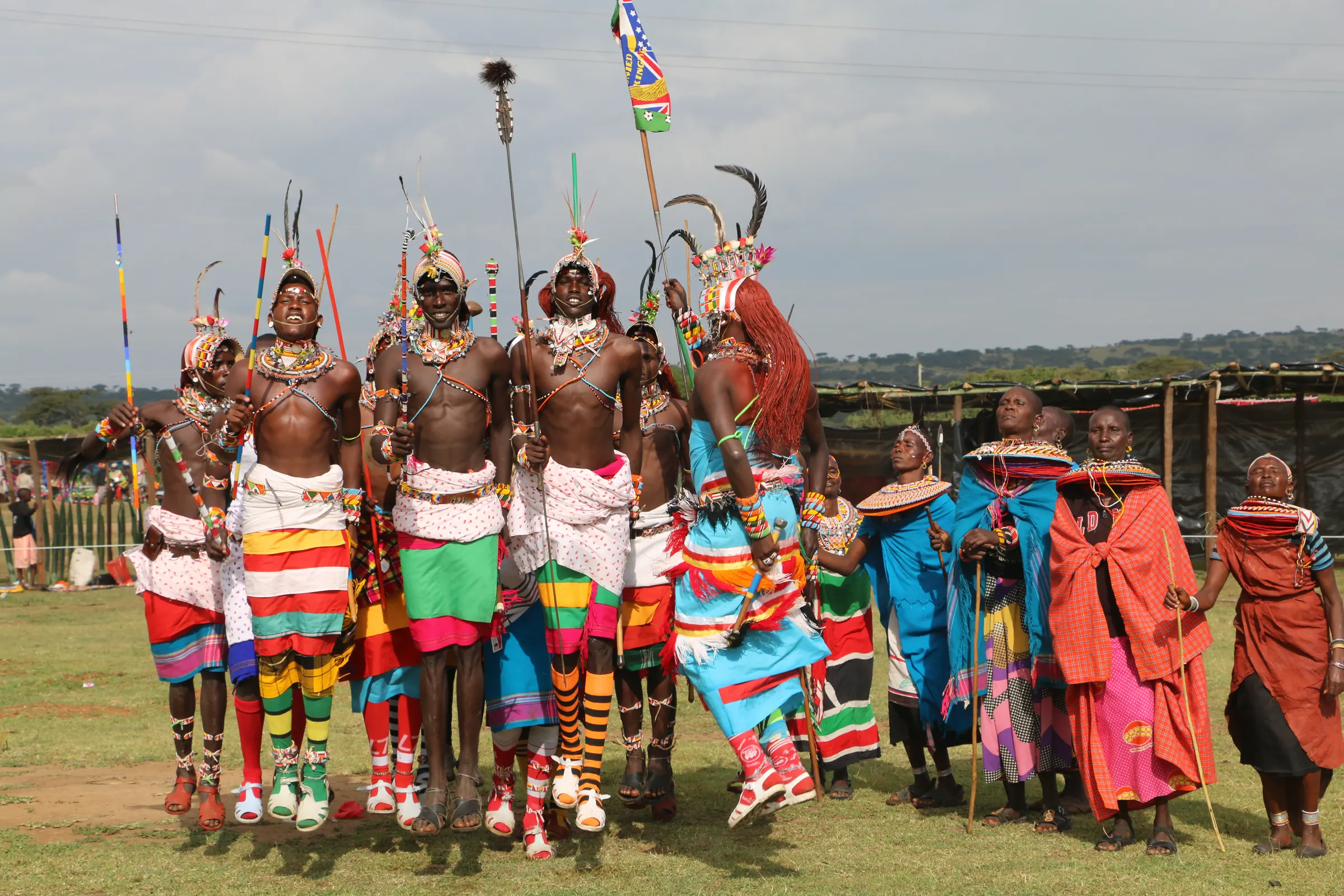
A review commission led by the constitutional lawyer Yash Pal Ghai collected views across the country from 2000, and a National Constitutional Conference met at the Bomas of Kenya in Nairobi from 2003. Its 2004 draft, the Bomas draft, cut presidential power and created a prime minister. The government then revised it, keeping a strong presidency, and put that version to a referendum on November 21, 2005. The campaign used fruit symbols: banana for Yes, orange for No. About 58 percent voted No. The defeat split the governing coalition and gave rise to the Orange Democratic Movement led by Raila Odinga.
The 2007 to 2008 crisis
Kenya's December 27, 2007 election between Kibaki and Odinga was so close, and the count so flawed, that a later inquiry said no one could say with confidence who had won. When Kibaki was declared the winner and sworn in within hours, protests and ethnic violence broke out in Nairobi's informal settlements, the Rift Valley, Kisumu and elsewhere. More than 1,100 people were killed and hundreds of thousands were driven from their homes. A mediation team led by the former UN secretary-general Kofi Annan brokered the National Accord of February 28, 2008: Kibaki stayed president, Odinga became prime minister in a grand coalition, and the parties agreed a reform agenda that put a new constitution at its heart. Cases at the International Criminal Court against six Kenyans, including two later elected president and deputy president, eventually collapsed.
2010: the referendum and the new order
A Committee of Experts produced a harmonised draft in 2009. In January 2010 a parliamentary committee meeting in Naivasha settled the biggest dispute, choosing a presidential system with strong checks rather than a prime minister. Parliament passed the proposed constitution, and on August 4, 2010, Kenyans voted on it, with green for Yes and red for No. About 67 percent voted Yes, on a turnout of around 72 percent. Some church leaders campaigned against it over the wording on abortion and the place of Kadhi courts for Muslim family law, and the Rift Valley largely voted No. The constitution was promulgated on August 27, 2010.
| Date | Milestone |
|---|---|
| 1963 | Independence constitution with regions and a Senate |
| 1964 to 1966 | Regions stripped of power; Senate merged into one chamber |
| June 1982 | Section 2A makes Kenya a one-party state |
| July 7, 1990 | Saba Saba rallies for multi-party democracy |
| December 1991 | Section 2A repealed |
| 2003 to 2004 | Bomas conference and draft |
| November 21, 2005 | Referendum rejects the government draft |
| December 2007 to February 2008 | Post-election violence and the National Accord |
| August 4, 2010 | Referendum approves the new constitution |
| August 27, 2010 | Promulgation at Uhuru Park |
| March 4, 2013 | First elections under the new constitution; 47 counties begin |
What changed
- A Bill of Rights (Chapter Four), with economic and social rights such as health, housing and water alongside civil and political ones, enforceable in court
- Devolution (Chapter Eleven): 47 counties, each with an elected governor and county assembly, receiving by law at least 15 percent of national revenue, with responsibility for local health, roads, markets and more
- A Senate restored to represent the counties, and a National Assembly
- A Supreme Court at the head of an independent judiciary, with a Judicial Service Commission to appoint judges
- Leadership and integrity rules for public officers (Chapter Six) and independent commissions, including for elections, land and human rights
- Land reform (Chapter Five), including a National Land Commission and a rule that non-citizens may hold land only on leases of up to 99 years
- Dual citizenship: a Kenyan citizen by birth does not lose citizenship by acquiring another (Article 16)
- The two-thirds gender rule: no more than two-thirds of any elective or appointive body may be of the same gender
How it has worked since
The constitution has been tested hard. In September 2017 the Supreme Court annulled the presidential election over irregularities in the count, the first such ruling in Africa, and ordered a fresh vote. In 2021 and 2022 the courts struck down a set of proposed amendments known as the Building Bridges Initiative, ruling that the process had not followed the constitution. The two-thirds gender rule has still not been fully met in parliament, despite repeated court orders. Devolution has brought roads, clinics and offices to counties that had been neglected for decades, and also new debates about local corruption and the cost of government. In 2024 young protesters against a finance bill cited their constitutional right to assemble and demonstrate. Kenyans argue about the constitution constantly, which is perhaps the best sign that it matters.
What it means for the diaspora
Before 2010, a Kenyan who became a U.S. citizen lost Kenyan citizenship. Article 16 changed that for citizens by birth, and those who had lost citizenship can apply to regain it through the immigration department. As citizens, dual nationals can own freehold land, which non-citizens cannot, and pay citizen rates at national parks with a Kenyan ID or passport. Rules on documents and procedures change, so check with the Kenyan embassy or consulates before you rely on them. Our diaspora pages cover trips home, and our county pages help you find your family's county government.

Where to stand
| Place | Why go | Time |
|---|---|---|
| Uhuru Park, Nairobi | Where the constitution was promulgated in 2010, and Freedom Corner | Thirty minutes |
| Bomas of Kenya, Langata | Where the 2003 to 2004 conference sat; today a cultural center with traditional dance performances | Two hours, near Nairobi National Park |
| Parliament Buildings | The National Assembly and Senate; the public gallery and tours are by arrangement | One to two hours |
| Supreme Court, Nairobi | The court that annulled the 2017 presidential election; seen from outside | Fifteen minutes |
| A county assembly | Devolution in action; most assemblies have a public gallery | An hour, by arrangement |
For civics, law and political science groups, we build study tours around these sites with meetings arranged through Kenyan partners: a county government, a legal aid organisation, journalists who covered the 2010 vote. Faculty can ask us for a draft program.
Further reading
- The Constitution of Kenya, 2010, free on Kenya Law's website
- Yash Ghai and Jill Cottrell Ghai, Kenya's Constitution: An Instrument for Change (2011)
- The Commission of Inquiry into Post-Election Violence (the Waki Report), 2008