History. Updated November 2026. 6 min read.
Most historic towns on the African coast are ruins you walk through. Lamu is a town people still live in, in houses their families have occupied for generations, along lanes laid out centuries ago, with the same call to prayer, the same dhows and the same carved doors. That continuity is the whole reason UNESCO listed it in 2001, and it is what makes Lamu different from Gedi, Jumba la Mtwana or even Mombasa Old Town.
This page is the heritage story: why Lamu Old Town is a World Heritage Site, how its houses work, what the fort, mosques and museums hold, and what threatens it. For the island itself, Shela, Manda, getting there and where to stay, see our Lamu destination page; the end of this page covers how to see the Old Town well.
Why UNESCO listed it
UNESCO describes Lamu Old Town as the oldest and best-preserved Swahili settlement in East Africa, one that has kept its traditional functions. It was inscribed on three criteria. Under criterion (ii), its architecture and town plan show centuries of exchange between Bantu Africa and the Arab, Persian, Indian and European worlds that traded on the monsoon winds. Under (iv), its coral-stone houses, courtyards and narrow streets are an outstanding example of a Swahili town. Under (vi), it has been a major center of Islamic and Swahili learning since the 19th century, and the religious festivals held there still draw people from across East Africa and beyond.
A short timeline
| When | What happened |
|---|---|
| 14th century | Lamu grows as a stone town; the oldest surviving buildings date from around this time |
| 1500s | Portuguese ships reach the archipelago; Lamu pays tribute but keeps its own rulers |
| 1700s | Omani influence grows along the coast; Lamu prospers on trade in mangrove poles, ivory and grain |
| 1812 or 1813 | Lamu defeats Pate and its allies at the Battle of Shela |
| 1813 to 1821 | Lamu Fort is built on the main square |
| 1880s to 1890s | A German post office opens in 1888; the British take over the coast's administration |
| Around 1900 | Riyadha Mosque is founded and the town becomes a center of Islamic learning |
| 2001 | UNESCO inscribes Lamu Old Town |
| 2010s to 2020s | Lamu Port and the LAPSSET corridor bring new pressures |
How a Lamu house works
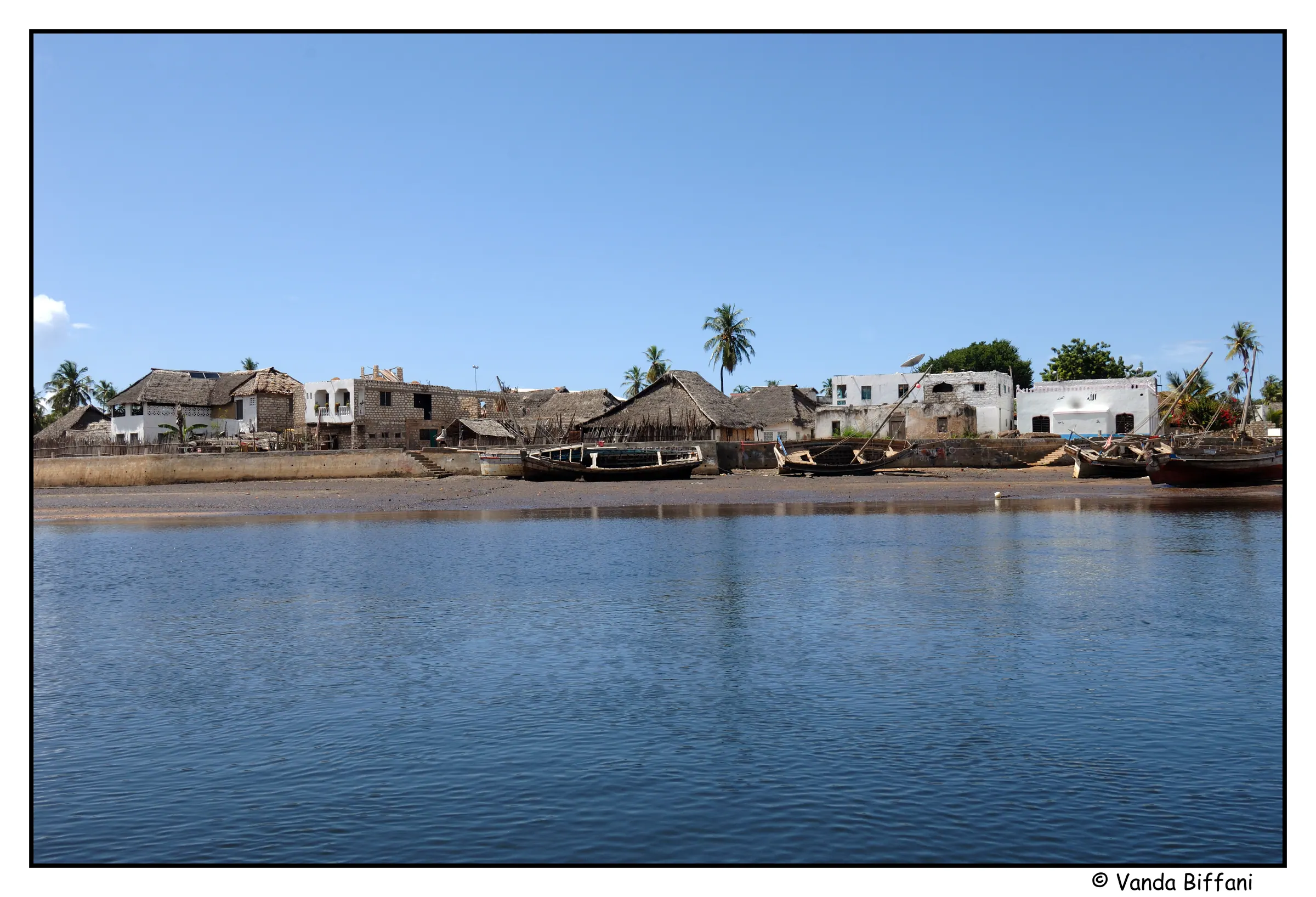
The Old Town is built from what the coast provides. Walls are coral rag set in lime mortar and plastered white. Ceilings rest on boriti, straight mangrove poles cut in the creeks and laid side by side, which sets the width of every room at the length of a pole, roughly three meters. That is why Lamu rooms are long and narrow, and why houses grow upward and around courtyards rather than outward.
A traditional stone house turns its back to the street. You enter through a carved door into a covered porch with built-in stone benches, the daka, where the men of the house received visitors. Inside, rooms open onto an inner courtyard that brings in light and air. The best rooms have plaster niches, the zidaka, cut into the walls to display porcelain and treasures. Roof terraces catch the breeze and are where much of family life happens in the hot months.
The carved doors
Lamu's doors are its signature. They are heavy hardwood, often with a carved frame and a central post, and the designs mix Swahili, Arab and Indian motifs: chains, lotus flowers, fish and frankincense trees. Some families say a door's chain motif was meant to protect the house; others say the patterns simply showed the owner's wealth. Carvers still work in the town and on Shela, and you can watch a door being made in their workshops. Many of the carved doors you see in Mombasa and beyond were made by Lamu craftsmen.
What to see in the Old Town
- Lamu Fort, on the main square: built from 1813 to 1821, used as a prison under British rule and long after independence, and now a museum and community space run by National Museums of Kenya.
- Lamu Museum, on the waterfront: the best single introduction to Swahili life, with dhow models, wedding and Maulidi displays, and one of the coast's famous siwa, ceremonial horns once blown on great occasions.
- The Swahili House Museum: a restored traditional house that shows the daka, courtyard, zidaka niches and bedrooms as they were.
- The German Post Office Museum: a reminder that Germany briefly ran a postal service here from 1888, during its short-lived protectorate at nearby Witu.
- Riyadha Mosque: founded around 1900 and the heart of the Maulidi festival. Visitors who are not Muslim should ask before entering any mosque and dress conservatively.
- The donkey sanctuary: Lamu has no cars in the Old Town, and the donkeys that carry its loads have their own clinic and rest yard.

Maulidi and the festival year
Maulidi celebrates the birthday of the Prophet Muhammad. In Lamu it has been a major event since the 19th century, with processions, prayers and recitations of poetry in praise of the Prophet, and it draws pilgrims and visitors from across East Africa and the Indian Ocean. Its date follows the Islamic lunar calendar, so it moves about eleven days earlier each year. The separate Lamu Cultural Festival, usually held later in the year, showcases Swahili music, crafts and food. Our festival page has the details.
What threatens Lamu
Lamu's listing is not a guarantee. The biggest change of the past decade is Lamu Port at Kililana on the mainland, the first part of the LAPSSET corridor meant to link Lamu with South Sudan and Ethiopia. Its first berths opened in 2021. UNESCO has repeatedly asked Kenya to assess the impact of the port and related projects on the Old Town, its setting and the mangroves and fisheries the town depends on. A proposed coal-fired power station nearby was halted in 2019 when Kenya's National Environment Tribunal cancelled its environmental licence after a challenge by local campaigners.
Inside the town the pressures are smaller but constant: new concrete buildings that break height and material rules, the cost of maintaining coral and lime houses, and the sale of old houses to outsiders. Lamu's conservation office and National Museums of Kenya work with owners on restoration. Staying in a restored traditional house and hiring local guides is the most direct way a visitor can help.
Visiting the Old Town
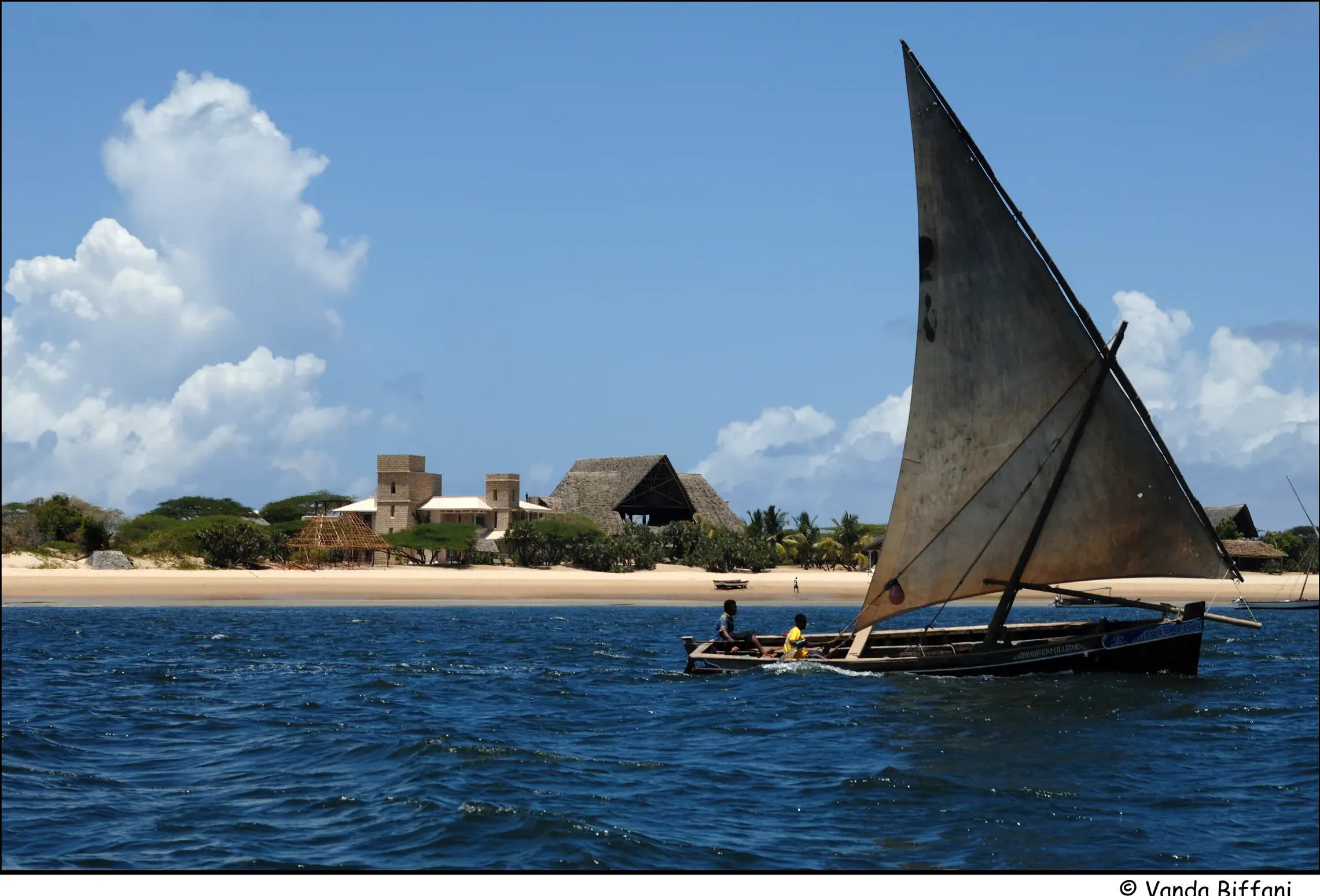
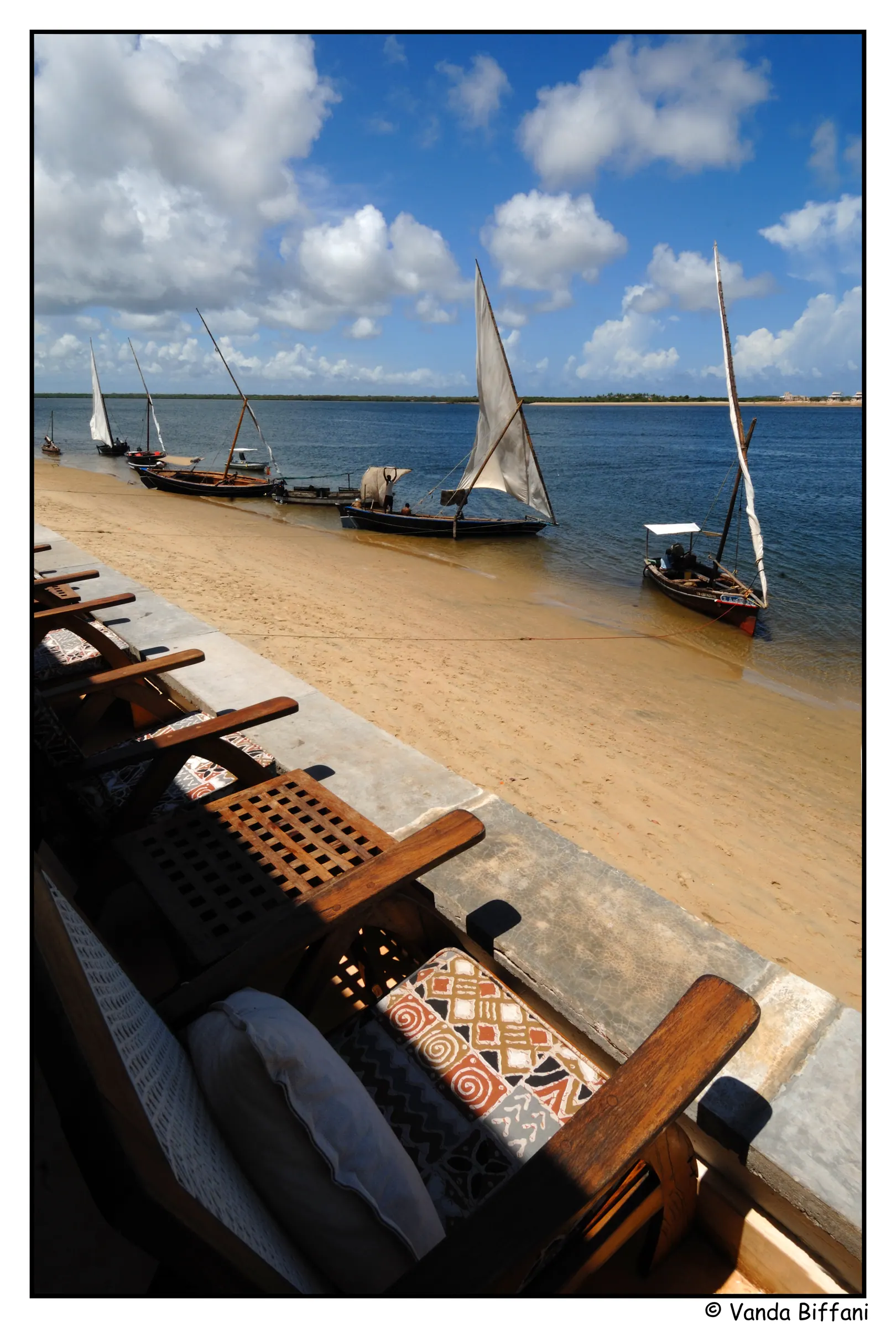
You fly to Manda Island, where the airstrip sits across a narrow channel from the town, and a boat brings you to the Lamu waterfront in a few minutes. From there you walk: the Old Town is small enough to cross on foot and intricate enough to fill three days. Start early with a local guide, who will take you through the lanes behind the waterfront, into the fort and the museums, and past the carved doors and workshops you would never find alone. Spend the afternoons on a roof terrace or at Shela beach, and an evening on a dhow.
- Time: two nights is the minimum, three lets you add Shela, the Takwa ruins on Manda and a dhow day in the archipelago.
- Dress: Lamu is a conservative Muslim town. Cover shoulders and knees in the Old Town, and ask before photographing people.
- Timing: the dry months, December to March and July to October, are the easiest; Maulidi and the Lamu Cultural Festival are the liveliest weeks, and rooms go early.
- Where to stay: a restored Swahili house in the Old Town, or a beach hotel in Shela, a short walk or boat ride away. Our where-to-stay guide compares them.
- Combine it: Mombasa Old Town, Fort Jesus and Gedi near Watamu tell the rest of the Swahili story, and a coast trip that ends in Lamu sees all of it.
Before you book, check the current U.S. State Department advisory for Kenya and confirm your travel insurance covers your route.