History. Updated November 2026. 7 min read.
The war that hastened Kenya's independence was fought from the forests of the Aberdares and Mount Kenya by people the colonial government called terrorists and Kenya now honours as freedom fighters. It was also a civil war, in which Kikuyu fought Kikuyu, and its memory still divides families in Nyeri and Murang'a. This page tells it plainly, gives the numbers as historians give them, and names the places where you can stand in it.
In short: from the late 1940s, a movement rooted in Kikuyu, Embu and Meru grievances over land, labour and exclusion from power bound its members by oath, first to unity and then to armed struggle. The colonial government declared a State of Emergency on October 20, 1952, jailed Jomo Kenyatta and other leaders, and fought the forest armies with British troops, police and African Home Guards. By 1956 the fighters were largely beaten. But the cost of the Emergency, and the scandal of its detention camps, convinced Britain it could not hold Kenya by force. The Emergency ended in January 1960 and independence followed in December 1963.
Land: the root of it
Once the railway was built, the colonial government reserved much of the cool, fertile central highlands for European settlers, an area that came to be called the White Highlands. Kikuyu families who had farmed land on the forest edge were pushed into crowded reserves, or became squatters on settler farms, working for the right to stay. From 1920 African men had to carry the kipande, a registration pass worn around the neck. By the 1940s the reserves were overcrowded, squatters were being evicted from the farms, and Nairobi's African neighbourhoods were filling with young men without land or work. Our history timeline covers the founding of the colony. The land question is what turned it into a war.
From petitions to the oath
Kenyans organised long before they fought. Harry Thuku's East African Association protested the kipande and taxes until his arrest in 1922, when police fired on the crowd that gathered outside the Nairobi police station, killing at least 21 people. The Kikuyu Central Association, founded in 1924, petitioned over land; Jomo Kenyatta became its general secretary and carried its case to London, where he lived from 1931 to 1946. The colonial government banned the association in 1940.
After the Second World War, in which many Kenyans had fought for Britain, the Kenya African Union, led by Kenyatta from 1947, pressed for land and representation. Alongside it, a more militant network in Nairobi and the highlands administered oaths that bound people to secrecy and then to fight. Where the name Mau Mau came from is still argued over; many fighters called their movement the Kenya Land and Freedom Army.
The Emergency, 1952 to 1960
On October 7, 1952, Senior Chief Waruhiu, a prominent supporter of the colonial government, was shot dead outside Nairobi. On October 20 the new governor, Sir Evelyn Baring, declared a State of Emergency, and that night Operation Jock Scott arrested Kenyatta and some 180 others. Kenyatta and five colleagues, the Kapenguria Six, were tried at a remote court in West Pokot and in April 1953 sentenced to seven years' hard labour. Historians widely regard the trial as unjust; in 1958 the chief prosecution witness swore that he had been paid to give false evidence. October 20 is now Mashujaa Day, Heroes' Day, a public holiday.
Thousands of fighters went into the Aberdare and Mount Kenya forests under leaders such as Dedan Kimathi, Stanley Mathenge and Waruhiu Itote, known as General China. They raided police posts, settler farms and the homes of loyalists. The worst single killing came at Lari on the night of March 26, 1953, when fighters killed more than 70 people from loyalist families, many of them women and children; in the reprisals that followed, security forces and Home Guards killed many more. Settler deaths were few, but they dominated the British press.
The government's answer was enormous. In Operation Anvil, from April 1954, the army and police sealed Nairobi and screened its Kikuyu, Embu and Meru residents, sending tens of thousands to camps. In the countryside, roughly a million people were moved into fenced, guarded villages, a policy called villagisation, often with their old homes burned behind them. Detainees were moved through a chain of camps where they were pressed, often by beatings and worse, to confess their oaths. More than 1,000 Kenyans were hanged under Emergency laws, a scale of execution the historian David Anderson found unmatched elsewhere in Britain's late colonial wars.
Dedan Kimathi was wounded and captured near Nyeri on October 21, 1956, and hanged at Kamiti Prison on February 18, 1957; where he is buried is still unknown. On March 3, 1959, guards at the Hola detention camp beat eleven detainees to death. The attempted cover-up collapsed, the killings were debated in the House of Commons, and the scandal helped convince the British government that the Emergency had to end. It was lifted on January 12, 1960, the same month the first Lancaster House conference on Kenya's future opened in London.
| Date | Event |
|---|---|
| 1920 | Kenya becomes a colony; the kipande pass is enforced |
| 1924 | The Kikuyu Central Association is founded |
| 1947 | Jomo Kenyatta leads the Kenya African Union |
| October 20, 1952 | State of Emergency declared; mass arrests |
| April 1953 | The Kapenguria Six are convicted |
| March 26, 1953 | The Lari massacre and the reprisals that follow |
| April 1954 | Operation Anvil in Nairobi |
| October 1956 | Dedan Kimathi captured; hanged February 1957 |
| March 3, 1959 | Eleven detainees killed at Hola |
| January 1960 | Emergency lifted; Lancaster House talks open |
| June 6, 2013 | Britain expresses regret and settles the detainees' claims |
How many died
The numbers are contested, so be wary of anyone who gives you one figure. The colonial government's official count was about 11,000 Mau Mau fighters killed. David Anderson puts the toll above 20,000, and Caroline Elkins has argued that deaths in the camps and villages pushed the true total far higher, an estimate other historians dispute. Official figures record about 1,800 African civilians killed by Mau Mau, with many more missing, and 32 European settlers. About 200 members of the security forces died. On detention, official figures give a peak of around 80,000 held at once; Elkins argues that between 160,000 and 320,000 people passed through the camps.
What is not in dispute is that the violence ran in every direction: fighters against loyalists and settlers, soldiers, police and Home Guards against suspects and civilians, neighbours against neighbours. Kenyan historians such as Bethwell Ogot and Wunyabari Maloba have written about the war as both a nationalist revolt and a civil war, and the arguments over who fought, who collaborated and who got the land afterward ran through Kenyan politics for decades. The movement itself stayed banned under Kenyan law until 2003.
The 2013 settlement
In 2009 a group of elderly Kenyans who had been detained during the Emergency sued the British government in London, supported by the Kenya Human Rights Commission. During the case, thousands of colonial files that Britain had removed from Kenya at independence came to light. On June 6, 2013, the Foreign Secretary, William Hague, made a statement to the House of Commons.
The British Government recognises that Kenyans were subject to torture and other forms of ill treatment at the hands of the colonial administration. The British Government sincerely regrets that these abuses took place, and that they marred Kenya's progress towards independence.William Hague, statement to the House of Commons, June 6, 2013
The settlement paid about £19.9 million to 5,228 claimants and funded a memorial in Nairobi, unveiled in Uhuru Park in 2015. In the same statement the government denied liability on behalf of the colonial administration, and a later, much larger group claim failed in the English courts. Many veterans, and many Kenyans, regard the settlement as a beginning rather than an end.
Where to stand
| Place | What is there | How to fit it in |
|---|---|---|
| Dedan Kimathi statue, Nairobi | A bronze of Kimathi with his rifle, unveiled in 2007 on Kimathi Street | A stop on a city history walk |
| Mau Mau memorial, Uhuru Park | The memorial funded under the 2013 settlement | Twenty minutes in central Nairobi |
| Uhuru Gardens, Langata | The independence site, now a memorial park with a museum | A morning, with the Nairobi National Museum |
| Karura Forest, Nairobi | Caves used by fighters, on the city's northern edge | A morning walk |
| Nyeri and its villages | Memorials and family histories in Kimathi's home county, with local guides | A day from an Aberdare or Mount Kenya stay |
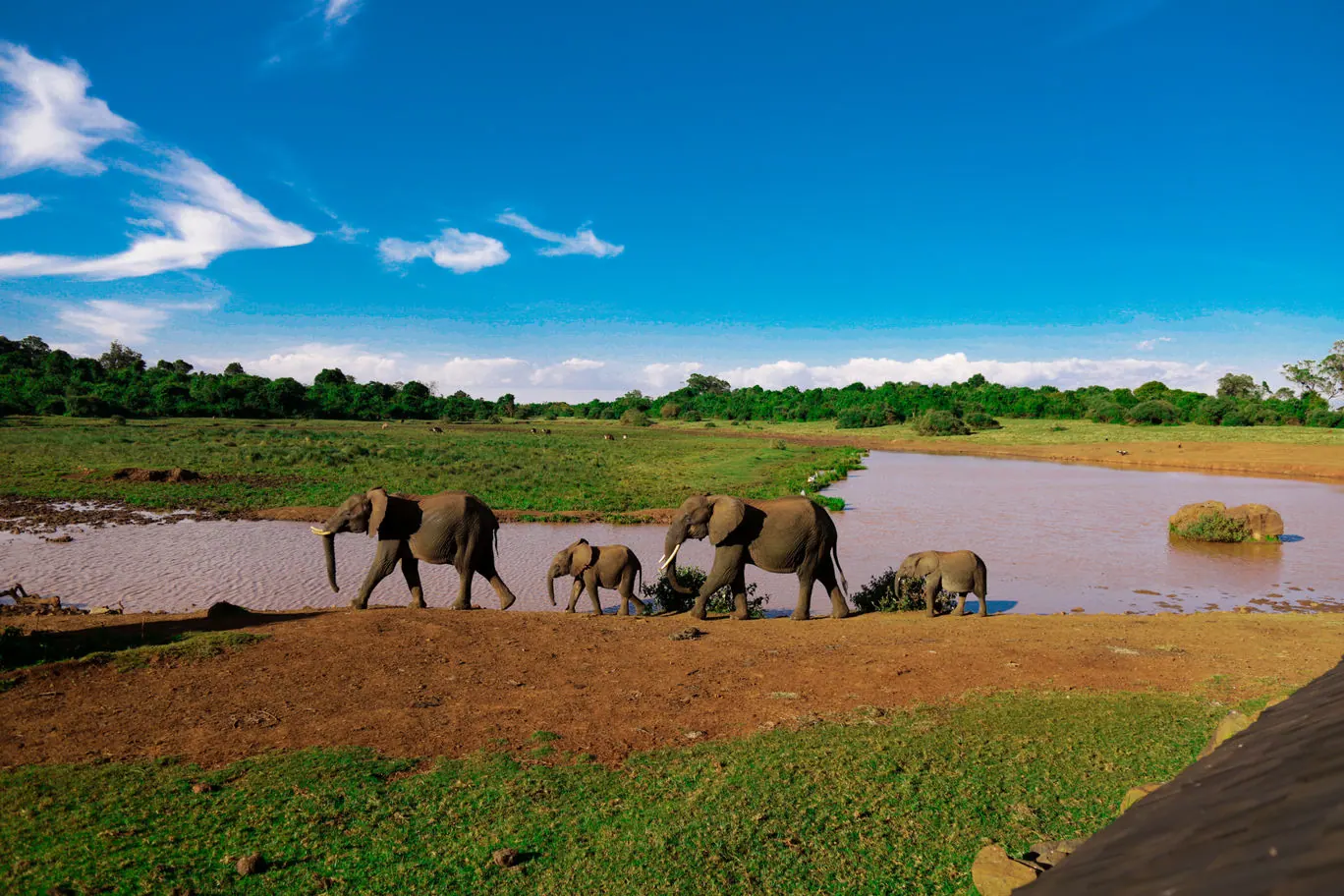
| Aberdare National Park | The forest where the fighters camped, and the site of the old Treetops, burned in 1954 | Two nights in the Aberdares |
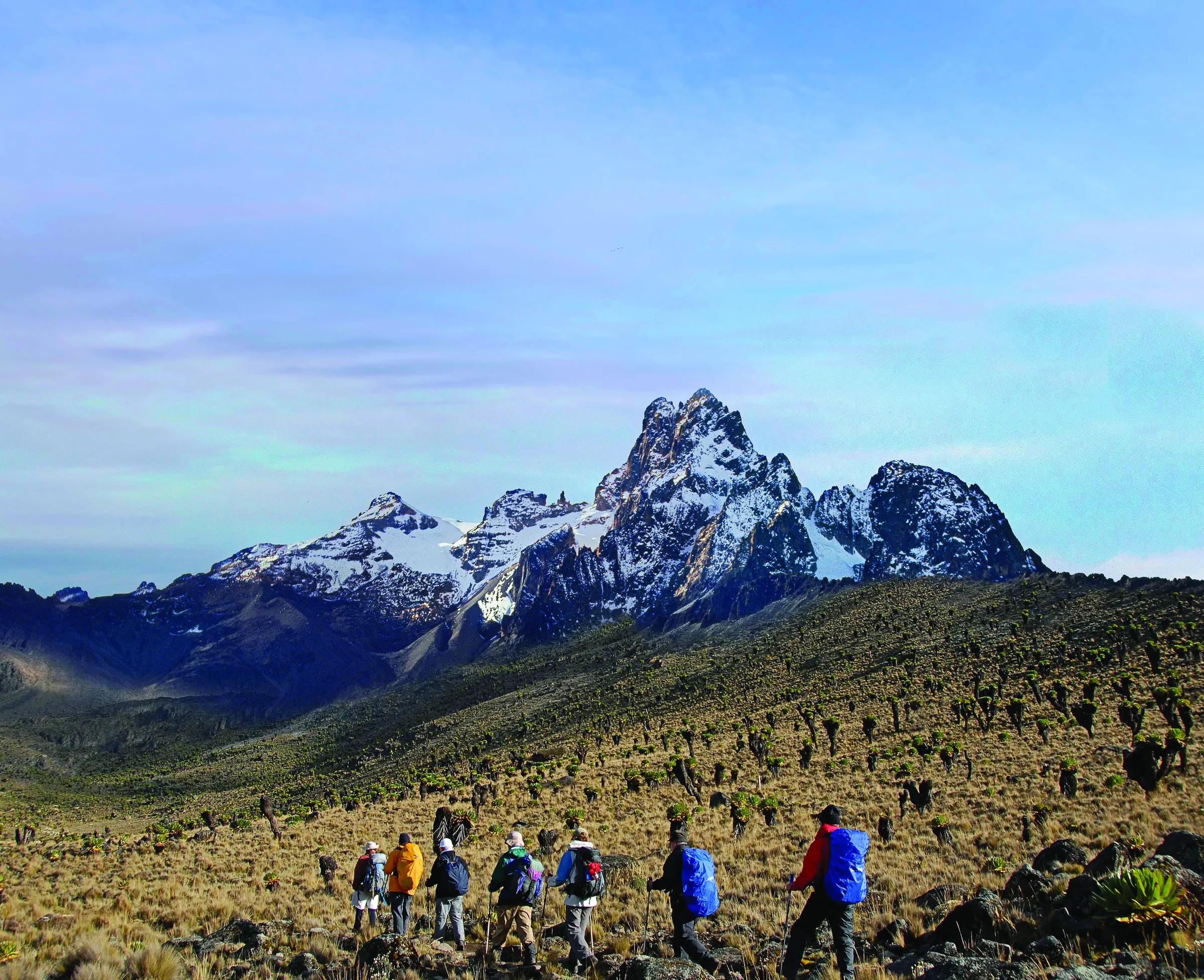
| Mount Kenya forest | Caves on the lower slopes near Nanyuki and Naro Moru | A half-day walk with a local guide |
| Kapenguria Museum, West Pokot | The cells that held the Kapenguria Six | On a north Rift trip |
Visit with a guide who knows the history and the families. In Nyeri you may be shown a forest trench by the grandson of a fighter, and an hour later meet a woman whose father was killed as a loyalist. Both are telling the truth about their families. Ask questions, and let people answer in their own way. For a full trip, two nights in the Aberdares and a day in Nyeri fit neatly between Nairobi and Laikipia, and a Nairobi day can link the Kimathi statue, the memorial, Uhuru Gardens and the National Museum.
Further reading
- David Anderson, Histories of the Hanged: The Dirty War in Kenya and the End of Empire (2005)
- Caroline Elkins, Imperial Reckoning: The Untold Story of Britain's Gulag in Kenya (2005)
- Wunyabari Maloba, Mau Mau and Kenya: An Analysis of a Peasant Revolt (1993)
- Waruhiu Itote, 'Mau Mau' General (1967), a fighter's own account
- Ngugi wa Thiong'o, A Grain of Wheat (1967), a novel of the Emergency and independence