History. Updated November 2026. 5 min read.
On the night of October 20, 1952, as the colonial governor declared a State of Emergency, police across Kenya arrested Jomo Kenyatta and scores of other African political leaders. Six of them were taken to Kapenguria, a small administrative post in West Pokot near the Uganda border, and tried for managing Mau Mau. All six spent most of the next decade in prison or detention, and several of them came out to help run an independent Kenya.
The Kapenguria Six were Jomo Kenyatta, Bildad Kaggia, Kung'u Karumba, Fred Kubai, Paul Ngei and Achieng' Oneko. Their trial, held in a remote schoolhouse so that crowds and the press would struggle to reach it, ran from late 1952 to April 1953. It ended with sentences of seven years' hard labour, and it is now widely regarded as rigged. This page is about the trial and the men. For the wider war, read our Mau Mau page; for Kenyatta and the other leaders after 1963, see the founding leaders page.
Timeline
| Date | What happened |
|---|---|
| October 20 to 21, 1952 | State of Emergency; Operation Jock Scott arrests Kenyatta and other leaders |
| November to December 1952 | Six men are charged and the trial opens at Kapenguria |
| April 8, 1953 | All six convicted; seven years' hard labour and indefinite restriction |
| 1953 to 1954 | Appeals to the Supreme Court of Kenya, the East African Court of Appeal and the Privy Council; Oneko's conviction is overturned, but he stays in detention |
| 1953 to 1959 | The prisoners serve their sentences at Lokitaung, in northern Turkana |
| 1958 | The chief prosecution witness swears that his evidence was false |
| 1959 to 1961 | Kenyatta is restricted at Lodwar, then moved to Maralal |
| 1961 | Kenyatta and the others are released |
| December 12, 1963 | Independence, with Kenyatta as prime minister |
Why Kapenguria
The colonial government chose Kapenguria because it was far away. West Pokot was a closed district, which meant visitors needed permission to enter, and the court sat in a converted school building hundreds of kilometres from Nairobi. Supporters could not gather in numbers, and journalists and defence lawyers had to make a long journey for every hearing. The charge was that the six had managed Mau Mau, which the government had banned as an unlawful society.
The defence
The six were defended by an international team led by D. N. Pritt, a British barrister known for political cases. Alongside him were Chaman Lall from India, H. O. Davies from Nigeria, Dudley Thompson from Jamaica, and Kenyan Asian lawyers including A. R. Kapila and Fitz de Souza. The team drew support from across the colonial world, and the trial became one of the first great political trials of African decolonisation.
Why it is called rigged
The case rested heavily on a few prosecution witnesses. The main one, Rawson Macharia, said he had seen Kenyatta administer a Mau Mau oath. In 1958 he swore an affidavit saying his evidence had been false and that he had been promised rewards for it. The magistrate, Ransley Thacker, was a retired judge brought back for the case, and historians later found evidence that he had received a large payment from the colonial government. Few historians today believe the trial was fair, and many doubt that Kenyatta directed Mau Mau at all; what is clear is that the government wanted him out of politics.
The verdict came on April 8, 1953. All six were sentenced to seven years with hard labour, to be followed by indefinite restriction. Appeals failed, except that Achieng' Oneko's conviction was quashed; he was held in detention all the same.
Lokitaung and release
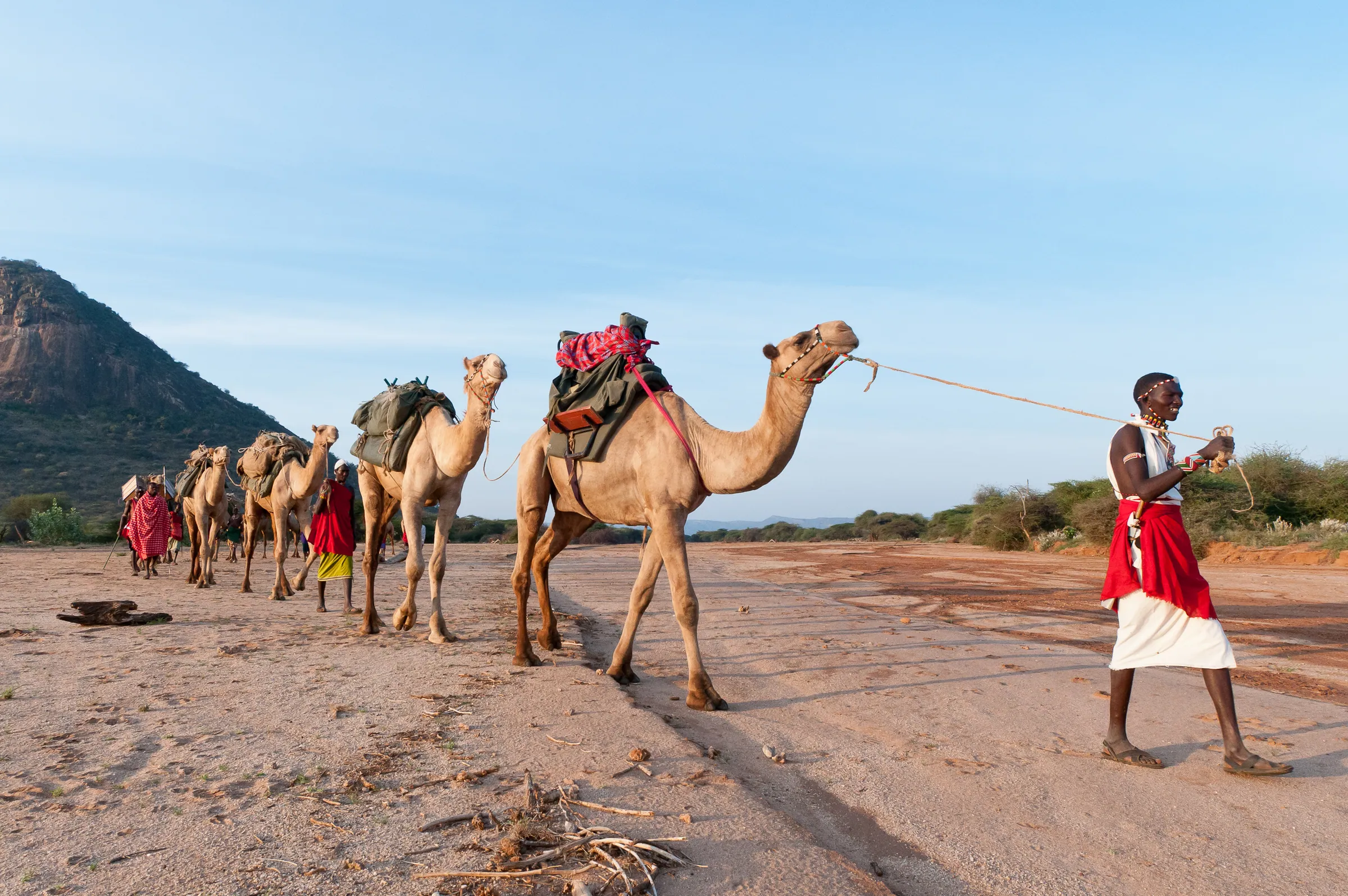
The prisoners were sent to Lokitaung, a remote post in the far north of Turkana near the Ethiopian border, where they did hard labour in heat and isolation. After his sentence ended in 1959, Kenyatta was restricted at Lodwar and then, in 1961, at Maralal, where journalists were finally allowed to see him. By then the political tide had turned: African parties were campaigning under the demand to release him, and he was freed in August 1961. Within two years he was prime minister.
What became of the six
| Name | Before the trial | After release |
|---|---|---|
| Jomo Kenyatta | President of the Kenya African Union | Prime minister in 1963, president from 1964 until his death in August 1978 |
| Bildad Kaggia | Trade unionist and KAU leader in Nairobi | Assistant minister, fell out with Kenyatta over land for the landless, joined the opposition KPU in 1966; died in 2005 |
| Kung'u Karumba | KAU branch leader | Businessman; disappeared on a trip to Uganda in 1974 |
| Fred Kubai | Trade unionist | Member of Parliament and assistant minister; died in 1996 |
| Paul Ngei | KAU official | Founded the African People's Party, later merged into KANU; long-serving minister; died in 2004 |
| Achieng' Oneko | KAU secretary and newspaper editor | Minister for information, joined the KPU, detained from 1969 to 1975, later MP for Rarieda; died in 2007 |
Their later lives show how quickly the shared struggle divided once power was in reach. Two of the six, Kaggia and Oneko, ended up in opposition to Kenyatta, and Oneko was detained again by an independent government. That, too, is part of the story the Kapenguria museum tells.
Visiting the Kapenguria Museum
The Kapenguria Museum, run by the National Museums of Kenya, is built around the cells where the six were held during the trial. Other galleries cover the Emergency and the culture of the Pokot people, with a traditional homestead in the grounds. Allow an hour or two. Entry carries a small fee for non-residents; fees change, so check the NMK site.
- Where it is: Kapenguria is about 35 km north of Kitale in West Pokot County, roughly 40 minutes by road, so it is an easy half-day trip from a base in Kitale
- Combine it with: Kitale and Mount Elgon on the Trans-Nzoia side, the Cherangani Hills to the east, and the Kerio Valley escarpment for the drive on toward Iten and Eldoret
- Maralal: the house where Kenyatta was held in 1961 is kept as a small museum, on the way to Samburu and the north
- Nairobi: the Kenyatta mausoleum at Parliament (viewed from outside), Uhuru Gardens and the Nairobi National Museum's history galleries
- Lokitaung: very remote, near the Ethiopian border; visit only as part of a carefully planned northern expedition
The best way to see it is as part of a western Kenya circuit: a night or two in Kitale, a morning at the museum with time to sit in the cells and read the trial papers on display, then the Cherangani Hills or a walk on Mount Elgon, and the Kerio Valley on the way south. Families with roots in the region often add a home visit, and we build that in. Before you book, check the current U.S. State Department advisory for Kenya and confirm your travel insurance covers your route.