History. Updated November 2026. 5 min read.
The first shots of the First World War on Kenyan soil were fired at Taveta, in the shadow of Kilimanjaro, in August 1914. The German commander in East Africa kept his army in the field for four years and surrendered only after the war in Europe had ended. In between, tens of thousands of Kenyans died, most of them carrying loads for armies they had not chosen, and most of them have no named grave.
Kenya, then the British East Africa Protectorate, bordered German East Africa, today's mainland Tanzania. From 1914 to early 1916 the front ran through what is now Taita-Taveta County, between Voi on the Uganda Railway and Taveta on the border. Its main battle on Kenyan soil was at Salaita Hill on February 12, 1916. You can still see trenches, forts and cemeteries along the Voi to Taveta road, and combine them with a safari in Tsavo West.
Timeline
| Date | What happened |
|---|---|
| August 1914 | War declared; German troops occupy Taveta, the first fighting on Kenyan soil |
| November 1914 | A British landing at Tanga, in German territory, ends in defeat; an attack at Longido also fails |
| 1915 | German patrols raid the Uganda Railway again and again; the British fortify Voi, Maktau and Mbuyuni and start a military railway from Voi toward Taveta |
| February 12, 1916 | Battle of Salaita Hill: a British and South African attack is driven back |
| March 1916 | Jan Smuts' offensive, with fighting at Latema Nek; the Germans abandon Taveta and the front moves into Tanzania |
| 1916 to 1918 | The campaign moves south; carrier deaths from disease peak |
| November 25, 1918 | Paul von Lettow-Vorbeck surrenders at Abercorn, in Northern Rhodesia, two weeks after the armistice |
| 2021 | The Commonwealth War Graves Commission acknowledges unequal commemoration of African dead and apologises |
The border war, 1914 to 1916
The German commander, Paul von Lettow-Vorbeck, had a small force of German officers and African soldiers, the askari. His strategy was to tie down as many British troops as possible, far from Europe. In 1914 his men took Taveta and dug in on Salaita Hill, a low ridge a few kilometres to the east, and from there sent patrols across the dry bush to blow up the Uganda Railway, the lifeline of the British protectorate. The British answered with forts and camps at Voi, Maktau and Mbuyuni, and with a military railway built across the bush from Voi toward Taveta to supply them.
The armies on the British side were a mix of empire: Indian regiments, the King's African Rifles, settler volunteers, and from early 1916 large South African contingents. Water was the constant problem. Pipelines were laid from the Taita Hills to the camps, and much of the fighting turned on who controlled the few springs and rivers.
Salaita Hill, February 1916
On February 12, 1916, a British force with newly arrived South African infantry attacked the German positions on Salaita Hill. The Germans had prepared well, and the attack was driven back with heavy losses; the South Africans, new to bush warfare, took the brunt of it. A month later, General Jan Smuts arrived with a larger army and outflanked the position. After fighting at Latema Nek near Taveta in March 1916, the Germans withdrew, and the war left Kenya for Tanzania and beyond.
The Carrier Corps: Kenya's largest loss
The East African campaign was fought in country without roads, where horses and oxen died of tsetse-borne disease. So the armies moved on human backs. The British raised a Carrier Corps of African porters, many of them recruited by force through chiefs, who carried food, ammunition and wounded men for hundreds of kilometres. They were badly fed, badly housed and exposed to dysentery, malaria and exhaustion.
Historians such as Geoffrey Hodges, who studied the Carrier Corps records, estimate that the dead among carriers recruited in British East Africa ran into the tens of thousands, far more than among the fighting troops, and most of them died of disease rather than in battle. Almost every community in Kenya lost men. In 2021 the Commonwealth War Graves Commission published a report acknowledging that many tens of thousands of African dead from the East African campaign had never been commemorated by name as European dead were, and it apologised.
The Corps left a name on Nairobi's map. Kariokor, the neighbourhood and market east of the city centre, takes its name from the Carrier Corps depot that stood there. Kariokor Market is still a busy place to buy leather sandals, baskets and a plate of nyama choma.
Where to see it today
- Taveta: the war cemeteries cared for by the Commonwealth War Graves Commission, open to visitors, near the town
- Salaita Hill: the ridge east of Taveta, with trench lines still traceable; visit with a guide, since the land is used by local communities
- The Voi to Taveta road: the line of the 1915 military railway and the sites of the Maktau and Mbuyuni camps
- Voi: the war cemetery, and the town's railway history
- The private sanctuaries along the road, including Lumo and the Taita Hills Wildlife Sanctuary, which have First World War sites on or near their land; ask which ones your guide can show you
- Nairobi: Kariokor Market; Mombasa: the bronze askari memorial in the city centre
| From | To Taveta | Notes |
|---|---|---|
| Voi | About 2 hours by road | Voi is on the Madaraka Express line from Nairobi and Mombasa |
| Tsavo West lodges | About 1 to 2 hours | Pair with Lake Chala or Lake Jipe |
| Mombasa | About 4 to 5 hours | Best as an overnight with Tsavo |
| Amboseli | Several hours on rough roads | Ask us about the current state of the road |
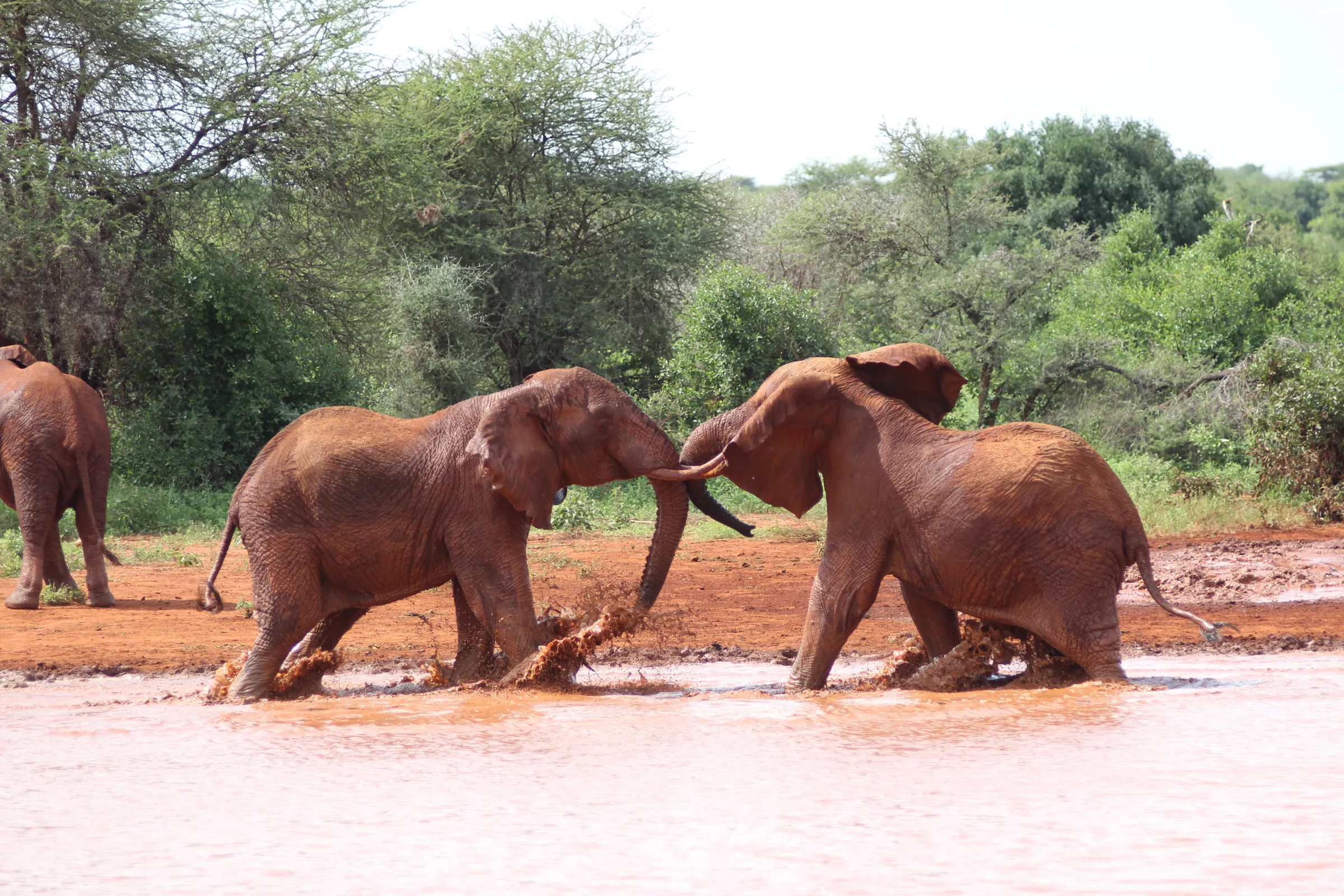
War cemeteries are free to visit; guides and community sites may charge a small fee. Bring water and a hat: this is hot, dry country, best in the early morning. We add a half day of First World War sites to Tsavo West and Taita Hills safaris, with a guide who knows the trench lines, and the elephants of Tsavo are never far away.