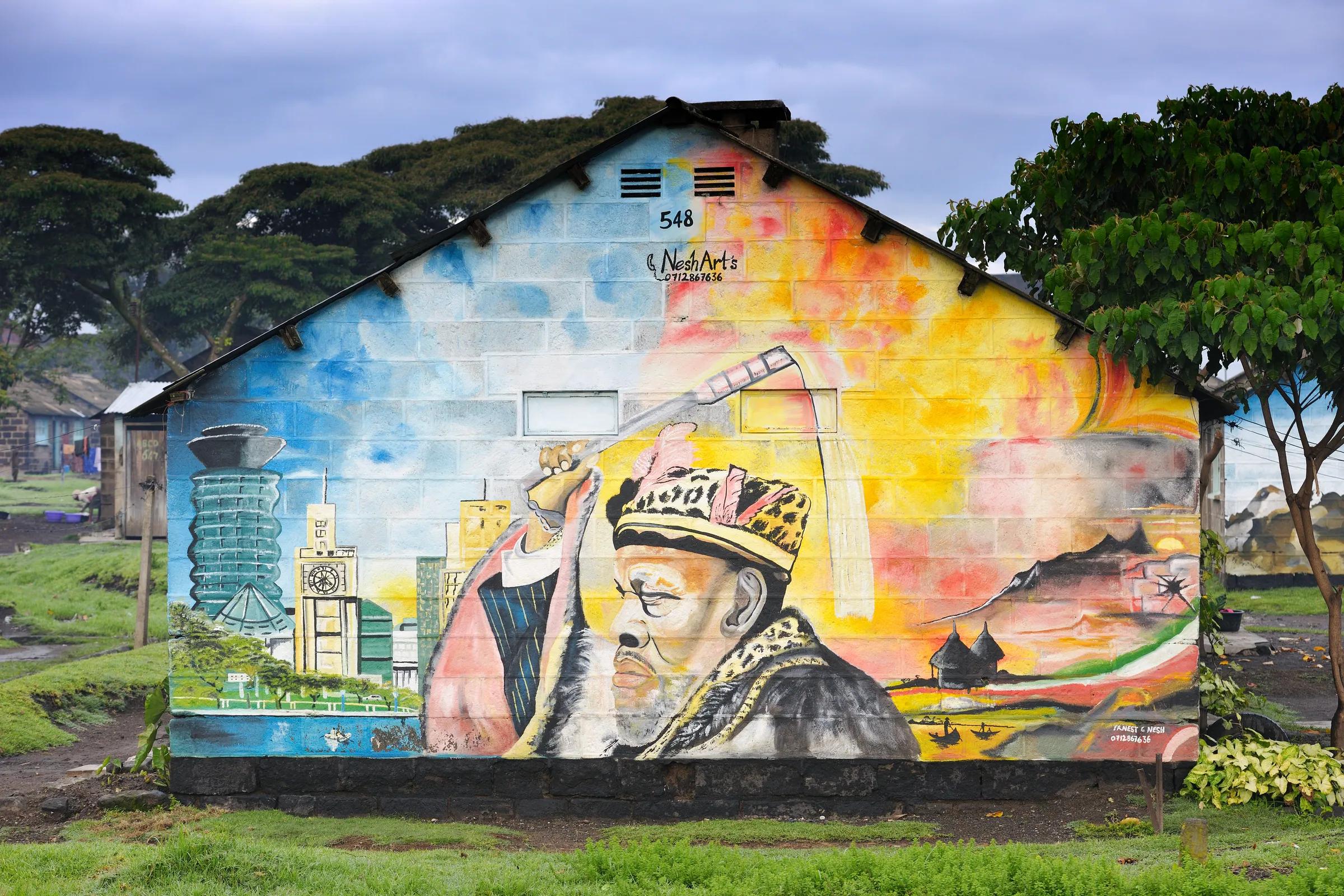
History. Updated November 2026. 5 min read.
In 1899 the engineers building the Uganda Railway needed a depot before the climb up the Rift Valley escarpment, and they chose a flat, swampy spot the Maasai called Enkare Nyrobi, the place of cool water. Nobody planned a capital. Within six years it was one, and within a century it was the biggest city between Johannesburg and Cairo. Every decade left something you can still stand in front of.
Here is Nairobi's history in twelve stops, from the railway yard of 1899 to the Expressway of the 2020s. Eight are an easy walk in the city centre; the others need a car. For what to do in Nairobi today, see our things to do guide; for the CBD as a neighbourhood, our CBD page. This page is the city's past, and how to read it on the street.
Nairobi decade by decade
| Decade | What happened | Where to stand |
|---|---|---|
| 1890s | Railhead reaches the swamp in 1899 | Nairobi Railway Museum |
| 1900s | Capital from 1905; the Norfolk Hotel opens; Jeevanjee Gardens | Jeevanjee Gardens; Harry Thuku Road |
| 1920s | The Harry Thuku protest and shootings of March 1922; Jamia Mosque built | Harry Thuku Road; Jamia Mosque |
| 1930s | McMillan Memorial Library and City Market | Banda Street and Muindi Mbingu Street |
| 1950s | City status in 1950; Operation Anvil in 1954 | City Hall; the Kimathi statue |
| 1960s | Independence at midnight, December 12, 1963 | Uhuru Gardens, Langata |
| 1970s | KICC opens in 1973; Kenyatta dies in 1978 | KICC; Parliament and the mausoleum |
| 1980s | Nyayo era; Uhuru Park saved; ivory burned in 1989 | Uhuru Park; Nairobi National Park |
| 1990s | Multiparty politics; the embassy bombing of 1998 | August 7th Memorial Park |
| 2000s and 2010s | New constitution in 2010; the Westgate attack of 2013 | Uhuru Park; Westlands |
| 2020s | The Expressway opens in 2022; a new skyline | The Expressway and Upper Hill |
The walk: eight stops in the centre
Stop 1, the Nairobi Railway Museum. Start where the city did, beside the main station. Old locomotives, carriages and the story of the line explain why a city grew here at all, and why for its first years Nairobi was a camp of tents, sheds and workers from India. Our Uganda Railway page tells the engineering story.
Stop 2, Jeevanjee Gardens. Walk north to the gardens given to the city in 1906 by A. M. Jeevanjee, the Indian merchant who founded The Standard, with the Queen Victoria statue unveiled that year. Nearby Biashara Street was the old Indian bazaar. Our Asian Kenyans page tells the people's story.
Stop 3, Jamia Mosque. A few blocks away, the silver domes of Nairobi's main mosque, built in the 1920s and enlarged since. Non-Muslims can see it from the street; visits inside are by arrangement and outside prayer times.
Stop 4, the McMillan Memorial Library and City Hall. The library, opened in 1931 and built in memory of the American settler William Northrup McMillan, was once whites-only. Next door is City Hall, from which Nairobi was governed as a city after it received its charter in 1950.
Stop 5, Harry Thuku Road. In March 1922 the young political organiser Harry Thuku was arrested and held at the police station near here. Crowds gathered to demand his release, and police and settlers opened fire, killing a number of protesters, among them the woman remembered as Mary Muthoni Nyanjiru. The road was later named after him. The Norfolk Hotel, which opened in 1904 and was the settlers' meeting place, stands at the end of it.
Stop 6, the Dedan Kimathi statue. On Kimathi Street stands the 2007 statue of the Mau Mau field marshal. In April 1954 the colonial army and police sealed off African Nairobi in Operation Anvil, screening tens of thousands of Kikuyu, Embu and Meru men and sending many to detention camps. Our Mau Mau page covers the war.
Stop 7, the August 7th Memorial Park. On August 7, 1998, a truck bomb destroyed the U.S. embassy here, killing more than 200 people in Nairobi, most of them Kenyans passing by. The quiet garden and small museum list their names. Our Kenya and U.S. ties page tells the wider story.
Stop 8, KICC and Parliament. End at the Kenyatta International Convention Centre, opened in 1973, its tower modelled loosely on a traditional hut, with a statue of Jomo Kenyatta in the courtyard. On a clear day the rooftop helipad shows the whole city. Across the road is Parliament, where Kenyatta lies in his mausoleum, which visitors see from outside.
Four stops by car
- Stop 9, Uhuru Park and Central Park: in 1989 Wangari Maathai led the campaign that stopped a 60-storey tower being built in Uhuru Park; the 2010 constitution was promulgated here on August 27, 2010, and the Nyayo Monument of the Moi era stands in Central Park next door
- Stop 10, the ivory burning site, Nairobi National Park: in July 1989 President Moi set fire to a pile of ivory here, and the monument marks the spot; a much larger burn followed in 2016
- Stop 11, Uhuru Gardens, Langata: where the British flag came down and the Kenyan flag went up at midnight on December 12, 1963
- Stop 12, the Expressway: the elevated road from the airport to Westlands, opened in 2022, gives the best view of the new skyline of Upper Hill and Westlands
The city in between
The stops leave out a lot. Nairobi was planned on racial lines, with Europeans in the leafy west, Asians in Parklands and Ngara, and Africans in the east, in areas such as Pumwani, Shauri Moyo and Kariokor, a pattern you can still see in the city's shape. Kibera, one of Africa's largest informal settlements, began as land given to Nubian soldiers of the King's African Rifles. The 2007 to 2008 post-election violence, the Westgate mall attack of September 2013 and the long fights over land, roads and green space all belong to the story. A good guide will tell you the parts that are not on plaques.
Practical notes
The eight-stop walk takes about half a day at an easy pace. Start in the morning, carry little, and go with a guide; we use local guides who know the history and the streets. The Railway Museum, the August 7th Memorial Park and the KICC rooftop charge small fees for visitors; check current rates locally. Add the Nairobi National Museum, the best history museum in the country, on another morning.