Wildlife. Updated November 2026. 5 min read.
Our guides have a favorite moment on the Mara plains early in the rains. A male ostrich drops to his knees in the grass, fans his black-and-white wings one after the other, and swings his neck from side to side as if a strong wind were blowing him about. The female he is courting usually carries on grazing. It is one of the strangest displays in the bird world, and you can watch it from the vehicle with a cup of coffee in your hand.
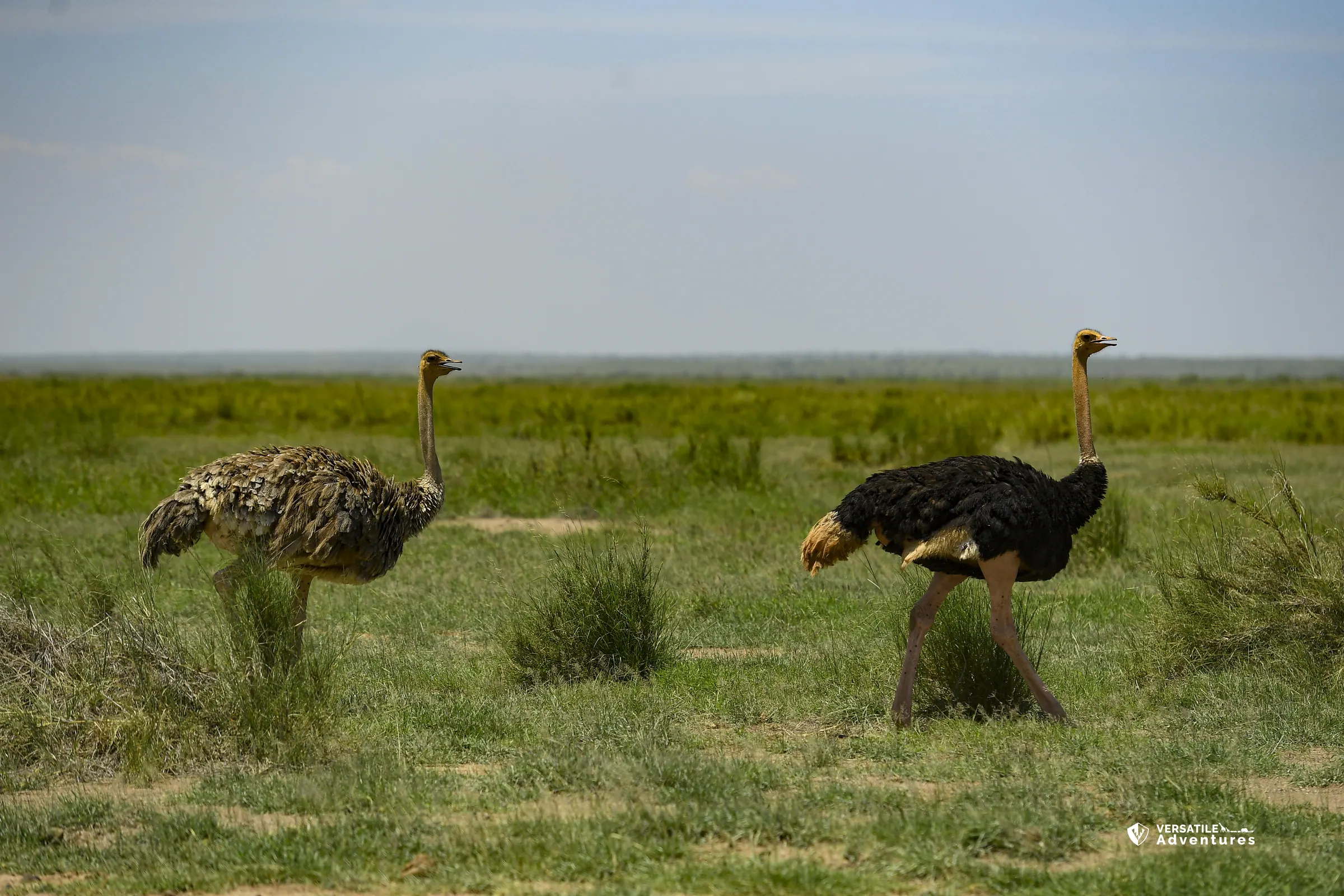
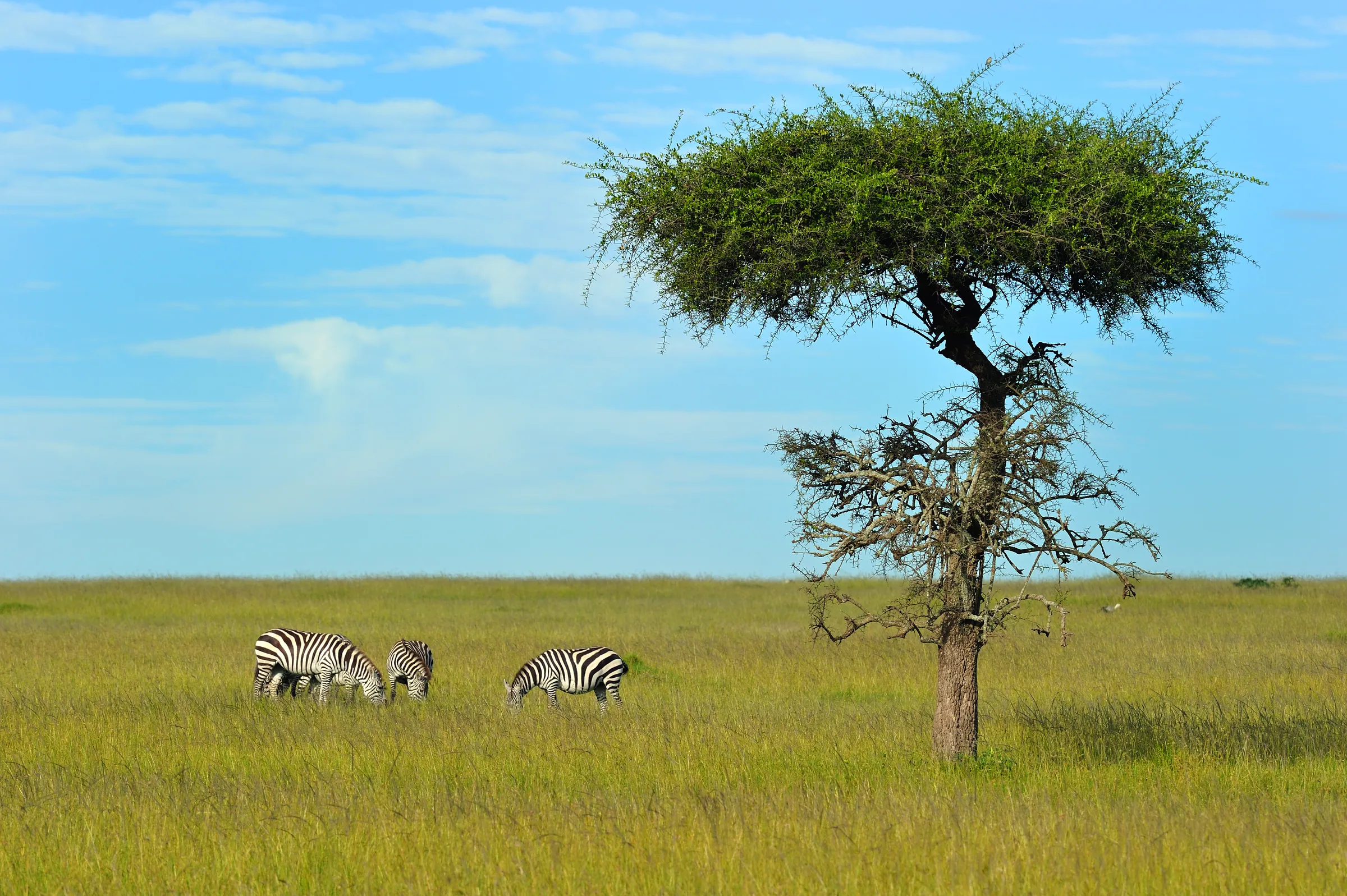
Kenya has two ostriches, mbuni in Kiswahili, and you can see both on one trip. The common ostrich, whose race here is often called the Maasai ostrich, lives in the south: the Maasai Mara, Amboseli, Nairobi National Park and Tsavo West. Breeding males have pink necks and thighs. The Somali ostrich lives in the north and east, in Samburu, Buffalo Springs, Shaba, Meru and Lewa, and its males have blue-gray skin. Ostriches are easy to find in any month, and the courtship displays are most often seen around the rains.
Two species: how to tell them apart
| Common (Maasai) ostrich | Somali ostrich | |
|---|---|---|
| Male neck and legs | Pink, brightest in the breeding season | Blue-gray, turning brighter blue when breeding |
| Female | Gray-brown | Gray-brown, often a little darker |
| Where in Kenya | South and southwest: Mara, Amboseli, Nairobi NP, Tsavo West, southern Laikipia | North and east: Samburu, Buffalo Springs, Shaba, Meru, Lewa, northern Laikipia |
| Habitat | Open grassland and light bush | Dry bush and semi-desert |
| IUCN status | Least Concern | Vulnerable |
The Somali ostrich was long treated as a race of the common ostrich, until BirdLife and the IUCN recognized it as a separate species in 2014. It is one of the Samburu Special Five, and our page on those northern rarities explains how it fits a Samburu trip. Where the two ranges meet, in Laikipia and parts of Tsavo East, look at the legs of the males. Females of the two are hard to tell apart, so look for a male nearby.
The biggest bird alive
An adult male stands up to about 2.7 meters tall and can weigh well over 100 kilograms, which makes the ostrich the largest and heaviest living bird. It cannot fly. It can run, though: ostriches have been timed at around 70 kilometers an hour in short bursts and can hold a fast pace for a long way, on legs that cover several meters in a stride. The ostrich is also the only bird with just two toes on each foot. The big inner toe carries a heavy claw, and that is the business end of the kick.
The dance, the nest and the eggs
Males hold territories in the breeding season and boom at night, a deep, lion-like sound that has fooled more than one first-time camper. The kneeling dance is part of courtship. A successful male mates with a main hen and often with several minor hens, and all of them lay in one shallow scrape in the ground. The main hen arranges the clutch, keeps her own eggs in the center where they are safest and pushes extra eggs to the edge, where predators take them first.
An ostrich egg is the largest laid by any living bird, about 15 centimeters long and around 1.5 kilograms, roughly the volume of two dozen hen's eggs. Incubation takes about six weeks, and the pair share it: the gray-brown hen sits by day, when her color blends with the dry ground, and the black male takes the night shift. Chicks leave the nest within days and are often gathered into large creches guarded by one or two adults, which is why you sometimes see a pair of ostriches leading thirty or more chicks across the plain.
Where to see ostriches in Kenya
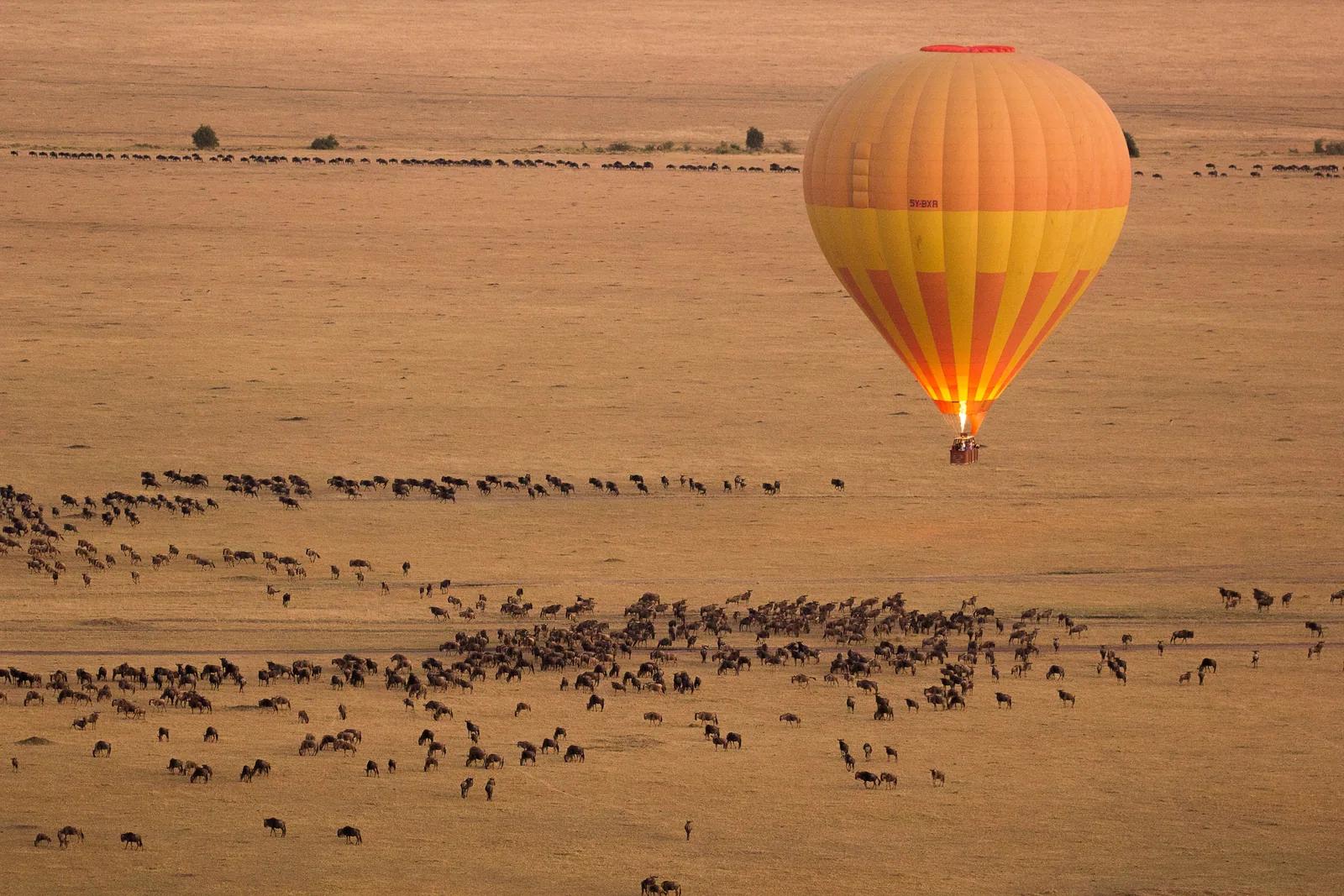
- Maasai Mara and its conservancies: common ostriches on the open plains, often near zebra and wildebeest.
- Nairobi National Park: common ostriches with the city skyline behind them, a short drive from the airport.
- Amboseli: common ostriches on the dry lake bed, with Kilimanjaro in the background on a clear morning.
- Tsavo West and Tsavo East: big, empty dry country; in Tsavo East, check the legs, since both kinds are reported.
- Samburu, Buffalo Springs and Shaba: the best place for the Somali ostrich, often near the Ewaso Nyiro river.
- Meru, Lewa and northern Laikipia: Somali ostriches in the bush, with fewer vehicles around.
Three things most people do not know
First, ostriches do not bury their heads in the sand. The myth probably comes from birds lying flat with their necks stretched along the ground to hide, or lowering their heads into the nest scrape to turn the eggs. Second, they get much of their water from plants and can go a long time without drinking, which is how the Somali ostrich lives in country where surface water is scarce. Third, ostriches have no teeth, so they swallow pebbles and grit, which sit in the gizzard and grind tough plant food.
The kick, and keeping your distance
An ostrich kicks forward and down, and a big male defending a nest or chicks can seriously injure a person or kill a predator. That is rarely an issue on safari, because you watch from a vehicle. On walking safaris in Laikipia and the Mara conservancies, your guide will give breeding males a wide berth. The same applies on farms: do not climb into an enclosure or offer food by hand.
Ostrich farms near Nairobi
Kenya has had commercial ostrich farms, including some on the plains south of Nairobi, and farmed ostrich appears on the menus of some Nairobi grill restaurants. Kenya has not allowed wild game meat to be sold since 2004, so any ostrich you eat is farmed. Farm visits open and close, so ask us what is running when you travel. Some farms have offered rides on ostriches; we do not recommend them, for the birds' sake.
How to photograph ostriches
Get low and wait for the bird to walk across open ground, ideally with Kilimanjaro in Amboseli or a dark storm sky over the Mara behind it. A running ostrich needs a fast shutter, 1/1600 second or quicker, and space in the frame to run into. For the courtship dance, shoot a burst with a slightly wider frame, because the wings spread farther than you expect. Early morning light brings out the pink or blue of the male's skin.
Conservation status
The common ostrich is listed as Least Concern and the Somali ostrich as Vulnerable, at the time of writing. Outside protected land, ostriches lose ground to farms and fences and are hunted for meat, feathers and eggs, and the Somali ostrich has declined in parts of the north. In Kenya's national parks, reserves and community conservancies, ostriches are generally secure. Check the IUCN Red List for the current status.
Trips where you will see ostriches
Any Mara or Amboseli safari will give you common ostriches, and adding Samburu or Meru brings in the Somali ostrich, so a seven to ten day route through the south and the north usually shows you both. Birders should read our birdwatching guide for the wider list, from secretary birds to bustards on the same plains.