Homeland
The Samburu, also known as Loikop, live in Samburu County and northern Laikipia, around Maralal, Mount Nyiro and the Ndoto range. The 2019 census counted 333,471 Samburu.
Language
Samburu is a northern dialect of Maa, mutually intelligible with the Maasai language. Maa belongs to the Eastern Nilotic languages.
Society
The Samburu keep the Maa age-set system in an especially strict form. Traditionally elders hold marriage and authority, while warriors (lmurran) wait many years to marry, the pattern the anthropologist Paul Spencer analyzed in The Samburu: A Study of Gerontocracy (1965). Each stage of life is opened by an ox-slaughtering ceremony called lmuget.
Belief
God is Nkai, associated with mountains such as Nyiro.
Livelihood
The Samburu herd cattle, goats and sheep, and camels are increasingly important as droughts lengthen. They are close allies of the Cushitic-speaking Rendille, and a mixed, bilingual group, the Ariaal, lives between them.
Dress and beadwork
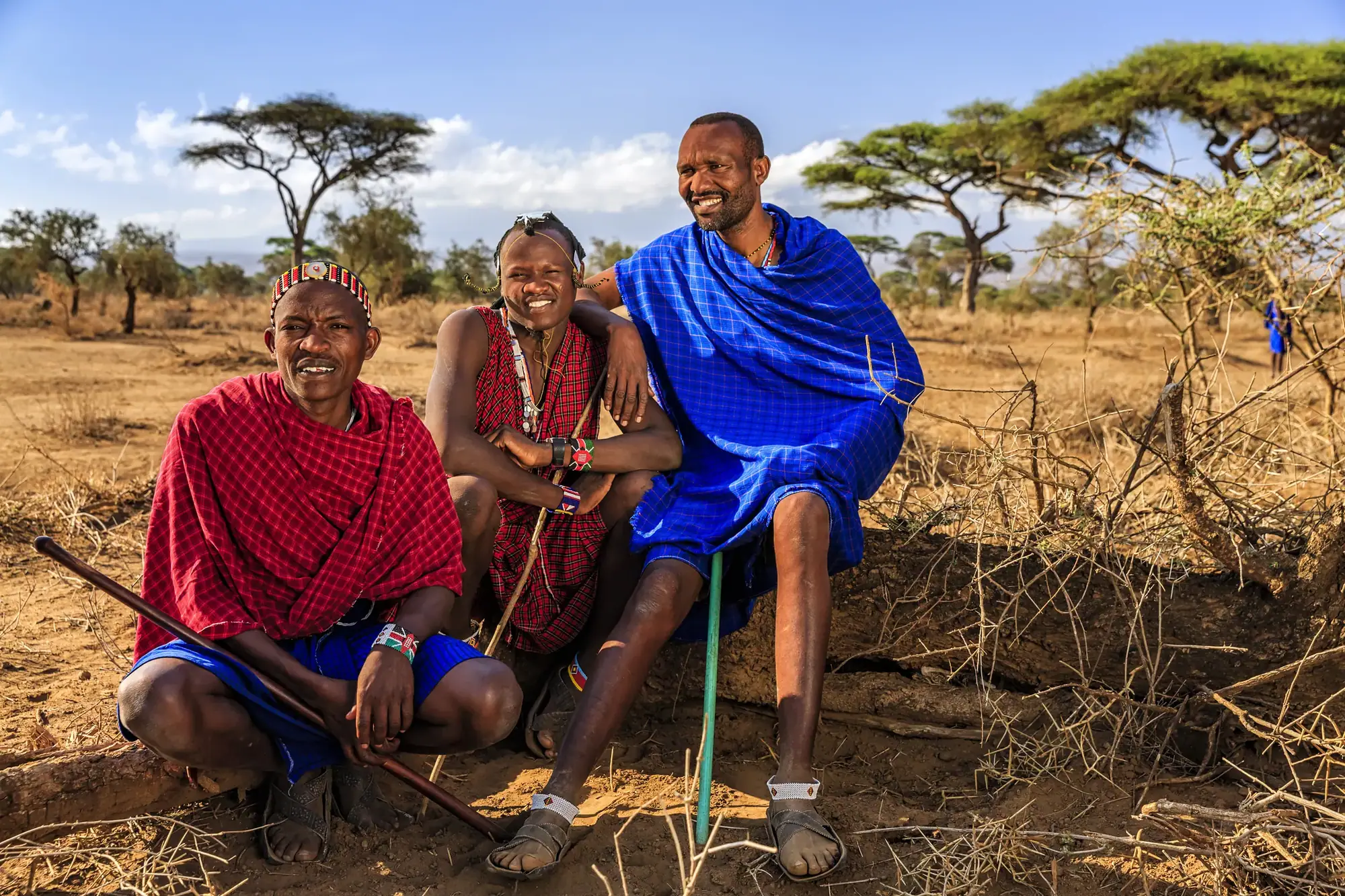
Women wear broad stacked bead collars, and warriors wear ochred braids.
Today
Practices described here are traditional baselines, and they vary by family and generation. Many Samburu today are Christian, and many speak Swahili and English as well as Maa.
Experience it with respect
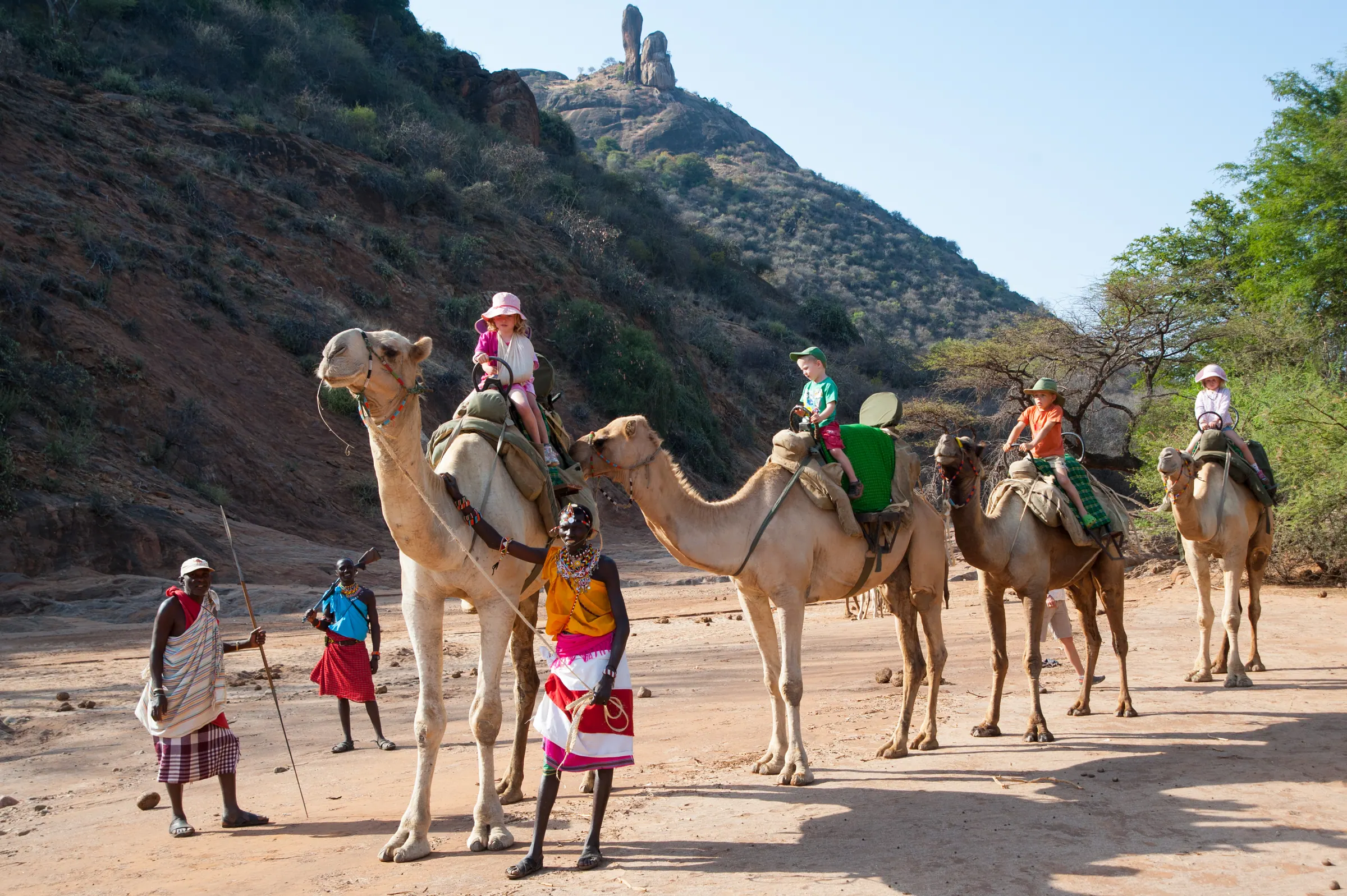
In Samburu country you can walk or trek by camel with Samburu guides, and learn about beadwork from the women who make it. We arrange these visits with local hosts, who are paid for their time, and photographs are taken only with consent.
Further reading
- The Samburu: A Study of Gerontocracy, Paul Spencer, 1965
Sources
- Talk Africa: census distribution of Kenya's ethnic communities
- Pulse Kenya: population of tribes in Kenya
From The Peoples of Kenya: An Ethnographic Reference (Kenya Experience, November 2026), a synthesis of published sources. Practices described as traditional are historical baselines; today most Kenyans are Christian or Muslim, live in or near towns and speak Swahili and English. Spot something to correct? Write to kibetck@kenyaexperience.org.