History. Updated November 2026. 5 min read.
In 1913, when British officials pushed into Giriama country behind Malindi to recruit young men as labourers and collect hut tax, the person who stood in their way was a widow, no longer young, who drew crowds by dancing the kifudu, a funeral dance, from village to village. Her name was Mekatilili wa Menza, and within a year the colonial government had arrested her, exiled her twice and fought a small war against her people.
Mekatilili led Giriama resistance to British labour recruitment, taxes and interference in Giriama life in 1913 and 1914, working with the elder Wanje wa Mwadorikola. Arrested and deported to Kisii, hundreds of kilometres inland, she escaped and walked home. She died around 1924 and is now one of Kenya's national heroes. You can honour her at her statue in Malindi, at her grave and festival site at Bungale in Magarini, and in the forests of the Giriama kaya.
Timeline
| Date | What happened |
|---|---|
| Mid 1800s | Born Mnyazi wa Menza, by most accounts at Mutara wa Tsatsu in present-day Ganze, Kilifi |
| 1895 | The coast and its hinterland come under the British East Africa Protectorate |
| 1912 to 1913 | Colonial officials press the Giriama for labourers and hut tax |
| 1913 | Mekatilili and Wanje wa Mwadorikola rally the Giriama; oaths are taken at Kaya Fungo |
| October 1913 | Both are arrested and deported to Kisii, in the western highlands |
| Early 1914 | They escape and make their way back to the coast on foot |
| August 1914 | Fighting breaks out; British forces burn villages and impose a heavy fine |
| 1914 to about 1919 | Rearrested and exiled to Kismayu, in present-day Somalia |
| About 1924 | Dies; buried at Bungale, in Magarini near Malindi |
| 2010 | The new constitution creates Mashujaa Day to honour Kenya's heroes |
Who the Giriama are
The Giriama are the largest of the nine Mijikenda peoples of the coastal hinterland, from Kwale in the south to Kilifi and Malindi in the north. Their traditions tell of a migration south from Shungwaya and of fortified villages, the kaya, built in forest clearings. By the 19th century most Giriama lived outside the kaya on farms, but the forests remained sacred, governed by councils of elders, and they still are. Kaya Fungo, the Giriama kaya, is one of the forests UNESCO listed in 2008 as the Sacred Mijikenda Kaya Forests.
In the late 19th century the Giriama had expanded north across the Sabaki river onto fertile land, and they traded grain with the coastal towns. That success made them a target: settlers and officials wanted their land and their young men's labour for plantations and public works on the coast.
What she did
Mekatilili's name means the mother of Katilili, after her son, as is the custom. She had no official position; women did not sit on the Giriama councils. What she had was standing as an elder woman and a gift for gathering people. She used the kifudu, a dance normally performed at funerals, to draw crowds, then spoke against sending sons to work for the British, against the hut tax and against officials who ignored the elders.
With Wanje wa Mwadorikola she called the Giriama to Kaya Fungo, where oaths were taken binding people not to cooperate with the administration. The assistant district commissioner, Arthur Champion, wrote of the movement with alarm. In October 1913 Mekatilili and Wanje were arrested and sent to Kisii, in the Gusii highlands, about as far from home as the protectorate's prisons allowed.
The escape and the war
Early in 1914 Mekatilili and Wanje escaped from Kisii and made their way back to the coast, a journey of roughly a thousand kilometres, much of it on foot. Her return became part of her legend. In August 1914, as the First World War began, fighting broke out between the Giriama and the colonial forces. Troops burned villages, the government imposed a large collective fine, and Giriama families were ordered off their land north of the Sabaki. The British later allowed many to return, but the fines and forced labour had done lasting damage.
Mekatilili was captured again and exiled to Kismayu, on the Somali coast. She came home around 1919 and lived out her life among the Giriama, dying around 1924. She was buried at Bungale, in Magarini, north of Malindi.
How Kenya remembers her
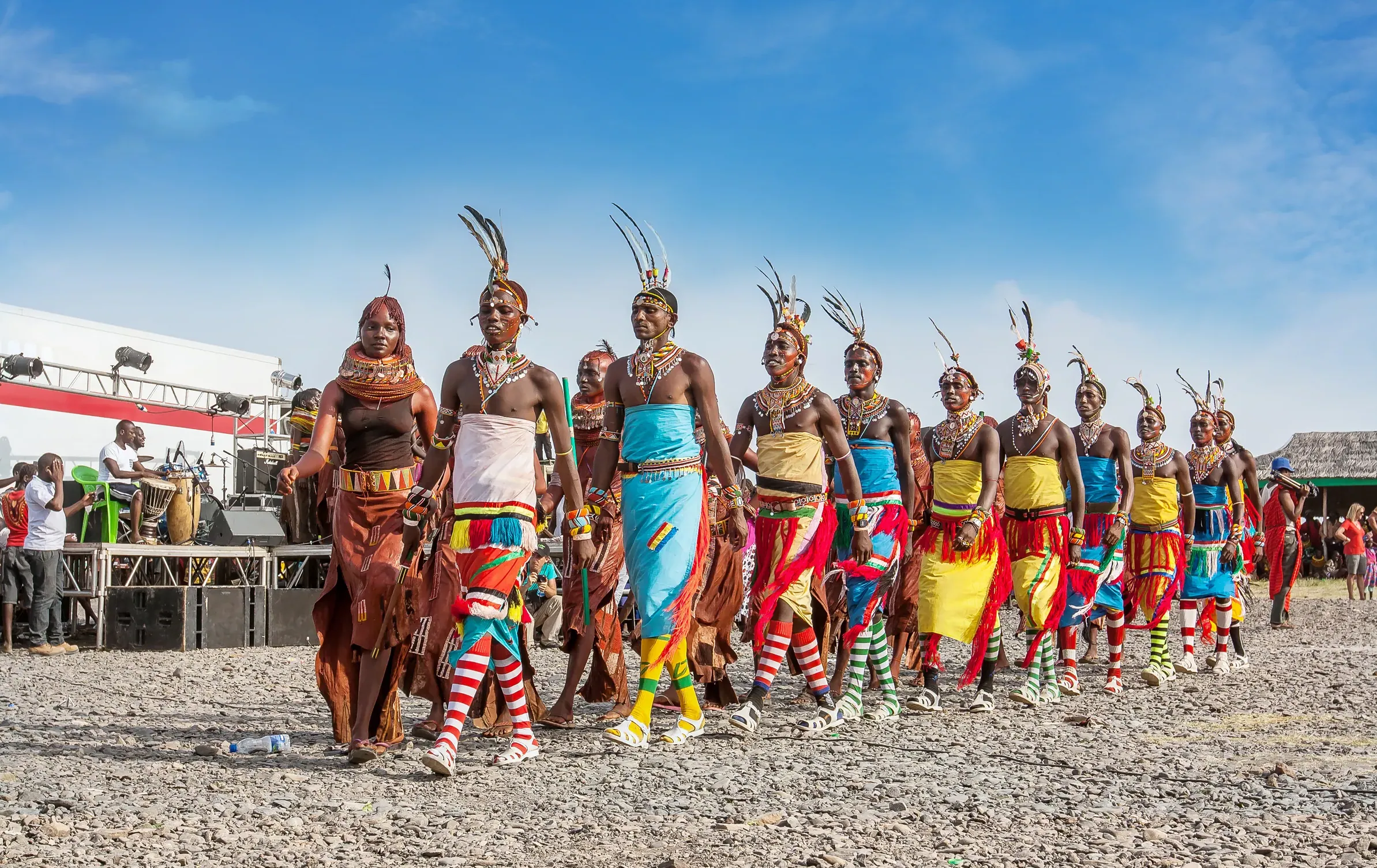
For decades Mekatilili was a local memory more than a national one. That changed after 2010, when the new constitution turned Kenyatta Day into Mashujaa Day, a day for all of Kenya's heroes, and she became one of the women most often named on it. A statue of her stands in a public garden in central Malindi, and the Mekatilili wa Menza cultural festival is held at Bungale, usually in August, with Giriama dance, food, elders' ceremonies and speeches. Dates are set locally each year, so ask us before you plan around it.
There is an American thread too. Giriama memorial posts called vigango, carved for respected elders and meant never to be moved, were taken from graves in the 1980s and 1990s and sold to collectors abroad. Several American museums have since returned theirs to Kenya.
Where to stand in her story
- Mekatilili's statue, Malindi: in the town centre, a short walk from the seafront and the Vasco da Gama Pillar
- Bungale, Magarini: her grave and the festival ground, north of Malindi; go with a local guide
- Kaya Fungo: the Giriama sacred forest where the oaths were taken; visits only with the elders' permission, arranged through local cultural contacts
- Malindi Museum: displays on Mijikenda culture, including memorial posts
- Kaya Kinondo near Diani: the easiest Mijikenda sacred forest to visit, with a Digo guide, if you are staying on the south coast
Respect matters at these sites. Kaya forests are sacred: dress modestly, follow the guide, and do not photograph shrines or graves. Bring small notes for entry or community fees, which are modest. From Watamu, Malindi and Magarini make an easy half day or full day with a driver-guide; we can pair it with Gedi and the Arabuko-Sokoke forest.