Food and drink. Updated November 2026. 4 min read.
Most visitors to the Kenya coast eat Swahili food, the spiced, Arab and Indian-influenced cooking of Mombasa's Old Town and Lamu. A few miles inland, in the farms and villages of Kilifi and Kwale, the Mijikenda cook something simpler and older: cassava boiled in coconut milk, sima (ugali) with fish or leafy greens, coconut grated fresh on a wooden stool, and in the non-Muslim homes, palm wine tapped from the tree that morning.
Mijikenda means the nine towns, and the name covers nine related peoples: the Giriama, Digo, Duruma, Rabai, Chonyi, Jibana, Kambe, Ribe and Kauma. Their history, the kaya forest settlements and the Mekatilili rising are on our Mijikenda people page and our kaya forests page. This page is about the food, which shares a coastline with Swahili cuisine but is a kitchen of its own.
The dishes that define the table
Muhogo wa nazi, cassava in coconut milk, is the dish to know. Cassava roots are peeled, cut and boiled, then simmered in tui, coconut milk squeezed from freshly grated coconut, with salt and sometimes a little chilli or turmeric. It is breakfast, lunch or a snack with tea. Cassava is also boiled plain, roasted on charcoal and sold at the roadside, or fried into chips.
Sima is ugali, usually from maize, and it is eaten with whatever the day brings: fish fried or stewed in coconut, beans, or mchicha (amaranth) and other leaves. Kisamvu, cassava leaves pounded and cooked slowly in coconut milk, is a Mijikenda and coastal favorite, dark green, rich and slightly bitter. Wali wa nazi, rice cooked in coconut milk, is shared with the Swahili and served at celebrations.
Fish matters most to the Digo, whose villages line the south coast around Gazi and Shimoni, and to families near the creeks of Kilifi and Mtwapa. Inland, among the Giriama and Duruma, the farm comes first: maize, cassava, cowpeas, cashews and mangoes, with goats and chickens for occasions.
The ingredient: the coconut palm
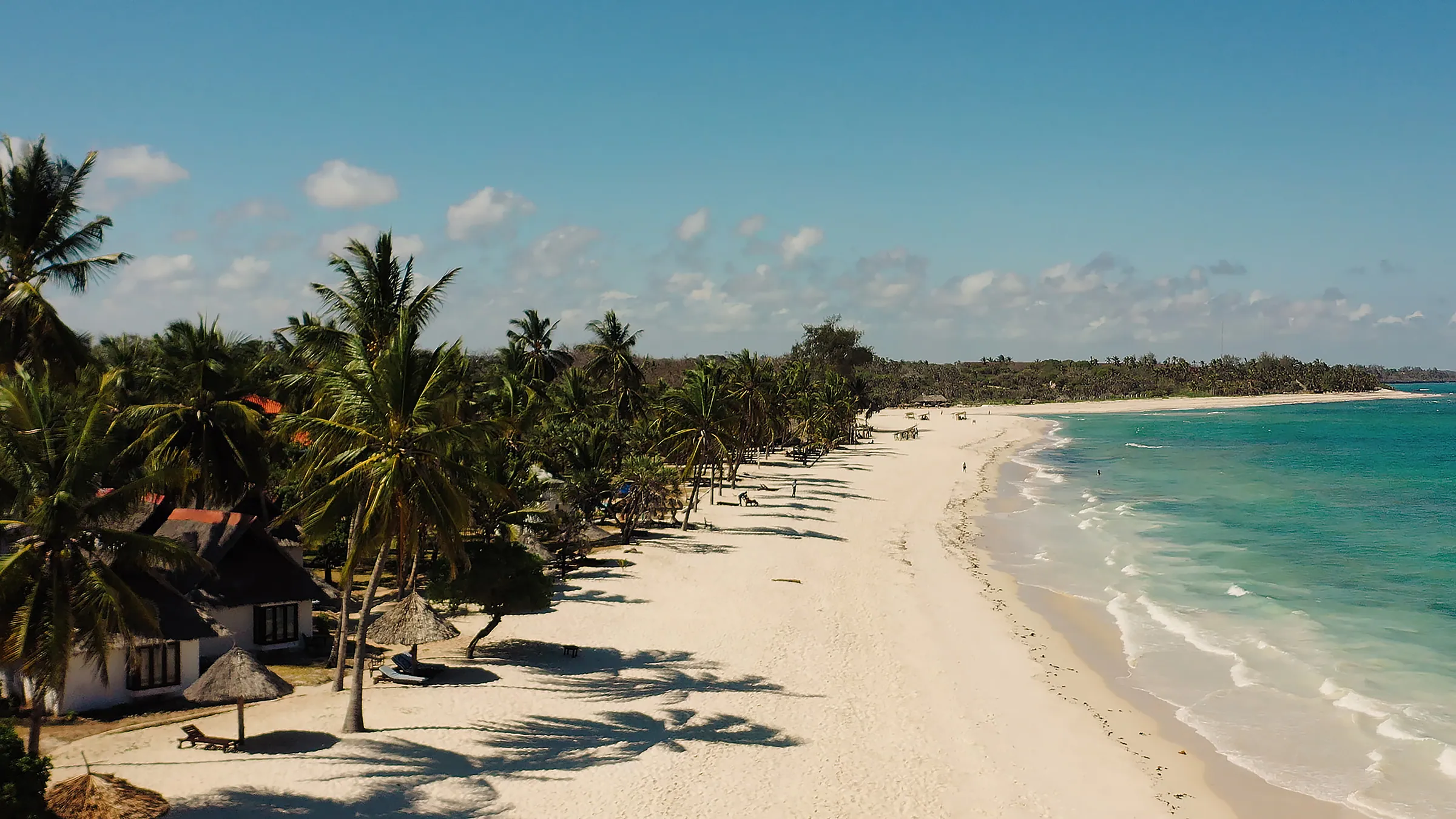
The coconut palm, mnazi, gives the coast its food, drink, building material and income. Coconut is grated on a mbuzi, a low wooden stool with a serrated blade at one end: you sit astride it and work the half shell against the blade. The grated flesh is soaked in water and squeezed to make tui, the coconut milk at the heart of the cooking. The same palm gives palm wine, and its leaves become the makuti thatch on coastal roofs.
Mnazi, palm wine
Mnazi is the sap of the coconut palm's flower stalk, collected by a tapper, the mgema, who climbs the tree each morning and evening. Fresh, it is sweet and mild; within a day it ferments into a sour, cloudy, lightly alcoholic drink. Among the Mijikenda groups that are not Muslim, mnazi is part of ceremony and hospitality, poured for elders and for the ancestors at important moments. The Digo and other Muslim Mijikenda do not drink it, and you should not offer it in a Muslim home. If you try it, drink it fresh from a known tapper, in moderation, and never home-distilled spirits.
Ceremony and the kaya
- The kaya forests: the sacred forest settlements of the nine peoples, a UNESCO World Heritage Site, are places of prayer where elders make offerings at important moments. Visit only with a guide approved by the elders
- Funerals and memorials: goats and chickens are slaughtered and the whole village is fed
- Weddings: rice in coconut, pilau, goat, chapati and, in non-Muslim families, mnazi
- Ramadan and Eid among the Digo: fast broken at sunset with dates, porridge and coconut dishes
Words for the table
| English | Kiswahili | Mijikenda usage |
|---|---|---|
| Ugali | Ugali | Sima |
| Cassava | Muhogo | Muhogo |
| Cassava leaves | Kisamvu | Kisamvu |
| Coconut milk | Tui | Tui |
| Coconut palm, palm wine | Mnazi | Mnazi |
| Palm-wine tapper | Mgema | Mgema |
Where to eat Mijikenda food
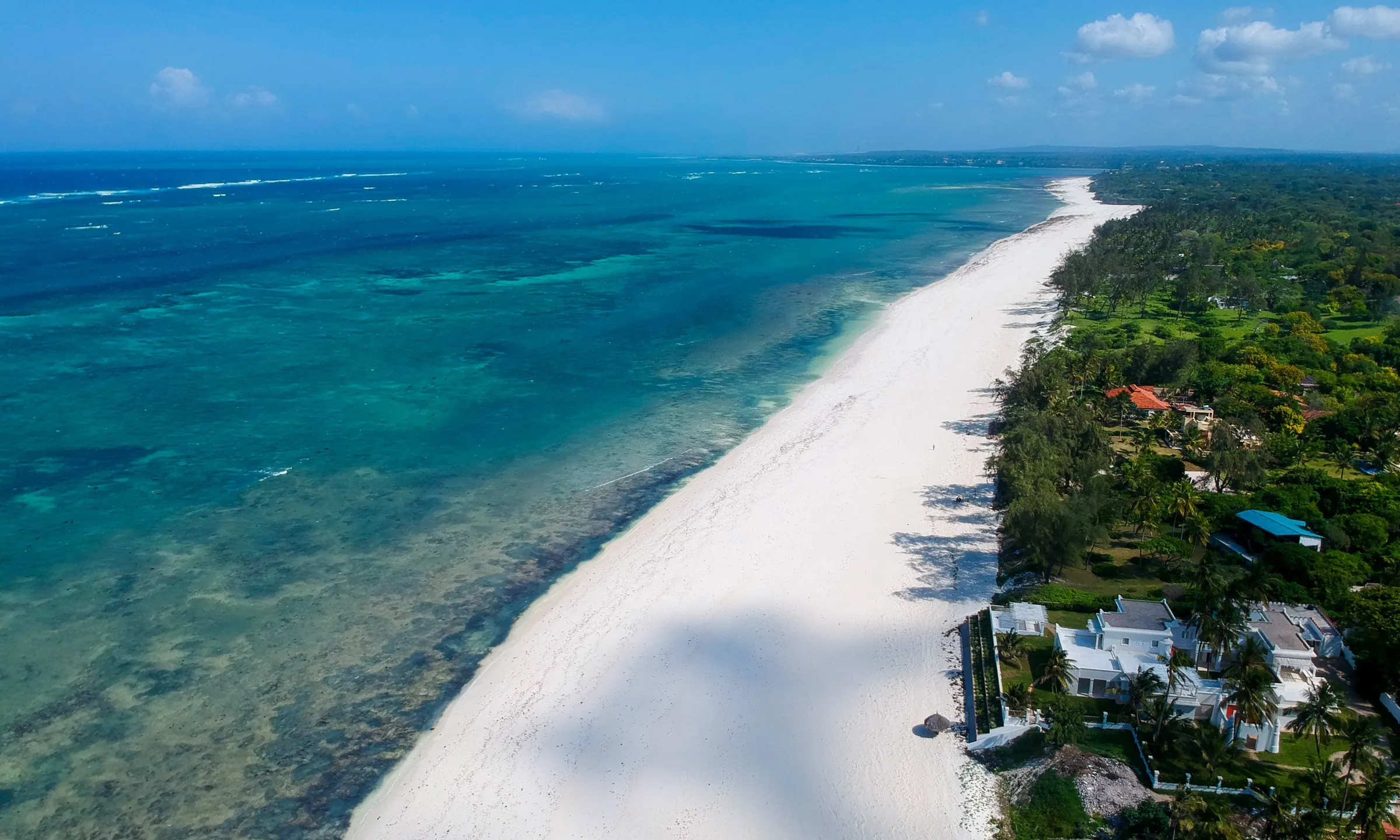
Kilifi town, on its creek an hour or so north of Mombasa, is the best base for the Giriama country inland, and its local restaurants serve sima with fish and coconut dishes at lunch. Kaloleni and the hills behind Kilifi are palm-wine country. Rabai, inland from Mombasa, has the old mission site and kaya forests nearby. On the south coast, the Digo villages around Ukunda, Gazi and Shimoni sell fresh fish and coconut-cooked meals, and the Shimba Hills, in Duruma and Digo country, can be paired with a village lunch.
Ask us for a cooking morning in a Mijikenda home: you will grate coconut on the mbuzi, squeeze the tui and cook muhogo wa nazi, which is a very different coast day from the beach.
How the plate is changing
Tourism, town jobs and supermarket food have changed coastal diets, and many young Mijikenda eat rice and chapati more than cassava. Coconut palms are aging and fewer young men want to climb them, so mnazi tapping has declined in some villages, and county rules on alcohol have shifted over the years. Cassava, on the other hand, is valued again as a crop that survives the coast's dry spells.
A home recipe: muhogo wa nazi (cassava in coconut)
- 1 kg (about 2 pounds) fresh or frozen cassava, peeled and cut into chunks, woody core removed
- 1 can (400 ml, about 14 oz) coconut milk
- 1 small onion, sliced; 1 tomato, chopped; half a teaspoon turmeric (optional)
- 1 green chilli, salt, and a squeeze of lime
- Boil the cassava in salted water for 15 to 20 minutes until just tender, and drain. Always cook cassava fully; never eat it raw
- In a pan, soften the onion, add the tomato, turmeric and chilli and cook 3 minutes
- Add the cassava and the coconut milk, bring to a gentle simmer, and cook 10 to 15 minutes until the sauce thickens and coats the pieces
- Season with salt and a squeeze of lime. Serve with tea for breakfast, or with fried fish for lunch