Food and drink. Updated November 2026. 5 min read.
Every Kenyan eats Indian food, whether they call it that or not. Chapati, samosas, pilau masala, achari pickle and the spiced chai of the coast all came with the families who arrived from Gujarat, Kutch and Punjab from the 1890s onward, and they are now simply Kenyan. Inside the Kenyan Asian community, the food went the other way too: cassava became mogo chips, coconut and charcoal made kuku paka, and the potato bhajia became something no cook in India would recognize.
This page is about that fusion kitchen and where to eat it. The history of the community, from the railway workers to the 2017 recognition, is on our Kenyans of Asian heritage people page and our Asian Kenyans history page; samosas, bhajia and the road snacks have their own page, so here we keep them short.
The dishes that define the table
Kenyan bhajia is not the onion fritter of an Indian menu. It is potato, sliced thin, dipped in a spiced chickpea-flour batter and deep-fried, served in a pile with tamarind or coriander chutney and a squeeze of lime. Maru bhajia, the Nairobi version, is the one people argue over; it is named, most Nairobians will tell you, after the family bhajia house that made it famous.
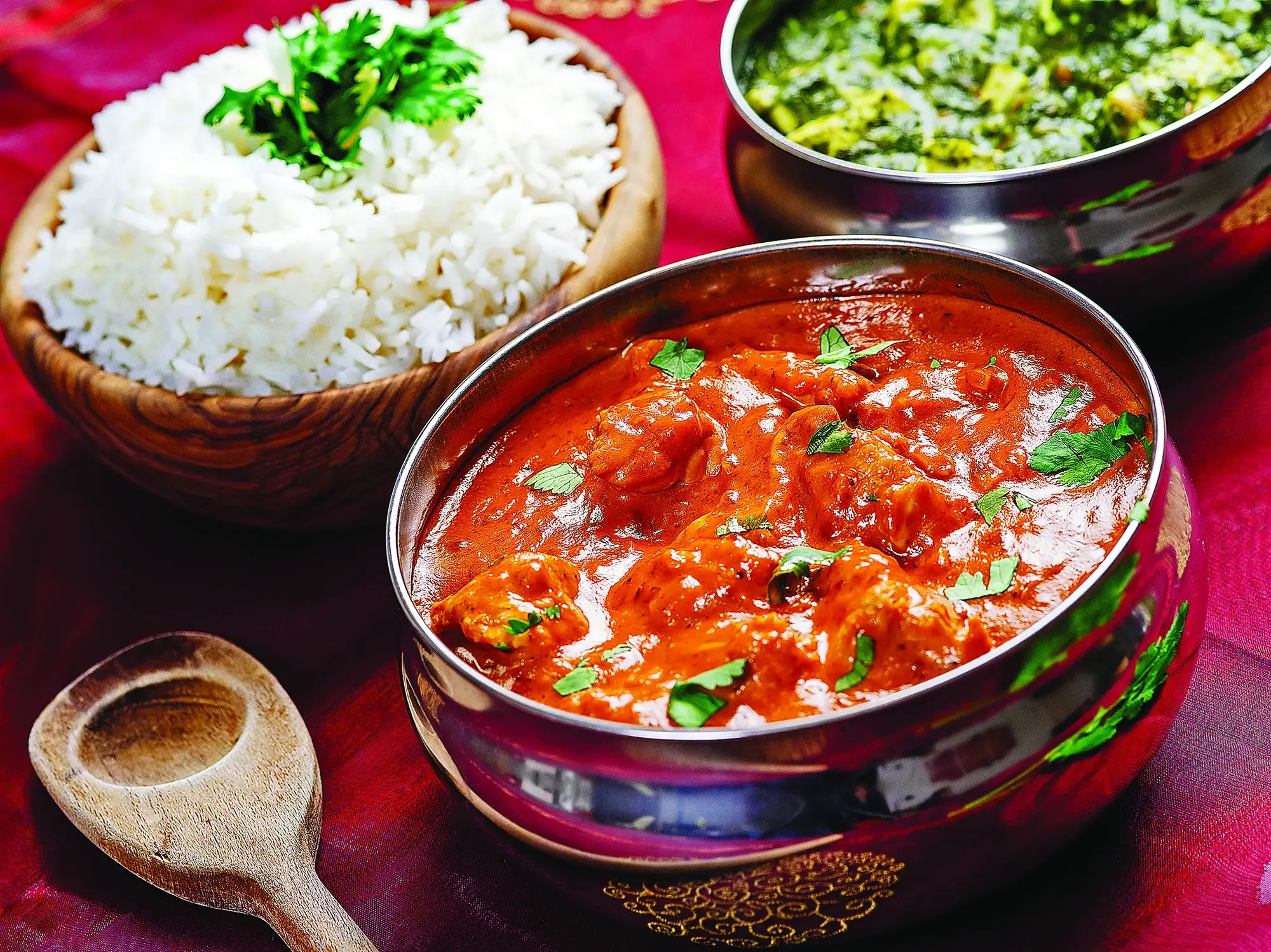
Kuku paka is the great Mombasa fusion dish: chicken marinated and grilled over charcoal, then simmered in a coconut sauce with ginger, garlic, chilli and turmeric, finished with lime. Kuku is Kiswahili for chicken, and most coast cooks connect paka with kupaka, to coat, the same verb behind samaki wa kupaka. Mogo is cassava, boiled and then fried, dusted with chilli and salt and squeezed with lime: the snack of Nairobi's Asian neighborhoods. Chevdo is a crunchy spiced mix of fried flakes, lentils, nuts and raisins, made in huge batches for Diwali and sold by the bag.
Beyond the snacks there is a whole cuisine: Gujarati vegetarian thalis of dal, kadhi, vegetables, rice, rotli and sweets; Punjabi dal makhani, paneer and parathas; Bohra and Ismaili biryanis; and Goan curries on the coast. Many Kenyan Asian families are vegetarian, so this is one of the easiest kitchens in Kenya for a vegetarian visitor.
The ingredient: besan, chickpea flour
If one ingredient holds the Kenyan Indian kitchen together, it is besan, the flour of ground chickpeas. It makes the bhajia batter, binds the kachori, thickens the kadhi and goes into the sweets. You can buy it in any Nairobi supermarket and in Indian grocers in the U.S., where it is labeled gram flour.
Festivals and the shared table
- Diwali, the festival of lights, in October or November: fireworks over Nairobi's Asian neighborhoods, and boxes of mithai (sweets) such as ladoo, barfi and jalebi exchanged with friends of every community
- Navratri: nine nights of garba dancing in community halls in September or October, with snacks and chai in the breaks
- Langar: Sikh gurdwaras serve a free communal meal to anyone. The Makindu gurdwara on the Mombasa Road has fed travelers for generations; if you stop, cover your head, remove your shoes and leave a donation
- Eid: Bohra, Ismaili and other Muslim Asian families share biryani and sweets
- Weddings: multi-day feasts with caterers who also cook for Kenyan weddings of every faith
Words that came to Kenya with the railway
| Kenyan word | What it is | From |
|---|---|---|
| Chapati | Layered flatbread, now a Kenyan staple | Hindi and Gujarati |
| Bhajia | Potato slices fried in chickpea batter | Gujarati bhajiya |
| Achari | Pickle, often mango or lime | Hindi achar |
| Mogo | Cassava, fried as chips | Kenyan Asian usage |
| Chevdo | Spiced fried snack mix | Gujarati |
| Kuku paka | Charcoal chicken in coconut sauce | Kiswahili and coast Indian cooking |
Where to eat Kenyan Indian food
In Nairobi, Diamond Plaza in Parklands is the classic: a food court of small Indian kitchens serving bhajia, mogo, chaat, dosa, grills and fresh juices, busy with families in the evening and at weekends. Parklands and Westlands have the Gujarati sweet shops, vegetarian thali restaurants and Punjabi grills; Ngara, near the old Indian bazaar, has the older snack shops. In Mombasa, the Old Town and the streets around it have Indian sweet shops, kuku paka and the samosa places that coast families swear by, among them the long-established Blue Room. Kisumu, too, has an Indian quarter with temples and snack shops.
The most memorable meal may be the simplest: a stop at the Makindu Sikh gurdwara, about halfway between Nairobi and Mombasa, where travelers have been given a free vegetarian meal at the long tables for decades. Ask your driver; most know it.

How the plate is changing
The Kenyan Asian community is smaller than it was at independence, after decades of emigration to Britain, Canada and the U.S., and many of the old family restaurants have closed or changed hands. But the food has never been more popular with other Kenyans: bhajia, mogo and chaat are now Nairobi weekend food for everyone, a new generation of Kenyan Asian chefs is cooking the fusion dishes proudly, and the diaspora in Toronto and London has carried kuku paka and Kenyan bhajia abroad as Kenyan food.
A home recipe: kuku paka
- 1 kg (about 2 pounds) chicken thighs and drumsticks, skinless
- Marinade: 1 tablespoon each grated ginger and garlic, 1 teaspoon chilli powder, 1 teaspoon turmeric, juice of 1 lime, salt
- Sauce: 1 onion, finely chopped; 2 tomatoes, grated; 1 green chilli; 1 teaspoon ground cumin; 2 cans (about 28 oz) coconut milk; 2 tablespoons oil
- To finish: lime juice and a handful of coriander
- Marinate the chicken for at least 1 hour, or overnight in the fridge
- Grill the pieces over charcoal or under a hot broiler, turning, until charred in places and nearly cooked through, about 20 minutes
- In a wide pan, soften the onion in oil, add the chilli, cumin and tomatoes and cook to a paste
- Pour in the coconut milk and bring to a gentle simmer; do not let it boil hard or it will split
- Add the grilled chicken and simmer 15 to 20 minutes until the sauce thickens. Finish with lime and coriander and serve with rice, chapati or mogo