Experiences. Updated November 2026. 4 min read.
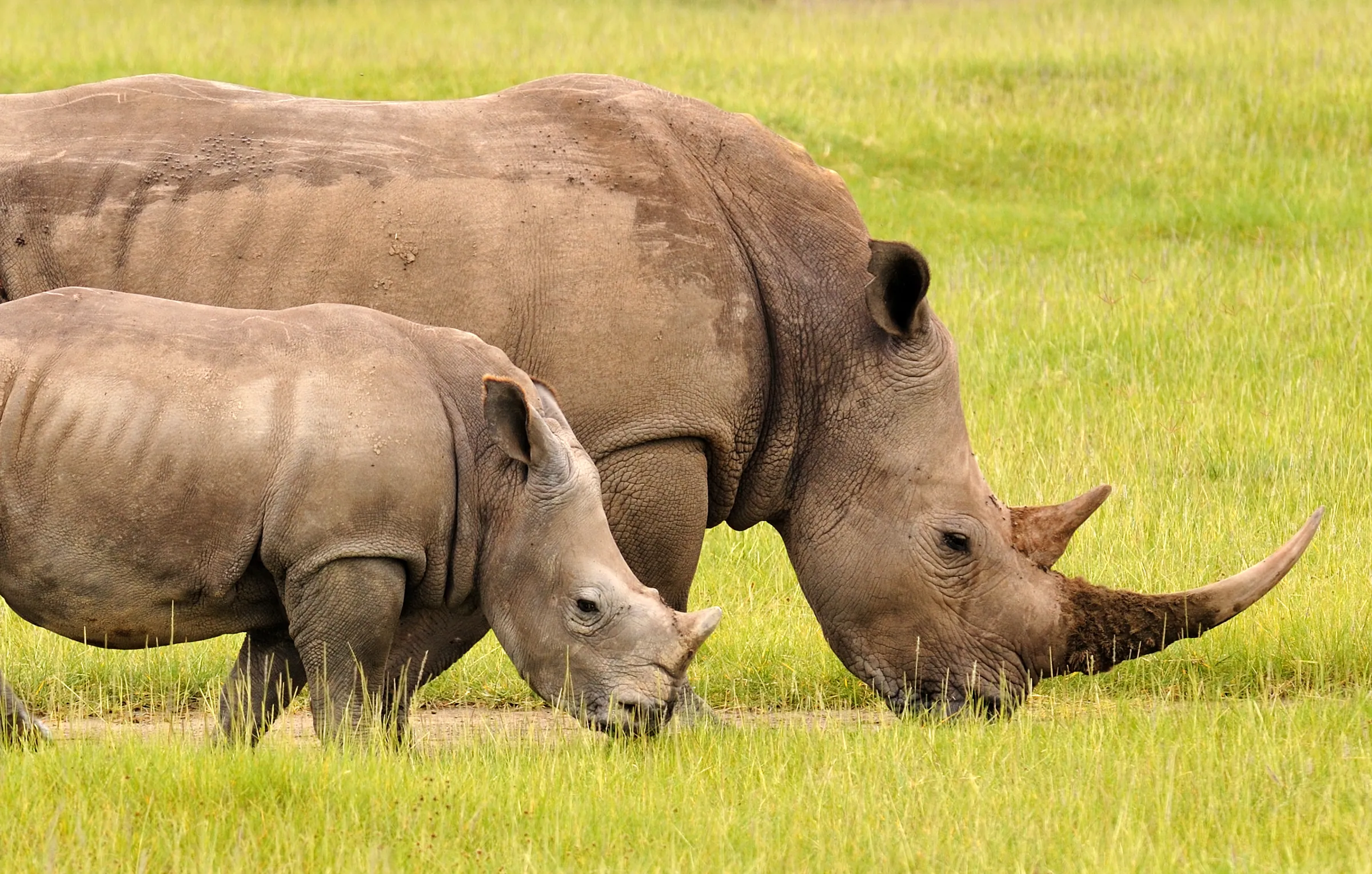
There are two northern white rhinos left on Earth, and you can stand a few yards from them. Najin and Fatu, a mother and her daughter, graze in a guarded enclosure at Ol Pejeta Conservancy below Mount Kenya, with armed rangers beside them around the clock. Both are female. When they die, the subspecies dies with them, unless a team of scientists in Kenya and Europe pulls off something that has never been done.
The short answer: you visit with Ol Pejeta's keepers, booked ahead as an add-on to your conservancy stay or day visit, for an extra fee of roughly $50 to $70 per person at the time of writing. The visit is short, the keepers set the rules, and the money goes to the rhinos' care and protection. This page covers the visit and the science. For Ol Pejeta itself, its black rhinos, lions and camps, see our Ol Pejeta park guide; for where else to see rhinos, see our rhinos page.
How it came to two
Northern white rhinos once lived across Uganda, Chad, Sudan, the Central African Republic and the Democratic Republic of Congo. War and poaching for horn wiped out the wild population; the last wild animals in Garamba National Park in Congo were gone by the late 2000s. In December 2009 four of the last captive animals, Najin, Fatu and two males, Sudan and Suni, were flown from Dvur Kralove Zoo in the Czech Republic to Ol Pejeta in the hope that Kenyan grass and sunshine would get them breeding. They did not. Suni died in 2014, and Sudan, the last male, died at Ol Pejeta in March 2018. A memorial to him stands in the conservancy.
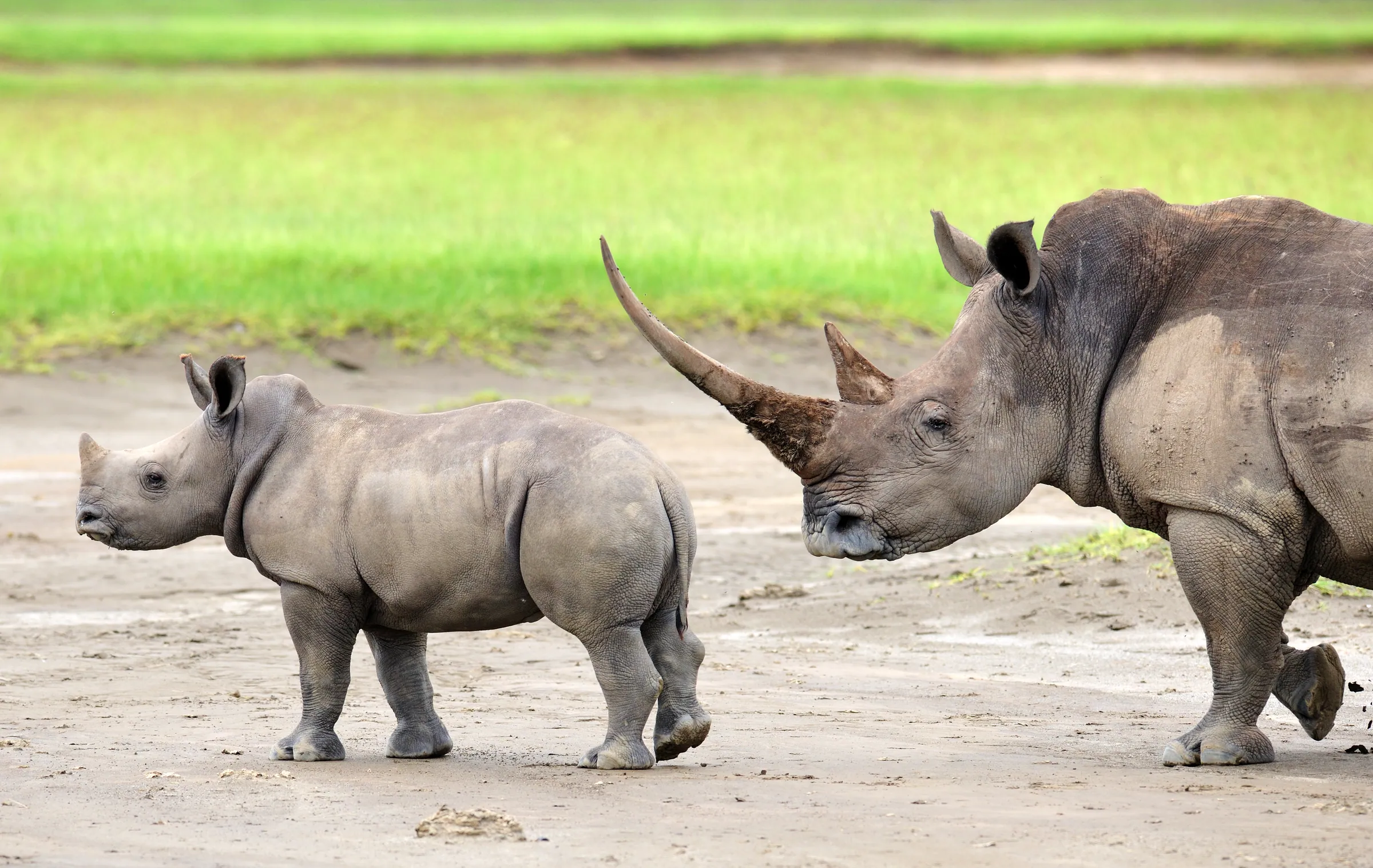
Najin was born in 1989 and Fatu in 2000. Neither can carry a pregnancy, so natural breeding is over. What is left is their eggs, frozen sperm from dead males, and a great deal of science.
The rescue plan
The BioRescue programme, led by the Leibniz Institute for Zoo and Wildlife Research in Berlin with Safari Park Dvur Kralove, Kenya Wildlife Service, Kenya's Wildlife Research and Training Institute and Ol Pejeta, collects eggs from Fatu under anaesthetic, fertilises them in a laboratory in Italy and freezes the embryos. Najin was retired from egg collection in 2021 on ethical grounds. By early 2026 BioRescue reported 39 pure northern white rhino embryos in storage. The plan is to place them in southern white rhino surrogate mothers at Ol Pejeta.
In January 2024 the team announced the first rhino IVF pregnancy ever, using a southern white rhino embryo in a southern white surrogate, confirmed after the surrogate died of an unrelated infection. Transfers of northern white embryos into surrogates have started at Ol Pejeta since. Nothing is promised: ask us for the latest news before you travel, and read BioRescue's own updates, because the story moves quickly.
| Year | What happened |
|---|---|
| 2009 | Najin, Fatu, Sudan and Suni arrive at Ol Pejeta from the Czech Republic |
| 2014 | Suni dies |
| 2018 | Sudan, the last male, dies at Ol Pejeta |
| 2019 | First eggs collected from Najin and Fatu for IVF |
| 2021 | Najin retired from egg collection |
| 2024 | First rhino IVF pregnancy announced, in a southern white rhino |
| Early 2026 | 39 pure northern white embryos reported in storage |
What the visit is like
You drive to the enclosure with your guide and are met by one of the keepers who look after Najin and Fatu. Rangers are always present. The keeper walks you in, tells you who they are, how they spend their day, what they eat and how the science works, and you spend time close to them while they graze. Sometimes they come right up; sometimes they ignore everyone. You follow the keeper's instructions on distance and noise, there is no feeding unless the keeper directs it, and photographs are fine without flash. Most guests are quieter than they expected to be on the drive back.
Ol Pejeta sets the times, group sizes, prices and rules for this visit and changes them, so we book it through the conservancy and confirm the details in your quote. Conservancy entry is charged on top; our park fees page lists the Laikipia conservancy range.
What else to see at Ol Pejeta
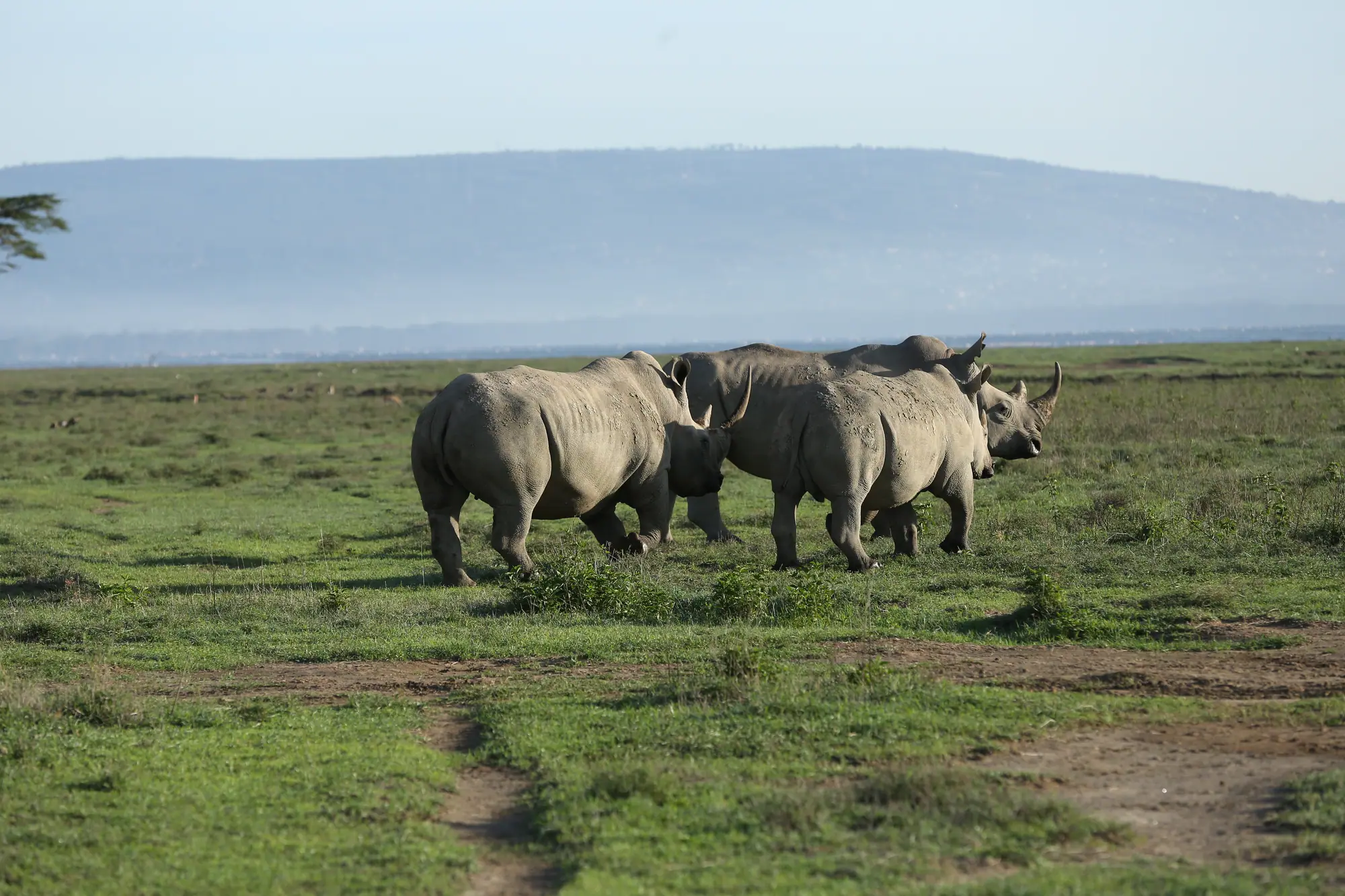
- Black rhinos: Ol Pejeta holds East Africa's largest black rhino sanctuary, and southern white rhinos graze its plains. Kenya counted about 2,100 rhinos in 2024, more than double the low point of the 1980s.
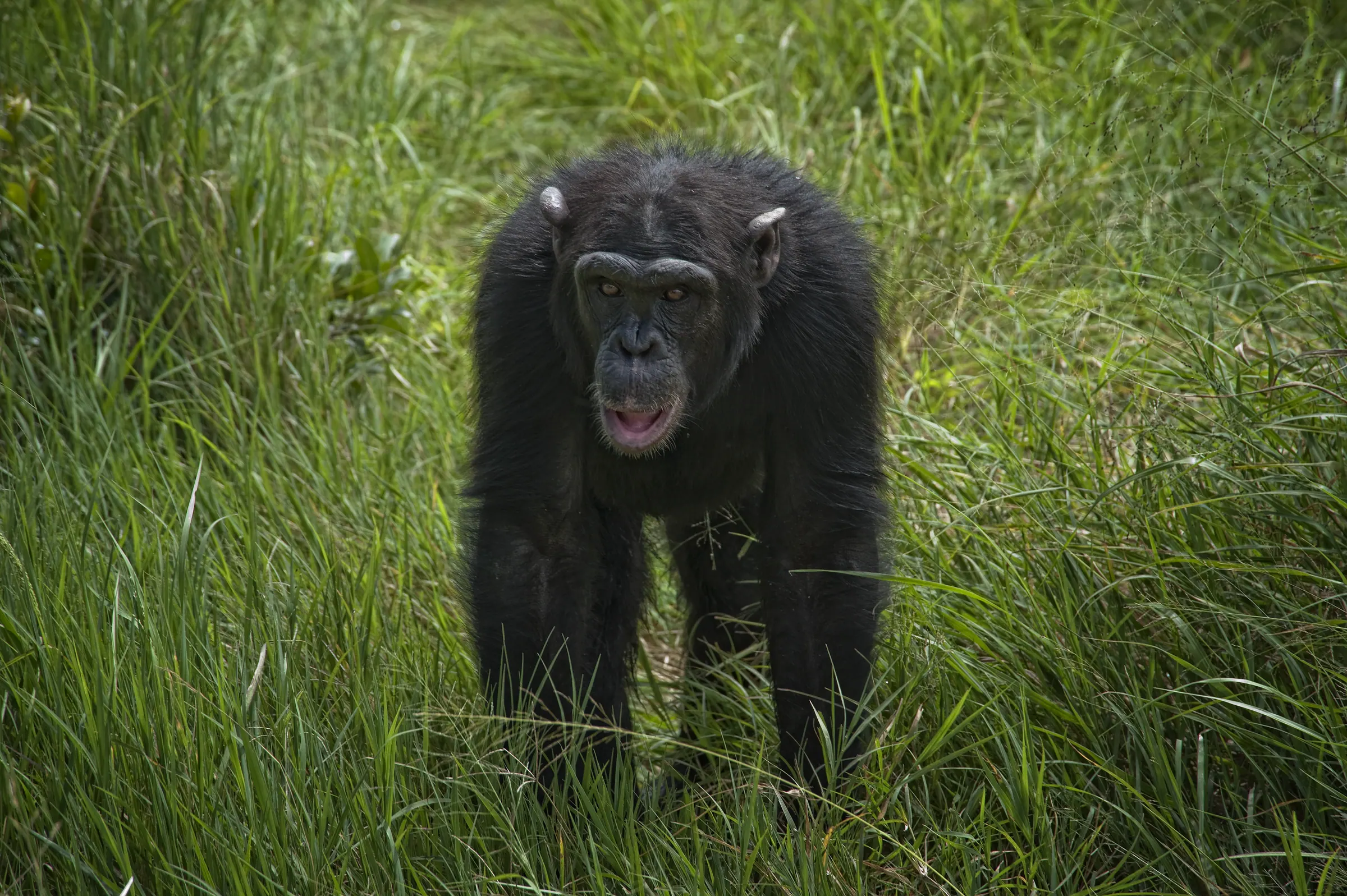
- The Sweetwaters Chimpanzee Sanctuary, home to chimps rescued from the trade elsewhere in Africa; our chimpanzee page tells their story.
- The Big Five, Grevy's zebra and reticulated giraffe on about 90,000 acres.
- Night drives and lion tracking, booked through the conservancy.
- The equator at Nanyuki, for the one-foot-in-each-hemisphere photo.
Getting there and how long to stay
Ol Pejeta is about 3.5 hours from Nairobi by road through Nyeri or Karatina, or under an hour by scheduled flight from Wilson Airport to Nanyuki. You can do the rhinos on a long day trip, but two nights is far better: one morning for the rhinos and chimps, the rest for game drives. Ol Pejeta pairs well with Samburu to the north, Lewa to the east and a flight on to the Mara. Our where to stay in Laikipia guide lists the camps.
Kenya Experience is Kenyan-led, with two U.S. companies behind it. We book the northern white rhino visit through Ol Pejeta, which is not our partner, and build it into a Laikipia stay. Pay in full or monthly with no deposit.