Experiences. Updated November 2026. 4 min read.
Look up as you drive along Diani Beach Road and you will see them: thick ropes and ladders slung between trees high over the tarmac. They are colobridges, and the black and white monkeys with long white capes that use them are Angolan colobus, which live in the strips of coastal forest between the hotels. The bridges, the rescue centre at the end of a sandy driveway and the people who run them are the reason Diani still has its colobus.
The short answer: Colobus Conservation is a non-profit on Diani Beach Road that rescues injured primates, protects the forest and runs the rope bridges. You can visit for a guided tour of the centre and a walk in the forest, usually from Monday to Saturday between 8:30am and 4pm at the time of writing; ask what the current tour fee or donation is when you book. It fills a morning or afternoon on any Diani stay. For the animal itself, its range and where else to see it, see our colobus page.
Why Diani's monkeys need help
Diani's coastal forest once ran unbroken behind the beach. Today it is cut into patches by hotels, villas, walls and the beach road, and the monkeys have to cross open ground and wires to reach food. The animals brought to the rescue centre tell the story: monkeys electrocuted on power lines, hit by cars and motorbikes, bitten by dogs, caught in snares or kept illegally as pets. The organisation also deals with the result of tourists feeding monkeys, which teaches them to raid rooms and bins and leads to conflict with hotels.
What Colobus Conservation does
- Rescue and rehabilitation: a round-the-clock line for injured primates, a clinic and enclosures where animals recover and, where possible, return to the forest.
- Colobridges: rope bridges over the beach road, placed where monkeys cross most, so they travel above the traffic rather than across it. There are dozens along the road, and they are checked and replaced as ropes wear.
- Power line safety: insulating cables and trimming trees near lines with the power company, so monkeys cannot touch live wires.
- Desnaring: patrols that remove wire snares set for bushmeat in the forest patches.
- Education and outreach: school programmes and advice for hotels and homeowners on living with monkeys.
- Forest protection: replanting indigenous trees and working with landowners to keep corridors between forest patches.
The primates you might see
| Species | What to look for | Where |
|---|---|---|
| Angolan colobus | Black body, white cape and whiskers, leaves only; shy and high up | Coastal forest canopy; the colobridges |
| Sykes' monkey | Blue-grey with a white throat; bold and curious | Forest edges and hotel gardens |
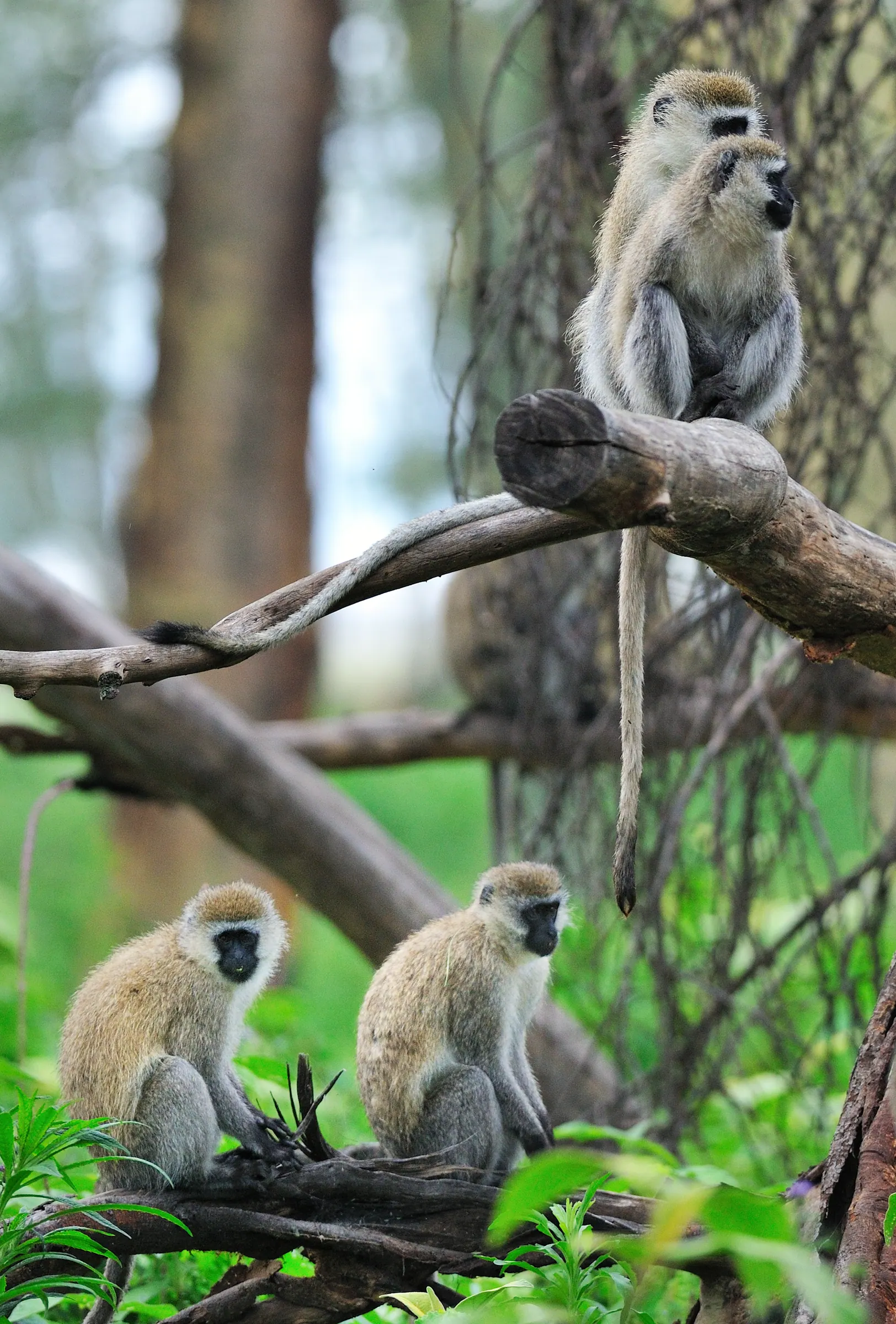
| Vervet monkey | Small, grey, black face; the bin raider | Everywhere, including your balcony |
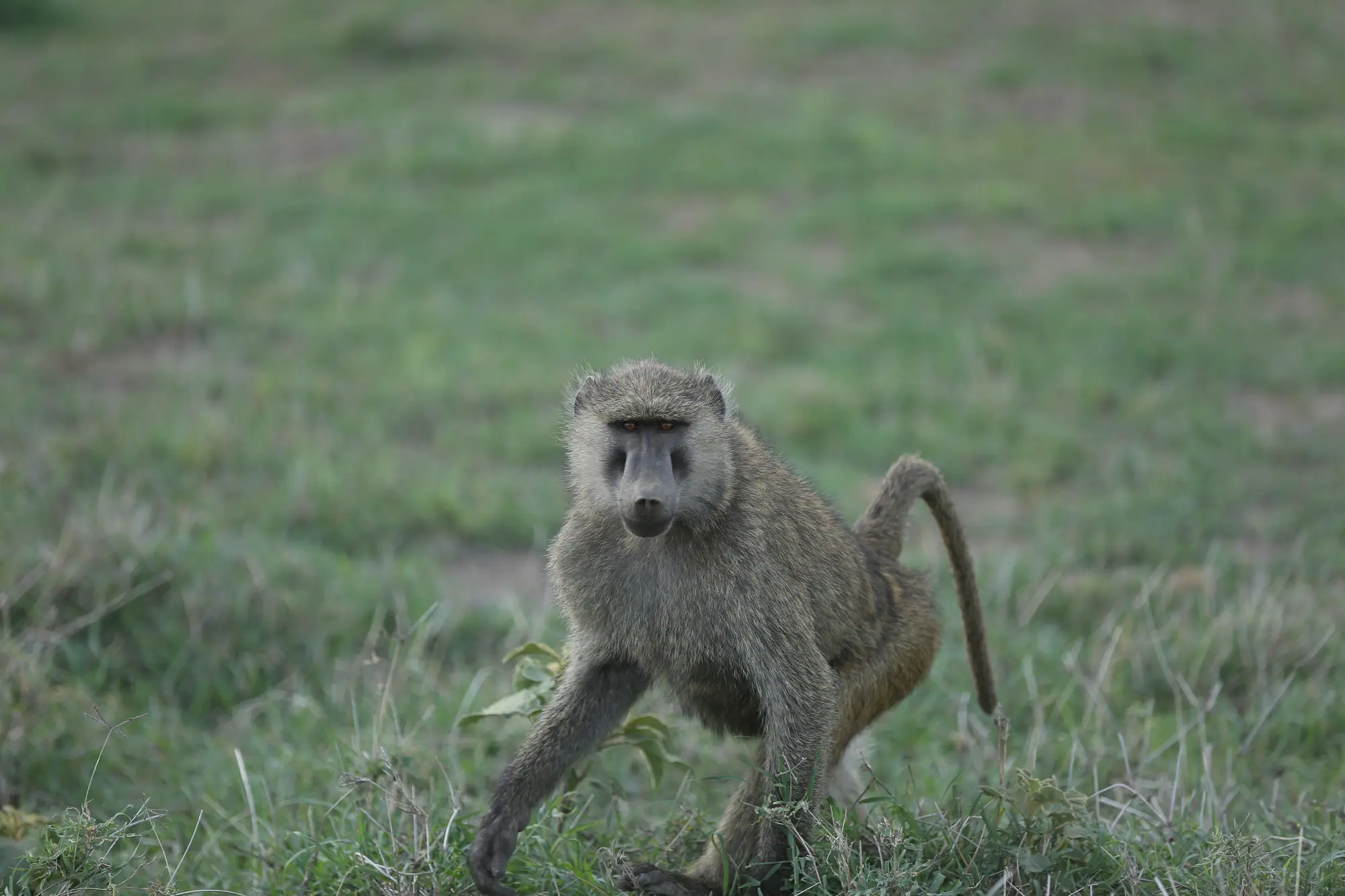
| Yellow baboon | Big, dog-like, travels in troops | Roadsides and forest edges |
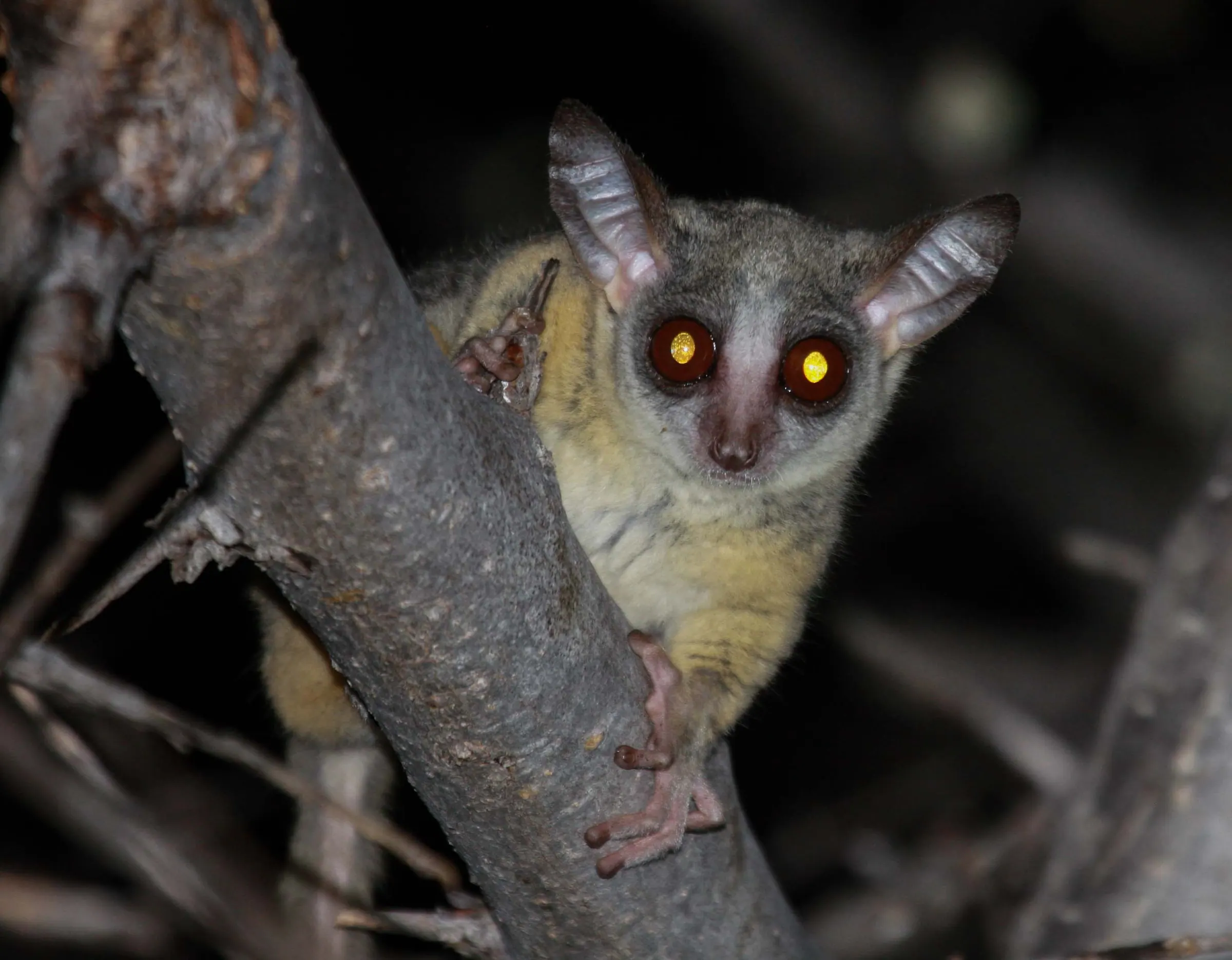
| Two kinds of bushbaby | Huge eyes, active at night, loud calls | Trees around Diani after dark |
What a visit is like
A guide meets you at the centre, explains the rescue work and the threats, and shows you around the enclosures, where you may see monkeys recovering from injury before release. Then you walk into the forest behind the centre on a guided primate walk, looking for colobus in the canopy and learning to tell the species apart by sound and movement. The walk is easy and flat on sandy paths, suitable for children and older travellers who can manage uneven ground. Wear closed shoes and insect repellent, bring binoculars, and keep voices low.
Colobus Conservation also runs a volunteer programme for people who want to stay for several weeks and help with rescues, surveys and education. It has its own costs and requirements, set by the organisation, so read its volunteer pages before you plan around it.
How to behave around monkeys in Diani
- Never feed monkeys, at the centre, at your hotel or on the beach. It makes them aggressive and is the root of most conflict.
- Keep balcony doors closed and food out of sight; vervets and Sykes' monkeys open zips and lift lids.
- Do not leave sunglasses, phones or snacks on a sun lounger unattended.
- Back away calmly from a baboon that approaches; do not run or stare.
- Drive slowly on the beach road, especially near the bridges, and watch for monkeys crossing.
- Report an injured monkey to Colobus Conservation's line rather than trying to help it yourself.
Choosing a hotel that lives well with monkeys
Many of Diani's hotels stand in old forest, which is why you wake to colobus in the treetops. Some keep indigenous trees, insulate their power lines and ask guests not to feed the monkeys; others clear the bush for lawns and then complain about baboons. When we choose where you stay on the south coast, we favour places that keep their forest and work with the conservation groups around them. Our where to stay in Diani guide lists our usual choices, and we are happy to explain why.
Fitting it into a Diani stay
The centre is on the beach road itself, so it is a short drive or tuk-tuk ride from almost any hotel. Go in the morning, when monkeys are most active and before the heat, and spend the afternoon on the beach. It pairs well with a walk in Kaya Kinondo, the sacred Mijikenda forest a little further south, and with a day in Shimba Hills for sable antelope and forest elephants. Our things to do in Diani guide has the full list.
Kenya Experience is Kenyan-led, with two U.S. companies behind it. Colobus Conservation is an independent non-profit and not our partner; we recommend it because the work is real and the visit is honest. Pay in full or monthly with no deposit.