Wildlife. Updated November 2026. 5 min read.
On a still morning at Lake Nakuru, a line of great white pelicans swims across the shallows in a loose horseshoe, beating the water with their wings. On a signal nobody else can see, every head goes under at once, and the pouches come up full of fish. It is teamwork, and it is one of the best things to watch on any Rift Valley lake.
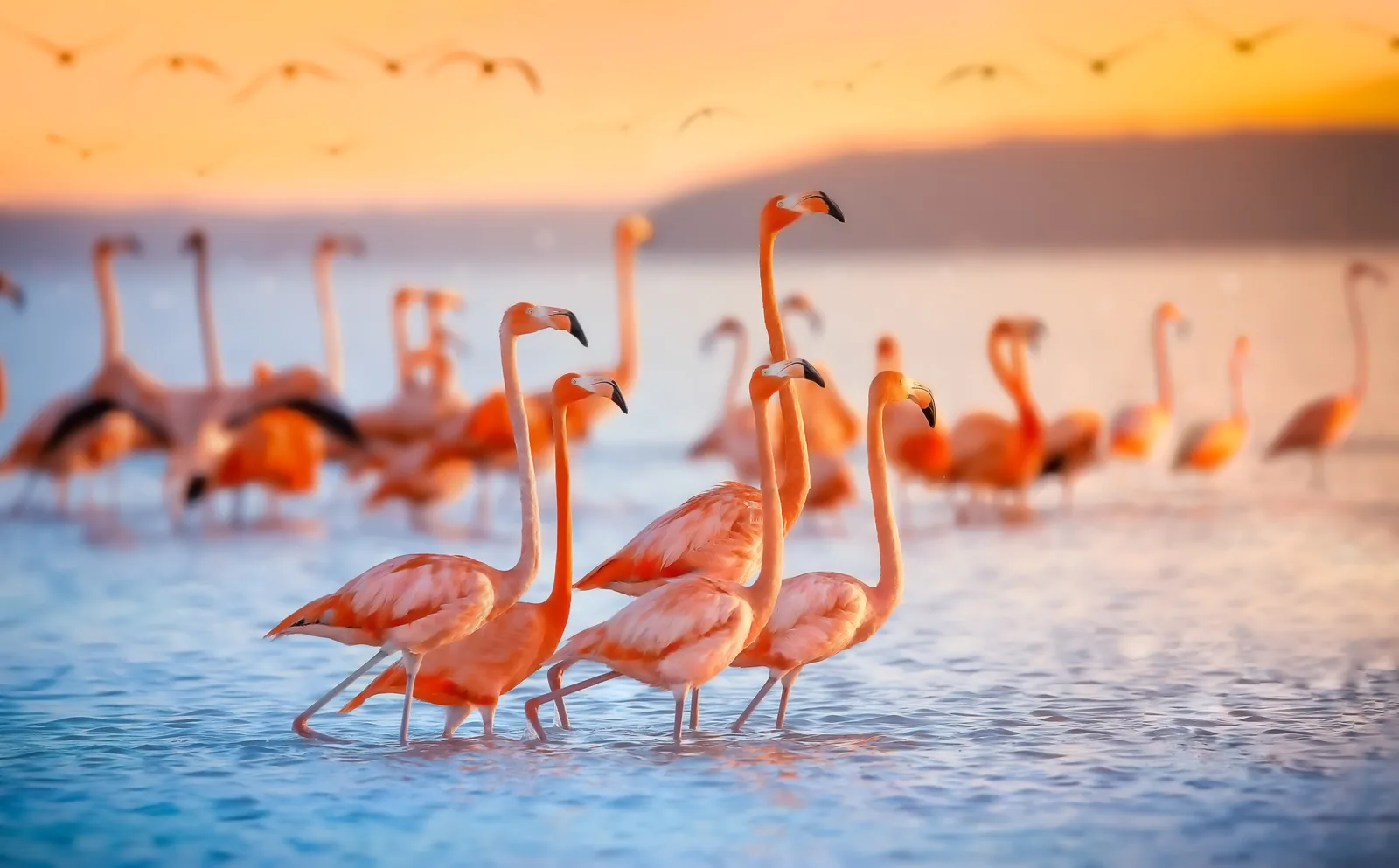
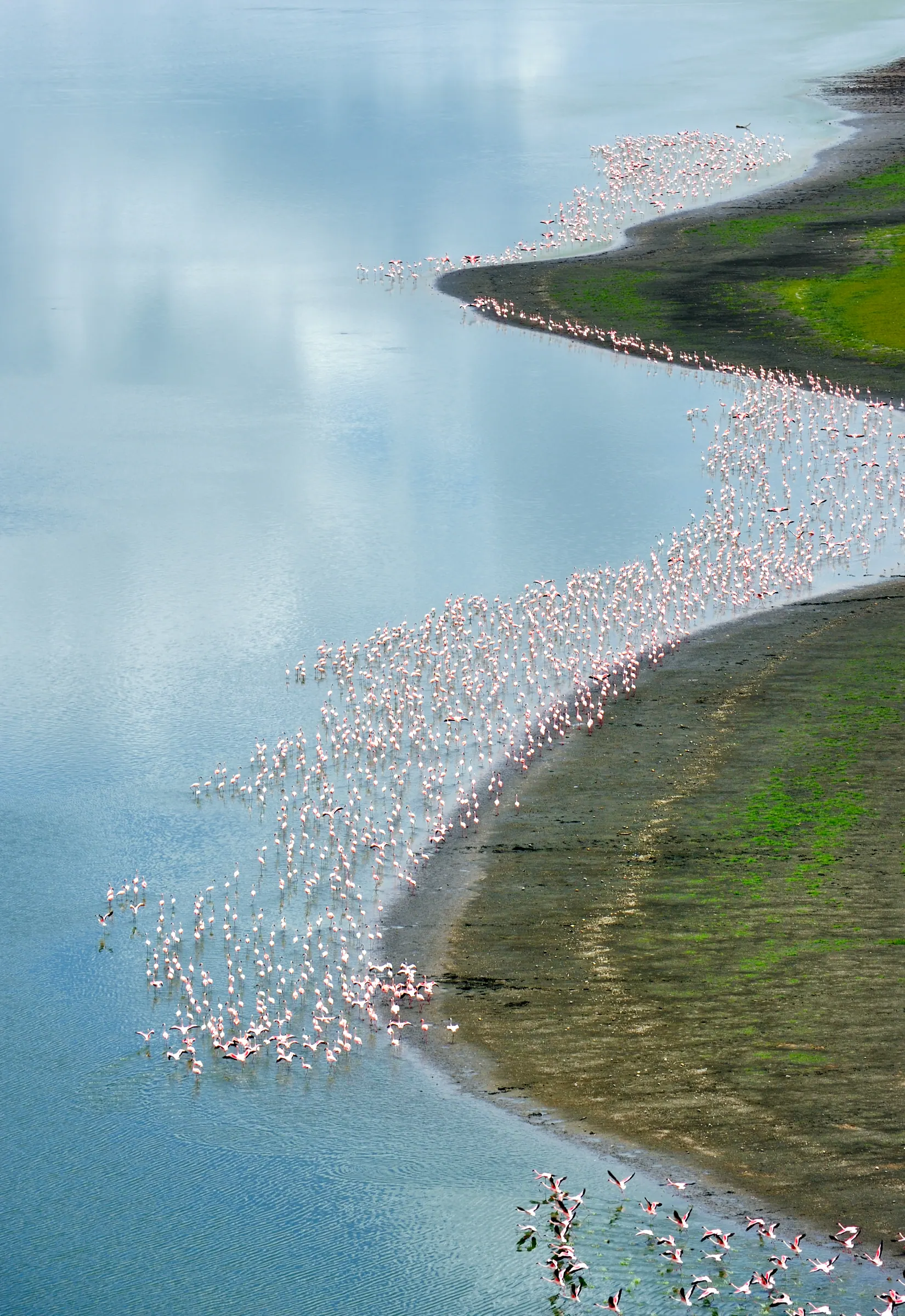
Pelicans and storks are the big birds of Kenya's lakes and swamps. For pelicans, go to Lake Nakuru, Lake Elementaita, Lake Naivasha and Lake Baringo. For storks, look almost anywhere there is water: saddle-billed and yellow-billed storks in the Mara and Amboseli swamps, and marabou storks, the big bald scavengers, in Nairobi itself. Most are resident and easy to see all year, and from about November to March European white storks and other migrants arrive. Flamingos share the same lakes; our flamingo page covers them, and this page covers the other big birds.
Kenya's two pelicans
The great white pelican is the big one: white, with a pink face, a yellow pouch and a wingspan of around three meters. It fishes in groups on open water and breeds in colonies on the ground, and Lake Elementaita has been one of its important breeding sites in Kenya. The pink-backed pelican is smaller and grayer, with a pinkish tinge on the back in the breeding season. It often fishes alone and nests in colonies in trees. Both soar on rising warm air between the lakes, and a flock circling high over the Rift is a sight in itself. At Lake Nakuru, pelicans gather where streams bring in fresh water, and the lake's fish, introduced in the twentieth century, are a big reason they are there at all.
Storks and their relatives
| Bird | How to recognize it | Where | When |
|---|---|---|---|
| Marabou stork | Huge, with a bald pink head, a hanging throat pouch and a gray back | Nairobi and other towns, dumps and kills in the parks | All year |
| Saddle-billed stork | Tall, black and white; red bill with a black band and a yellow saddle | Mara marshes, Amboseli swamps, the Samburu river, Nakuru | All year, usually in pairs |
| Yellow-billed stork | White with pink-tinged wings, a red face and a down-curved yellow bill | Lakes, rivers and swamps across Kenya | All year |
| African openbill | A dark stork with a gap between the mandibles, used to hold snails | Swamps, rice fields and lake edges | Seasonal, often after rain |
| Woolly-necked stork | Dark, with a fluffy white neck | The coast, Mara rivers and wetlands | All year |
| Abdim's stork | Small and dark with a white belly; travels in flocks | Grassland after rain | Mostly the rainy months, about October to April |
| White stork | White with black wings, red bill and red legs | Grassland and farmland | About November to March |
| Hamerkop | A small brown bird with a hammer-shaped head; builds huge domed nests | Almost every stream and lake | All year |
Nairobi's marabou storks
The marabou is the stork most visitors meet first, sometimes before they leave the city. Marabous nest in colonies in tall roadside trees in parts of Nairobi and scavenge at dumps and markets around the city, as well as at kills in the parks. Up close they are startling: a bald, scabby pink head, a dangling throat pouch, and legs often whitened with their own droppings, which helps them keep cool. With a wingspan that can reach about three meters, they are among the largest flying land birds in the world. Guides sometimes call them the undertakers, for their hunched, black-cloaked look. They are not dangerous, but do not stand under a nesting tree.
Where to go
| Place | What you will see | Good to know |
|---|---|---|
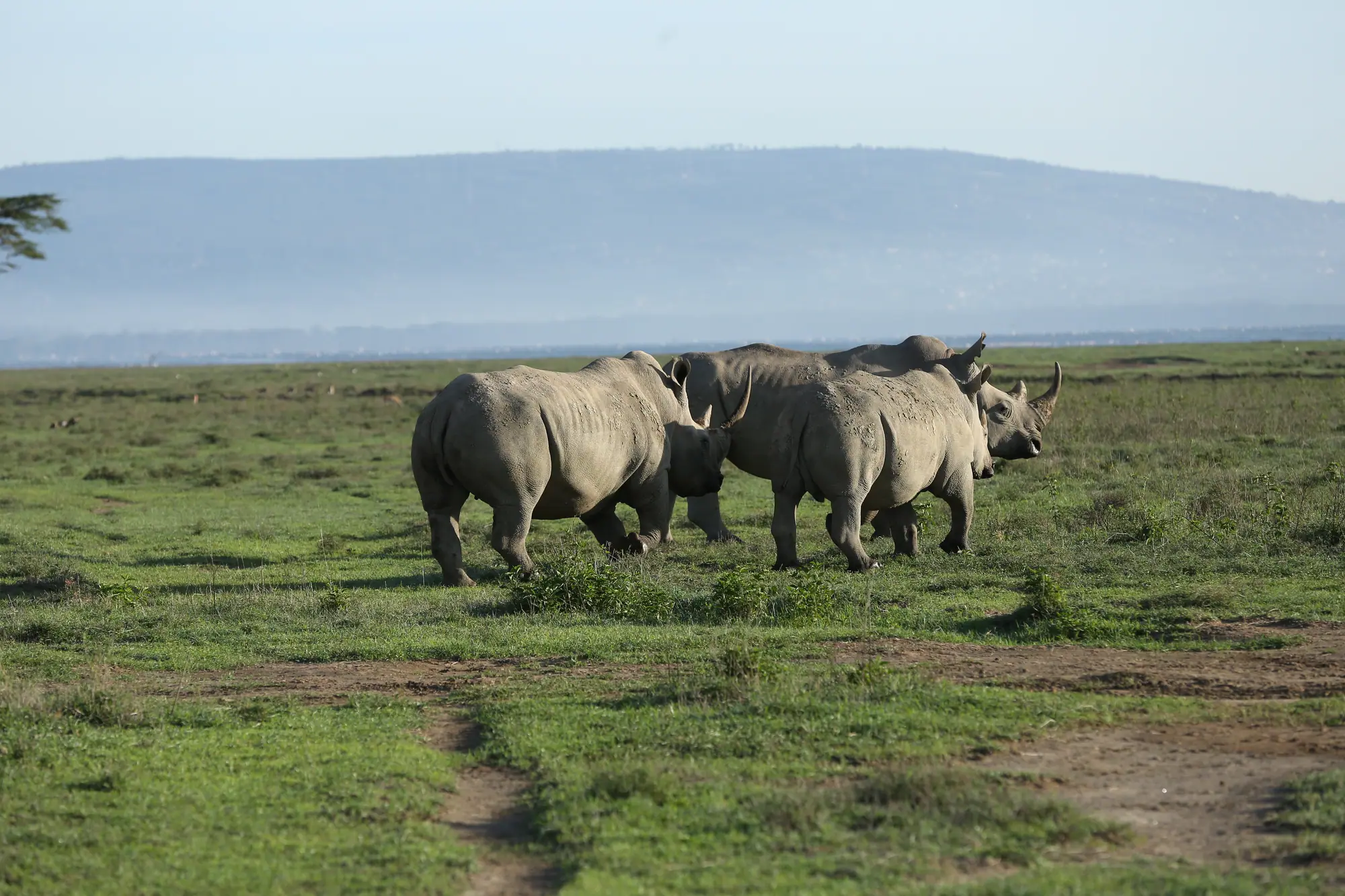
| Lake Nakuru | Great white and pink-backed pelicans, yellow-billed storks, marabous and flamingos | Pelicans gather near the river inflows; combine with rhinos |
| Lake Elementaita | Great white pelicans, flamingos and waders | Quieter than Nakuru and a short drive away |
| Lake Naivasha | Pelicans and storks from a boat, hamerkops on the banks | Boat trips from most lodges |
| Lake Baringo | Pink-backed pelicans, storks, herons and the lake's specialist birds | Local bird guides at Kampi ya Samaki |
| Amboseli swamps | Saddle-billed and yellow-billed storks, pelicans in wet years | Scan the swamps around Observation Hill |
| Maasai Mara | Saddle-billed storks in the marshes, marabous at kills, white storks in the migrant months | Musiara Marsh is a good bet |
Three things most people do not know
First, a pelican's pouch is a net, not a shopping bag. It scoops up several liters of water with the fish, the bird tips its head to drain the water, then swallows; it does not carry fish around in it. Second, many storks are almost silent, because they lack the vocal muscles of songbirds, so they clatter their bills instead, especially at the nest. Third, the marabou's throat pouch is not a food store either: it is linked to the bird's air sacs and used in display.
How to photograph pelicans and storks
Pelicans fishing together make a great sequence, so ask your guide where they are working and shoot wide enough to show the formation. Take-off runs across the water, with feet slapping, need a shutter of 1/2000 second or faster. A saddle-billed stork striding through a marsh looks best from low down, with a long lens and the eye in sharp focus; wait for it to strike at a fish. For marabous in Nairobi, a wider lens with the city behind tells the story.
Conservation status
Most of these birds are listed as Least Concern at the time of writing, but they depend on healthy lakes and wetlands. Pelicans suffer when fish stocks fall, when water is polluted and when breeding colonies are disturbed, and storks lose ground when swamps are drained. Lake Nakuru, Lake Elementaita and Lake Bogoria are protected together as a UNESCO World Heritage site, and rising water over the past decade has changed their shorelines and nesting islands. Check the IUCN Red List for current statuses.
Trips where you will see them
A night at Lake Nakuru, or a Naivasha stay with a day at Elementaita, gives you pelicans, storks and flamingos together, and most of our Mara routes pass close by. Birders should add Lake Baringo. Our birdwatching guide covers the wider picture, and our fish eagle page covers the raptor you will see over the same water.