Wildlife. Updated November 2026. 5 min read.
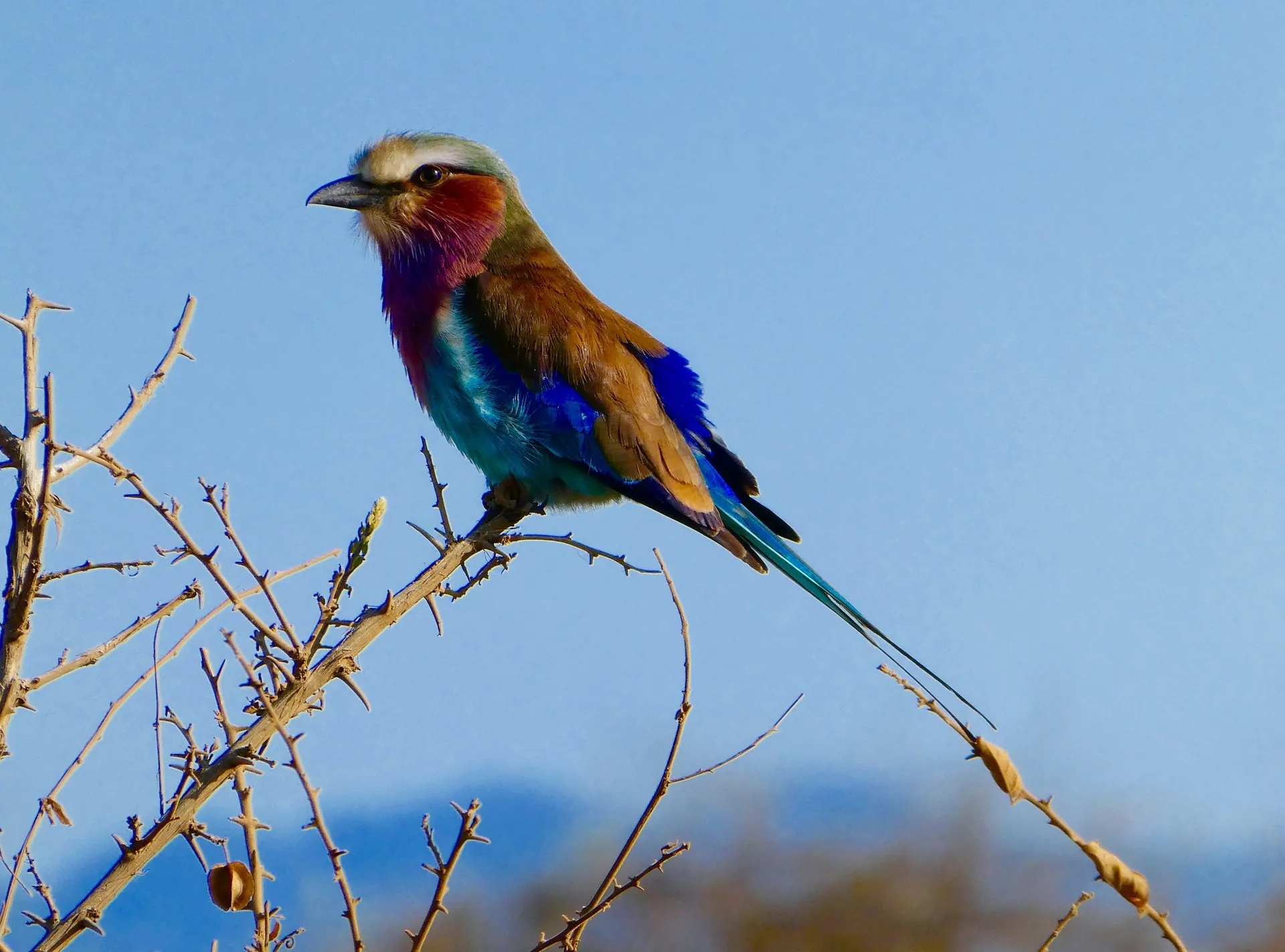
The bird that gets the most camera clicks on many of our safaris is not a lion. It is a lilac-breasted roller on a dead branch, all turquoise, lilac and blue, and the next most popular is often a pied kingfisher hanging in the air over Lake Naivasha before it folds its wings and drops into the water. Kenya's kingfishers, bee-eaters and rollers are cousins, and they are the jewels of almost every game drive.
Kenya has more than a dozen kingfishers and around a dozen bee-eaters, and you do not need to be a birder to enjoy them. For kingfishers, go to the Rift Valley lakes, above all Naivasha and Baringo. For bee-eaters, look along riverbanks, cliffs and open bush almost anywhere. From about October to April, migrant bee-eaters from Europe and Asia join the residents. Bring a long lens and some patience: these birds return to the same perch again and again.
Kingfishers you are likely to see
| Bird | How to recognize it | Where | Eats |
|---|---|---|---|
| Pied kingfisher | Black and white; hovers over open water before diving | Naivasha, Baringo, Nakuru, the Mara River, coastal creeks | Fish |
| Malachite kingfisher | Tiny, sapphire blue and orange, red bill; perches low on reeds and papyrus | Lake edges and slow rivers, especially Naivasha and Baringo | Small fish and insects |
| Giant kingfisher | Africa's largest kingfisher: dark speckled back, chestnut chest, heavy bill | Rivers and lakes with wooded banks | Fish and crabs |
| Woodland kingfisher | Bright blue, with a red-and-black bill and a loud trilling call | Bush and woodland, often far from water | Insects and lizards |
| Grey-headed and striped kingfishers | Smaller, quieter dry-country kingfishers | Savanna and bush across Kenya | Insects |
| Mangrove kingfisher | Blue and gray with a red bill | Coastal mangroves and gardens, such as Mida Creek | Crabs and insects |
Bee-eaters you are likely to see
| Bird | How to recognize it | Where | When |
|---|---|---|---|
| Little bee-eater | Small and green, with a yellow throat and a black collar; perches low | Grass and bush almost everywhere | All year |
| White-fronted bee-eater | White forehead and red throat; nests in colonies in earth banks | Naivasha, Nakuru, Baringo, Hell's Gate and the Rift cliffs | All year |
| Cinnamon-chested bee-eater | Green, with a cinnamon chest | Highland gardens and forest edges: Nairobi, Mount Kenya, the Aberdares | All year |
| Northern carmine bee-eater | Carmine red with a blue cap and a long tail | The coast and the lower Tana, river mouths near Malindi | Seasonal visitor |
| European bee-eater | Chestnut, yellow and blue, in noisy flocks | Widely, on migration and through the northern winter | About October to April |
| Somali bee-eater | Pale, slim, with a blue line through the eye | Dry north and east: Samburu, Tsavo East | All year |
Rollers: the cousins on every game drive
The lilac-breasted roller sits on a high, open perch, drops to the ground for grasshoppers and lizards, and in the breeding season tumbles and rolls through the air in display, which gives the family its name. It is one of the most photographed birds in Kenya. Look also for the purple or rufous-crowned roller in dry country, the broad-billed roller near water and, in the northern winter, the European roller. Rollers, kingfishers and bee-eaters belong to the same order of birds, which explains the shared love of bright color and open perches.
Three things most people do not know
First, many kingfishers do not eat fish. The woodland, striped and grey-headed kingfishers hunt insects and lizards in dry bush, sometimes far from water. Second, bee-eaters really do eat bees, along with wasps and hornets. They catch them in flight, carry them to a perch, and beat and rub the insect against the branch to squeeze out the venom and break off the sting before swallowing. Third, the pied kingfisher is one of very few birds that can hover in still air for long periods, which lets it fish on open lakes far from any perch.
Where to go
- Lake Naivasha: pied, malachite and giant kingfishers from a boat, and white-fronted bee-eaters at nearby banks.
- Lake Baringo: some of Kenya's best birding, with local guides who know where the kingfishers fish and the bee-eaters nest.
- Hell's Gate: white-fronted bee-eaters along the gorge, on a walk or a bike ride.
- Maasai Mara: little bee-eaters and lilac-breasted rollers on every drive, giant and pied kingfishers on the rivers.
- Samburu and Tsavo East: Somali bee-eaters and dry-country kingfishers.
- Mida Creek and the Sabaki river mouth near Malindi: mangrove kingfishers, carmine bee-eaters in season and waders.
- Nairobi: cinnamon-chested bee-eaters in leafy gardens, and Nairobi National Park on a first morning.
How to photograph them
- Find the perch and wait. Bee-eaters and rollers return to the same branch after each sally, so frame the perch and let the bird come back.
- Use a fast shutter: 1/2000 second for a perched bird flicking its head, 1/4000 or more for a diving kingfisher or a bee-eater in flight.
- Watch the exposure. A turquoise bird against a bright sky fools the meter; add a little exposure compensation, or move so the background is dark foliage.
- From a boat, ask the boatman to drift with the engine off. Malachite kingfishers sit close to the water and are easy to scare.
- Respect nest colonies. Keep back from bee-eater banks and never walk on top of them; the nest tunnels run just under the surface.
- Go early. The first two hours after sunrise give soft light and the most activity.
Conservation status
Most of Kenya's kingfishers and bee-eaters are common and listed as Least Concern at the time of writing. They still depend on clean water, papyrus and reedbeds, earth banks for nesting and plenty of insects, and all of these are squeezed by lakeshore building, sand harvesting and pesticides. Hiring local bird guides at Baringo, Naivasha and the coastal creeks keeps money flowing to the people who protect these places.
Trips where you will see them
A Naivasha stay is the easiest way to see the kingfishers, and the Mara gives you rollers and bee-eaters every day. A week that adds Lake Baringo, or a coast stay with a morning at Mida Creek, turns a safari into a proper birding trip. Our birdwatching guide has the sites, seasons and Kenya's endemic birds.