
Wildlife. Updated November 2026. 3 min read.
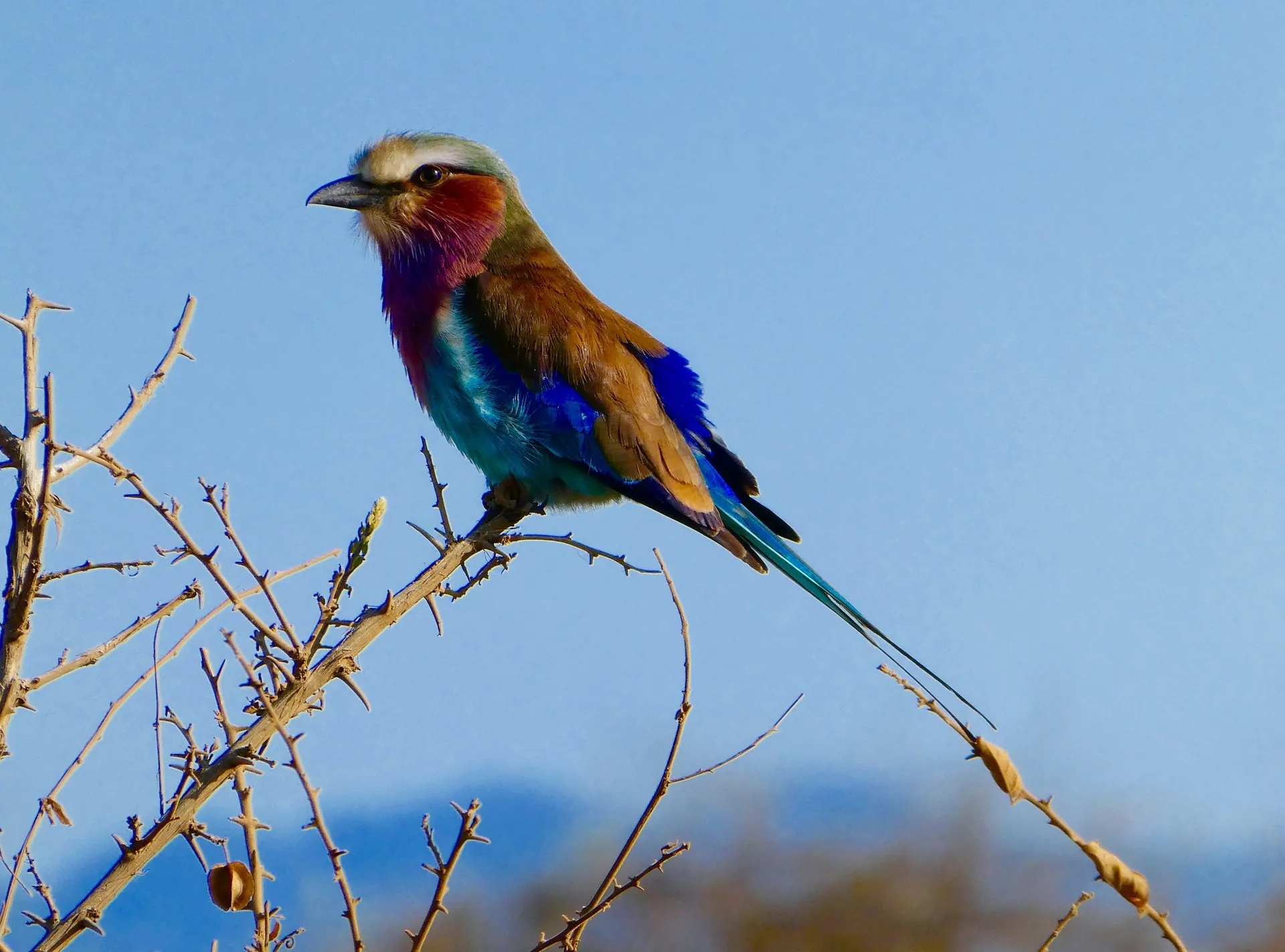
A pale blue roller with a chestnut back and no tail streamers. European roller (Coracias garrulus) is 31 cm long and common and not threatened; it is a migrant, present in Kenya in November, December, January, February, March, April. Passes through Kenya in November and again in March and April on its way between Europe and southern Africa.
Where to see European roller
- Tsavo East: Kenya's largest park: red elephants, the Yatta plateau and huge skies, an easy add-on to the coast.
- Samburu: The dry north: the Samburu Special Five, elephants on the Ewaso Nyiro and the red-robed Samburu people.
- Maasai Mara: Kenya's most famous reserve: the Great Migration from July to October and the densest big-cat country in Africa all year.
- Amboseli: Big-tusked elephants crossing dry lakebeds under Kilimanjaro, clearest at dawn.
Sits on roadside bushes on migration, often dozens along a Tsavo road. It is widespread enough that a standard safari finds it without trying; the best months are November, December, January, February, March, April.
How to identify it
A pale blue roller with a chestnut back and no tail streamers. Size: about 31 cm, thrush-sized. Family: rollers. Sits on roadside bushes on migration, often dozens along a Tsavo road.
Status and conservation
European roller is common and not threatened. No special measures are needed to see it, and your park fees support the habitats it uses.
On a Kenya Experience trip
Our guides carry binoculars and the East African field guide in every vehicle, and our birding itineraries put a specialist bird guide in the front seat. For European roller we would start at Tsavo East and Samburu. Tell us the species on your list and we build the days around them.