Hiking. Updated November 2026. 5 min read.
If you want to stand on Point Lenana at sunrise and feel well enough to enjoy it, start on the Sirimon side. It is the gentlest and most popular way up Mount Kenya: a steady climb from the drier north-west, a night at Old Moses, a long walk up the Mackinder valley under the north faces of Batian and Nelion, and a 4am start from Shipton's camp to reach the top as the sun comes up over the clouds.
In short: allow four days up and down, or better five, with a night at Liki North to acclimatize or a traverse down the Chogoria side. You need a registered guide, porters, warm kit and a schedule that respects the altitude. You do not need ropes or climbing skills. If you are still choosing a route, our Mount Kenya climbing guide compares all three; this page is the Sirimon route in detail.
The route, day by day
| Day | Section | Distance and time | Sleep at |
|---|---|---|---|
| Day 1 | Sirimon Gate (2,650 m) through forest and heath to Old Moses | About 9 km, 3 to 4 hours | Old Moses camp, 3,300 m |
| Day 2 | Old Moses over the moorland to Liki North, a short day for acclimatization | About 7 to 8 km, 4 to 5 hours | Liki North camp, about 4,000 m |
| Day 3 | Liki North into the Mackinder valley and up to Shipton's, with an afternoon walk higher | About 6 km, 3 to 4 hours | Shipton's camp, 4,200 m |
| Day 4 | Start about 2 to 3am, Point Lenana (4,985 m) at sunrise, then down to Old Moses or Shipton's | 3 to 4 hours up, 5 to 6 hours down | Old Moses, or the Chogoria side on a traverse |
| Day 5 | Old Moses back to Sirimon Gate and transfer to Nanyuki | About 9 km, 2 to 3 hours | Off the mountain |
The four-day version skips Liki North and climbs from Old Moses to Shipton's in one long day, a gain of about 900 meters of sleeping altitude, then goes for the summit the next night. Many fit people manage it, but it is where headaches and sleepless nights start. The extra day costs little and is the single best thing you can do for your chances of summiting.
What each day is like
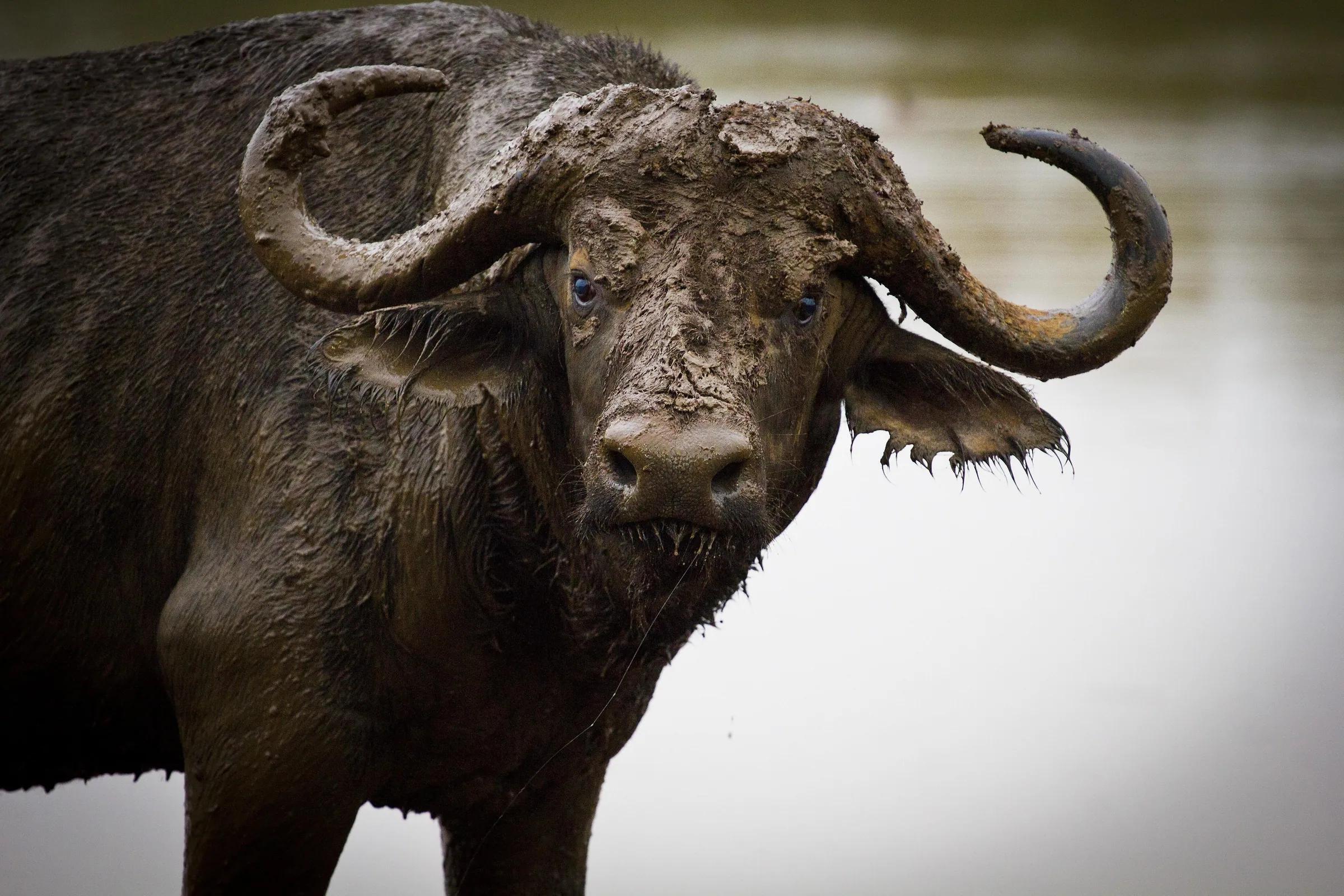
Day one is a gentle walk on a track through cedar and podocarpus forest into open heath, where you may see buffalo, elephant dung, colobus monkeys and, if you are lucky, a herd of zebra on the lower slopes. Old Moses is a hut camp with bunks and camping space, cold at night and often clear at dawn.
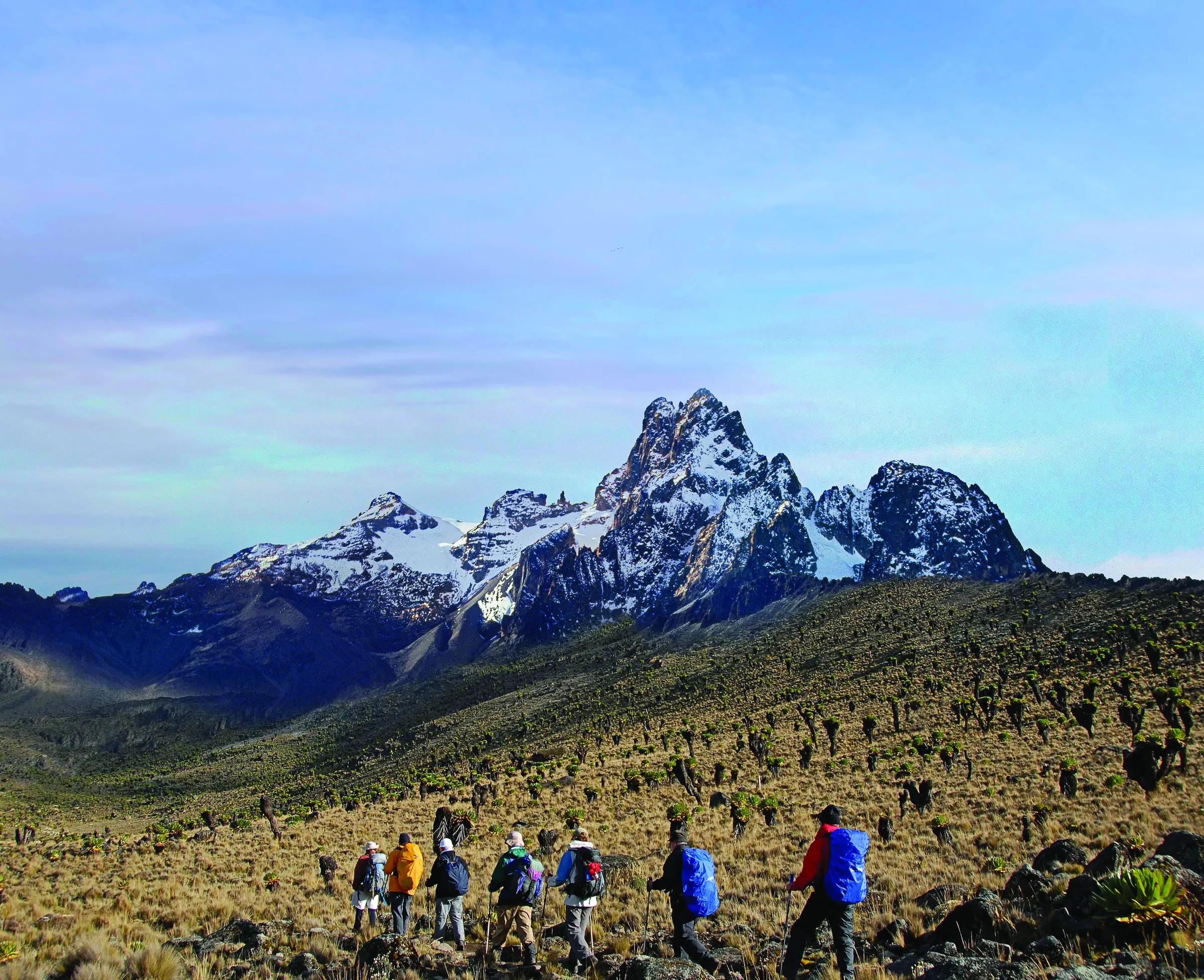
Above Old Moses the moorland begins: tussock grass, everlasting flowers and, as you climb, the giant groundsels and giant lobelias that make Mount Kenya look like nowhere else. The Mackinder valley is wide and open, with the peaks at its head growing bigger all day. Shipton's camp sits right under the north faces of Batian and Nelion, the most dramatic campsite on the mountain, where rock hyraxes run between the tents.
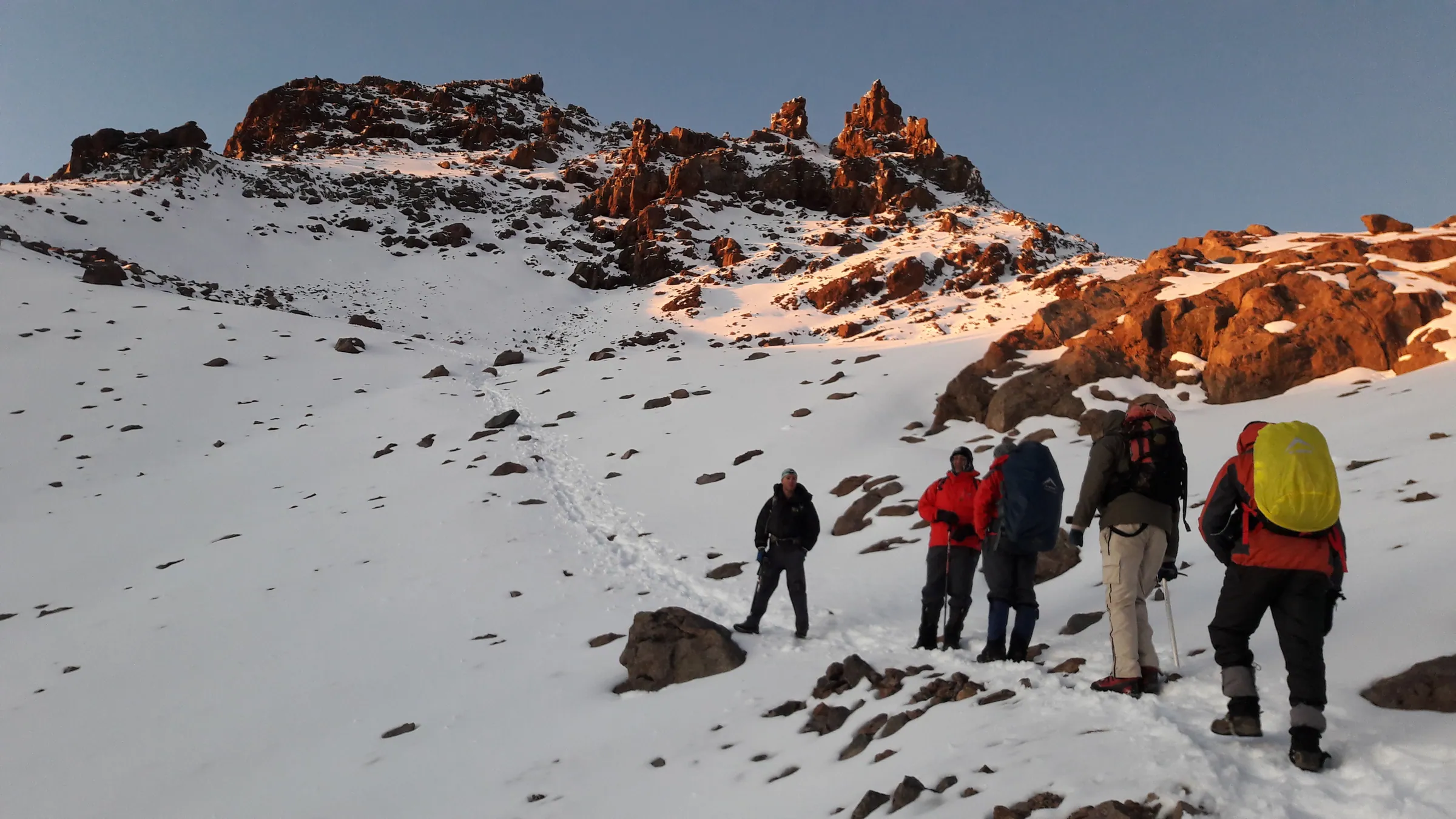
Summit night starts in the dark, with headlamps on a steep path of scree and rock past Harris tarn and up to Lenana's summit ridge. It is well below freezing, the air is thin and the pace is very slow: pole pole, slowly, is the only speed your guide will use. Most people reach the top in three to four hours, in time for sunrise, the shadow of the mountain thrown across the clouds and, on clear mornings, Kilimanjaro on the horizon.
Why Sirimon is the gentle route
- The gain is spread out: three nights on the way up rather than two on Naro Moru.
- The north-west side is the driest part of the mountain, so the trail is firmer and the views are clearer.
- Liki North gives a natural acclimatization stop at about 4,000 meters.
- Shipton's is close to the summit, so the night climb is about 785 meters of gain.
- It combines well: up Sirimon and down Chogoria is the classic traverse, and up Sirimon and down Naro Moru is a shorter alternative.
Fees, guides and porters
Mount Kenya National Park is run by Kenya Wildlife Service. At the time of writing, the non-resident fee is about $80 per adult per day, with separate rates for climbing packages, and is paid through KWS on eCitizen; our park fees page has the current table and the official schedule. KWS rules require climbers to go with a registered guide, and every party signs in at the gate and out again at the end.
A typical crew is a guide, an assistant guide for groups, a cook and porters who carry the main bags while you carry a daypack. Choose an operator that uses registered guides, pays porters fairly, keeps loads reasonable and gives the crew proper boots and warm clothes. Plan to tip at the end of the climb; our tipping guide has the usual amounts. Trek packages generally cost about $800 to $1,500 per person, depending on days, group size and whether you sleep in huts or tents, and should list park fees, the crew, food, gear hire and the transfer from Nanyuki.
Safety: altitude, cold and rain
- Altitude sickness is the main risk. Headache, nausea and poor sleep are common above 3,000 meters. Breathlessness at rest, confusion or stumbling are emergencies: go down at once.
- Drink 3 to 4 liters a day and walk slower than feels necessary.
- Ask a travel clinic about acetazolamide (Diamox) six to eight weeks before you fly.
- Summit night is well below freezing. Bring a down jacket, gloves, a warm hat and a sleeping bag rated well below zero Celsius.
- Rain can fall in any month, and in the rainy seasons summit night is wet, icy and often viewless.
- Buy travel insurance that covers trekking to 5,000 meters, with evacuation.
Our altitude page explains the symptoms, safe ascent rates and Diamox in more depth.
Getting there and where to stay
Nanyuki, the base for Sirimon, is about three hours by road from Nairobi, or under an hour by light aircraft from Wilson Airport. Sirimon Gate is a short drive north-east of town. Most climbers sleep in Nanyuki the night before and the night after, and many add Ol Pejeta or Lewa to finish the trip with a few days of safari. Spending time at Nairobi or lodge altitude first also helps your body adjust.