Planning a safari. Updated November 2026. 7 min read.
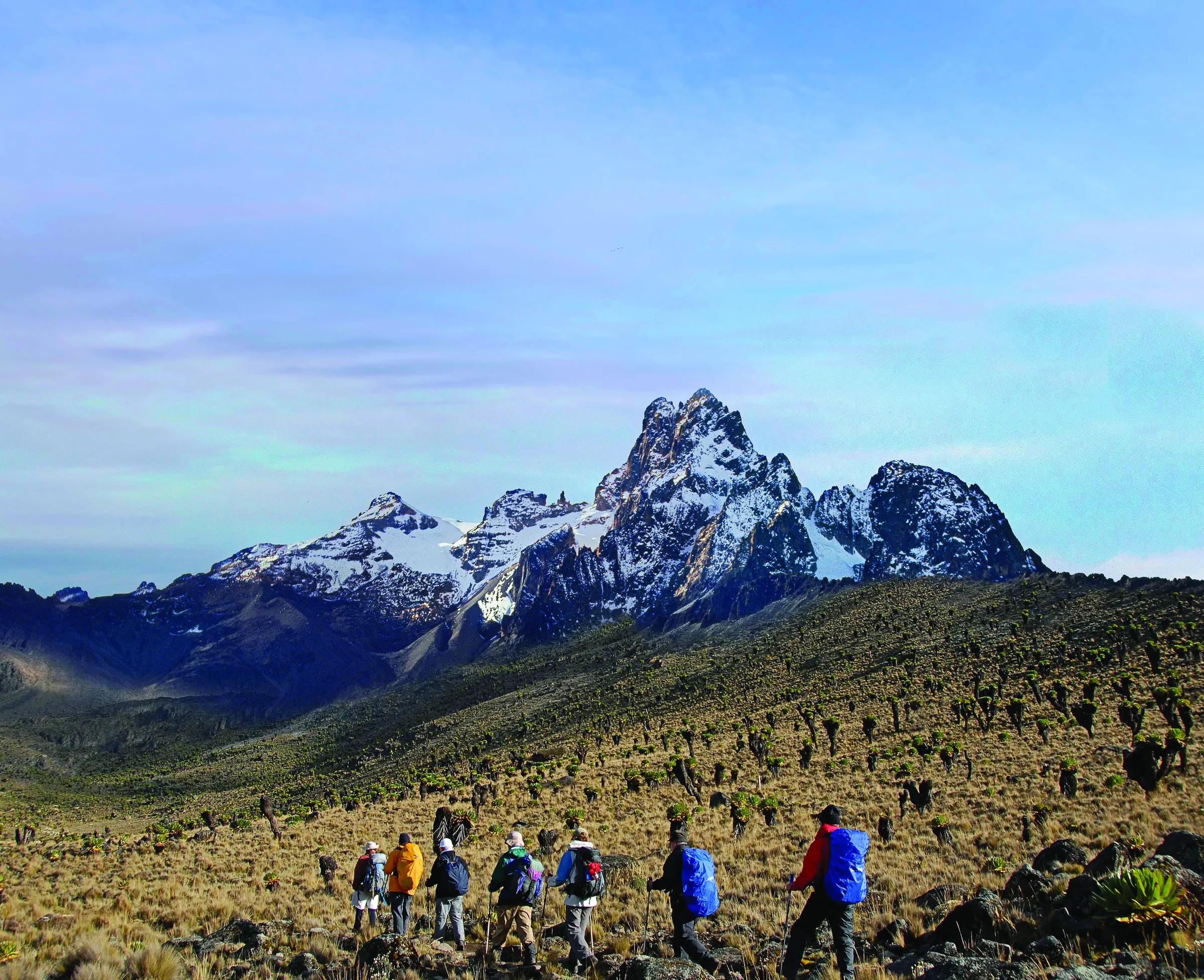
Kilimanjaro is higher. Mount Kenya, many of the guides who know both will tell you, is better: fewer people on the trail, real alpine scenery of jagged peaks, glacier remnants and tarns, a moorland of giant groundsels and lobelias that looks like another planet, and a summit you reach at sunrise with the whole of central Kenya at your feet and, on a clear morning, Kilimanjaro floating on the southern horizon.
Here is the decision in two paragraphs. Most people climb to Point Lenana, at 4,985 meters, a non-technical summit that needs fitness and time to acclimatize, not ropes. Choose five days rather than four, and the classic route, up the gentle Sirimon side and down the scenic Chogoria side. Budget about $800 to $1,500 per person for a guided trek, and check whether Kenya Wildlife Service park fees are included. Go from January to February or August to September, when the mountain is driest. Hike with a registered guide, a cook and porters; it is mandatory on most routes and the reason most people summit.
The rest of this page helps you make each of those choices. Our altitude page covers acclimatization, symptoms and Diamox in depth, and our Mount Kenya park page covers the mountain itself; here we stick to planning.
Mount Kenya or Kilimanjaro?
| Mount Kenya (Point Lenana) | Kilimanjaro (Uhuru Peak) | |
|---|---|---|
| Summit height | 4,985 m | 5,895 m |
| Days on the mountain | 4 to 6 | Usually 6 to 9 |
| Crowds | Quiet; you may share a camp with a few groups | Busy on popular routes |
| Scenery | Jagged peaks, tarns, glacier remnants, moorland | A huge volcanic cone with glaciers on top |
| Technical option | Batian and Nelion, serious rock climbs | None on the standard routes |
| Typical trek cost | About $800 to $1,500 plus fees | Usually considerably more, with Tanzania park fees |
| Fits a Kenya safari | Nanyuki is three hours from Nairobi, next to Laikipia | Needs a border crossing or a flight |
Do not underestimate Mount Kenya because it is lower. Its routes gain height quickly, and Point Lenana is still higher than any summit in the lower 48 states.
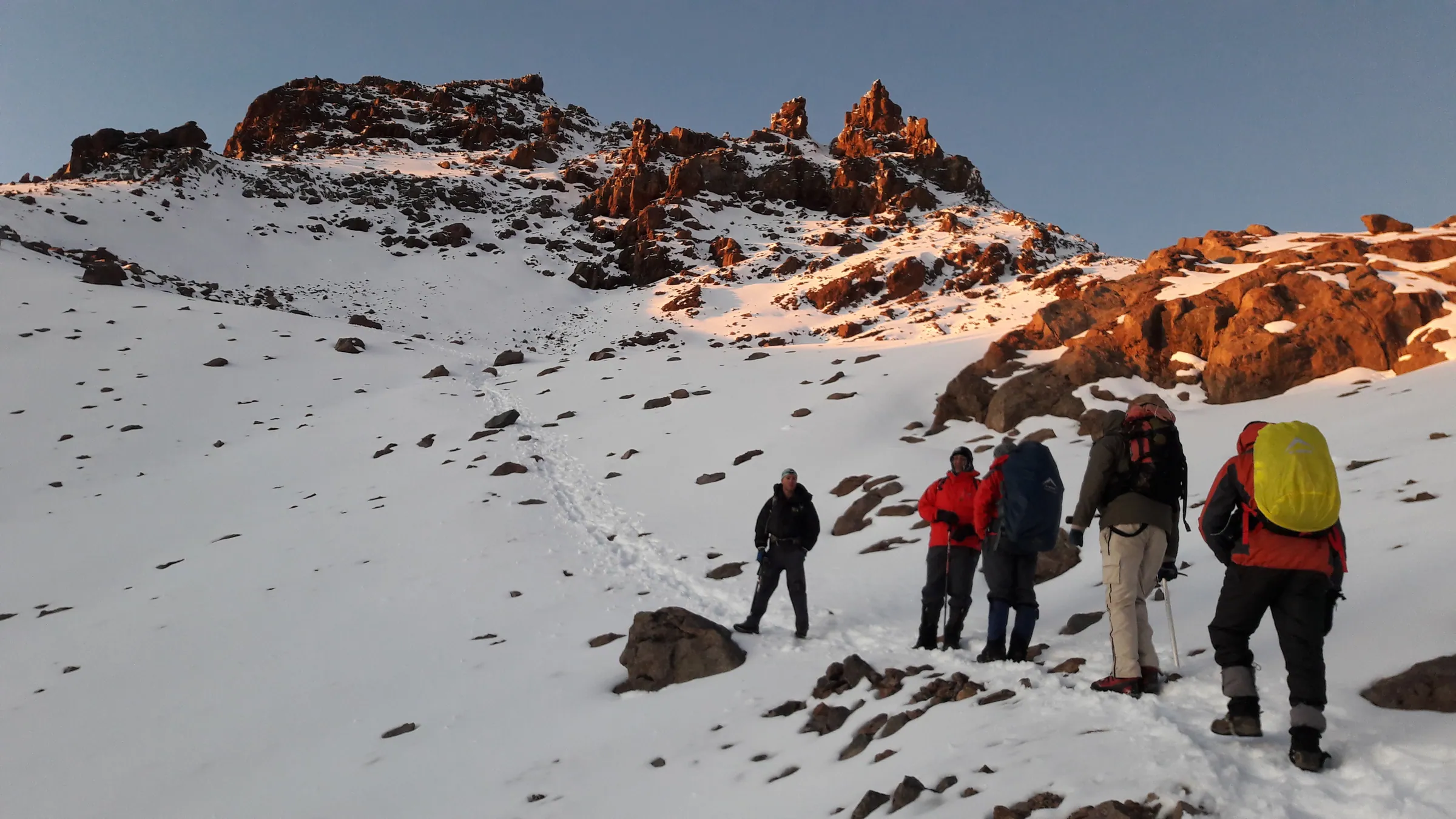
Which route
| Route | Days | Best for | Watch out for |
|---|---|---|---|
| Sirimon (from the northwest, near Nanyuki) | 4 to 5 up and down | First-timers: a gradual climb that helps acclimatization | Drier, less dramatic lower slopes |
| Chogoria (from the east) | 5 | Scenery: Lake Ellis, the Gorges Valley, Lake Michaelson and the Hall Tarns | A long road to the gate; usually used for the descent |
| Naro Moru (from the west) | 3 to 4 | Speed and a short drive from Nairobi | Steep, the boggy section, and the highest rate of altitude sickness |
| Sirimon up, Chogoria down | 5 to 6 | The classic traverse: gentle up, beautiful down | Transport has to meet you on the other side |
| Sirimon up, Naro Moru down | About 5 | A traverse with easier logistics | The Naro Moru descent is steep and muddy |
Our route pages go camp by camp: Sirimon, Chogoria and Naro Moru. If you are unsure, start with the Sirimon to Chogoria traverse. It gives you the best acclimatization profile going up and the finest valley on the mountain going down.
How many days
The three-day dash from a trailhead at about 2,600 meters to Point Lenana is where most people get sick. Four days is the minimum we would consider for fit, experienced hikers on Sirimon. Five days, with a short acclimatization day around 4,000 meters, is the plan we recommend for most travelers. Six days on the Sirimon to Chogoria traverse gives you time to enjoy the tarns and gives slower walkers margin. An extra day costs far less than a failed summit, and it is the single best investment you can make in the climb.
What it costs
| Item | Typical cost | Notes |
|---|---|---|
| Guided trek package | About $800 to $1,500 per person | Varies with route, days, group size and camp standard; usually includes guide, cook, porters, food, tents or huts and transfers to the gate |
| KWS park fees | About $80 per non-resident adult per day at the time of writing | Check whether your quote includes them; KWS lists climbing rates separately and fees rose in October 2025 |
| Crew tips | Agreed with us before you go | Customary for guides, cooks and porters; see our tipping guide |
| Gear hire | Varies | Sleeping bags, jackets and poles can often be rented in Nanyuki or through the operator |
| Travel insurance | Varies | Must cover trekking to 5,000 meters with evacuation |
| Transfers from Nairobi | Often included | About three hours by road to Nanyuki, or a short flight from Wilson Airport |
Be wary of very cheap quotes. The savings usually come from fewer days, underpaid porters, thin sleeping bags or a guide who is not registered, and none of those help you reach the top.
How fit you need to be
You do not need climbing experience, but you need to be able to walk for six to eight hours a day on rough, steep ground, several days in a row, and then get up at around 2am for a summit push of several hours in the cold. If you can hike 15 to 20 kilometers with a daypack and real elevation gain, and do it again the next day, you are in the right range. Train for at least two months with long hill walks on back-to-back days, and break in your boots on them. Age is less of a limit than fitness and health; tell us about any heart, lung or blood pressure condition before you book, and see a travel clinic.
When to go
The driest and clearest months are usually January to February and August to September, with late June to early October generally workable. The long rains, roughly March to May, bring mud in the forest, cloud on the peaks and snow on summit night, and the short rains, roughly late October to December, are not much better. Nights above 4,000 meters are below freezing in every season, and the equatorial sun is fierce by day. Kenya's school holidays and the Christmas season bring Kenyan hikers to the mountain, which is a fine reason to go, but book early.
Guides, porters and the crew
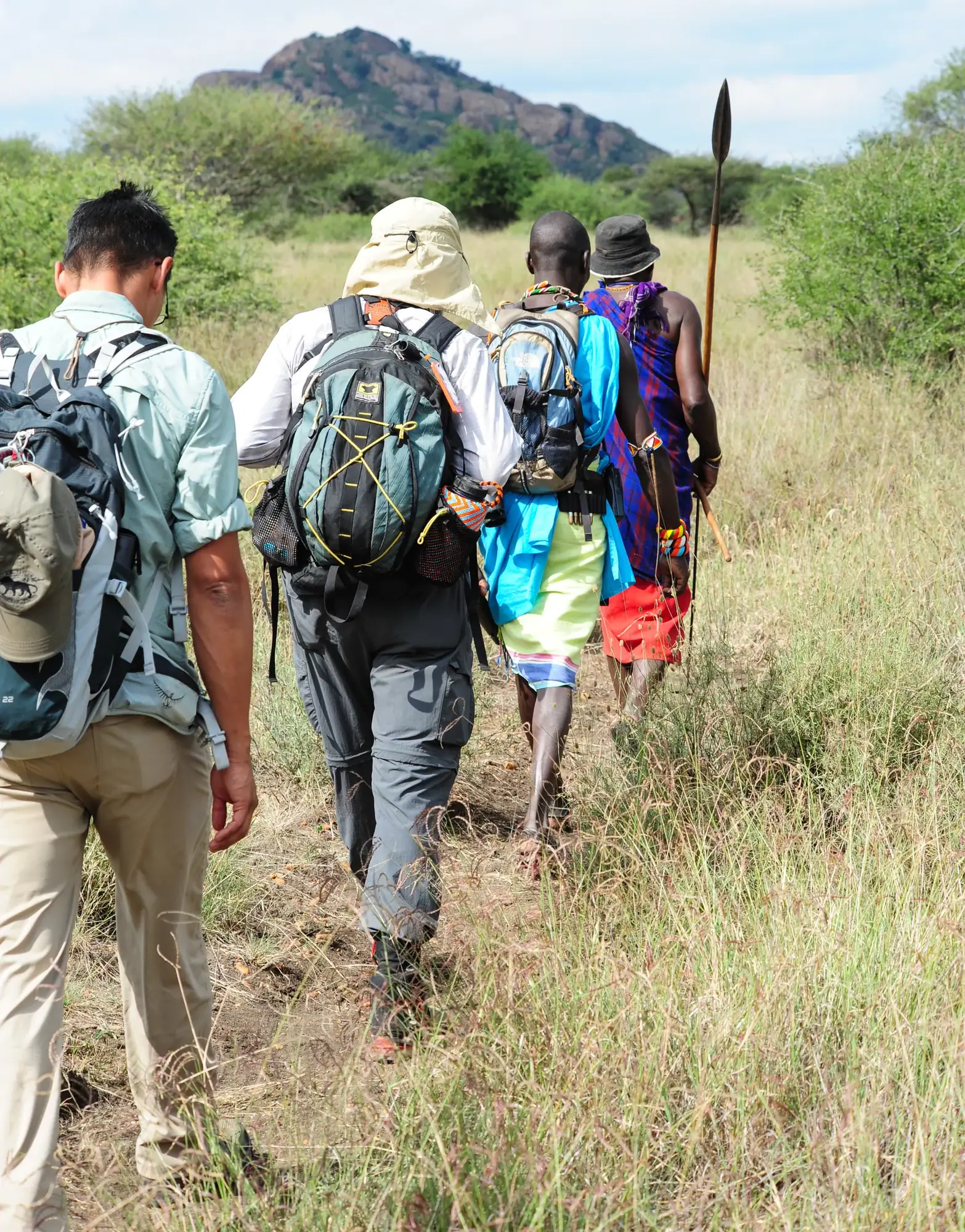
Climb with a registered guide; on most routes it is required, and on all of them it is the safe choice. A typical crew is a lead guide, an assistant guide for larger groups so anyone who turns back can go down with someone, a cook and porters who carry the food, tents and your main bag, leaving you with a daypack. Many guides and porters come from the farming communities around the mountain, and the climb is an important source of local income. Ask any operator how they pay and equip their porters, and expect a clear answer. Tipping the crew at the end is customary; we give you a guideline before you go so nobody has to guess.
What to pack
- Broken-in waterproof hiking boots, gaiters for the bog and scree, and trekking poles.
- Layers: base layers, a fleece, a warm down jacket, a waterproof shell and waterproof trousers.
- A four-season sleeping bag, warm hat, gloves and spare socks; summit night is well below freezing.
- A headlamp with spare batteries, sunglasses, high-factor sunscreen and lip balm.
- Water bottles or a bladder for 3 to 4 liters a day, purification tablets and snacks.
- A small first aid kit and any personal medicines, including what your travel clinic prescribes for altitude.
Pack the safari clothes in a separate bag we can hold for you in Nanyuki or Nairobi; the porters only need to carry the mountain kit.
Altitude, in one paragraph
Altitude, not fitness, is what turns people back on Mount Kenya. Choose a schedule that keeps the gain in sleeping altitude modest above 3,000 meters, walk slowly, drink well and tell your guide about every headache. Going down is the cure for serious symptoms. Ask your travel clinic about acetazolamide. Our altitude page has the full guidance, symptom list and a sample schedule.
Batian and Nelion
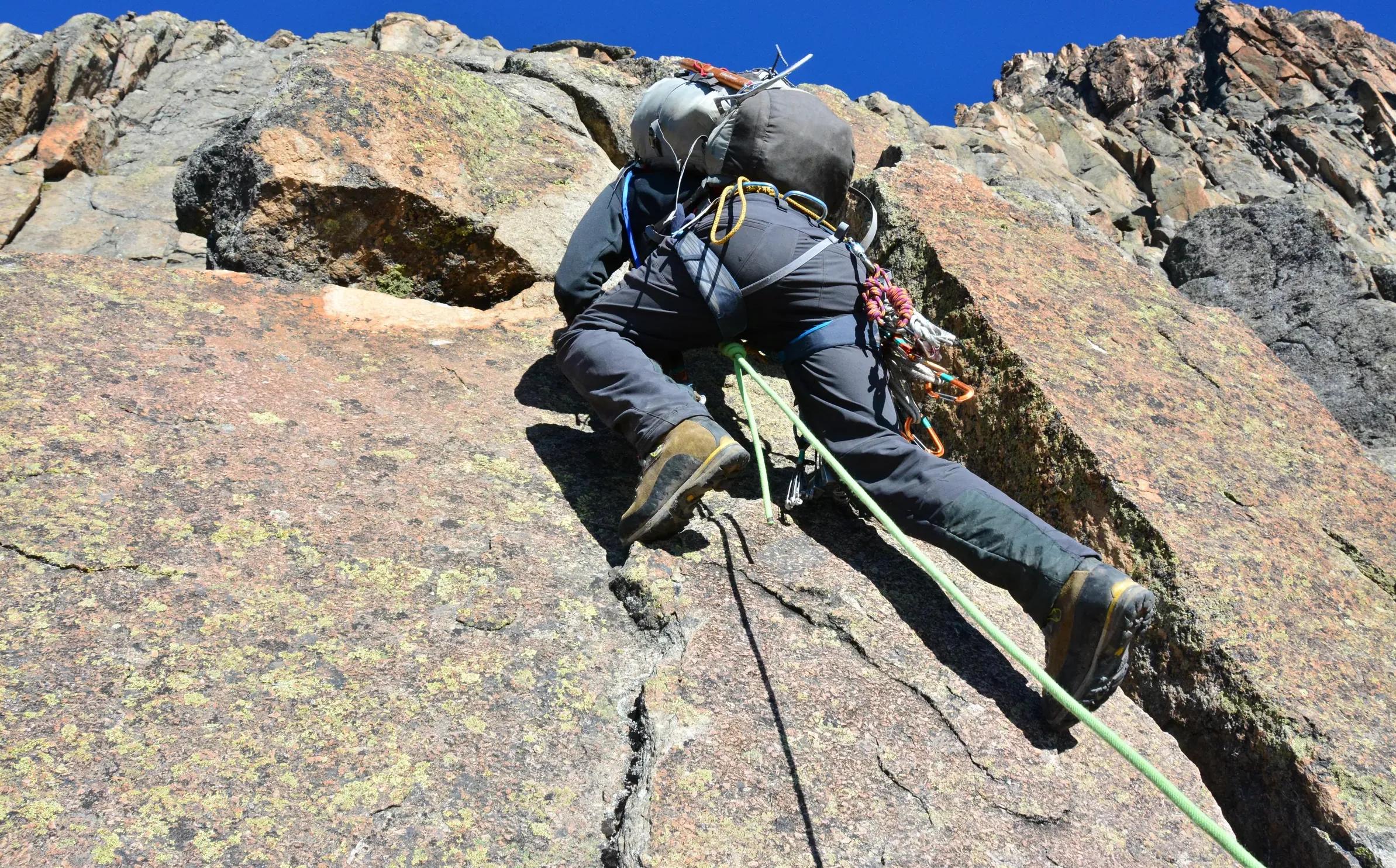
The true summits, Batian and Nelion, are technical rock climbs on old volcanic rock, with a night on or near the peaks for most parties, and ice in places depending on the season. They are for experienced climbers with their own rock and alpine skills, climbing with a specialist mountain guide. If that is you, tell us early: we work with guides who lead these routes and can plan an acclimatization trek to Lenana first.
Insurance
Many travel insurance policies cap trekking cover at 3,000 or 4,500 meters, and Point Lenana is 4,985. Buy a policy that explicitly covers trekking to 5,000 meters, with helicopter or air evacuation included, and carry the policy details with you. For the technical peaks, you need mountaineering cover.
Pairing the climb with a safari
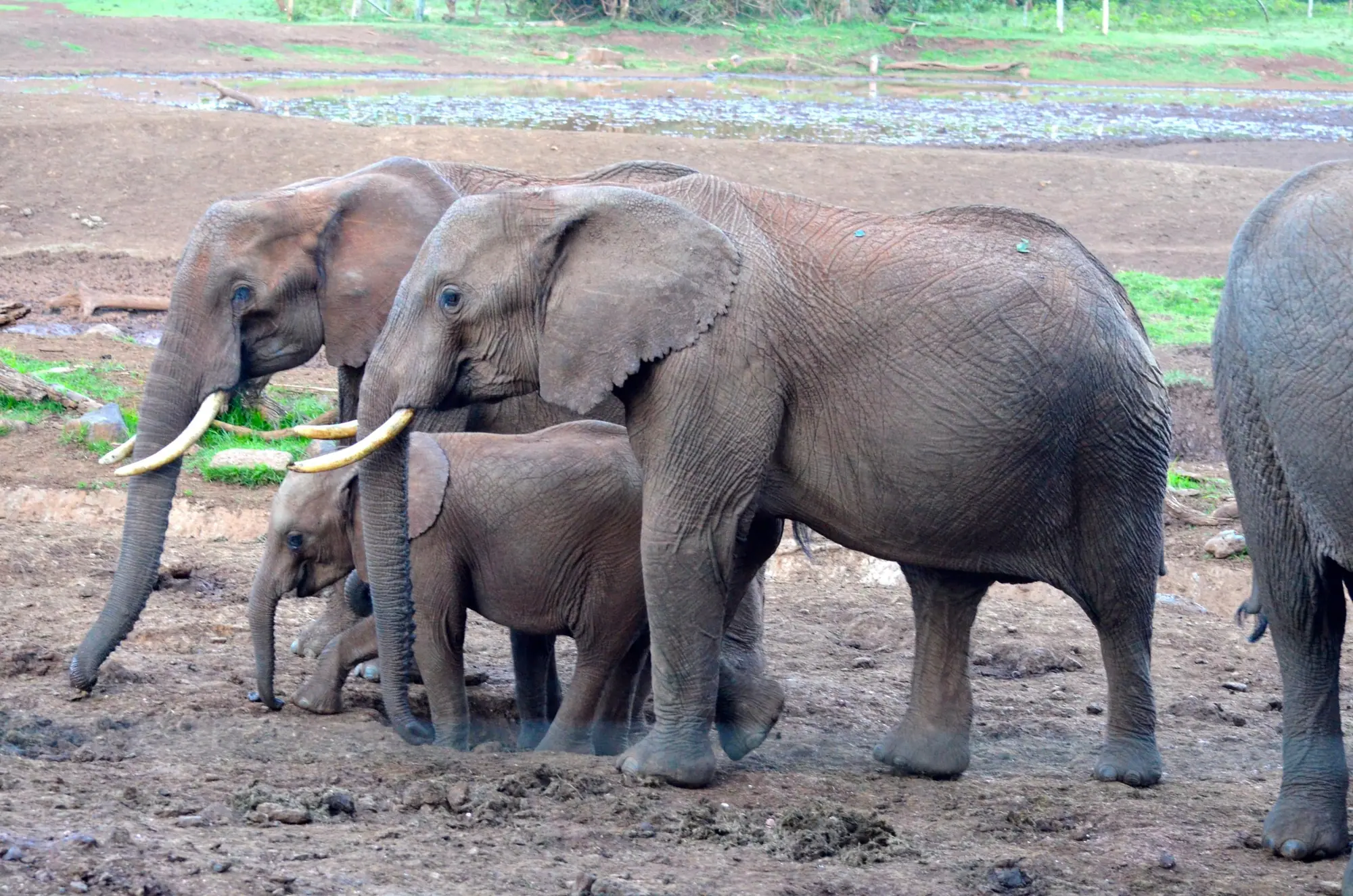
Mount Kenya fits a Kenya trip better than almost any big mountain in Africa. Do a few safari days first, in Laikipia or the Mara, so your body is already used to sleeping at 1,500 to 2,000 meters; it is the cheapest acclimatization there is. Then climb from Nanyuki, and come down to a hot shower at Ol Pejeta, Lewa or Samburu, all within a few hours of the trailheads. Finish on the coast if you have time. A typical plan is three nights of safari, five or six days on the mountain, and two or three nights of recovery.