Towns and places. Updated November 2026. 4 min read.
Marsabit is the strangest mountain in Kenya: a broad volcano that rises out of the northern desert and catches enough mist to grow a forest. You drive for hours across black lava and red sand, climb into cool air and fog, and find crater lakes, giant fig trees, elephants and greater kudu, all within reach of a busy frontier town. It is the gateway to the Chalbi Desert and Lake Turkana, and one of the great road journeys in East Africa.
The short answer: give Marsabit two nights on the way north. One morning for the forest and Lake Paradise, one for the crater lakes, the town and its markets, and you leave for Lake Turkana rested and supplied. It is on tarmac all the way from Isiolo, so it is the easiest part of the far north to reach, and it works on our northern Kenya expedition or on a custom route of your own.
What to see and do
| Place | What it is | Time |
|---|---|---|
| Lake Paradise | The crater lake in the forest of the national park, with elephants and buffalo coming down to drink | A morning, with a ranger |
| Gof Sokorte Dika | A smaller crater lake close to town, easy to reach | An hour |
| Gof Bongole | A huge, grassy volcanic crater on the mountain, wide enough to hold a plain of its own | An hour or two |
| Marsabit town and market | Camel herders, cattle keepers and traders from across the north, at the main crossroads of the region | A morning with a local guide |
| The Chalbi Desert and Kalacha | A salt-pan desert west of the mountain and an oasis of palms and springs on the way toward Lake Turkana | A full day, or on the way to the lake |
| Mount Kulal and Loiyangalani | A forested mountain high above Lake Turkana, and the lake shore town beyond it | Two to three nights on the next leg |
The north has its own practical demands: long distances between fuel and help, heat in the lowlands, and in some areas disputes between communities over grazing and water that flare and settle. We travel in two vehicles with experienced northern driver-guides, drive in daylight, and check with local contacts before every departure. Before you book, check the current U.S. State Department advisory for Kenya and confirm your travel insurance covers your route.
The mountain and the national park
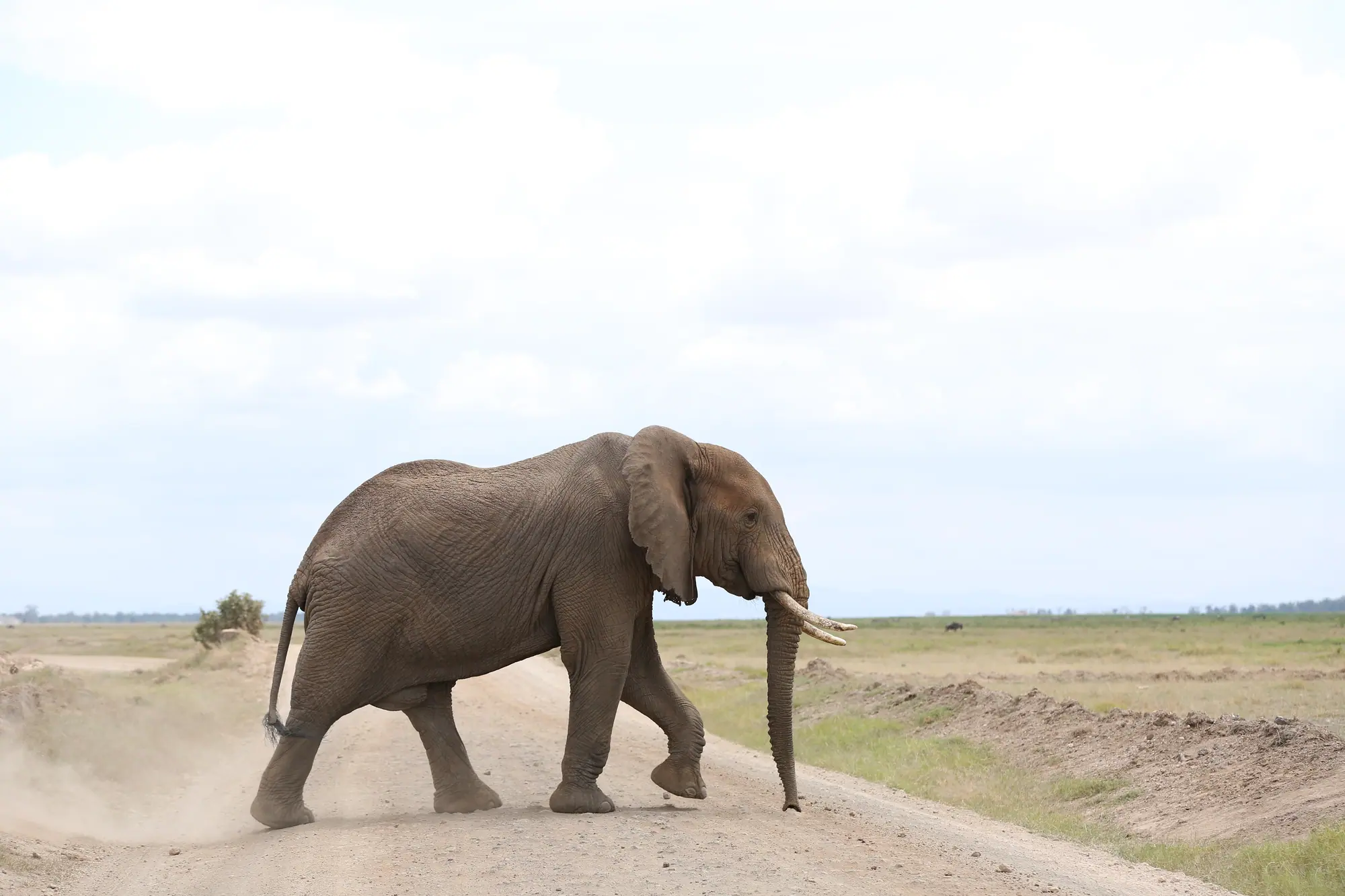
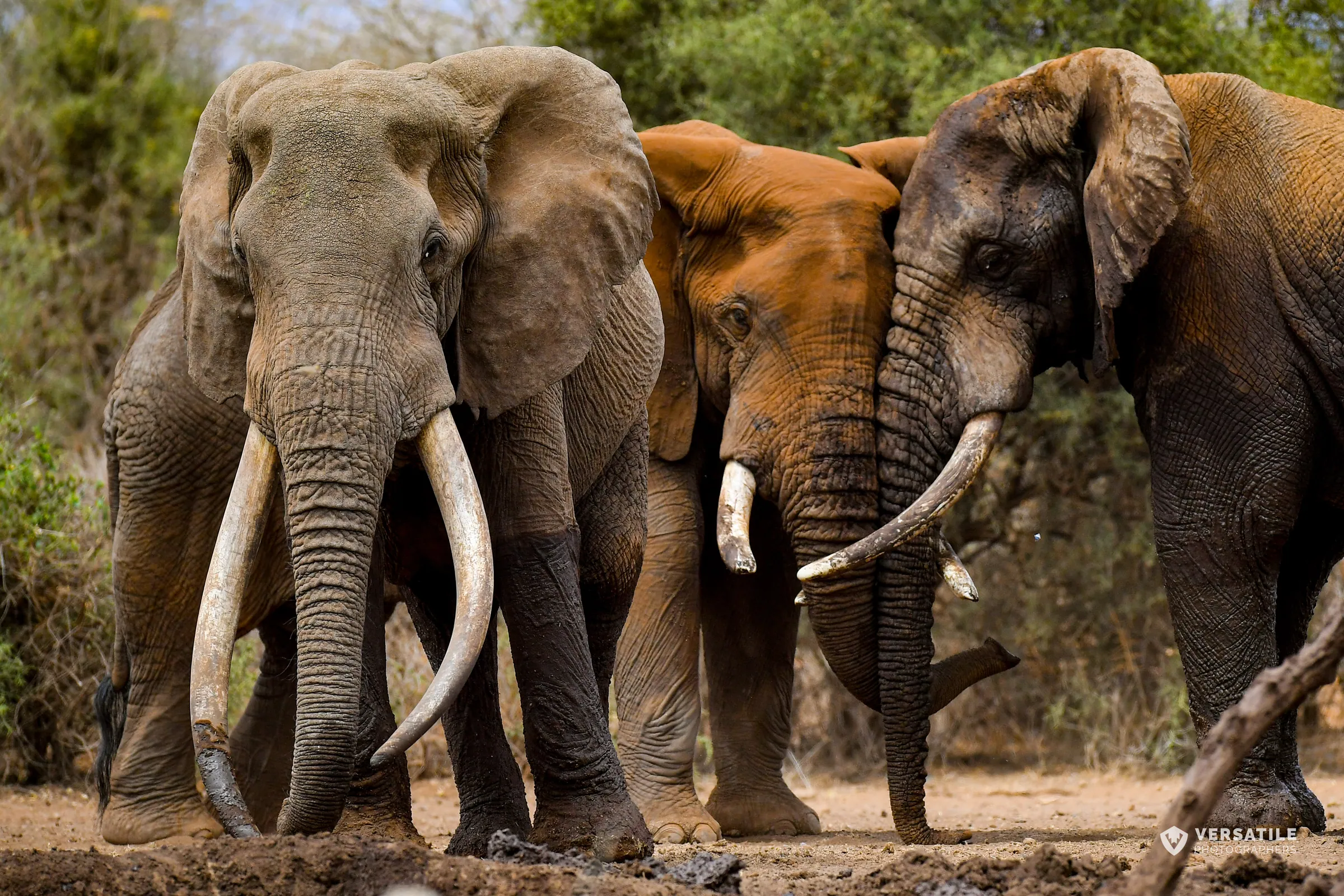
Marsabit National Park covers the forested upper slopes of the volcano. Morning mist drifts through the trees and condenses on leaves, which is how a forest survives in a desert, and the mornings can be surprisingly cold. The park's set piece is Lake Paradise, a crater lake in a ring of forest, named by the American filmmakers Martin and Osa Johnson, who camped beside it in the 1920s. Gof Sokorte Dika, a smaller crater lake close to town, is another easy stop. Elephants, buffalo, greater kudu, bushbuck and many forest and cliff birds live in the park; the elephants are shy and the forest is thick, so sightings take patience.
Marsabit is famous for big-tusked elephants. The most famous was Ahmed, a bull with enormous tusks, who in 1970 was put under round-the-clock protection by presidential decree. He died of old age in 1974, and a replica of him stands at the National Museum in Nairobi, which is worth a visit before you head north. Our Marsabit National Park page goes deeper into the park itself.
The peoples of the mountain and the desert
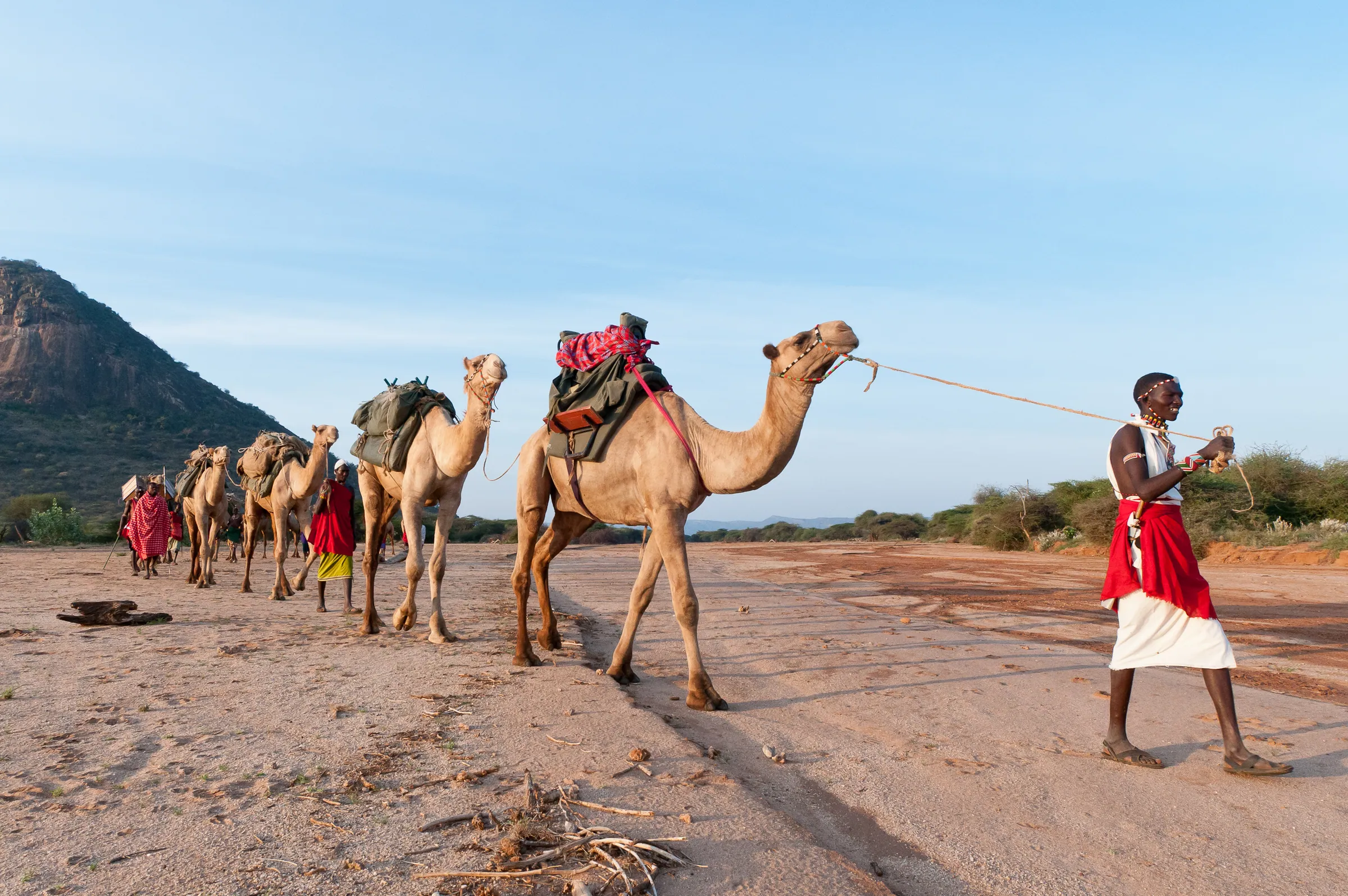
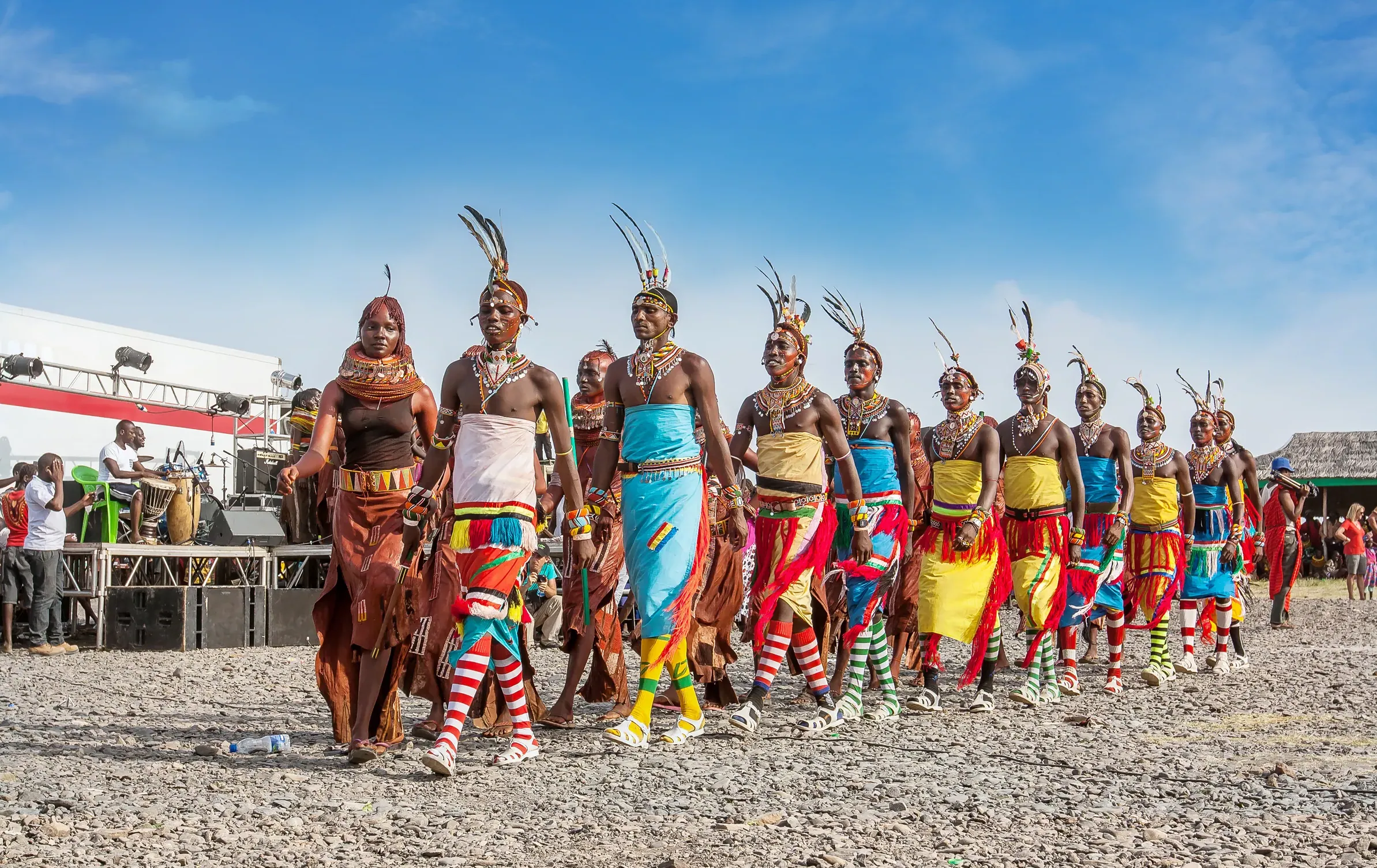
Marsabit town is a meeting place of the north. Rendille and Gabra camel herders, Borana cattle keepers, Burji farmers, Samburu, Turkana and Somali traders all come to its markets. Beyond the mountain, the Chalbi Desert stretches west to the oasis of Kalacha and on toward Lake Turkana, where Loiyangalani is home to the El Molo, Turkana, Samburu and Rendille. The Lake Turkana Cultural Festival at Loiyangalani has usually been held around May or June, but it has not run every year; we confirm the dates with the organizers before planning around it. Ask before photographing anyone, and expect to pay a fair fee if you photograph people at their homes; our photography etiquette page covers this.
Getting there
| Leg | Roughly | Notes |
|---|---|---|
| Nairobi to Isiolo | About 5 hours | Tarmac via Nanyuki |
| Isiolo or Archer's Post to Marsabit | About 4 to 5 hours | Tarmac across lava plains; fuel up first |
| Marsabit to Loiyangalani | A full day | Rough tracks across the southern Chalbi; two vehicles |
| Nairobi to Marsabit by air | A few hours | Charter flight to the Marsabit airstrip |
Most people combine Marsabit with Samburu or Laikipia on the way north and Lake Turkana beyond. Our northern Kenya expedition does exactly this over 12 days, and Sibiloi National Park, with the Koobi Fora fossil beds, can be added from the lake. The best months are the dry ones, June to October and January to February; the rains in April, May and November make the desert tracks slow or impassable.