Towns and places. Updated November 2026. 4 min read.
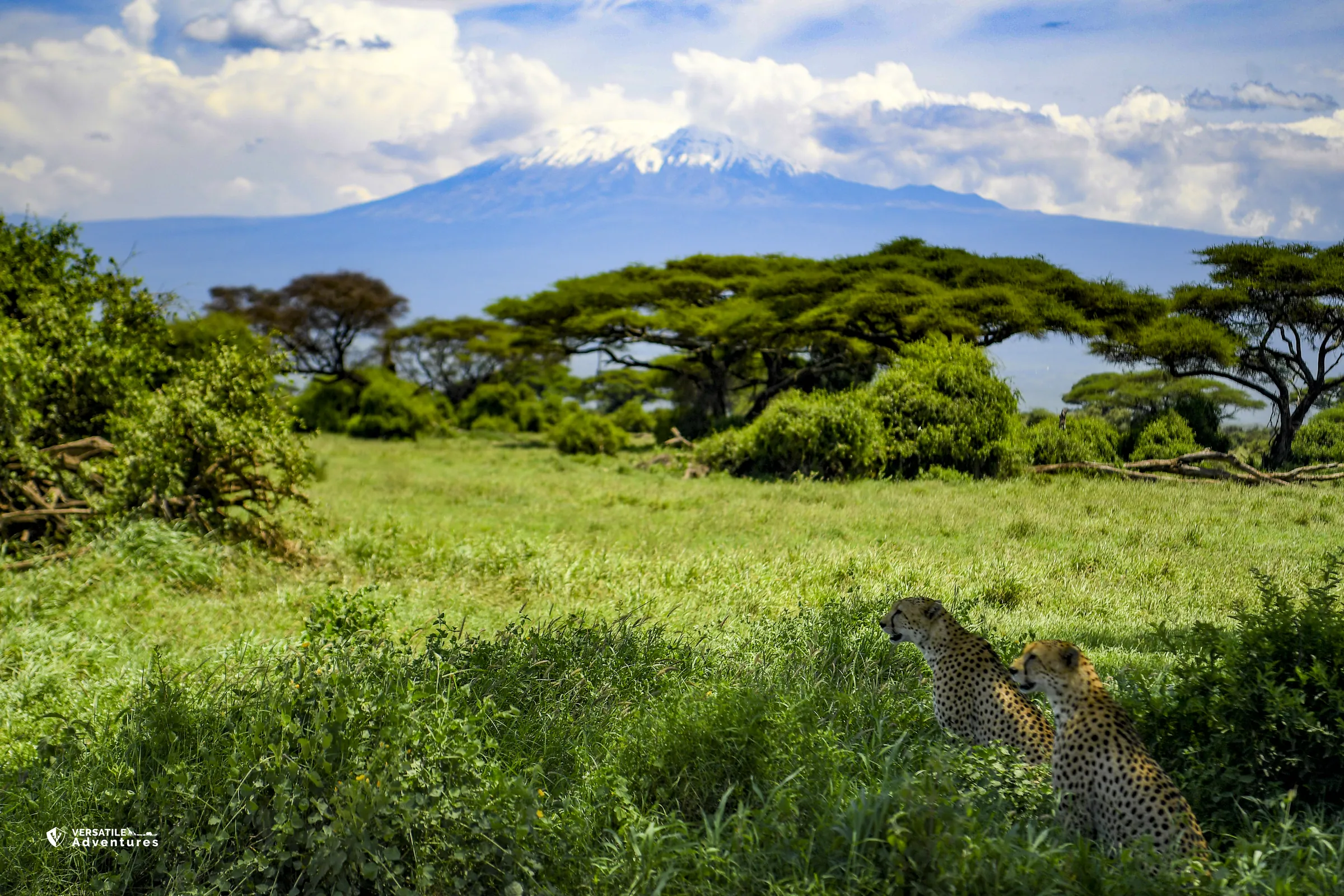
Kilimanjaro is the reason most people go to Amboseli, and the most common disappointment is arriving at noon to find a wall of white cloud where the mountain should be. Here is the honest answer: the mountain shows most often at dawn, from about 6 to 8am, and again in the last hour before sunset, and it hides behind cloud for most of the middle of the day. The clearest months are December to February and July to September.
No lodge, guide or website can promise you the view. What you can do is stack the odds: stay at least two nights, so you get two dawns and two sunsets, be out on the plains at first light, and know where to stand. That is what this page is for. For lodges, fees and the park itself, see our where-to-stay in Amboseli guide, our fees and getting there page and the Amboseli park page.
Why the cloud comes and goes
Kilimanjaro rises to 5,895 m, nearly 4,800 m above the Amboseli plains, from across the border in Tanzania. As the sun warms the slopes through the morning, moist air rises up the mountain, cools and condenses, and by mid-morning a collar of cloud forms around its middle and often swallows the summit. In the late afternoon, as the air cools, the cloud often thins or sinks, and the snow cap floats above it. Overnight the sky clears, which is why dawn is the best bet of all.
Rain helps. The morning after a night of rain, the dust is washed out of the air and the mountain can look close enough to touch. The driest, dustiest weeks can bring a haze that softens the view even when there is no cloud. And the snow itself changes: Kilimanjaro's glaciers are shrinking, but a fresh fall after the short rains can whiten the summit for a while.
Month by month
| Months | The view | Notes |
|---|---|---|
| December to February | Often clear, especially at dawn | Warm, dry and one of the best windows; short-rain showers end in December |
| March | Mixed | Heat builds and cloud gathers earlier in the day |
| April and May | Often hidden | Long rains; clear spells after storms can be spectacular, and the park is quiet |
| June | Mixed to good | Cooler; early morning mist sometimes sits on the plains |
| July to September | Often clear at dawn and dusk | Cool, dry and busy; the other best window |
| October | Mixed | Dust and haze build at the end of the dry season |
| November | Mixed | Short rains; clear, washed mornings between showers |
Where to stand
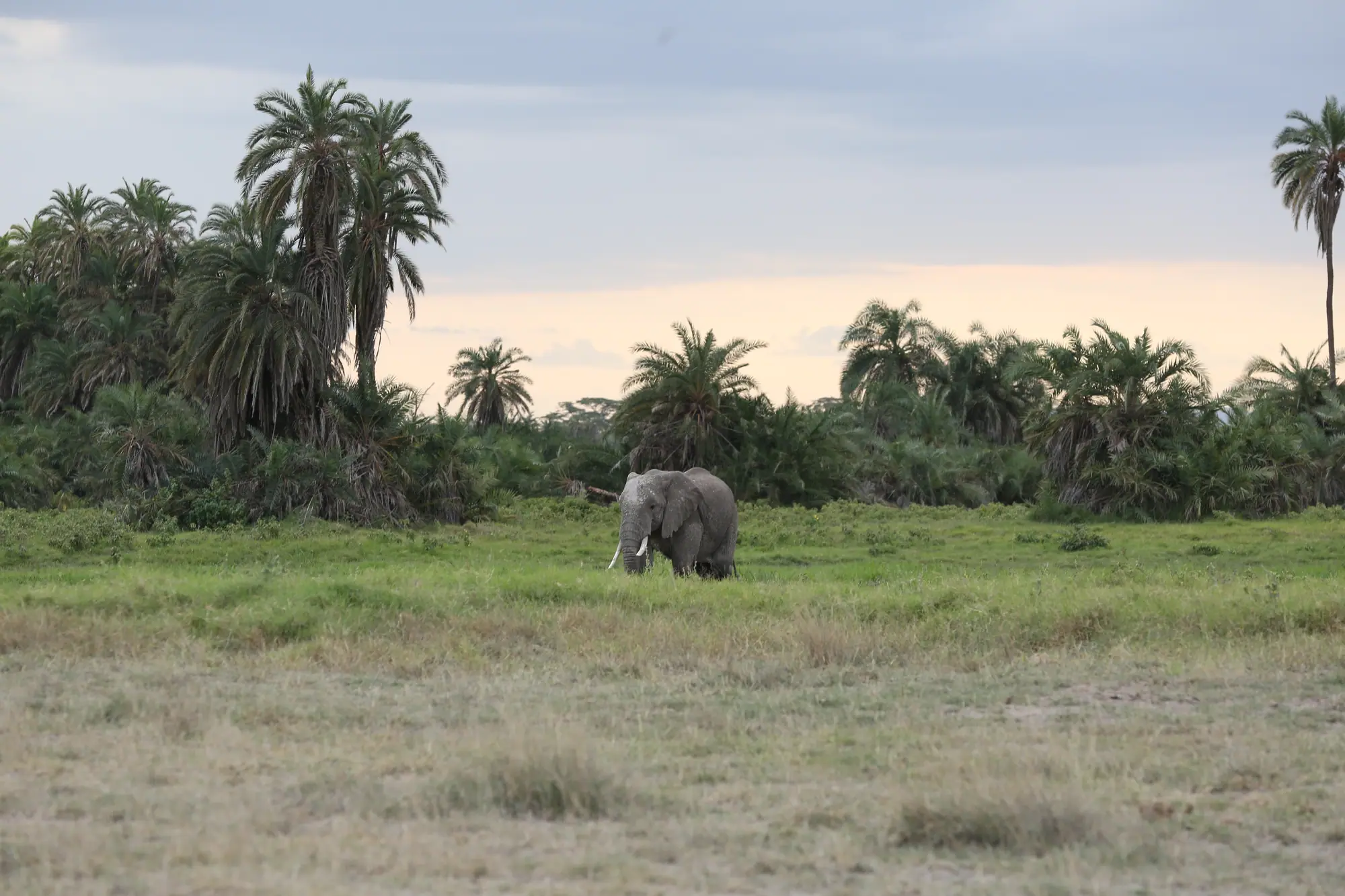
- The Enkongo Narok swamp edge: the classic picture, with elephants in the green swamp grass and the mountain behind them. Be there at first light, when the herds walk in from the woodland.
- Observation Hill: one of the few places you can leave the vehicle, with a view across the swamps and the plains to the mountain. Better for the wide view than for close elephants.
- The dry lake bed and the plains in between: dust, zebra and wildebeest in the foreground, the snow above, especially at sunset.
- The Kimana side and the group ranch camps: many lodges outside the park face the mountain from their rooms and decks, so you can watch the dawn without leaving camp.
- The Chyulu Hills: about 1.5 hours east, with the widest view of all, the whole mountain from the plains to the summit. Our Chyulu Hills page covers them.
From the park you face south. Kibo, the snow-capped summit, is the broad dome; Mawenzi, the jagged second peak, is to its left. At dawn the light comes from your left and lights the snow first; at sunset it warms the whole face of the mountain, often pink, for a few minutes.
How to plan for it
- Stay two nights at least, three if the mountain is the point of your trip
- Go out at gate opening, with breakfast packed, rather than after breakfast in camp
- Ask your guide to plan around the light: elephants and swamps at dawn, the plains at sunset
- Use the middle of the day for the pool, a nap or a cultural visit, when the mountain is usually hidden anyway
- If day one is cloudy, do not panic: the next dawn is a new chance
Photographing it
A medium telephoto, around 100 to 400 mm, pulls the mountain closer behind elephants and makes the classic picture; a wide lens works for the sweep of the plains with the mountain small. Expose for the snow so it does not turn to a blank white, and bracket in the early light, when the contrast between the bright summit and the dark plains is strongest. Keep a cloth over your camera on the dusty tracks. Our safari photography tips and safari gear guide go further, and our drones and photography page explains why you cannot fly a drone over the park.
The honesty line
Some travelers see Kilimanjaro on every drive. Some see it once, for ten minutes. A few see it not at all, even in a good month. We plan your stay to give you the best odds, and we would rather tell you that now than have a brochure promise it. If you only see it once, make sure you are awake for it.