Towns and places. Updated November 2026. 3 min read.
The soapstone elephant on a shelf in Minnesota, the black bowl with the white pattern in a London gift shop, the chess set in a Nairobi airport curio stall: most of it started as a block of stone dug by hand in the hills around Tabaka, a village near Kisii, and carved by a Gusii family in a shed beside their house. Kisii is where Kenya's best-known craft comes from, and you can buy it from the person who made it.
Kisii is also one of the greenest and most densely farmed parts of Kenya: steep hills of bananas, tea and maize, rain most afternoons and a busy, cheerful market town at the center. It is not a tourist destination in the usual sense. It is a stop with real substance on the road between Kisumu and the Maasai Mara, and for Gusii families in the U.S., it is home.
Tabaka and the soapstone carvers
Kisii soapstone is a soft, smooth stone in shades of white, cream, pink and grey, quarried by hand from pits in the hills around Tabaka. Fresh from the ground it is soft enough to shape with simple tools; it hardens a little as it dries. Carvers rough out the form with machetes and chisels, refine it with files and knives, smooth it with sandpaper and water, then often dye it black and scratch the pattern back through to the pale stone. A final coat of wax brings up the shine. Whole families work together, from quarrying to polishing.
- Visit with a local guide, who can introduce you to a carving family and show you a quarry and a workshop
- Try carving a small piece yourself; it is harder than it looks
- Buy direct: prices are far below the curio shops in Nairobi or abroad, and more of the money stays with the carver
- Pay fairly; bargaining is normal, but the lowest price is not the goal
- Pack carefully: soapstone chips and breaks, and it is heavy, so think about weight on safari flights
- Ask before photographing people at work, and offer to send them the photos
Kisii sculptors' work has traveled far beyond the curio trade, into galleries and collections abroad, and as gifts to international institutions. In the village, though, the craft is a livelihood, and quarry work is hard and dusty. Buying well is the best thing a visitor can do for it.
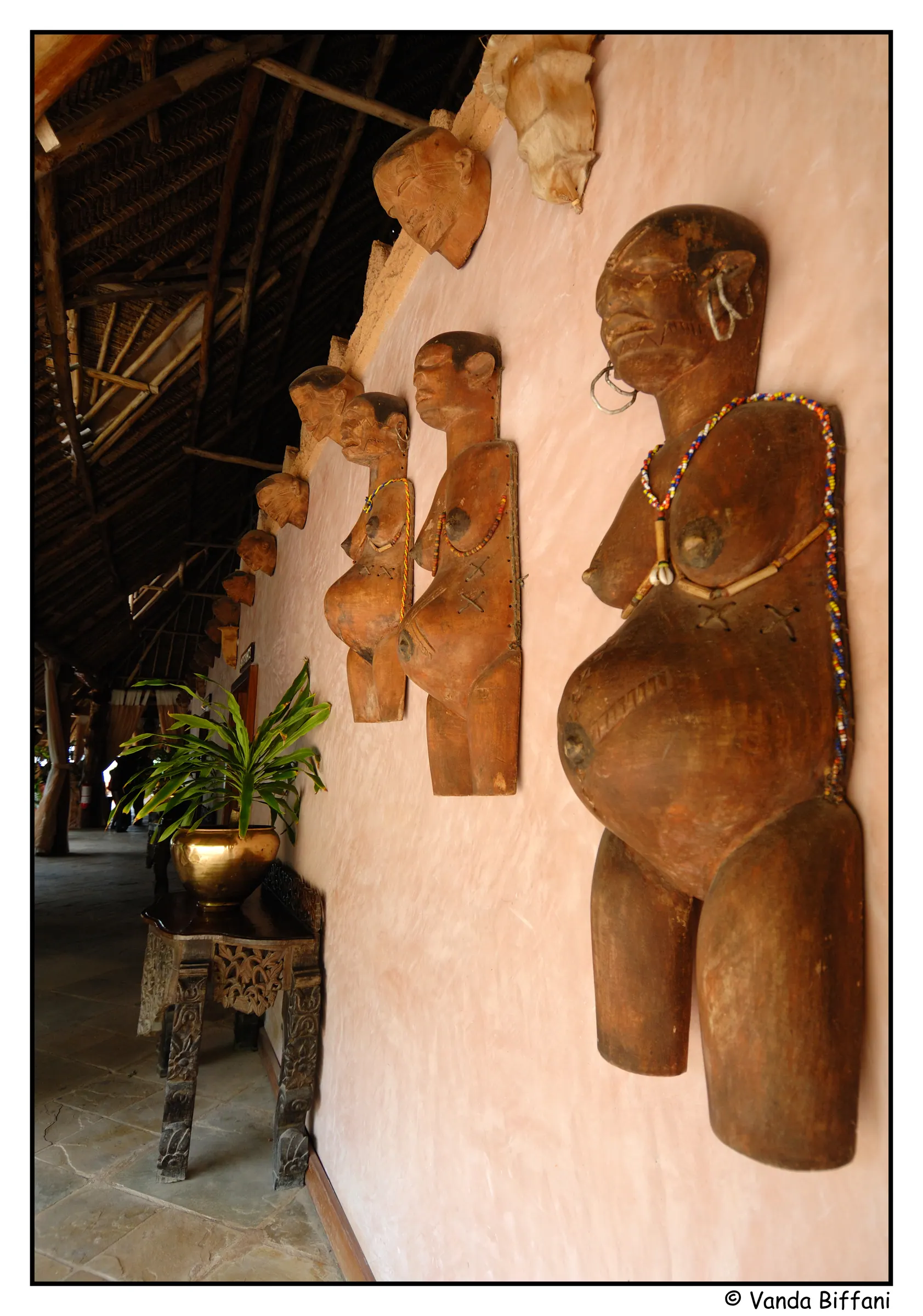
The Gusii highlands
The Abagusii, or Gusii, are a Bantu-speaking people who have farmed these hills for centuries. The land is fertile, the rainfall reliable and the population dense, so the hills are a patchwork of small farms right up to the ridges: bananas everywhere, tea on the higher slopes, maize, beans and greens below. Kisii town is the commercial center, with a university, busy markets and constant traffic of matatus and boda bodas.
Look out for Gusii music: the obokano, a large lyre with a deep, buzzing voice, is one of the great instruments of the region. Gusii food is its own cuisine, with millet ugali, local greens such as chinsaga and managu, and bananas cooked many ways; our Kisii food page covers it dish by dish. Our Gusii people page tells the community's history.
Just north, in Nyamira County, the Manga escarpment drops away to the plains, with wide views on a clear day. It makes a short detour on the way to or from Kisumu.
Kisii on the map
| From Kisii to | Route | Roughly |
|---|---|---|
| Kisumu | Road north via Ahero or Oyugis | About 2 hours |
| Kericho tea country | Road east via Sotik | About 2 hours |
| The Maasai Mara (Mara Triangle side) | Road south-east via Kilgoris toward the Oloololo escarpment | About 3 to 4 hours; road quality varies |
| Tanzania (Isebania and Sirari border) | Road south via Migori | About 2 hours |
| Tabaka | Road south-west | Under an hour |
That makes Kisii a natural lunch or overnight stop on a western loop: Kisumu, Kisii and Tabaka, then on to the Mara Triangle by road, or the other way round. Our western Kenya itinerary and our Kisumu page show how the region fits together.
Coming home to Kisii
Many Kenyan-Americans have roots in Gusiiland, and December is when they come home: weddings, church, family land and long lunches. If you are bringing American-born children or a spouse for the first time, Tabaka is a good way to show them something their friends will recognize. We plan trips home that add a few days of safari or coast, and our diaspora pages cover the rest.