Wildlife. Updated November 2026. 3 min read.
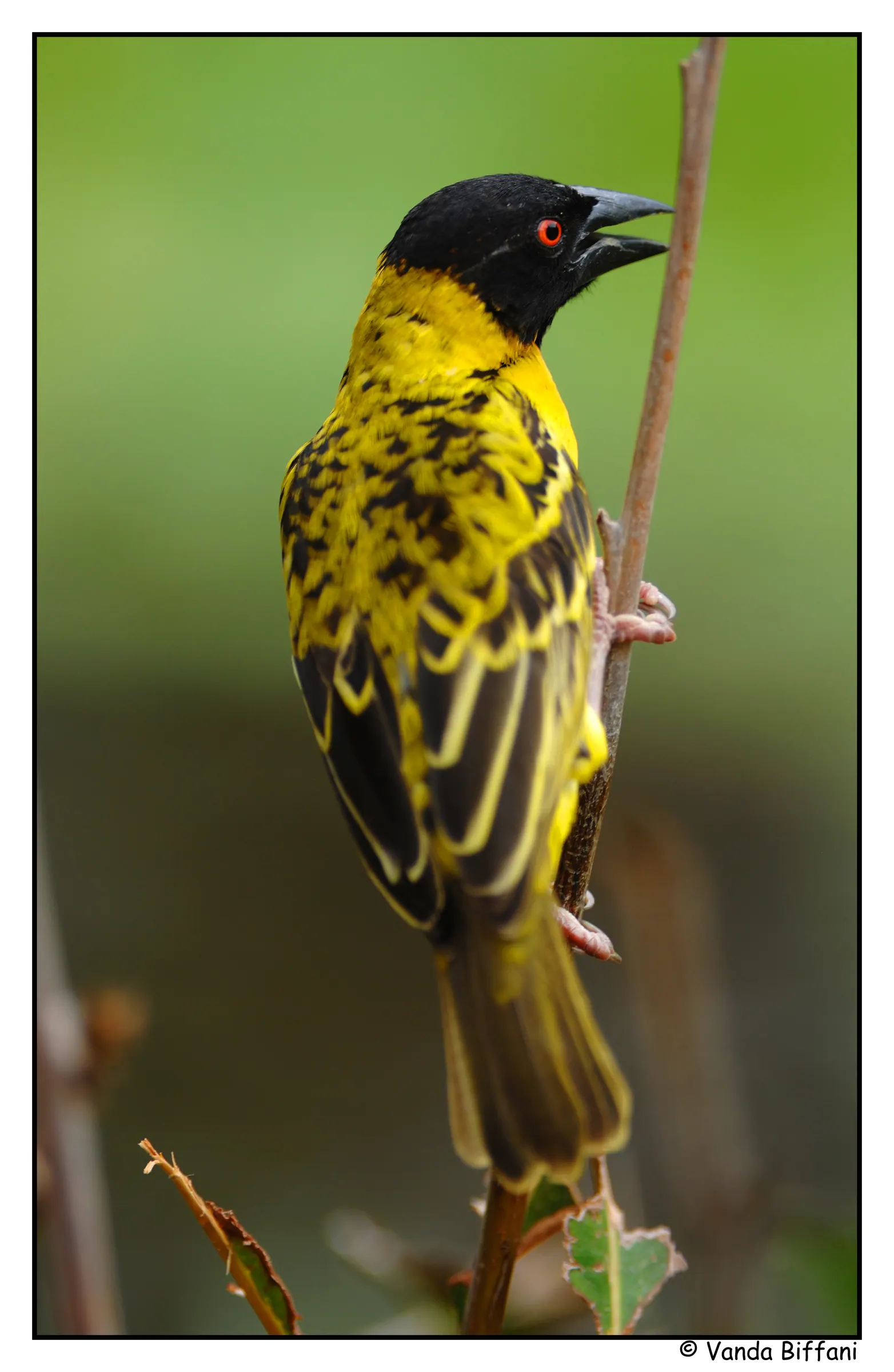
A yellow weaver with a black face mask and a chestnut crown in the male. Vitelline masked weaver (Ploceus vitellinus) is 14 cm long and common and not threatened. One of a dozen look-alike yellow weavers; the nests on acacias at Samburu's camps are often this species.
Where to see Vitelline masked weaver
- Samburu: The dry north: the Samburu Special Five, elephants on the Ewaso Nyiro and the red-robed Samburu people.
- Amboseli: Big-tusked elephants crossing dry lakebeds under Kilimanjaro, clearest at dawn.
- Tsavo East: Kenya's largest park: red elephants, the Yatta plateau and huge skies, an easy add-on to the coast.
- Lake Baringo: A freshwater Rift lake of 470 bird species, hippos, crocodiles and boat trips to the Njemps islands.
Males weave hanging ball nests over water and display with wing-flicking. It is widespread enough that a standard safari finds it without trying; the best months are Jan, Feb, Mar, Jun, Jul, Aug, Sep, Oct.
How to identify it
A yellow weaver with a black face mask and a chestnut crown in the male. Size: about 14 cm, small. Family: weavers. Males weave hanging ball nests over water and display with wing-flicking.
Status and conservation
Vitelline masked weaver is common and not threatened. No special measures are needed to see it, and your park fees support the habitats it uses.
On a Kenya Experience trip
Our guides carry binoculars and the East African field guide in every vehicle, and our birding itineraries put a specialist bird guide in the front seat. For Vitelline masked weaver we would start at Samburu and Amboseli. Tell us the species on your list and we build the days around them.