Wildlife. Updated November 2026. 3 min read.
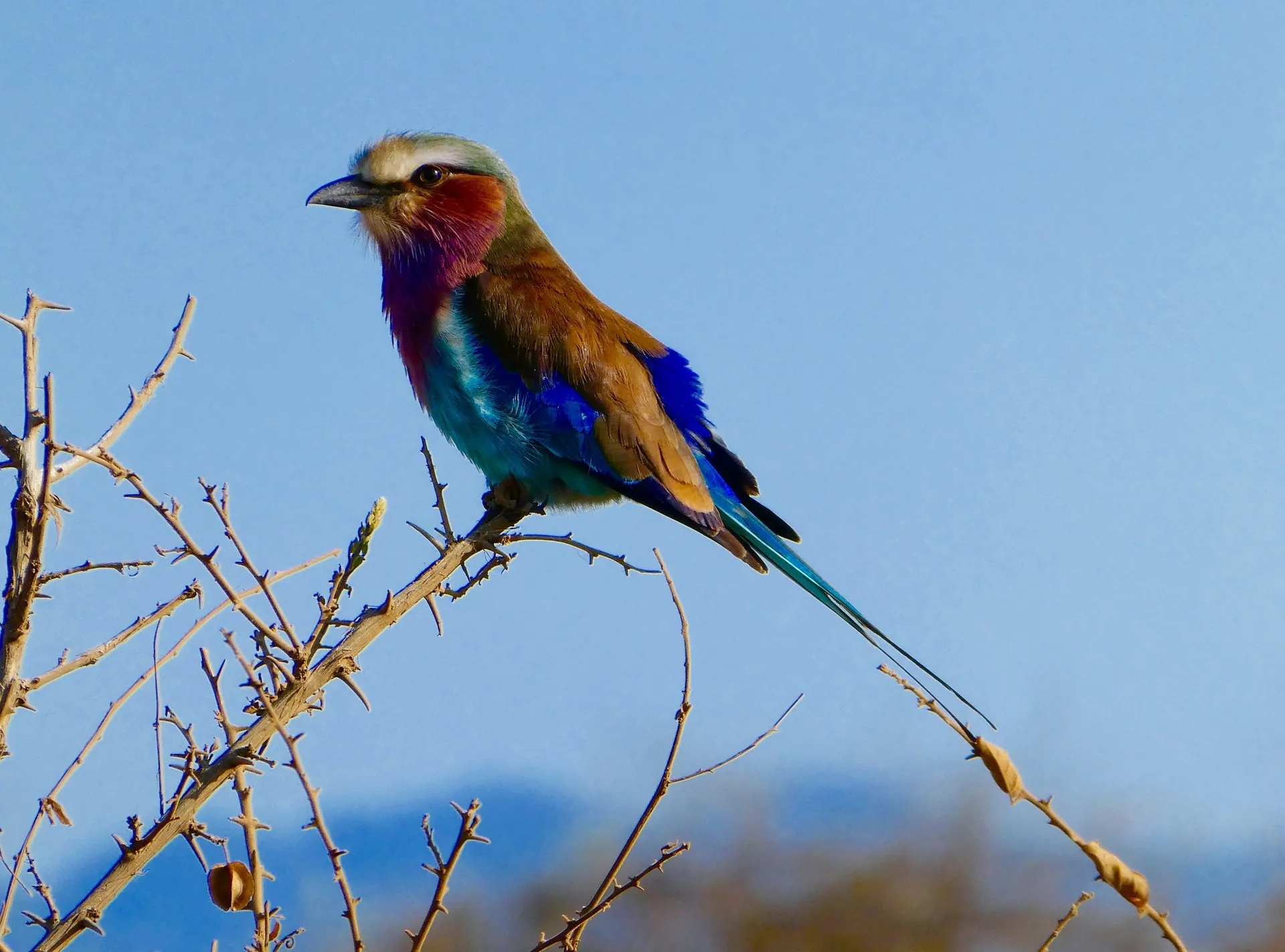
Metallic blue-green back, rust belly separated by a white band, and a pale staring eye. Superb starling (Lamprotornis superbus) is 19 cm long and common and not threatened. The first bird most visitors learn; it breeds cooperatively, with young from earlier broods helping at the nest.
Where to see Superb starling
- Maasai Mara: Kenya's most famous reserve: the Great Migration from July to October and the densest big-cat country in Africa all year.
- Amboseli: Big-tusked elephants crossing dry lakebeds under Kilimanjaro, clearest at dawn.
- Samburu: The dry north: the Samburu Special Five, elephants on the Ewaso Nyiro and the red-robed Samburu people.
- Nairobi: The safari capital: a national park inside the city limits, elephant orphans, giraffes and the best food and nightlife in East Africa.
- Tsavo East: Kenya's largest park: red elephants, the Yatta plateau and huge skies, an easy add-on to the coast.
- Lake Nakuru: Kenya's surest rhino sighting, a soda lake of pelicans and flamingos, and tree-climbing lions.
Bold and noisy around camps and picnic sites, hopping under tables for crumbs. It is widespread enough that a standard safari finds it without trying; the best months are Jan, Feb, Jul, Aug, Sep, Oct.
How to identify it
Metallic blue-green back, rust belly separated by a white band, and a pale staring eye. Size: about 19 cm, small. Family: starlings. Bold and noisy around camps and picnic sites, hopping under tables for crumbs.
Status and conservation
Superb starling is common and not threatened. No special measures are needed to see it, and your park fees support the habitats it uses.
On a Kenya Experience trip
Our guides carry binoculars and the East African field guide in every vehicle, and our birding itineraries put a specialist bird guide in the front seat. For Superb starling we would start at Maasai Mara and Amboseli. Tell us the species on your list and we build the days around them.